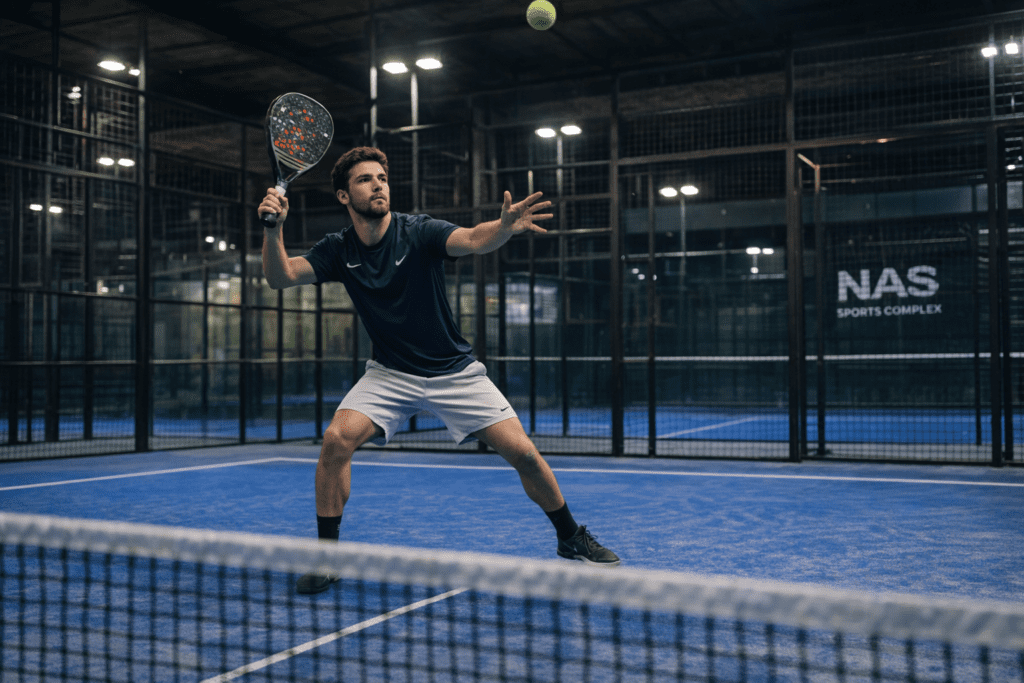
The Bandeja vs the Smash: Key Differences
Understanding what the bandeja is not helps clarify when to use it. The table below outlines the core differences between a bandeja and a full smash (remate).
| Aspect | Bandeja | Smash (Remate) |
|---|---|---|
| Primary purpose | Control and position maintenance | Win the point outright |
| Contact type | Sliced, angled downward | Flat or topspin, full power |
| Ball position at contact | Slightly in front and to the side | Directly overhead, as high as possible |
| Court position after shot | Player recovers to net | Player may end up pushed back |
| Ideal lob height | Mid-depth lob, playable but not short | Short lob, clear attacking opportunity |
| Risk level | Lower – built for consistency | Higher – margin for error is smaller |
The víbora is a third overhead option – faster and more aggressive than the bandeja but with added sidespin. Coaches commonly recommend mastering the bandeja before attempting the víbora, as the bandeja provides the foundational movement pattern.
While the smash and bandeja are the two most commonly discussed overheads, intermediate and advanced players will also encounter the víbora. Understanding how these three overhead shots differ helps improve shot selection during matches.
| Shot | Main Purpose | Spin Type | Speed | Difficulty | Best Situation |
|---|---|---|---|---|---|
| Bandeja | Maintain net position | Slice | Medium | Intermediate | Mid-depth lob |
| Vibora | Aggressive pressure | Side spin | Fast | Advanced | Attacking overhead |
| Smash | Finish point | Flat/Topspin | Very Fast | Intermediate | Short lob |
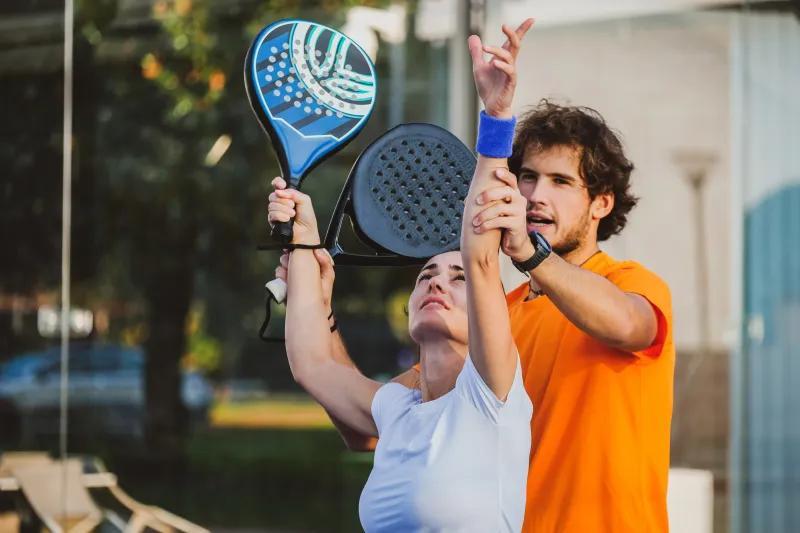
Step-by-Step Bandeja Technique
Step 1 – Read the lob early
The bandeja begins before the racket moves. As soon as a lob is identified, the player must turn sideways to the net and begin moving into position. Waiting too long to read the ball is the most common reason the shot breaks down. The shoulder turn should happen immediately on recognition of the lob trajectory.
Step 2 – Sideways stance and positioning
Move into position with the non-dominant shoulder pointing toward the net. The feet should be roughly shoulder-width apart, with the player positioned slightly behind the ball rather than directly under it. Being too far under the ball tends to produce a flat contact rather than the angled slice required.
For right-handed players, the left shoulder faces the net. For left-handed players, this is reversed. Maintaining this sideways orientation throughout the shot is essential – opening up too early causes the racket face to lose its angle.
Step 3 – Grip and racket preparation
The continental grip is the standard recommendation for the bandeja, consistent with the grip used for volleys and serves. The racket is raised behind the shoulder in a preparation position – higher than a volley but not fully extended overhead as in a smash. The elbow should be bent at roughly 90 degrees during preparation.
Step 4 – Contact point
Contact happens slightly in front of and to the side of the body, not directly overhead. This is the defining characteristic that separates the bandeja from a smash. The racket face is open (angled slightly upward toward the ball) but the swing direction is downward and forward, producing the slice effect that keeps the ball low after bouncing.
The wrist remains firm at contact. A loose wrist at this moment is a common source of inconsistency and sends the ball long or high. Coaches typically describe the motion as a controlled carving action rather than a full swing.
Step 5 – Follow-through and recovery
The follow-through is compact and controlled, finishing in front of the body. Immediately after contact, the player should be taking their first recovery step back toward the net. The bandeja is designed to be played on the move – staying back after the shot defeats its purpose.
Recovery to a net position should happen within two to three steps. If the shot has been executed correctly, the player arrives back at the net as the ball is reaching the opponent’s side, maintaining pressure on the rally.
Common Mistakes and How to Correct Them
| Mistake | Result | Correction |
|---|---|---|
| Hitting too flat | Ball goes long | Use slicing motion |
| Standing still after shot | Lose net position | Recover immediately |
| Too close to ball | Cramped swing | Create spacing |
| Opening shoulders early | Reduced control | Stay sideways longer |
| Too much power | Weak smash effect | Prioritize placement |
Hitting too flat
When players attempt a bandeja but swing with too much power and a flat face, the result resembles a weak smash rather than a controlled overhead. The ball tends to sit up for the opponents or go out. The correction is to focus on the carving motion at contact – actively brushing under and across the ball rather than driving through it.
Standing still after the shot
Many intermediate players execute the shot reasonably well but fail to recover. They watch the ball after hitting it, which leaves a gap at the net. The recovery step should be a habit built into practice from the beginning – the shot and the movement back to net are one continuous action.
Being too close to the ball
Crowding the ball forces a cramped, awkward swing. The contact point should feel comfortable with the arm slightly extended. If the player feels jammed, they were likely too slow to move into position or did not judge the ball’s landing point correctly.
Opening the shoulders too early
Rotating the hips and shoulders toward the net before contact pulls the racket across the ball incorrectly and reduces control. The sideways position should be maintained through contact, with the body opening only after the ball has left the racket.
Using the bandeja when a smash is the correct choice
The bandeja is not always the right shot. When a lob is short and the player can reach it comfortably with a clear overhead position, a smash is the better choice. Defaulting to a bandeja on every overhead limits attacking opportunity. Shot selection should be based on the lob quality and the player’s court position at the moment.
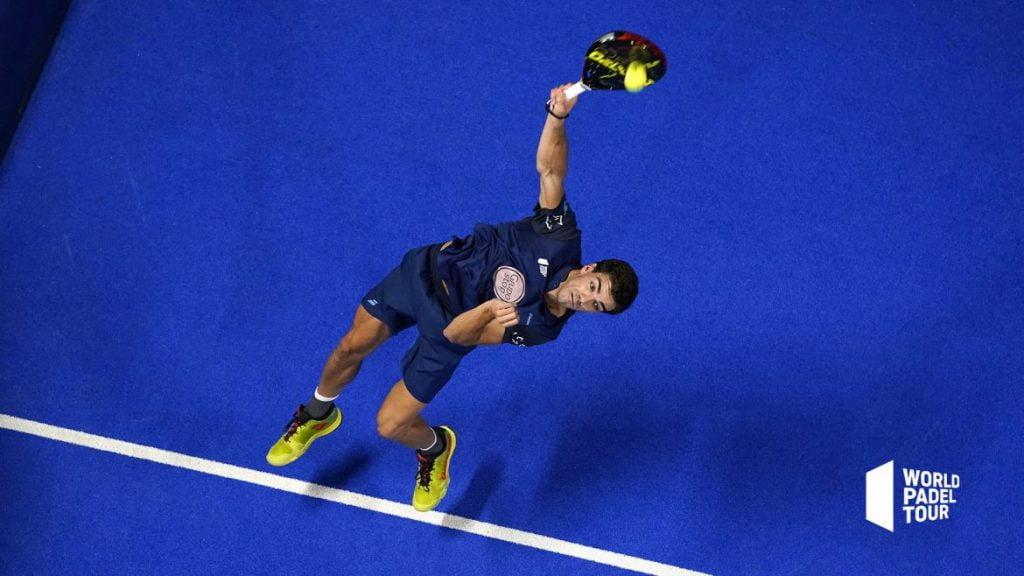
When to Use the Bandeja in a Match
The bandeja is the appropriate response in the following situations:
- The lob is mid-depth – deep enough to make a clean smash risky but not so deep that the player is fully pushed to the back wall
- The player wants to maintain net position and continue pressure on the point
- The opponents are positioned well and a smash is likely to be retrieved
- A reliable reset of the rally is preferable to gambling on an outright winner
- The player is slightly off-balance or not fully in position for a controlled smash
In UAE club doubles, coaches consistently recommend using the bandeja as the default overhead response until a clear smash opportunity presents itself. This approach reduces unforced errors and keeps teams in net-dominant positions longer during rallies.
| Lob Situation | Recommended Shot |
|---|---|
| Short easy lob | Smash |
| Mid-depth lob | Bandeja |
| Deep defensive lob | Defensive lob return |
| Difficult off-balance lob | Safe bandeja |
| Opponents deep in court | Aggressive overhead |
Bandeja Practice Drills
Drill 1 – Lob and recover (solo feed)
A partner or coach feeds a mid-depth lob from the baseline. The player at the net reads the lob, turns sideways, moves into position, plays the bandeja, and immediately recovers to the net. The emphasis is on the recovery step rather than the shot itself. Repeat 10 to 15 times per side before switching.
Progress markers: the player should be back at the net line before the opponent plays the next ball.
Drill 2 – Continuous bandeja sequence
Two players at the net, two players at the baseline. Baseline players alternate feeding mid-depth lobs. Net players alternate playing bandejas and recovering. The drill continues as a rally – baseline players try to lob consistently, net players respond with controlled bandejas rather than smashes.
This drill builds both technique and decision-making under the light pressure of a continuous exchange.
Drill 3 – Directional placement targets
Place two cones or markers in the opponent’s court – one in the middle and one toward a side corner. The player practices directing the bandeja to alternate targets, reinforcing the idea that placement matters as much as execution. Coaches commonly note that players who practice with targets develop a more purposeful shot selection habit.
Drill 4 – Bandeja vs lob decision drill
The coach or partner feeds lobs of varying depths. Short lobs are attacked with a smash. Mid-depth lobs are played with a bandeja. Deep lobs that reach the back area are played defensively with a lob return. The player must identify which shot is appropriate based on the feed. This trains the decision-making element that purely technical drills do not address.
| Drill | Main Focus | Skill Developed |
|---|---|---|
| Lob and recover | Footwork | Net recovery |
| Continuous bandeja | Consistency | Rally control |
| Target practice | Placement | Accuracy |
| Decision drill | Shot selection | Match awareness |
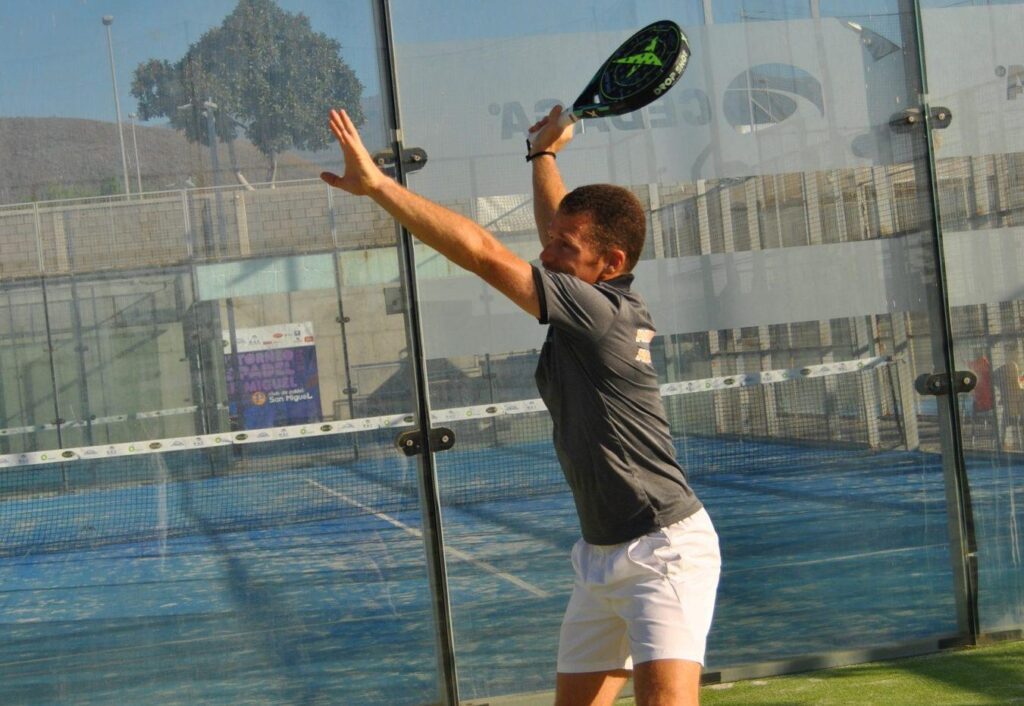
The Bandeja in the UAE Playing Context
Most padel played across UAE clubs – from Al Quoz in Dubai to courts in Abu Dhabi, Sharjah, Ras Al Khaimah, Ajman, Fujairah, and Umm Al Quwain – is doubles. The doubles format makes net dominance a central element of match strategy, and the ability to hold the net under lob pressure is a key differentiator between players at the intermediate level.
Indoor courts, which many UAE players use year-round due to climate, tend to have slightly faster ball conditions than outdoor courts. On indoor surfaces, the bandeja’s slice and low bounce become even more effective because the ball stays low after contact and gives opponents less time to respond. Players training indoors during the UAE summer months are in an ideal environment to develop this shot.
Many UAE clubs offer coached sessions where overhead technique, including the bandeja, is a standard component of intermediate group lessons. Booking a structured clinic to work on this shot with qualified guidance is consistently recommended over attempting to self-correct through uncoached rally play alone.
| Court Type | Ball Speed | Bounce | Bandeja Effectiveness |
|---|---|---|---|
| Indoor UAE courts | Faster | Lower | Very effective |
| Outdoor UAE courts | Slower | Higher | Requires more placement |
Frequently Asked Questions
What does bandeja mean in padel?
Bandeja is a Spanish word meaning tray. In padel, it describes a controlled overhead shot where the racket is held at an angle – similar to carrying a tray – producing a sliced, downward contact rather than a full-power smash.
Is the bandeja a defensive or offensive shot?
The bandeja is primarily a control shot used to maintain net position. It is neither purely defensive nor fully offensive. Its purpose is to keep pressure on opponents while avoiding the positional risks of attempting a smash on a mid-depth lob.
When should a beginner start learning the bandeja?
Coaches commonly recommend introducing the bandeja once a player has a stable volley, a basic smash, and a consistent ready position. Attempting it too early, before these foundations exist, tends to result in confused technique. For most players this is around the early intermediate stage.
What grip is used for the bandeja?
The continental grip is the standard starting recommendation. It provides the versatility needed to produce the slice contact and is consistent with the grip used for volleys and serves, reducing the need for grip changes during fast exchanges.
How is the bandeja different from the víbora?
The bandeja uses a straightforward sliced contact with the racket swinging downward and forward. The víbora adds a sidespin element through a more pronounced wrist and arm rotation at contact, producing a faster ball with more lateral movement. The bandeja is the recommended starting point before progressing to the víbora.
Why do my bandejas keep going long?
The most common causes are hitting too flat, contacting the ball too far in front of the body, or using too much swing speed. Focus on a compact, carving motion at contact and ensure the racket face is genuinely slicing across the ball rather than driving through it.
Can the bandeja be played on both forehand and backhand sides?
Yes. The forehand bandeja is more common and is typically learned first. The backhand bandeja is a more advanced variation used when a lob is directed toward the backhand side and repositioning for a forehand is not possible. Many players at intermediate level focus on the forehand version initially.
How deep should the bandeja land in the opponent’s court?
A well-executed bandeja typically lands mid-court or deeper, keeping the ball away from the net area where opponents could easily volley it. Aiming for a mid-court landing with a low bounce gives opponents less time and fewer options for an aggressive response.
Does the bandeja work differently on indoor versus outdoor courts in the UAE?
The mechanics are the same, but ball behaviour varies. On faster indoor surfaces – common across UAE clubs during summer months – the low, sliced bounce produced by the bandeja tends to stay lower and skid through more quickly. This makes accurate placement more important on indoor courts than on slower outdoor surfaces.
How many repetitions does it take to develop a reliable bandeja?
Based on available coaching guidance, no fixed number applies universally as individual progression varies. Coaches generally recommend focused repetition with a specific correction goal per session rather than high-volume unstructured practice. Consistent work over several weeks of coached or purposeful practice sessions is more effective than occasional high-volume drilling.
Sources
This article draws on coaching methodology referenced in FIP (International Padel Federation) guidance, established padel coaching principles from academy programmes operating in the UAE, terminology and shot definitions from the padel coaching community, and community-reported playing experience from UAE club players. This article was researched and published by the Padel Gameplan Editorial Team for Padel Gameplan, a UAE-based padel research and curation platform serving players across all seven emirates.