

 What Is Padel?
 What Is Padel?
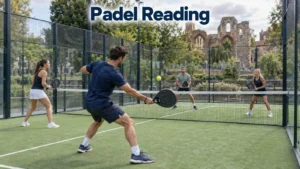
Padel is a racket sport played in doubles, two players on each side, on an enclosed court surrounded by glass walls and metal fencing. The court measures 10 metres wide by 20 metres long, making it roughly a third of the size of a tennis court. The sport scores exactly like tennis but differs in three important ways: serves are underhand, walls are an active part of play after the ball bounces, and the smaller court makes rallies easier to sustain for players at all levels. Padel is played across all seven UAE emirates, with 950+ courts across 320+ venues in Dubai, Abu Dhabi, Sharjah, Ras Al Khaimah, Ajman, Fujairah, and Umm Al Quwain.
The Padel Court
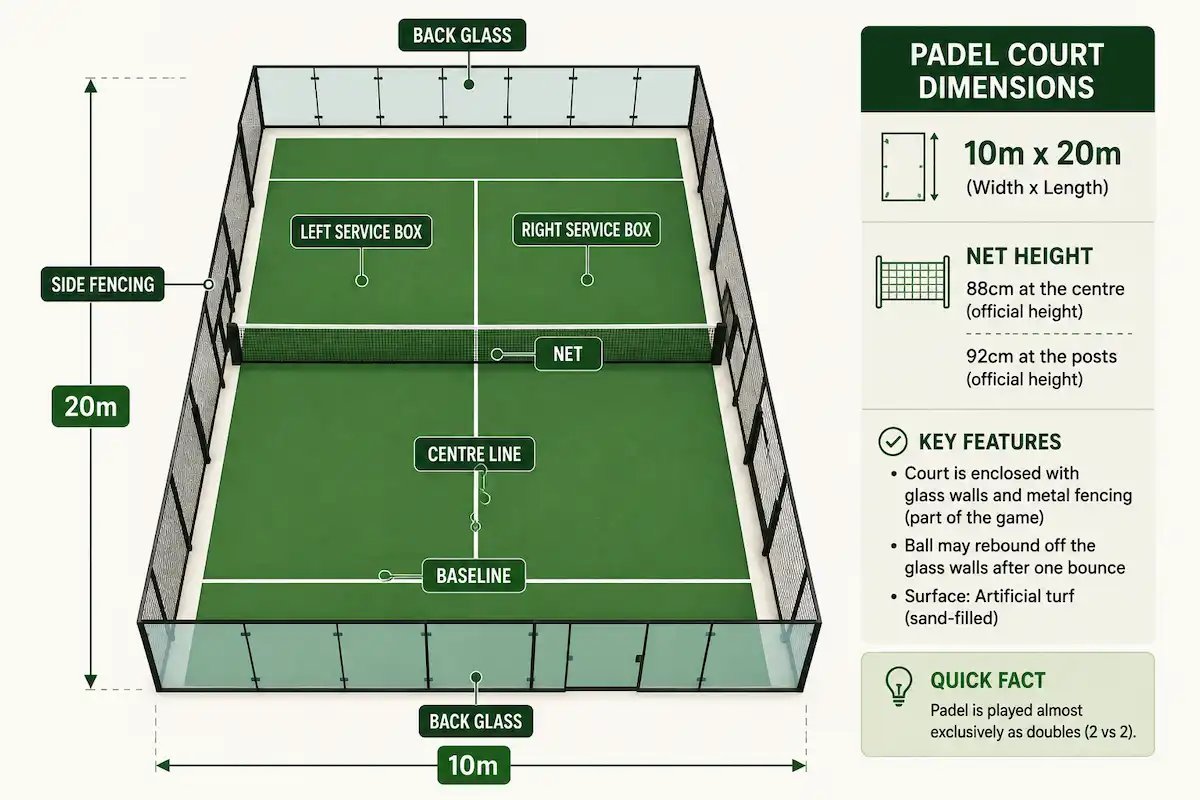
Understanding the court layout helps with serving and positioning.
| Area | Measurement |
|---|---|
| Court length | 20 metres |
| Court width | 10 metres |
| Net height – centre | 88 cm |
| Net height – posts | 92 cm |
| Service box depth | 3 metres each side |
| Wall height | 3 to 4 metres |
The court is divided by a net in the middle. On each side of the net are two service boxes separated by a centre line. The walls, glass panels and metal fencing, surround the entire playing area and are an active part of the game during rallies.
For a complete directory of padel venues across all seven emirates, visit the Padel Courts UAE hub.

The Scoring System
Padel uses the same scoring system as tennis. Points within a game progress as follows: Love (0), 15, 30, 40, Game. When both players reach 40-40, this is called deuce. A team must then win two consecutive points to take the game, first winning Advantage, then the game point. Some recreational and club formats in the UAE use a golden point at deuce, where the receiving team chooses who receives and the next single point decides the game.
From 2026, the FIP Rules of Padel also introduced a third official scoring option at deuce, known as the Star Point. It allows up to two advantage cycles before a single deciding point settles the game. Star Point is used in some FIP-affiliated competitions; players entering an organised UAE tournament should check with the organiser which scoring format applies, since recreational and club matches are not required to use it.
The first team to win 6 games wins the set, provided they lead by at least 2 games. A score of 6-4 wins the set. If the set reaches 6-6, a tiebreak is played, first to 7 points with a minimum 2-point lead. Most matches in the UAE and internationally are played as best of 3 sets. The first team to win 2 sets wins the match.
Serving Rules
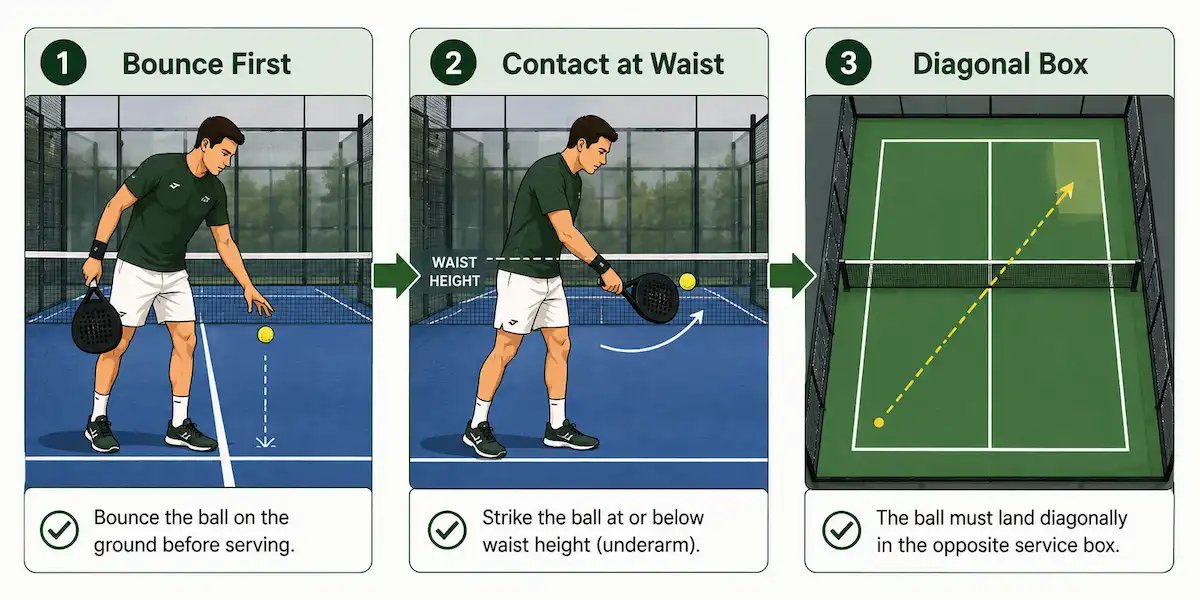
Serving in padel is significantly different from tennis, and beginners commonly make mistakes here. All of the following are required for a legal serve:
- The serve must be underhand, with the ball struck at or below waist height.
- Overhand serves as used in tennis are not permitted in padel.
- The server must bounce the ball once on the ground before striking it; the ball cannot be hit out of the air on a serve.
- The ball must land in the opposite diagonal service box: a right-side server serves to the left service box on the opponent’s side, and vice versa.
- At least one foot must remain behind the service line until the ball is struck; stepping on or over the line before contact is a foot fault.
- A serve that bounces in the correct service box and then hits the back glass is still a legal serve.
- If the served ball touches the net but lands correctly in the service box, this is a let and the serve is replayed with no penalty.
- If the ball bounces correctly in the service box and then touches the metal fencing before its second bounce, it is a fault.
Two faults in a row lose the point, exactly as in tennis.
How a Rally Works
Once the serve has been returned, the ball must touch the ground on your side of the net before you hit it back. The one exception is the volley: you may hit the ball before it bounces at any point during the rally except on the return of serve.
After the ball bounces on the ground on your side, it may then hit any wall or fence and still be in play. This is one of the most important rules to understand as a beginner. You can play the ball off the back wall to return it over the net.
Padel also allows a specific attacking option: a player may deliberately hit their own return into their own glass, sending the ball over the net, even if the ball has not yet bounced on their own side of the court. This is a legal return under FIP rules. The metal fencing works differently: a player cannot deliberately use their own fence in the same way, and hitting a return into your own fence rather than crossing the net correctly loses the point.
Hitting the ball in the air before it bounces, particularly near the net, is a normal and common part of padel play and is encouraged as an attacking tactic.
What Counts as Losing a Point
A point ends and is awarded to the opposing team when any of the following occur:
- The ball bounces twice on your side before being returned.
- The ball is hit outside the court boundaries, over the walls or fencing.
- A player fails to return the ball over the net.
- The ball is hit into a wall or the fence on your own side without first crossing the net correctly.
- A player’s racket or body touches the net during play.
- A double fault on serve: two consecutive failed serve attempts.
Padel vs Tennis: Key Rule Differences
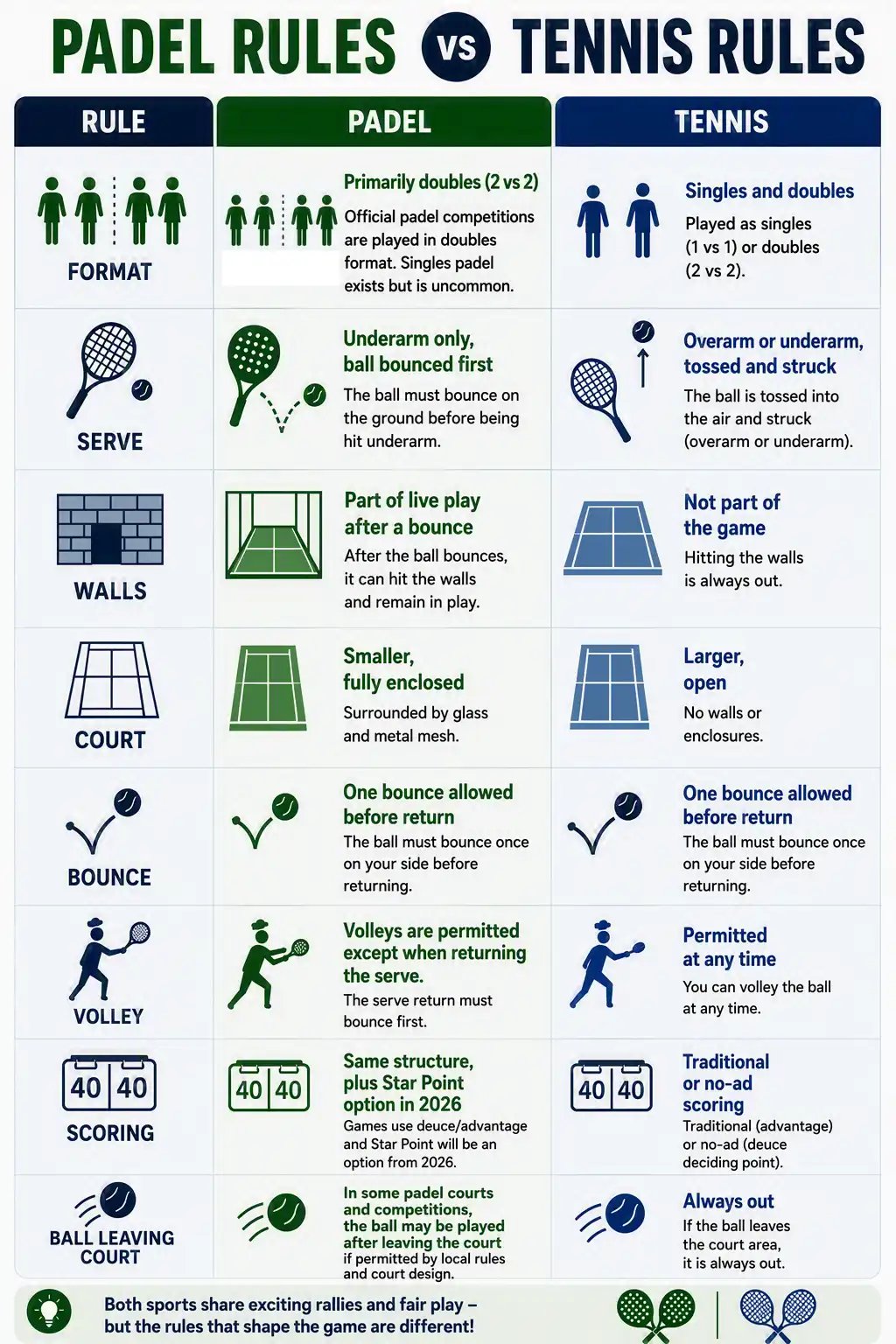
Many UAE players come to padel from a tennis background. For more details, read the article on Padel vs Tennis. The table below highlights the most important differences:
| Rule | Padel | Tennis |
|---|---|---|
| Serve type | Underhand – must bounce first | Overhand – toss and hit |
| Walls | Active part of play after bounce | Not part of the game |
| Court size | 10m x 20m enclosed | 23.8m x 10.97m open |
| Standard format | Doubles only | Singles and doubles |
| Scoring | Same as tennis | Standard tennis |
| Fencing | Can be played off after bounce | Not in play |
Common Beginner Mistakes in the UAE
These are the rules beginners most commonly misunderstand during their first sessions at UAE clubs.
- Many new players instinctively try to serve like in tennis. The padel serve must be underhand, with the ball bouncing on the ground first.
- When an opponent’s ball hits the back wall after bouncing, many beginners stop playing, thinking the point is lost. It is not; the ball is still in play and can be returned.
- During baseline play, beginners sometimes try to volley the ball before it bounces on the ground, which loses the point. The ball must always bounce on the ground on your side before you can return it from the baseline.
- The serve must go diagonally, always to the opposite service box. Serving straight ahead rather than diagonally is a fault.
- Beginners often avoid the walls and try to play purely as in tennis. The walls are a strategic advantage, and learning to play the ball off the back wall is one of the most important skills to develop early.
For more details, read the article Padel Mistakes Beginners Make.

Doubles Positioning and Court Sharing
Padel is always played in doubles, two players per team. Both players share responsibility for covering the court. When your team is at the net, both players stand near the net ready to volley. When your team is at the back of the court, both players cover the baseline area. Maintaining parallel positioning with your partner, staying at the same depth, avoids leaving gaps in the middle of the court. Communication with your partner is essential, particularly for balls coming down the centre of the court which either player could reach.
Quick Reference: Rules Checklist Before You Play
- Serve underhand, bounce first, aim diagonally into the opposite service box.
- During a rally, the ball must bounce on the ground on your side before you return it.
- After bouncing on the ground, the ball may hit any wall and is still in play.
- You may deliberately use your own glass, but not your own fence, to send a return over the net.
- Scoring follows tennis: 15, 30, 40, game, best of 3 sets wins the match.
- Some competitions may use the 2026 Star Point option at deuce; check with the organiser.
For a complete guide to the padel lifestyle across the UAE including seasonal play, injury prevention and community tips, visit the Padel Lifestyle UAE hub.
Frequently Asked Questions
1. What is the difference between padel rules and tennis rules?
The three main differences are: padel serves must be underhand with the ball bouncing first; walls are an active part of play after the ball bounces on the ground; and padel is played almost exclusively in doubles. Scoring is the same as tennis.
2. Can the ball hit the wall in padel?
Yes, but only after it has bounced on the ground first. If the ball hits a wall before bouncing on the ground, the point is lost. After the ground bounce, the ball may hit any wall or fencing on your side and remain in play.
3. How do you serve in padel?
The server bounces the ball once on the ground, then strikes it below waist height, directing it diagonally into the opposite service box. Both feet must remain behind the service line until contact. The serve cannot be overhand.
4. What is a let in padel?
A let occurs when the serve touches the net but still lands correctly in the service box. The serve is replayed with no penalty. A let can also be called to stop play for a safety reason such as a ball rolling onto the court from an adjacent court.
5. What happens at deuce in padel?
At 40-40, a team must win two consecutive points to win the game – first achieving advantage, then the game point. In some UAE club formats a golden point is used instead, where one point decides the game at deuce.
6. Can you volley in padel?
Yes – volleys are permitted at any time during a rally except on the return of serve. Hitting the ball before it bounces is a normal and frequently used tactic, particularly when positioned at the net.
7. Is padel always played in doubles?
Officially yes. The International Padel Federation and Premier Padel competitions are all doubles format. Singles padel exists informally at some clubs but is not part of competitive padel.
8. What is the golden point rule in padel?
The golden point is an alternative to deuce used in some formats including Premier Padel professional events. At 40-40, the receiving team chooses which player receives, and the next single point decides the game. Many UAE clubs use this format for recreational and social play.
9. What happens if the ball goes over the wall in padel?
If the ball exits the court over the walls or fencing after a rally, the point is awarded to the team that hit the last legal shot. This is different from the serve, where hitting the fencing directly is a fault.
10. How many sets are played in a padel match?
Most padel matches are best of 3 sets. The first team to win 2 sets wins the match. Each set is first to 6 games with a 2-game lead, or a tiebreak at 6-6. Tournament formats in the UAE and internationally follow this structure.
Sources
All rules are based on the official regulations of the International Padel Federation (PadelFIP). Padel court and venue information across the UAE should be confirmed directly with each facility. This article was researched and published by the Padel Gameplan Editorial Team for Padel Gameplan, a UAE-based padel research and curation platform serving players across all seven emirates.