
Master the Padel Serve: 7 Proven Techniques to Win More Points in UAE 2026
By the Padel Gameplan Editorial Team | Published: 18 March 2026
The padel serve is one of the most misunderstood shots in the game. Unlike tennis, where the serve is often a dominant attacking weapon, the padel serve operates under strict rules that limit power – yet when executed with correct padel serve technique, it can consistently put opponents under pressure and set up the rest of the rally in your favour.
For players across the UAE – whether picking up a racket for the first time at a Dubai club or looking to sharpen consistency at an Abu Dhabi academy – mastering the serve is a foundational step toward becoming a more complete player. This guide covers the 7 essential padel serve techniques, the rules that govern them, common faults to avoid, and structured drills to build serving consistency.
Coaches commonly recommend that beginners dedicate time to the serve early, as poor serving habits are difficult to correct once they become ingrained.
For a complete overview of padel technique, beginner guides and skill development resources, visit the Learn Padel UAE hub.
Understanding the Padel Serve Rules First
Before covering technique, it is important to understand the official rules governing the padel serve, as set by the International Padel Federation (FIP). Serving illegally leads to faults, double faults, and lost points.
The 5 core padel serve rules:
- The serve must be hit underhand – contact must be made below waist height.
- The server must bounce the ball once before striking it.
- The server must stand behind the baseline, with feet not touching the line at the moment of contact.
- The serve must land diagonally in the opponent’s service box (cross-court).
- After landing in the service box, the ball may hit the back wall and remain in play – but if it contacts the wire fence before landing, the serve is a fault.
Two consecutive faults result in a lost point, just as in tennis. A serve that clips the net and lands correctly in the service box is called a let and is replayed.
For a full breakdown of padel rules, visit the Rules of Padel Tennis guide on this site.
Grip and Stance: The Foundation of Every Good Padel Serve
Before exploring the 7 techniques, players need a solid technical base.
Grip
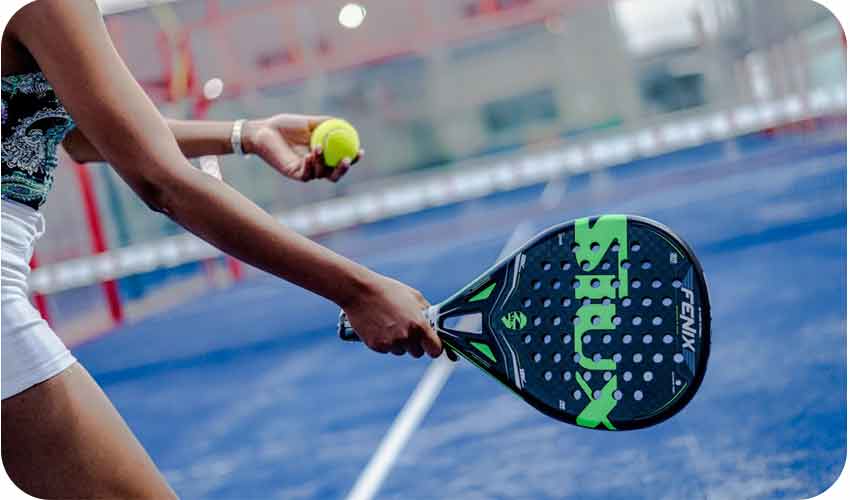
The continental grip is the most widely used grip for padel serving. It provides versatility across serve types – flat, slice, and spin – without requiring a significant grip change between variations. Coaches commonly recommend beginners start with the continental grip and practise it consistently before experimenting with other grips.
Stance
- Stand behind the baseline, feet shoulder-width apart.
- The front foot should point toward the net; the back foot should be parallel to the baseline.
- Knees should be slightly bent to allow fluid weight transfer through the serve.
- The body should face sideways toward the net rather than square-on.
Ball Drop
- Hold the ball at roughly waist height or below.
- Allow it to drop onto the court surface and let it bounce up to your preferred contact zone.
- Consistent ball drop is one of the most commonly noted areas where beginners lose control of their serve.
The 7 Padel Serve Techniques
1. The Flat Padel Serve
What it is: A direct serve with minimal spin, aimed at a clean contact through the ball.
When to use it: Effective early in a match to establish rhythm and simplify the serve motion. Many coaches recommend beginners start here.
How to execute it:
- Set up in the correct stance and hold the racket with a continental grip.
- Drop the ball and allow it to bounce to a comfortable height below the waist.
- Swing through the ball with a flat, firm contact – no brushing or side rotation.
- Aim toward the center or body of the receiver to reduce angles.
- Follow through naturally toward the target.
Key point: Because the flat serve has no spin, opponents can predict the bounce direction more easily. Use it as a control serve rather than an attacking one.
2. The Slice Padel Serve
What it is: A serve that applies sidespin, causing the ball to curve away from the receiver and stay low after bouncing.
When to use it: Widely regarded as one of the most effective serves in padel for experienced beginners and intermediate players. The unpredictable low bounce makes it difficult for receivers to set up a strong return.
How to execute it:
- Use a continental grip and adopt the standard serving stance.
- At contact, angle the racket face slightly outward and brush the side of the ball in a downward arc.
- The motion resembles slicing across the ball rather than hitting through it.
- Direct the serve to the wide corner of the service box to push the receiver off the court.
- Follow through across the body toward the non-dominant hip.
Key point: The slice serve is particularly effective in UAE indoor courts, where the ball tends to stay low after bouncing on smoother surfaces.
3. The Kick Padel Serve (Topspin)
What it is: A serve that applies topspin, producing a higher bounce after landing. This disrupts the receiver’s timing and rhythm.
When to use it: Useful against opponents who prefer to return at a low contact point or who struggle with high-bouncing balls.
How to execute it:
- Set up with a continental grip, positioned slightly further back from the service line than usual.
- Drop the ball and, at contact, brush upward and over the top of the ball.
- The racket moves from low to high through the contact zone, imparting forward and upward spin.
- The ball arcs higher over the net and kicks up sharply off the ground.
- Follow through high and across the body.
Key point: The kick serve requires more timing than the flat serve. Many coaches recommend practising this with wall drills before using it in match play. Coaches commonly recommend combining the kick serve with a flat serve to keep opponents guessing.
4. The Power Padel Serve
What it is: A fast-paced serve prioritising speed over spin, designed to force a weak or rushed return.
When to use it: Against opponents who favour a slow, deliberate warm-up to the rally. Also effective as an occasional first-serve variation to create pressure.
How to execute it:
- Set up slightly closer to the center of the baseline to maximise diagonal angle.
- Drop the ball and make clean, firm contact with a full follow-through.
- Aim deep into the service box rather than for corners – depth matters more than angle with a power serve.
- Transfer weight fully from back to front foot at the moment of contact.
- Follow through fully toward the target.
Key point: Because padel serve rules mandate underhand contact, true “power” is limited compared to tennis. Many players report that accuracy and placement at moderate speed is more effective than chasing maximum power.
5. The Lob Padel Serve
What it is: A high-arching serve that travels deep toward the back of the service box, pushing the receiver back and disrupting their positioning.
When to use it: An effective variation when opponents are attempting to crowd the return or when you need to reset your serving pattern after a predictable sequence.
How to execute it:
- Adopt a standard serving stance.
- At contact, open the racket face and hit slightly under and through the ball to generate height.
- Direct the ball on a high arc that lands deep in the service box.
- After landing, the ball may continue toward the back wall – a significant tactical element in padel.
- Follow through smoothly upward.
Key point: The lob serve forces the receiver to step back, often creating an opportunity to move quickly to the net. It is commonly used in combination with flatter serves to vary the receiver’s read.
6. The Body Padel Serve
What it is: A serve directed directly at the body of the receiver, limiting their ability to step into a return and reducing their shot angle.
When to use it: Highly effective against receivers who favour wide positioning, or as a disruption serve after establishing a wide-serve pattern.
How to execute it:
- Set up in the standard stance.
- Identify the receiver’s body position – aim for their dominant shoulder or hip.
- Serve with moderate pace, flat or with a slight slice.
- The goal is to reduce their swing space and force an awkward, cramped return.
- Follow through toward the target.
Key point: The body serve is less about power and more about placement. Coaches commonly recommend it as an intermediate-level variation once flat and slice serves are consistent.
7. The Wide (Corner) Padel Serve
What it is: A serve aimed deep toward the side corner of the service box, pulling the receiver wide and creating space in the centre of the court.
When to use it: When the net player is ready to intercept a return toward the middle – the wide serve opens the court on the far side. Also effective to draw a weak, stretched return from an unprepared receiver.
How to execute it:
- Position slightly toward the sideline to increase the angle available.
- Aim the serve toward the far corner of the diagonal service box.
- Combine with a slice or flat motion to keep the ball low.
- As soon as the serve is struck, begin moving toward a central court position to cover the return.
- Communicate with your partner – the open court created by a wide serve requires coordinated coverage.
Key point: Many beginners report difficulty controlling the wide angle when starting out. Coaches commonly recommend practising with target cones placed at the service box corner before integrating this serve into match play.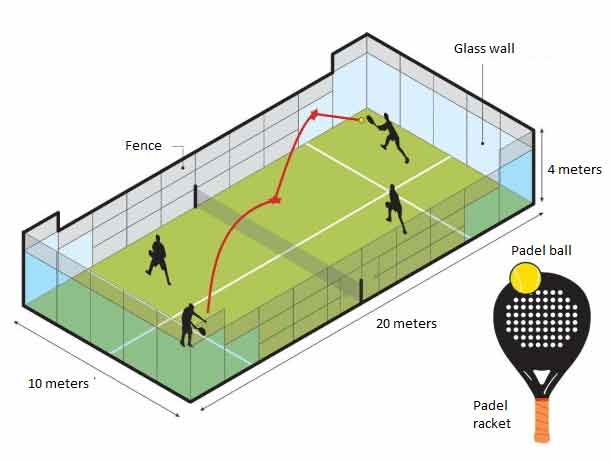
Padel Serve Comparison Table
Some product mentions may include affiliate links.
| Serve Type | Spin | Bounce | Best Used Against | Difficulty Level |
|---|---|---|---|---|
| Flat | None | Predictable, direct | Any receiver | Beginner |
| Slice | Sidespin | Low, curving | Receivers who like high balls | Beginner – Intermediate |
| Kick (Topspin) | Topspin | High, kicking | Low-contact returners | Intermediate |
| Power | Minimal | Fast, deep | Slower returning opponents | Intermediate |
| Lob | Minimal | Deep, high arc | Receivers crowding the return | Beginner – Intermediate |
| Body | Flat or slight slice | Direct to body | Wide-positioned receivers | Intermediate |
| Wide (Corner) | Flat or slice | Angled, low | Central or static receivers | Intermediate |
Common Padel Serve Faults and How to Fix Them
Understanding what goes wrong is as important as understanding technique. Below are the most frequently observed serve errors in beginner and intermediate play.
1. Serving above the waist Coaches commonly flag this as the most common beginner fault. Ensure the point of contact is clearly below the hip line. If in doubt, serve lower.
2. Foot fault (stepping on or over the baseline) Both feet must remain behind the baseline at the moment of contact. Many players instinctively step forward during the swing. Practise with a cone placed on the service line as a visual reminder.
3. Inconsistent ball drop A variable ball drop leads to inconsistent contact height and direction. Many coaches recommend practising the ball drop motion in isolation – without swinging the racket – to build a repeatable pattern.
4. Serving into the wrong service box The serve must land diagonally across the net. Beginners sometimes lose track of the required diagonal direction during match pressure. Walk through the court positioning deliberately before each serving session.
5. Serving into the wire fence before the bounce If the ball hits the fence of the service box before landing on the ground, the serve is a fault. This often occurs when the lob serve is used with too steep an angle. Reduce height and aim deeper.
Padel Serve Drills for UAE Players
The following drills are commonly used by padel coaches to build serving consistency. These can be practised at most padel courts across Dubai, Abu Dhabi, Sharjah, Ras Al Khaimah, and other UAE venues.
Drill 1 – Target Cone Accuracy Place cones in three positions within the service box: center, wide corner, and body line. Serve sets of 10 toward each target, tracking accuracy. This drill builds placement consistency across all 7 serve types.
Drill 2 – Serve Progression Steps Begin serving from a position halfway between the net and the baseline. Gradually step back one meter at each round until reaching the correct baseline position. This builds confidence in serve mechanics before adding the full serving distance.
Drill 3 – Alternating Serve Sequences Alternate deliberately between serve types across consecutive serves – flat, then slice, then body serve – to build the ability to vary serve selection in match conditions. Many players report that practising deliberate variation improves serve disguise significantly.
Drill 4 – Serve and Move After each serve, immediately move toward the net. This trains the serve-and-approach pattern that is standard in padel doubles tactics. The serve is not the end of the point – it is the beginning of the rally setup.
For additional technique and drilling guidance, refer to the How to Play Padel Tennis guide.

Serving Strategy in UAE Doubles Play
Because padel is almost exclusively played as doubles, the serve must also be understood as a team tactical tool, not just an individual shot.
- Communicate with your partner before each serve. The serving player and the net player must align on where the serve is aimed and what coverage pattern follows.
- Use the wide serve to create net opportunities. A wide serve that pulls the receiver out wide often results in a weak return that the net player can intercept.
- Vary serve direction regularly. Many players report that predictable serving patterns allow receivers to set up early and take control of the return.
- Serve deep into the service box. Short serves that land near the service line are easier to attack. Aim for depth to keep the receiver behind the baseline.
For a complete directory of padel venues across all seven emirates, visit the Padel Courts UAE hub.
For broader context on doubles play and club options across the UAE, see the UAE Venue Guide for details on courts where supervised practice and coaching are available.