Padel Shots Explained: The Complete Guide for UAE Players (2026)
By the Padel Gameplan Editorial Team | Published: 21 March 2026
Padel has a specific shot vocabulary. Every shot has a name, a purpose, and a situation where it works – and knowing the difference between a bandeja and a vibora, or understanding when to lob instead of smash, is what separates players who improve from those who plateau after a few months.
This guide covers every major padel shot from the ground up. Whether this is your first time hearing terms like chiquita or bajada, or you have been playing for a year and want to understand the mechanics behind shots you already attempt, this article covers the full picture – from beginner essentials to intermediate technique, in the context of how the game is actually played on UAE courts.
For a complete overview of padel technique, beginner guides and skill development resources, visit the Learn Padel UAE hub.
What Are the Main Padel Shots?
Padel has ten core shots: the serve, lob, smash, bandeja, vibora, chiquita, volley, bajada, wall shot, and drop volley. Complete beginners should focus on the serve, lob, smash, and basic volley first. Intermediate players add the bandeja, chiquita, and bajada. The vibora and advanced net touches come with structured coaching and consistent court time.
Why Padel Shots Are Different from Other Racket Sports
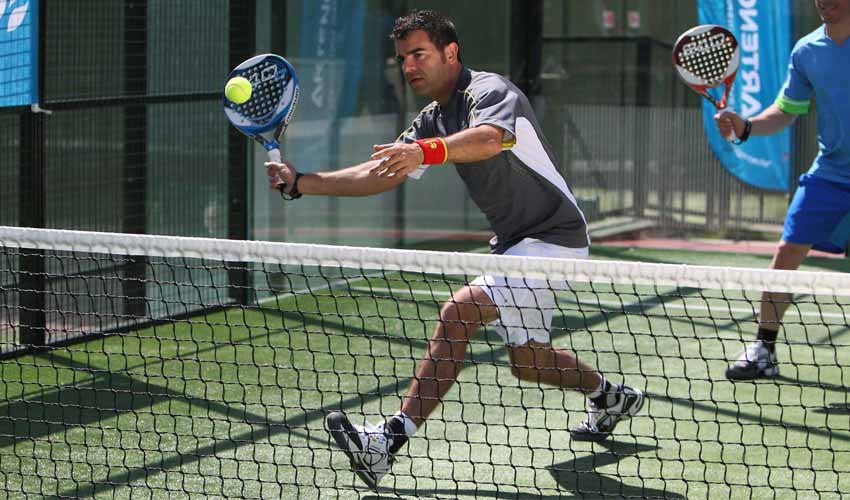
Players coming from tennis, squash, or badminton often assume the shot patterns transfer. Some do – the overhead motion in tennis helps with the smash – but padel has mechanics that exist nowhere else in racket sports.
The glass walls change everything. In padel, the ball is allowed to bounce off the back and side glass before being played. Some shots, such as the bajada and wall shot, are built entirely around the glass. Others, like the smash, are often aimed deliberately at the glass rather than the floor. A player who tries to win every point by hitting through the court, the way a tennis player might, will struggle in padel.
The court is also smaller and the game is exclusively doubles at competitive level. This means court positioning and shot selection matter more than power. Many players in UAE beginner sessions develop the habit of hitting hard when the correct play is to lob, reset, and wait for a better opportunity.
Understanding shot purpose – not just shot mechanics – is the foundation of padel improvement.
The Recommended Learning Order
Before covering each shot in detail, it helps to know what to prioritise. The following order reflects the progression commonly used by coaches in UAE padel academies:
Stage 1 – Essential (first 1-3 months)
- Serve
- Lob
- Smash
- Basic volley
Stage 2 – Developing (3-9 months)
- Chiquita
- Bandeja
- Return of serve positioning
- Wall shot / playing off the glass
Stage 3 – Intermediate (9+ months or with coaching)
- Vibora
- Bajada
- Angled volley
- Drop volley
Most beginners try to skip to Stage 3 shots too early. A clean lob and a reliable bandeja are worth far more in a match than an inconsistent vibora.
Attacking Shots
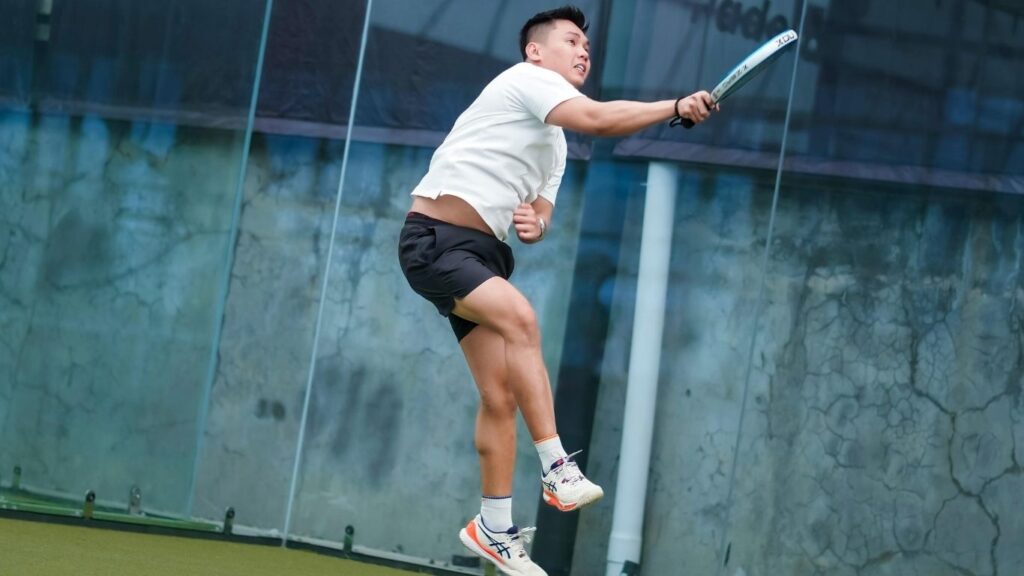
Attacking shots are played when the player has a positional advantage – usually at or near the net, or when the opponent’s ball sits high enough to punish.
Padel Smash (Remate)
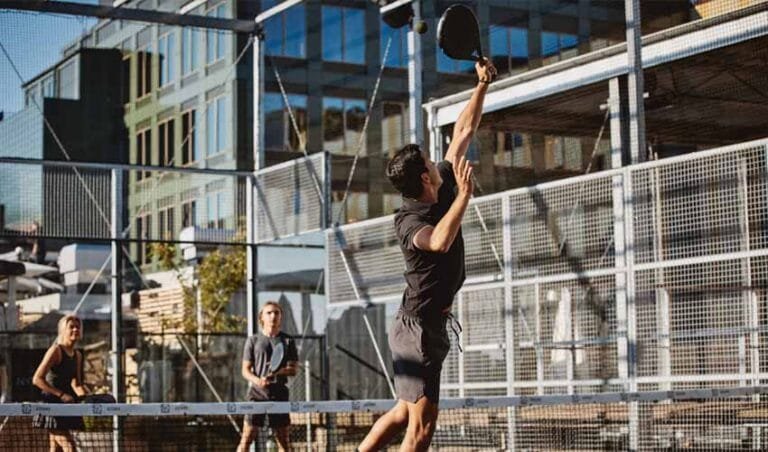
The smash is the primary finishing shot in padel. It is an overhead strike played when the ball is high and the player has time to set up. In tennis, a smash is aimed at the floor. In padel, a smash is often aimed at the back glass or side glass – because off the glass, the ball can bounce in directions that make it unreturnable even without full power.
There are three main smash variations that come up in UAE club play:
- Smash to the floor (remate directo): The most straightforward version. Useful when the player has a high, central ball with opponents out of position.
- Smash into the back glass (remate por tres): Aimed at the back glass so it rebounds sideways or into a corner. Effective and commonly used at intermediate level.
- Smash into the side glass (remate por cuatro): Aimed at the side glass first. Generates an angle that is very difficult to cover.
When to use it: When the opponent plays a weak or short lob and the player is at or near the net with time to prepare.
Common beginner mistake: Trying to smash every overhead. Many situations – particularly when pushed back or under time pressure – call for a bandeja instead.
Difficulty: Beginner to intermediate. The basic floor smash is accessible within the first few months. Glass smashes require consistent technique and court awareness.
Bandeja
The bandeja (Spanish for “tray”) is the shot that separates beginner padel players from developing ones. It is a controlled overhead played when a full smash is not possible – typically when a lob forces the player to retreat or when there is not enough time to set up properly.
The bandeja is not a defensive shot. It is a controlled attacking shot that keeps the player at the net, maintains pressure, and waits for a better smash opportunity. The grip is looser than a smash, the swing is flatter, and the goal is precision and placement rather than power.
When to use it: When retreating from the net due to a lob, when a full smash setup is not possible, or when the player wants to keep the rally going from a high-ball position without risking an error.
Common beginner mistake: Attempting a full smash in a bandeja situation, which leads to errors or poor placement.
Difficulty: Intermediate. This shot requires understanding of when not to smash, which is a tactical concept beginners typically develop after several months of play.
Vibora
The vibora is an overhead shot struck with sidespin. Where the bandeja uses a flat contact, the vibora brushes across the ball to generate spin. After the glass, the ball stays low and kicks sideways at an awkward angle – difficult to read and harder to return.
The vibora is one of the most distinctive shots in padel and one that differentiates intermediate from advanced players. At UAE clubs, players often see the vibora from coaches or stronger opponents and attempt to replicate it before the mechanics are consistent, leading to high error rates.
When to use it: When in a mid-court overhead position and wanting to attack with spin rather than power. Effective when opponents have taken a strong baseline position.
Common beginner mistake: Using the vibora before the bandeja is consistent. The bandeja should come first.
Difficulty: Intermediate to advanced. Reliable vibora technique typically requires structured coaching and significant court time.
Bajada
The bajada is the counterattack off the back glass. When an opponent’s smash hits the back glass and the ball drops to a manageable height, the bajada turns a defensive position into an attack. Rather than lobbing, the player drives the ball back aggressively.
The bajada requires precise timing. The ball needs to drop to the right height before contact – too early and the ball is still too fast, too late and the opportunity is gone.
When to use it: When the ball drops off the back glass at waist height or below and the player has enough time to set up an attacking stroke.
Common beginner mistake: Attempting the bajada when the ball is still moving too fast off the glass. The lob is a safer choice in most beginner situations.
Difficulty: Intermediate. Timing and reading the glass rebound are the key challenges.
Defensive Shots
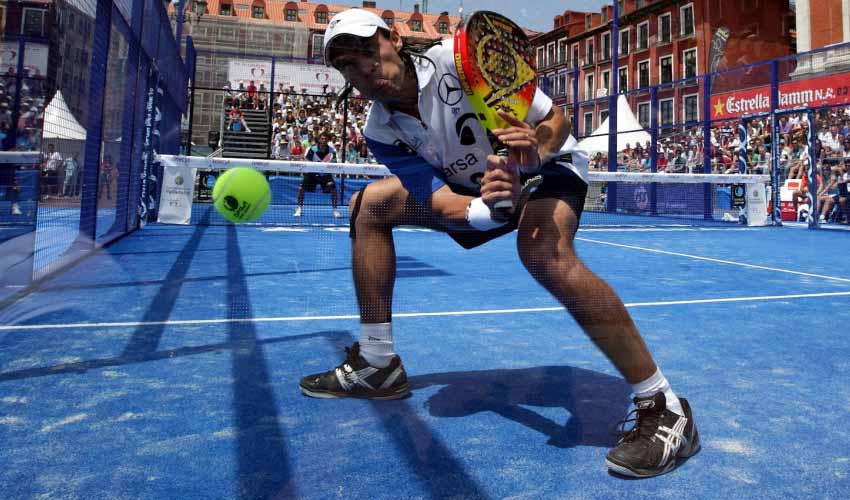
Defensive shots are used under pressure – when opponents are at the net, when the ball is fast and low, or when the player needs to reset court position.
Padel Lob
The lob is the most important shot in padel for beginners and remains essential at all levels. A well-executed lob over the net players forces them to retreat, resets the balance of the rally, and gives the lobbing team time to move forward. Most beginner rallies in UAE clubs follow a lob-and-smash rhythm for extended periods.
A good padel lob is high enough that opponents cannot smash aggressively, deep enough to push them to the back wall, and controlled enough to land in the court. Many beginner lobs are too short, landing in a position that invites a comfortable smash rather than forcing a difficult one.
When to use it: Whenever positioned at the back of the court with opponents at the net. Also as a reset when under pressure anywhere on the court.
Common beginner mistake: Lobbing too short or too flat, which gives the opponent an easy smash.
Difficulty: Beginner. One of the first shots to develop, and one that directly improves match performance.
Chiquita
The chiquita is a low, cross-court shot played at the net when the ball is fast and at a difficult height – typically around knee to waist level. Rather than trying to attack, the chiquita keeps the ball low, forces opponents to volley upward from below the net height, and resets the point on more neutral terms.
The chiquita is the standard response to a hard, flat ball coming at the player near the net when there is no time to set up. It is a controlled shot, not a defensive panic, and when executed well it shifts the pressure back to the opponents.
When to use it: When receiving a fast, low ball at the net with limited preparation time.
Common beginner mistake: Trying to attack or smash a fast, low ball instead of using the chiquita to reset the rally.
Difficulty: Beginner to intermediate. The concept is straightforward; reliable execution under pressure takes practice.
Wall Shot (Playing Off the Back Glass)
One of the aspects of padel that surprises players coming from other sports is that letting the ball hit the back glass and then playing it is not only legal – it is a standard and often strategic part of the game.
When a smash or hard drive hits the back glass and rebounds, the player has the option to play the ball off the bounce. Positioning is critical: standing too close to the glass reduces reaction time, while the correct position – a few steps off the glass – gives enough space to read the rebound and make a clean shot.
In UAE summer conditions, the glass can play differently depending on court surfaces and indoor versus outdoor settings. Players who spend time practising glass rebounds at local clubs adapt faster.
When to use it: When the ball passes the player and hits the back glass, or when the glass rebound creates a better shot opportunity than playing the ball before it reaches the wall.
Common beginner mistake: Moving too close to the back glass in anticipation, which removes recovery space.
Difficulty: Beginner to intermediate. Reading the rebound takes adjustment but is learnable quickly with court time.
Serve and Return
Padel Serve
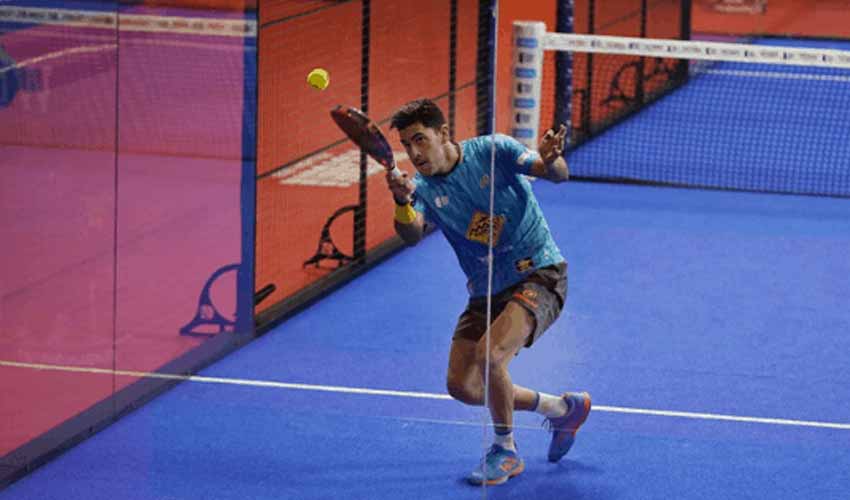
The padel serve is underhand and must bounce once before contact. After the bounce, the player strikes the ball below hip height. The ball must land in the diagonally opposite service box – the same cross-court pattern as tennis.
Unlike tennis, the serve in padel is not a dominant weapon. It is a point starter. At beginner and intermediate level, a consistent, well-placed serve matters more than speed or spin. Common targets in UAE club play are wide to the body, into the T, or low to the backhand.
Two serve attempts are allowed, same as tennis. A ball that hits the net and lands in the correct service box is a let and is replayed.
Key rules:
- The server must stand behind the service line
- The ball must be bounced before contact – no toss serve
- The ball must be struck below hip height
- The server’s feet must not cross the centre line during the serve
Common beginner mistake: Focusing on power rather than placement. A fast serve that lands in the middle of the box is easier to attack than a well-placed serve at medium pace.
Difficulty: Beginner. Mechanics are straightforward. Placement and consistency develop over months.
Return of Serve
The return of serve is the first shot the receiving team plays, and positioning is as important as technique. The standard return position is just inside the service box, not at the baseline – close enough to attack a weak serve, far enough back to handle a fast one.
The most common return choices are a lob (to reset and take net position), a chiquita (to keep the ball low and apply pressure), or a drive return when the serve is weak. Lob returns are often recommended for beginners because they immediately force the serving team away from the net.
Common beginner mistake: Standing too far back in the court, reducing reaction time and limiting shot options.
Difficulty: Beginner. Understanding positioning comes before working on shot selection for the return.
Net Game
Volley
In padel doubles, both players on the attacking team aim to hold the net position, volleying to maintain pressure and keep opponents in the back court. A clean volley – struck before the ball bounces – is one of the most effective ways to control a rally.
The basic block volley is the first version beginners learn: a firm, compact swing that redirects the ball back at a downward angle. The punch volley adds more pace. The angled volley redirects the ball sharply to the side, forcing opponents to cover a wider area.
When to use it: When positioned at the net and the opponent’s ball is playable before it bounces.
Common beginner mistake: Backing away from the net when an attacking ball comes, rather than holding position and blocking.
Difficulty: Beginner. The block volley is accessible early. Placement and angles develop over time.
Drop Volley
The drop volley is a soft touch at the net, played so the ball barely clears the net and dies before the opponent can reach it. It requires feel, timing, and the awareness to recognise when opponents are too deep to retrieve a short ball.
When to use it: When opponents are caught well behind the baseline and the player has a comfortable ball at the net.
Difficulty: Advanced. Not a priority for beginners or early intermediates.
Shot Reference Table
| Shot | Type | When to Use | Difficulty |
|---|---|---|---|
| Serve | Serve | Start of every point | Beginner |
| Lob | Defensive | Under pressure, to reset | Beginner |
| Basic Volley | Net | At the net, before bounce | Beginner |
| Smash | Attacking | High ball at or near net | Beginner-Intermediate |
| Chiquita | Defensive | Fast low ball at net | Beginner-Intermediate |
| Wall Shot | Defensive | Ball rebounds off glass | Beginner-Intermediate |
| Return of Serve | Return | Every receiving point | Beginner |
| Bandeja | Attacking | Overhead under time pressure | Intermediate |
| Bajada | Attacking | Glass rebound at manageable height | Intermediate |
| Vibora | Attacking | Overhead with spin, mid-court | Intermediate-Advanced |
| Drop Volley | Net | Opponents deep, easy net ball | Advanced |
Practising Padel Shots in the UAE
Most padel clubs across Dubai, Abu Dhabi, Sharjah, and Ras Al Khaimah offer beginner group clinics and private coaching sessions where shot technique is covered systematically. Group clinics typically focus on Stage 1 and Stage 2 shots and are an accessible starting point for new players. Private lessons allow work on specific shots – particularly the bandeja, vibora, and bajada, which benefit most from individual coaching feedback.
For players at intermediate level, asking a coach specifically to assess shot selection – not just shot mechanics – is often more productive than drilling a single technique. Knowing when to use each shot is as important as knowing how.
For a complete guide to padel coaching programmes and kids classes across the UAE, visit the Padel Coaching UAE hub.