Looking for a padel game online to play for free? Rally Arena lets you play a simple browser-based padel game without downloading an app or creating an account.
If you’re also interested in playing padel on a real court, this UK-focused 2026 guide goes further. Below the game, you’ll find 7 padel tips for beginners, a quick explanation of how to play padel, and practical guidance on the rackets, shoes, balls and accessories new players may need.
Play Rally Arena below, then continue to the beginner guide to learn more about taking your game from the screen to the court.
How to Play
Controls
Mouse or touchscreen
Move the paddle left and right
Avoid missing the ball
Arrow keys – keyboard alternative for desktop
W / A / S / D – keyboard option on desktop
Pause button
Stop and resume the match at any time
Match format
Best of 3 sets format
Rally-style play against an AI opponent
Sound can be toggled on or off at any point
Choose a difficulty level before pressing Start
Difficulty
Beginner (Slower) – First-time players or those new to padel
Club (Moderate) – Regular club players comfortable with padel basics
Advanced (Faster) – Experienced players seeking a demanding rally
SHARPEN YOUR PADEL SKILLS
PLAY. PRACTICE. IMPROVE.
Padel GamePlan · Rally Arena
PADEL GAMEPLANRally Arena
MODEMATCH
BEST0
POWERREADY
Move with mouse, touch, arrows or W A S D · Space = Power Shot
GAME SETTINGSOptions
Difficulty
Sound
Match Length
Actions
BEAT YOUR BEST RALLY AND IMPROVE CONSISTENCY
KEEP PLAYING. GET BETTER.
How to Play Padel: Quick Beginner Guide
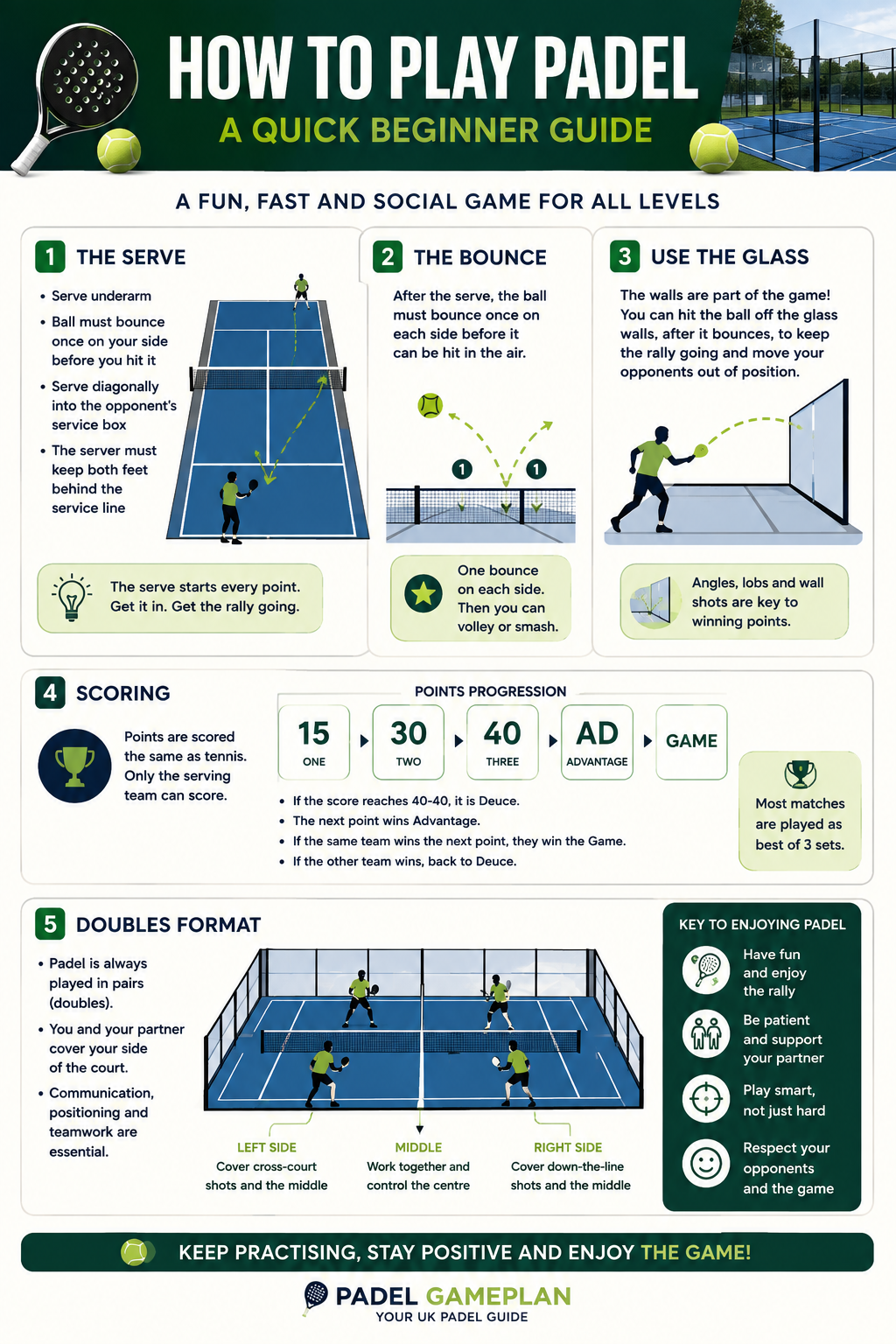
Padel is normally played as doubles on an enclosed court with glass and mesh walls. The scoring system is similar to tennis, but the smaller court, underarm serve and use of the walls create a different style of play.
A point starts with an underarm serve into the opposite service box. After the return, players can volley the ball or allow it to bounce before hitting it. Once the ball has bounced on your side, it may rebound from the glass and still be returned before a second bounce.
For beginners, the main objective is usually not to hit the ball as hard as possible. Keeping the ball in play, moving with your partner and learning when to move toward the net are better starting points.
Basic Padel Rules at a Glance
Rule
Beginner Explanation
Players
Usually 2 vs 2
Serve
Underarm, after bouncing the ball
Scoring
Similar to tennis
Walls
The ball can rebound from the glass after bouncing
Second bounce
The point is lost if the ball bounces twice
Net play
Controlling the net is an important part of padel
Racket
Solid, stringless padel racket
For a more detailed explanation of scoring, serving and court rules, see the Padel Rules UK 2026 guide.
7 Padel Tips for Beginners
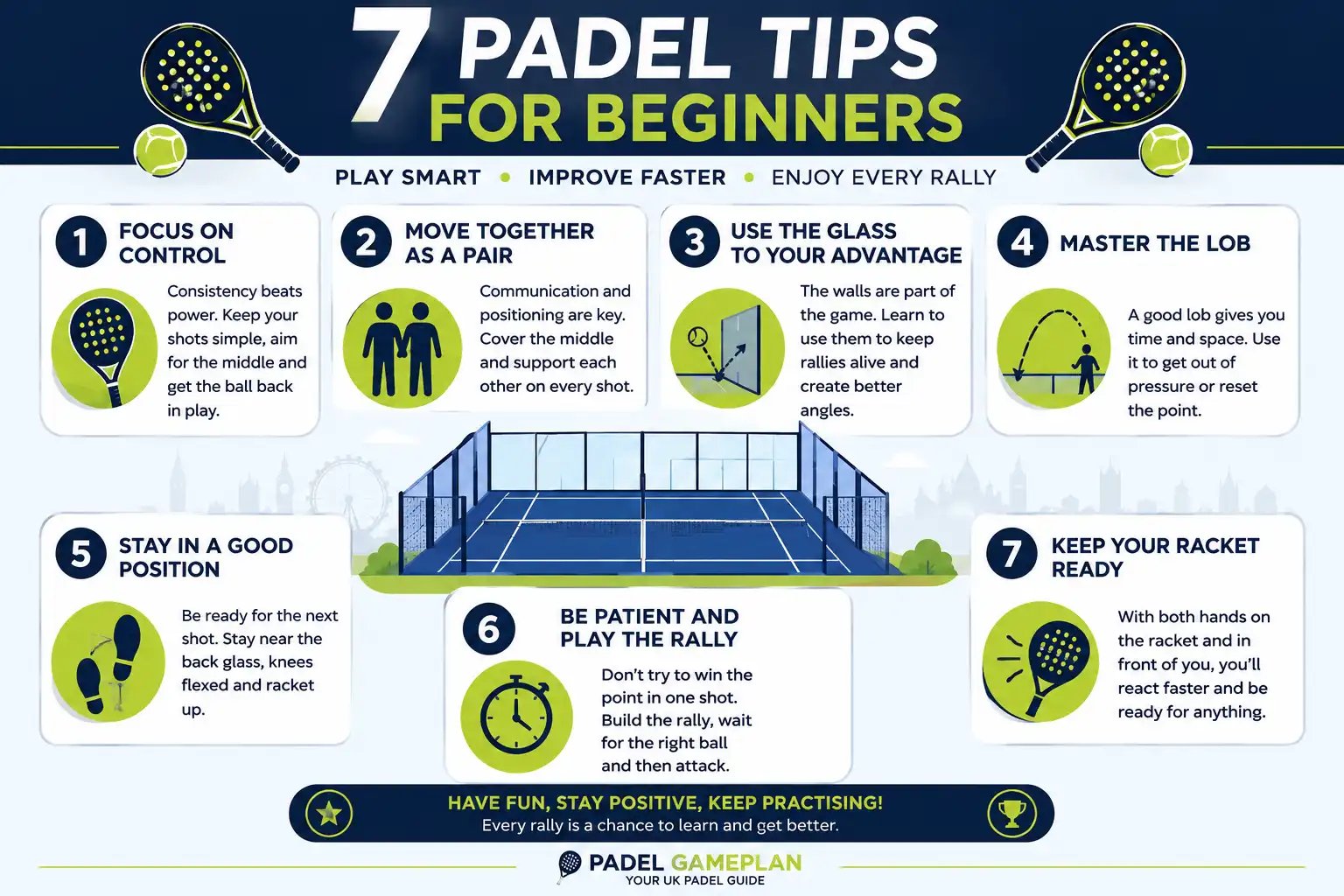
Learning padel is easier when the focus is on control, positioning and consistency rather than trying to hit every ball with maximum power. These padel tips for beginners cover some of the most useful habits to develop during your first games.
1. Prioritise Control Over Power
One of the most common beginner mistakes is trying to hit the ball too hard. Padel rewards consistency, placement and patience.
Aim to keep the ball in play and make your opponents hit another shot. Power becomes more useful once control and positioning improve.
2. Move With Your Partner
Padel is normally played as doubles, so court positioning should be coordinated.
When your partner moves forward, move forward with them. When they retreat, move back as well. Keeping a similar depth helps reduce gaps that opponents can target.
3. Learn to Use the Glass
The glass walls are one of the biggest differences between padel and tennis.
If the ball bounces on your side before hitting the back glass, it can still be returned before the second bounce. Beginners often try to hit these balls too early instead of allowing the rebound to create more time.
Start by practising simple back-glass rebounds at a comfortable pace.
4. Use the Lob to Regain the Net
The lob is one of the most useful shots in padel.
A controlled lob can push opponents away from the net and give your team time to move forward. It does not need to be hit particularly hard – height and depth are usually more important.
5. Avoid Staying at the Back of the Court
The net is an important attacking position in padel.
Beginners often remain close to the back glass because it feels safer. Once an opportunity appears, move forward with your partner and try to establish a position near the net.
Avoid rushing forward after every shot. Move when the ball gives you enough time.
6. Keep Your Racket Ready
Fast exchanges near the net leave little time for large swings.
Keep the racket in front of your body in a neutral ready position between shots. This makes it easier to react to volleys aimed at either side.
7. Use Suitable Footwear and Equipment
Running shoes are designed mainly for forward movement, while padel involves frequent lateral movement, stopping and changing direction.
Court-specific footwear can provide better support for this type of movement. A beginner-friendly racket with a manageable weight and forgiving sweet spot can also make early sessions easier.
Later in this guide, the equipment section explains what UK beginners should look for when choosing a racket, shoes, balls and accessories.
What Equipment Do You Need for Padel?
Some product mentions may include affiliate links.
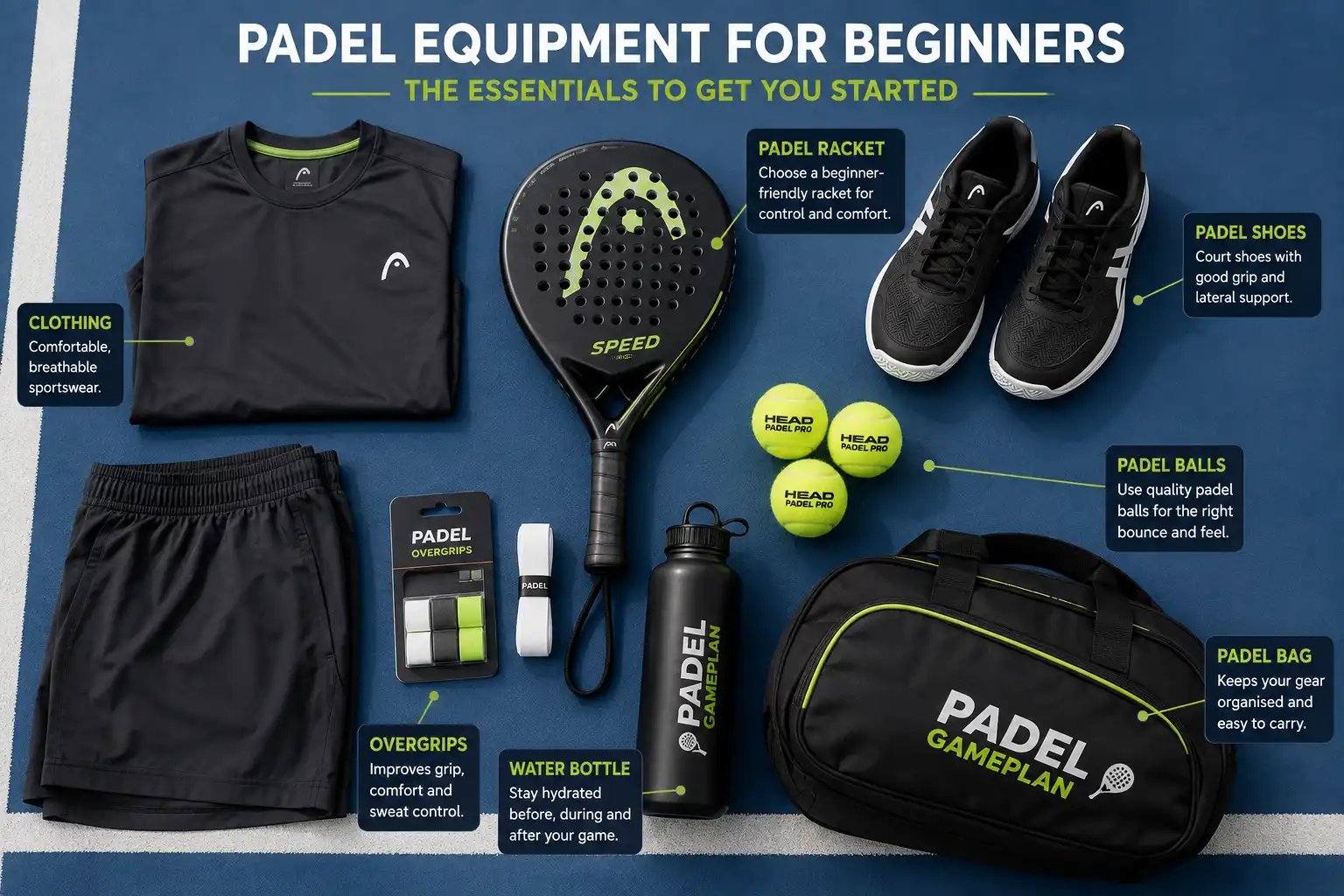
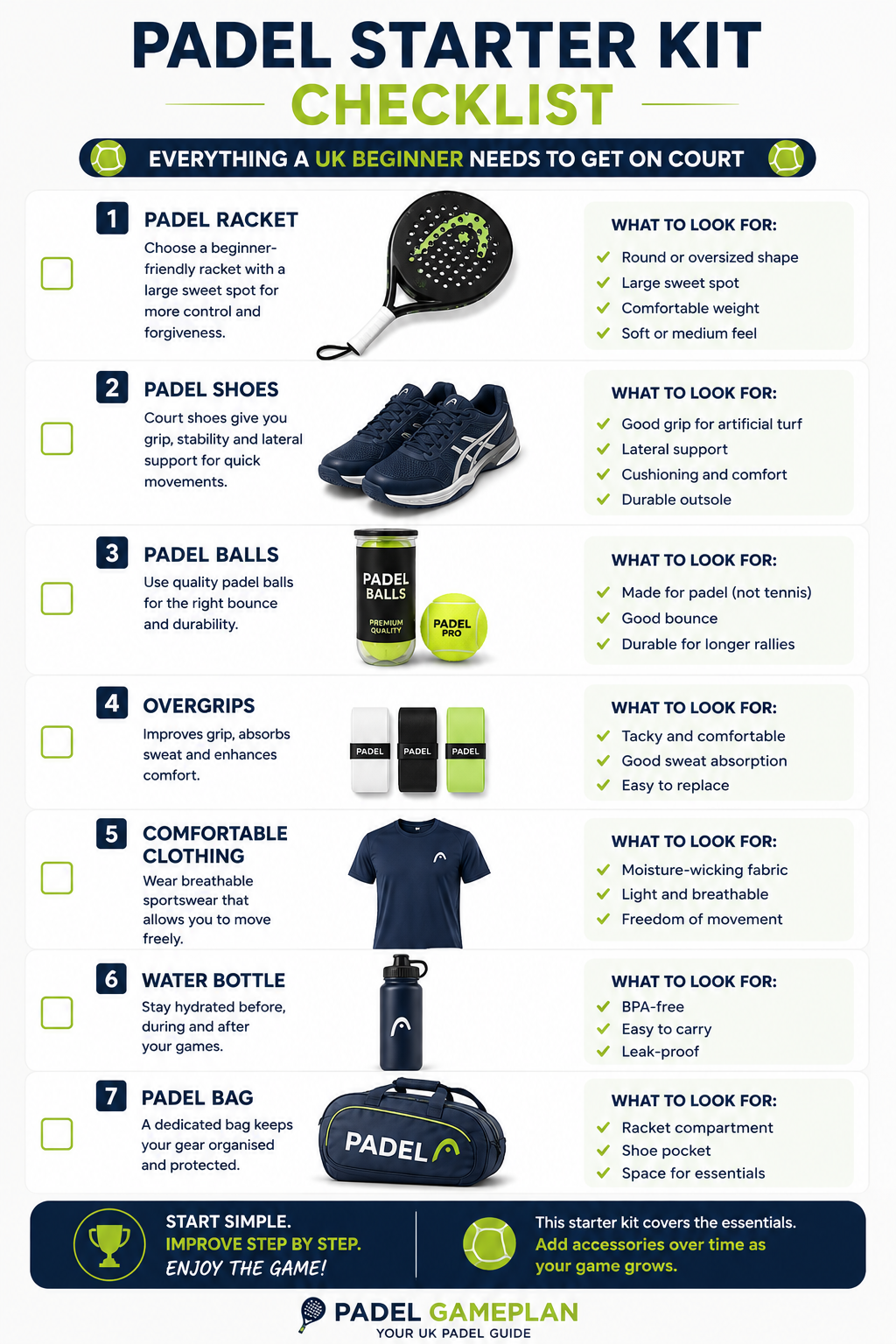
Beginners do not need much equipment to start playing padel. For most UK players, the main priorities are a suitable racket, supportive court footwear and comfortable sports clothing. Balls, overgrips and a bag can then be added depending on how often you play and whether your venue provides equipment.
The sections below explain what to look for in each item and which accessories are worth considering later.
If you are buying several items for the first time, the Padel Starter Kit UK 2026 guide brings the main beginner essentials together in one place.
How to Choose a Beginner Padel Racket
Choosing the right racket can make the first few months of padel more comfortable. Beginners generally benefit from a racket that is easy to control rather than one designed mainly for maximum power.
What Should Beginners Look For?
For a first racket, consider:
Round shape – commonly associated with a larger sweet spot and easier control.
Manageable weight – a lighter or moderate-weight racket can be easier to manoeuvre.
Soft or medium feel – often more forgiving than a very hard racket.
Large sweet spot – useful when contact is not yet consistently centred.
Control-focused balance – usually easier for new players than a strongly head-heavy racket.
The best choice still depends on strength, playing frequency and personal preference, but most beginners do not need an advanced power racket at the start.
For new players, the priority should be a racket that feels easy to control and comfortable enough to use regularly.
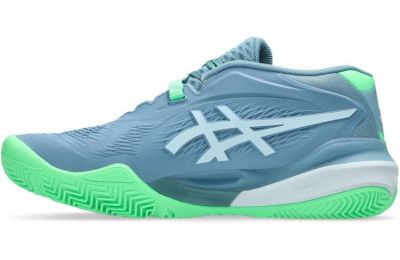
Do Beginners Need Padel Shoes?
Beginners can sometimes start in suitable tennis or court shoes, but running shoes are generally not the best choice for padel because the sport involves frequent lateral movement, quick stops and changes of direction.
Padel-specific shoes are designed for court movement and usually focus on grip, stability and support. For players who expect to play regularly, they are a sensible early upgrade.
What to Look For in Padel Shoes
When choosing shoes, consider:
Lateral support – useful for side-to-side movement.
Court grip – enough traction for the surface without feeling excessively sticky.
Comfort – especially important if sessions last 60 to 90 minutes.
Fit – the foot should feel secure without excessive pressure.
Durability – frequent court use can wear unsuitable soles quickly.
Beginners do not necessarily need the most expensive model. A comfortable shoe designed for padel or tennis can be a better starting point than a general running shoe.
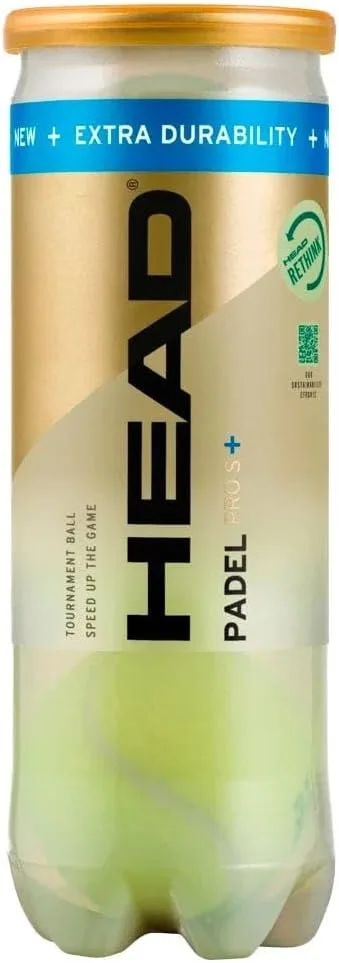
Padel balls look similar to tennis balls, but they are designed specifically for padel and normally have slightly different pressure and bounce characteristics.
For beginners, the simplest option is to use standard padel balls from a recognised brand rather than trying to substitute regular tennis balls.
What to Look For in Padel Balls
When buying padel balls, consider:
Designed specifically for padel – check that the balls are labelled for padel rather than standard tennis.
Consistent bounce – useful for practice and regular club games.
Durability – ball pressure gradually drops with use, so replacement frequency matters for regular players.
Pack size – tubes of three are common and practical for most recreational sessions.
Players who only attend organised sessions may find that balls are already provided. If you play independently or practise regularly, keeping your own tube of padel balls is useful.
If you play frequently and want to extend the usable life of opened balls, the Best Padel Ball Pressurizer UK 2026 guide explains how pressurizers work and who they are most useful for.
Useful Padel Accessories for Beginners
Once you have a racket and suitable shoes, a few simple accessories can make regular padel sessions more convenient. Beginners do not need to buy everything at once, so it is usually better to start with inexpensive items that solve a practical problem.
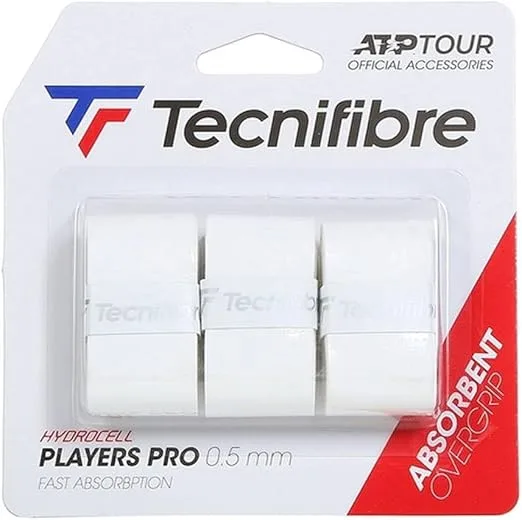
Padel Overgrips
An overgrip wraps around the existing racket handle and can improve comfort and grip.
They are inexpensive, easy to replace and useful when the handle starts to feel worn or slippery. Some players also add more than one overgrip to slightly increase the handle thickness.
Padel Bag
A dedicated padel bag is optional for beginners, but it becomes useful once you regularly carry a racket, shoes, balls and small accessories.
A few inexpensive extras can improve comfort during regular sessions, such as a towel, wristbands or spare socks. These are personal preferences rather than essential padel equipment.
A Simple Padel Starter Kit for UK Beginners
A beginner padel kit should focus on the items needed to play comfortably, while leaving optional accessories until later. For most UK beginners, that means prioritising a racket, suitable court shoes and basic sportswear, then adding balls, overgrips and a bag as needed.
The checklist below shows which items are essential, useful or optional for a first setup.
Beginner Padel Kit at a Glance
Item
Priority
Buy Immediately?
Why
Padel racket
Essential
Yes
Needed to play
Court shoes
High
Recommended
Better suited to lateral movement
Padel balls
Medium
Useful
Helpful for independent games and practice
Overgrips
Medium
Useful
Cheap and easy to replace
Sports clothing
Essential
Yes
Comfortable movement
Water bottle
High
Yes
Useful during sessions
Padel bag
Low-Medium
Optional
More useful once carrying several items
Ball pressurizer
Low
Optional
Mainly useful for regular players
If you prefer to compare everything in one place, see thePadel Starter Kit UK 2026 guide for a more complete beginner equipment setup.
How Much Does It Cost to Start Playing Padel in the UK?
The cost of starting padel in the UK depends mainly on whether you buy your own equipment immediately or hire a racket for your first few sessions.
Beginners can usually keep initial costs lower by booking a court with friends, hiring a racket where available and delaying optional accessories until they know they will continue playing.
Typical Beginner Costs
Expense
Lower-Cost Approach
Higher-Cost Approach
Padel racket
Hire first or choose a budget beginner racket
Buy a premium racket immediately
Shoes
Use suitable existing court shoes
Buy dedicated padel shoes
Balls
Share with other players or use venue-provided balls
Buy several tubes
Overgrips
Buy a small multipack
Buy larger packs or premium grips
Bag
Use an existing backpack
Buy a dedicated padel bag
Court hire
Split the cost between four players
Play more frequently or at peak times
Coaching
Join a group beginner session
Book private coaching
The biggest variables are usually your racket choice, footwear and how often you book court time. Beginners can keep the initial spend lower by hiring equipment where available, sharing court costs and avoiding optional accessories until they become genuinely useful.
How to Keep the Cost Down
A few simple choices can reduce the cost of getting started:
Hire a racket for your first few sessions if the venue offers rental equipment.
Split court hire between four players to reduce the cost per person.
Compare off-peak booking times, which may be cheaper than evenings and weekends.
Use suitable existing court shoes if they are still supportive and appropriate for the surface.
Delay non-essential accessories until you know you will play regularly.
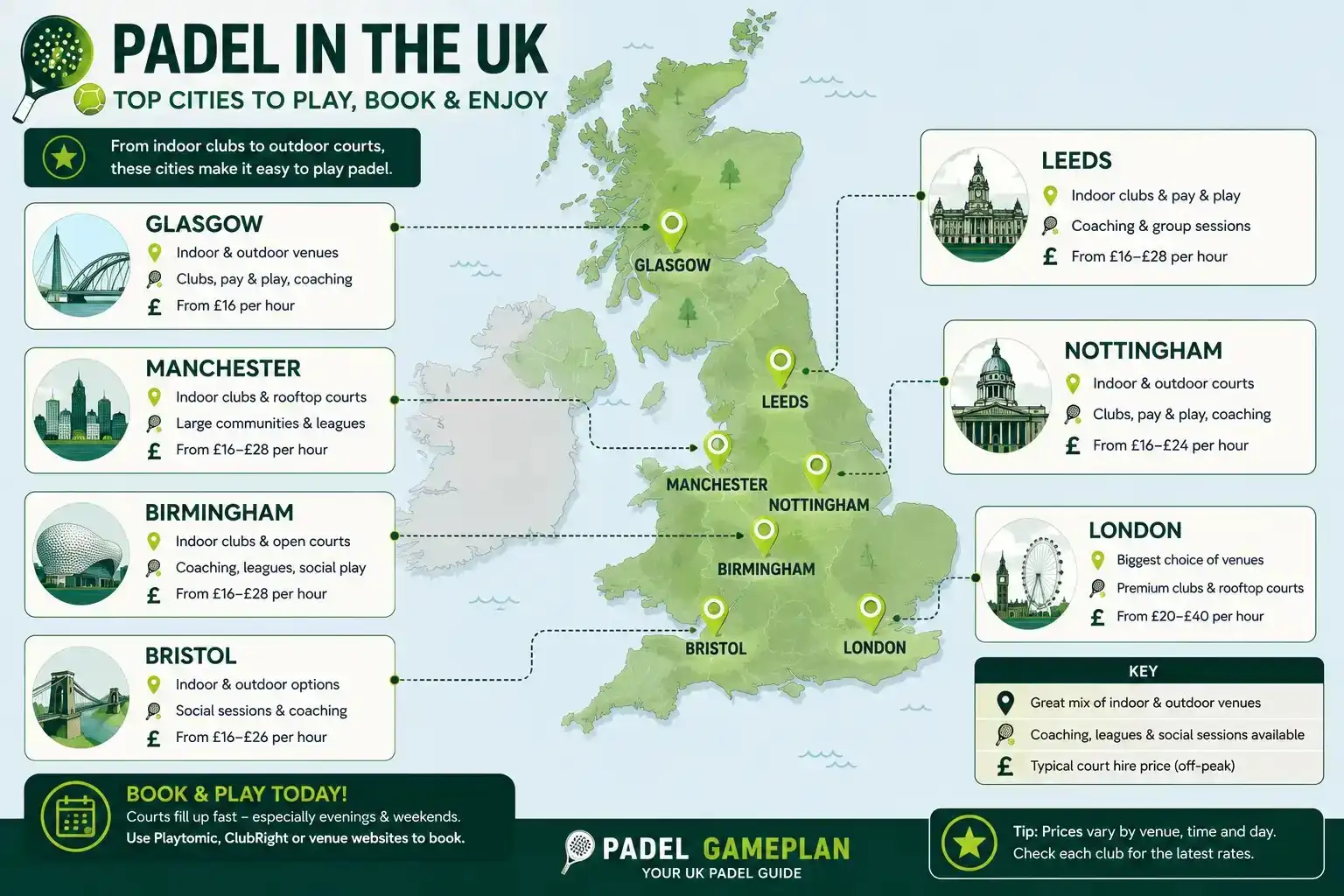
Padel is available in many parts of the UK, with indoor, covered and outdoor courts depending on the city and venue.
For beginners, the best venue is usually one that offers easy booking, racket hire, beginner sessions or coaching. Court prices and availability vary by city, venue and time of day, so comparing local options before booking is useful.
UK Padel City Guides
Use the local guides below to compare courts, prices, coaching and booking options:
Padel London 2026 – compare major clubs, court options and prices across London.
Padel Manchester 2026 – find indoor, covered and outdoor venues across Greater Manchester.
Padel Bristol 2026 – compare the main clubs, indoor courts and prices in Bristol.
If you are new to the sport, look for venues that offer introductory sessions, social games or beginner coaching. These can make it easier to learn the basic rules, meet other players and start playing regularly.
Frequently Asked Questions
Is Rally Arena free to play?
Yes. Rally Arena is a free browser-based padel game. No download or account is required to start playing.
Can Rally Arena be played on a phone or tablet?
Yes. Rally Arena supports touchscreen controls, so it can be played on compatible phones and tablets using a modern browser.
Can an online padel game help you learn real padel?
Rally Arena is mainly intended as entertainment rather than a replacement for real court practice or coaching. It can introduce basic padel-style rallies and scoring, but real padel also requires movement, positioning, communication with a partner and learning how to use the walls.
What are the most useful padel tips for beginners?
Beginners should usually focus on control, consistency and positioning before trying to hit with maximum power. Moving with your partner, learning to use the glass, practising the lob and keeping the racket ready are useful habits to develop early.
What equipment do you need to start playing padel?
A padel racket, suitable court footwear and comfortable sports clothing are the main essentials. Balls, overgrips and a bag can be added depending on how often you play and what your venue provides.
What type of padel racket is best for beginners?
Beginners often find control-focused, forgiving rackets easier to use while technique is developing. Round or oversized shapes are common starting points because they generally provide a larger sweet spot.
Do beginners need special padel shoes?
Dedicated padel shoes are useful for regular play, although suitable tennis or court shoes may work for beginners. Running shoes are generally less suited to the lateral movement involved in padel.
Yes. Padel balls are designed specifically for padel and typically differ from standard tennis balls in pressure and bounce characteristics.
How much does it cost to start playing padel in the UK?
Costs vary depending on equipment, court hire, coaching and whether your venue offers racket rental. Hiring equipment and sharing court costs can help keep the first few sessions affordable.
Where can beginners play padel in the UK?
Padel courts are available across many UK cities. Beginners may find it useful to choose venues offering introductory sessions, social games, racket hire or coaching.
Padel Gameplan has dedicated court guides for cities including London, Manchester, Birmingham, Glasgow, Leeds, Nottingham and Bristol.
Padel rules, scoring and match-format information are based on official padel governing and competition resources, including Premier Padel and the Royal Spanish Padel Federation.
Equipment guidance is based on general manufacturer specifications and intended product use. Specific racket, shoe, ball and accessory recommendations are covered separately in Padel Gameplan’s UK buying guides, where current specifications, retailer availability and Amazon UK listings can be checked in more detail.
UK court information and pricing should always be verified with the individual venue before booking, as availability, prices and programmes can change.
Final Thoughts
Rally Arena offers a simple introduction to padel, but learning the real sport depends on regular court time, practice and good positioning.
For beginners, the most useful approach is to keep things simple: learn the basic rules, focus on control before power, move with your partner and use equipment that feels comfortable and manageable.
From there, regular play, coaching and experience will help develop technique, confidence and court awareness over time.