Padel vs Tennis UK: 11 Honest Differences Explained for 2026
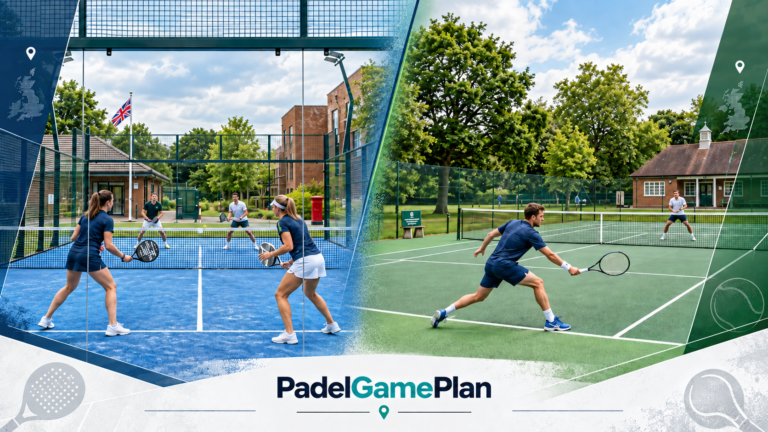
Padel vs tennis UK players face a practical choice: padel offers an accessible, social doubles game on an enclosed court, while tennis offers singles and doubles, more court types and a deeper competitive pathway. This UK guide compares the two sports across 11 honest differences, including court design, rules, equipment, costs, fitness, weather and availability.
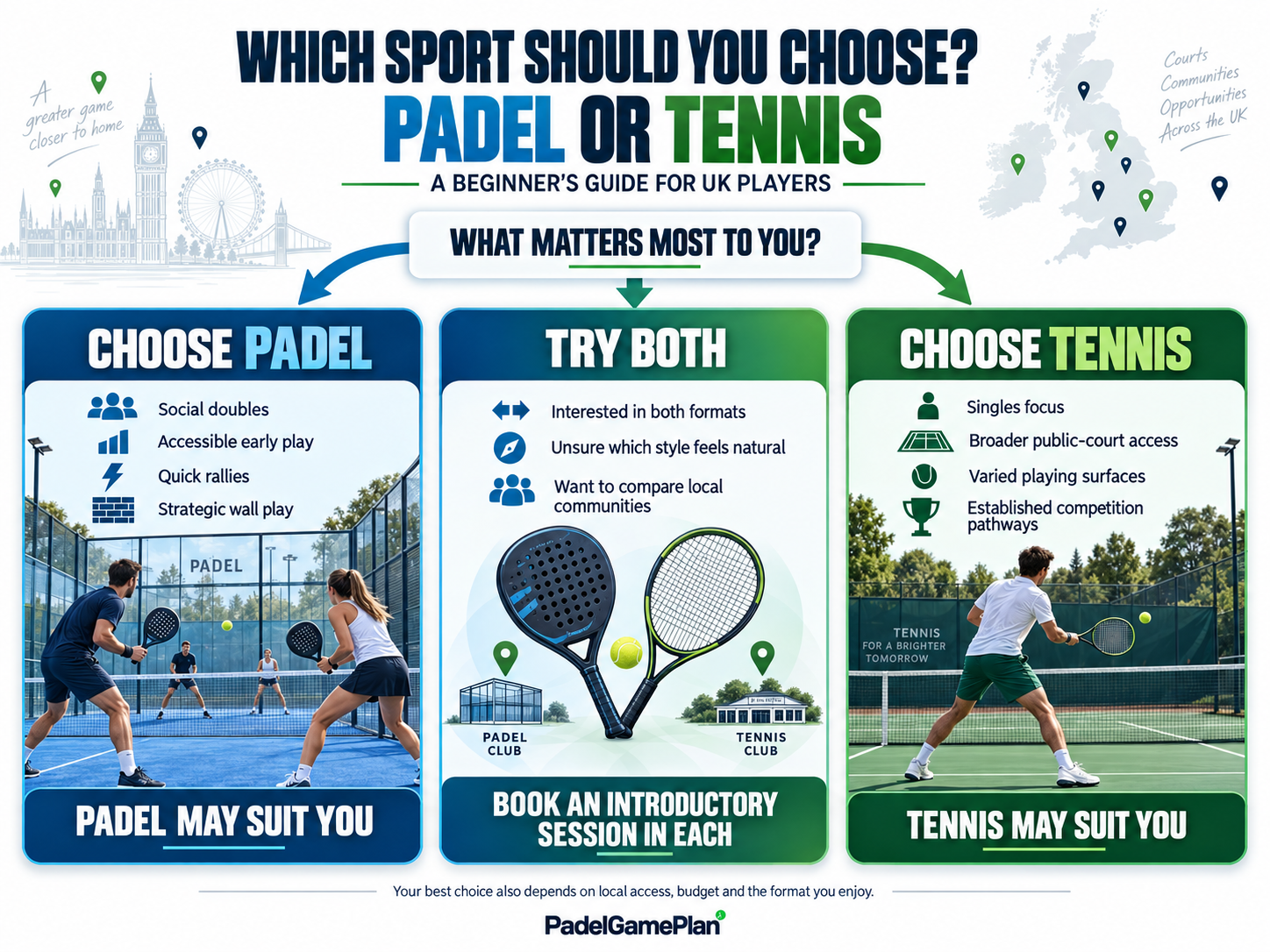
Quick answer: Choose padel if the priority is sociable doubles, a shorter initial learning curve and tactical wall play. Choose tennis if the priority is singles, a wider range of low-cost public-court options or a more established competition structure. Trying one beginner session in each sport remains the most reliable way to decide.
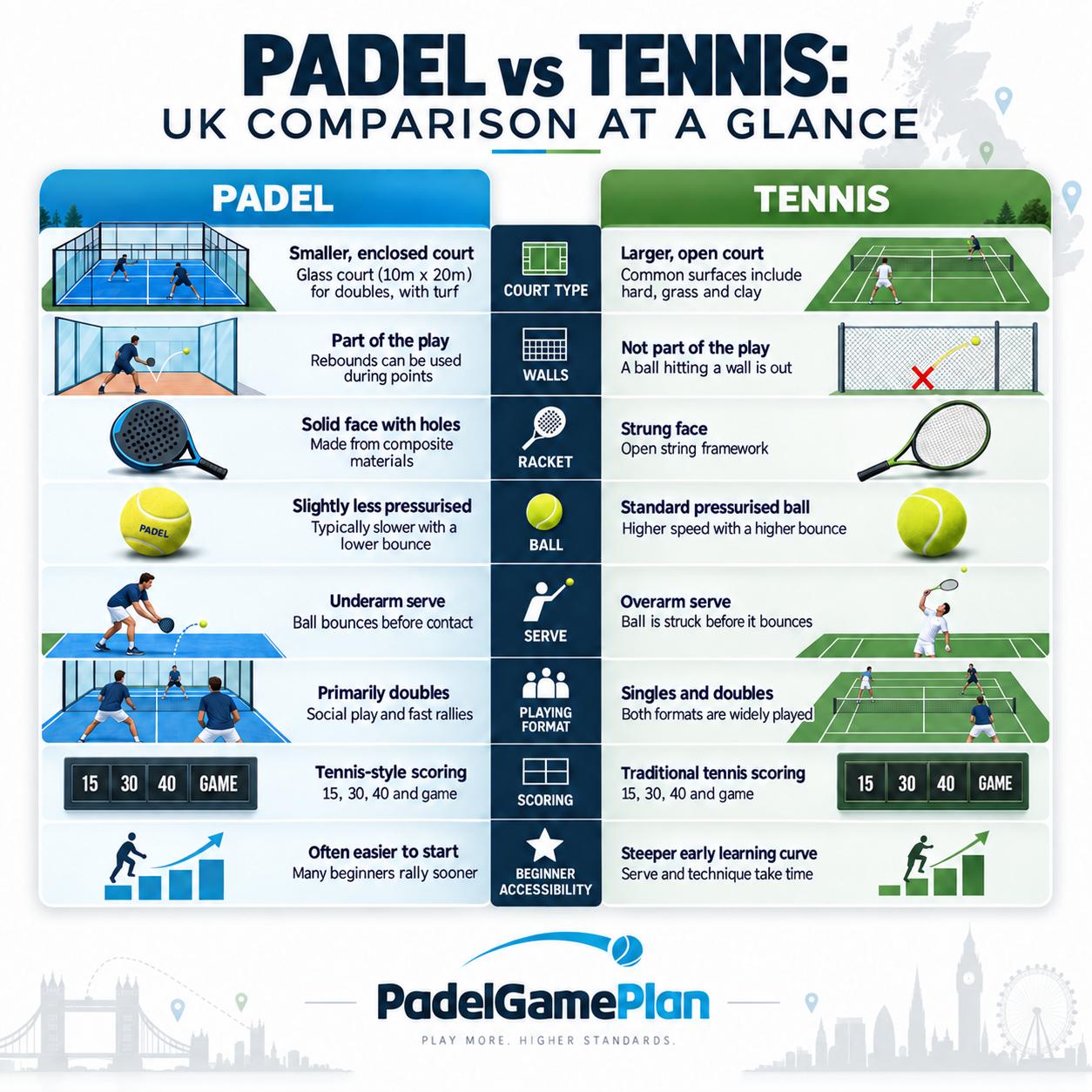
Padel vs Tennis: UK Comparison Table
Both are net-and-racket sports, but the experience is different from the first point. The table below summarises the main differences before each topic is explained in detail.| Category | Padel | Tennis |
|---|---|---|
| Standard format | Doubles | Singles and doubles |
| Court | 20m x 10m, enclosed | 23.77m long; 8.23m singles or 10.97m doubles width |
| Walls | Glass and mesh enclosure is part of play after the bounce | No playable walls |
| Racket | Short, solid and perforated | Longer, strung racket |
| Serve | Underarm after one bounce, struck at or below waist height | Usually overhead from a ball toss |
| Scoring | Usually tennis-style scoring; format can vary by competition | Love, 15, 30, 40 and game |
| Early learning | Often easier to start rallying | Usually needs more time to control serve and groundstrokes |
| Typical movement | Short accelerations, reactions and team positioning | More court coverage in singles and longer running patterns |
| UK access | Growing network, often purpose-built and privately operated | Large network of clubs, parks, schools and leisure centres |
| Weather | Covered and indoor sites are increasingly important | Indoor options exist, but many public and club courts are outdoors |
| Best suited to | Social doubles and quick entry into match play | Singles, varied surfaces and established competition pathways |
What Is Padel?
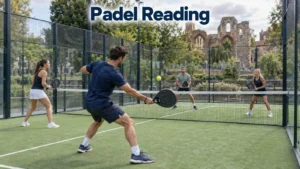
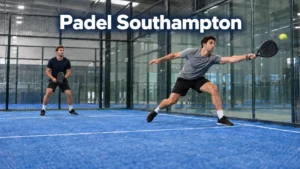
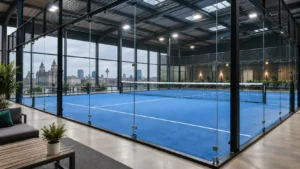
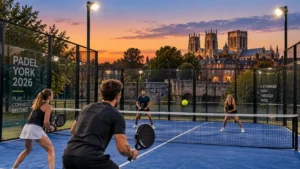
Padel is normally played by four people on a 20m x 10m enclosed court. A solid, stringless racket is used with a depressurised ball. After the ball lands on the court, it can rebound from the glass or mesh and remain in play under the rules. This creates longer exchanges and introduces defensive skills that do not exist in tennis.The sport began in Mexico and later developed strongly in Spain and Argentina. In Great Britain, padel sits within the LTA’s participation and competition structure. Players can now find facilities in major cities, suburban clubs, leisure venues, universities and an increasing number of regional locations.New players can use the Learn Padel hub for rules, technique and beginner guidance.What Is Tennis?
Tennis is played on an open rectangular court with a strung racket and a pressurised ball. It supports singles and doubles, and can be played on hard, grass, clay and artificial surfaces. The serve is normally overhead, and any ball landing outside the relevant lines is out.Modern lawn tennis developed in Britain in the 19th century. The sport has a mature UK infrastructure that includes park courts, member clubs, commercial centres, schools, universities and indoor venues. Competition ranges from local leagues and ratings-based matches to county, national and international events.1. Court Size and Structure
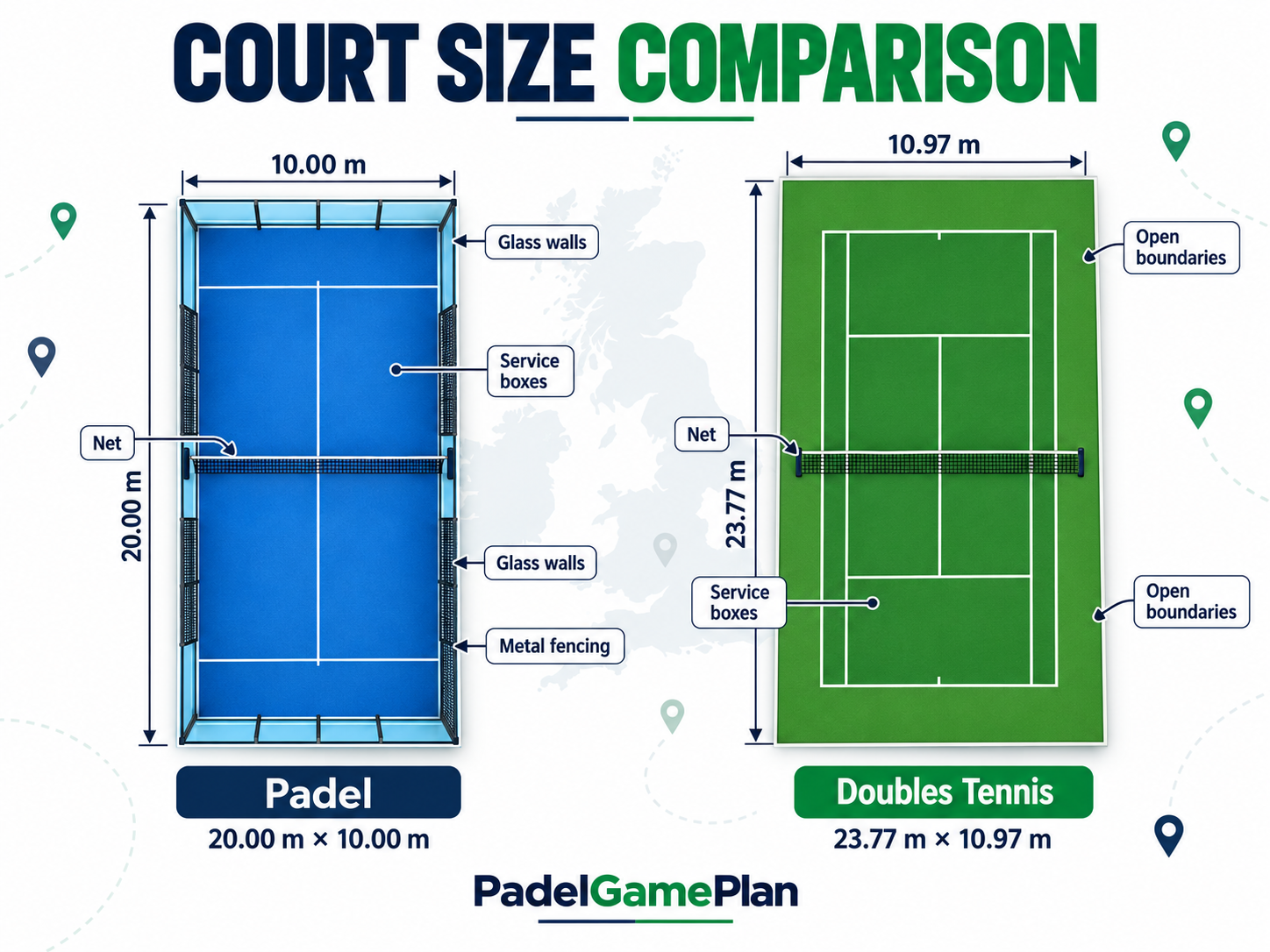
A regulation padel court has a playing area of 200m². A tennis doubles court has a playing area of about 261m², although a complete tennis installation needs additional run-off space around the marked court. The enclosure, rather than size alone, creates the biggest difference.Padel players can let the ball pass, rebound from the back glass and then return it. They also use the enclosure tactically when defending. Tennis rewards depth, width and accurate control of open boundaries, because there is no second opportunity after a shot lands out.| Measurement | Padel | Tennis |
|---|---|---|
| Length | 20m | 23.77m |
| Playing width | 10m | 8.23m singles; 10.97m doubles |
| Centre net height | 0.88m | 0.914m |
| Enclosure | Walls and mesh form part of the court | Open court with surrounding run-off |
| Common UK setting | Purpose-built club, leisure or pop-up venue | Park, club, school, leisure centre or private facility |
2. Rules, Serving and Scoring
Serving
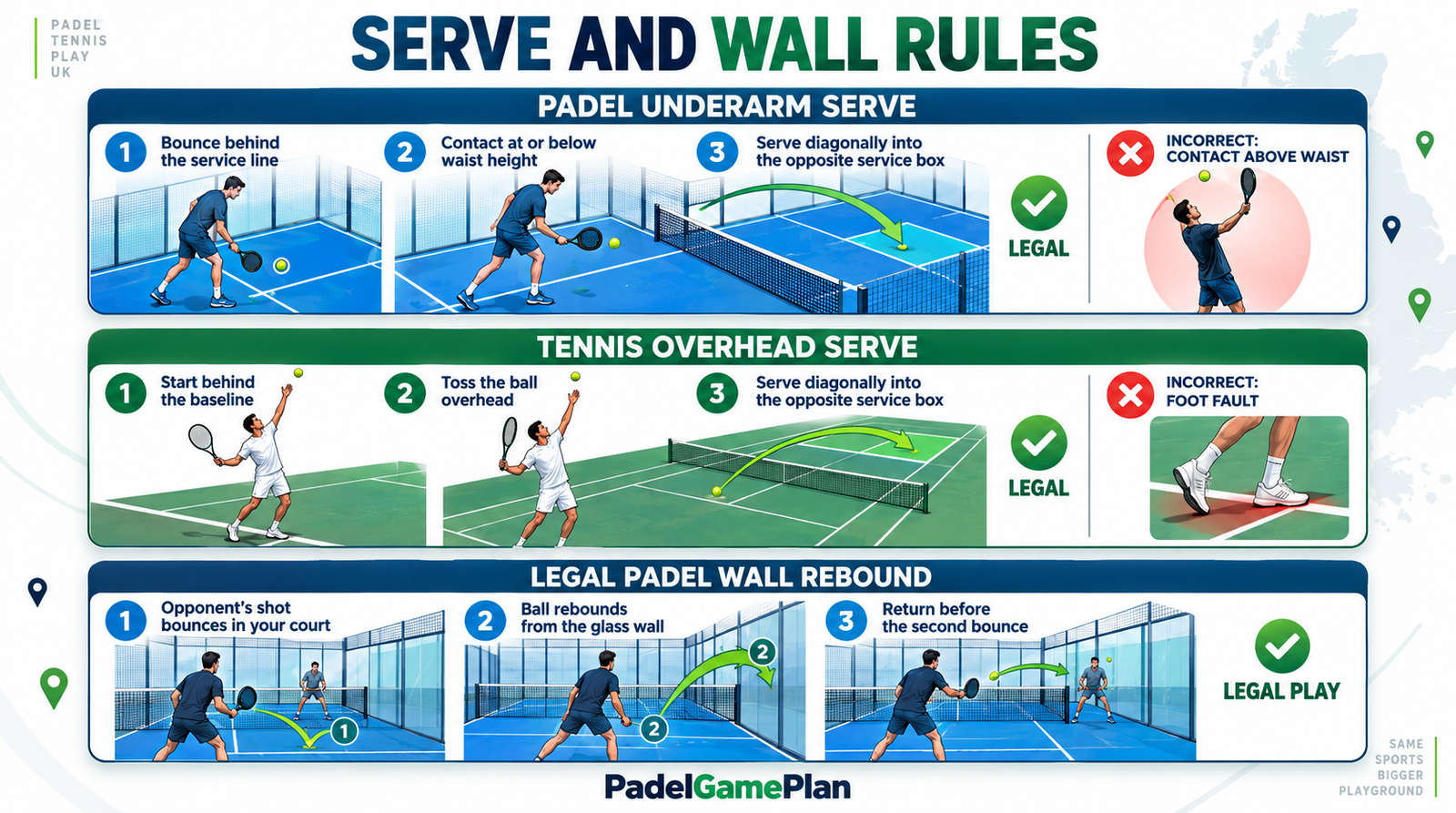
In padel, the server first bounces the ball behind the service line and hits it underarm at or below waist height into the diagonal service box. In tennis, the server usually tosses the ball and strikes it overhead before it bounces. Both sports allow a first and second serve.Wall play
A padel return can be played after the ball bounces and then touches the player’s own glass. A ball that reaches the opponent’s wall before bouncing in the opponent’s court is out. In tennis, surrounding fences and walls are not part of play.Scoring
Traditional padel uses the familiar tennis sequence of love, 15, 30, 40 and game. The exact deuce method can vary, with some competitions using advantage scoring and others using a deciding point. Before a league or tournament, check its published format rather than assuming every padel event uses the same deuce rule.Rules reference: Technical details should be checked against the current rules from the International Padel Federation (PadelFip) and the International Tennis Federation (ITF). For a practical British guide, see the rules of padel tennis in the UK.
3. Rackets, Balls and Shoes
Padel racket vs tennis racket
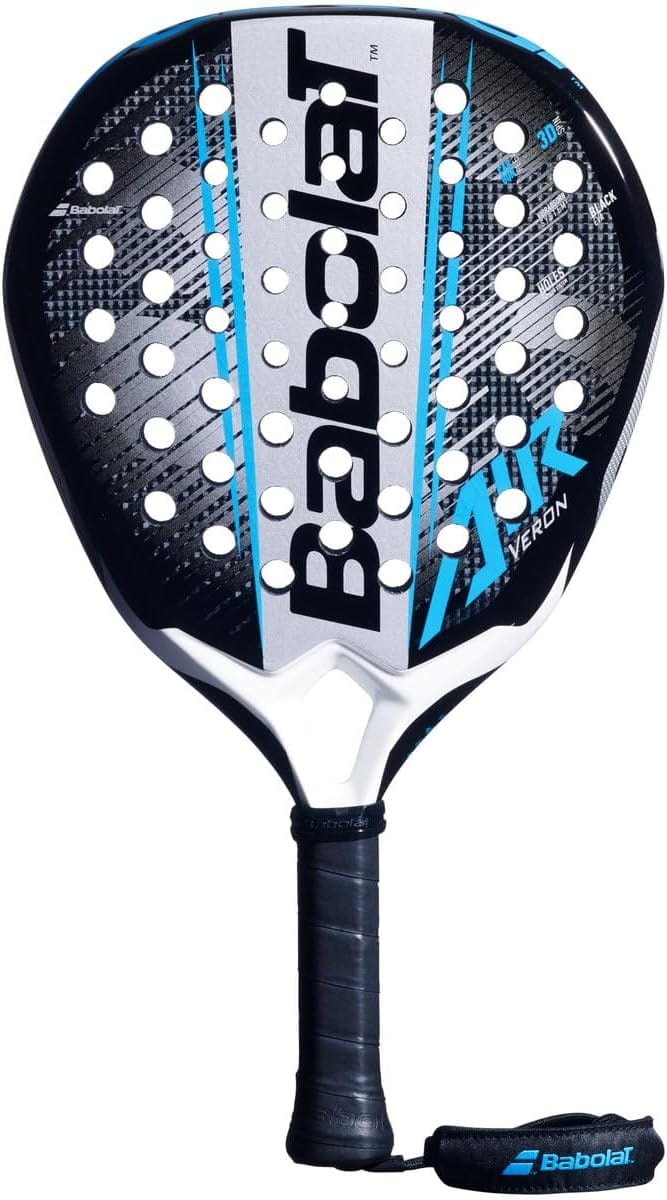
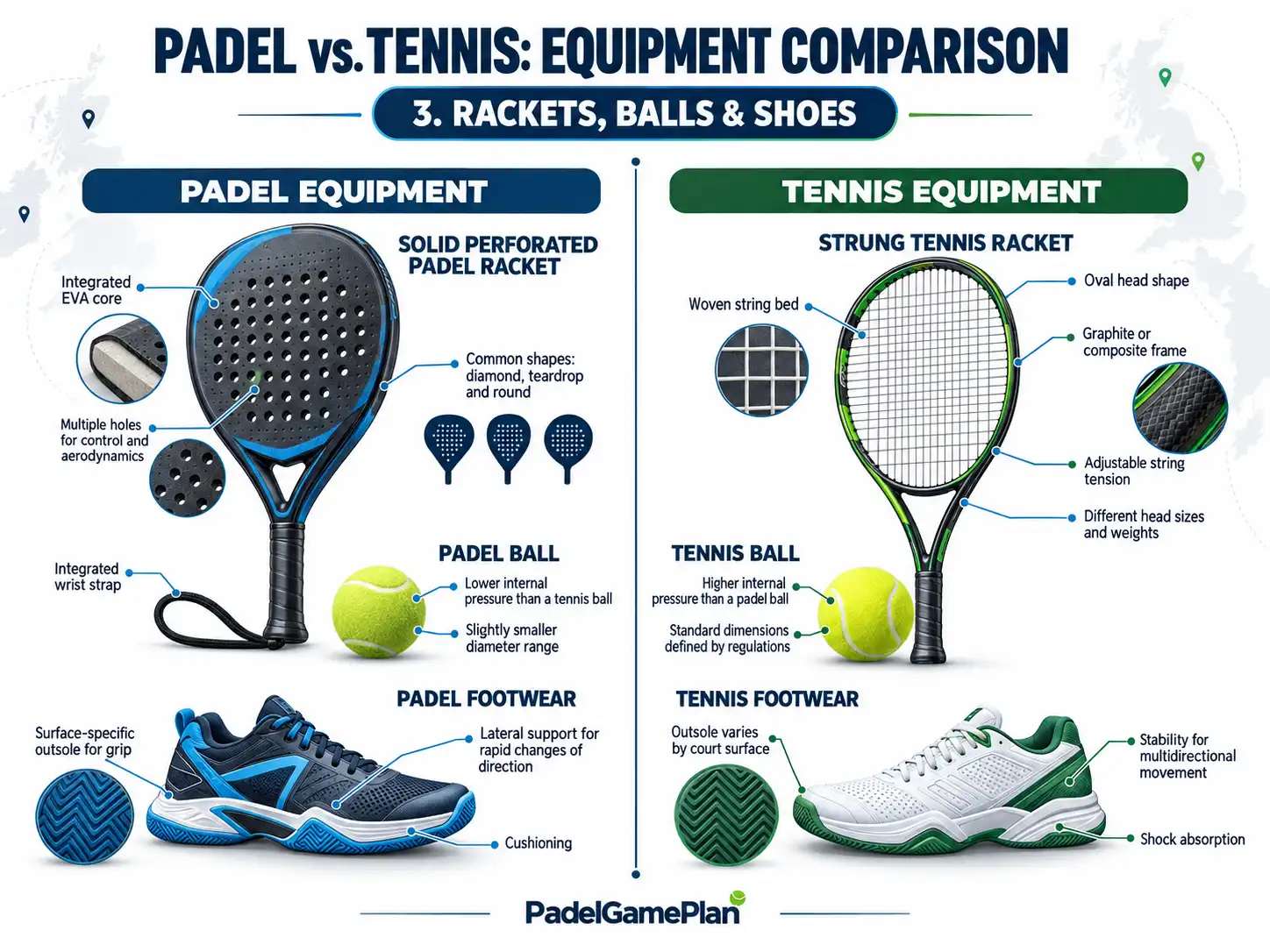
A padel racket has a solid face with holes and a short handle. Round rackets usually give beginners a larger central sweet spot and easier control. Teardrop and diamond designs shift the balance towards a blend of control and power or a more attacking setup.A tennis racket has a larger strung head and longer handle. Head size, racket mass, balance and string tension affect power, control, comfort and spin. Strings also introduce a maintenance cost that padel rackets do not have.Padel ball vs tennis ball
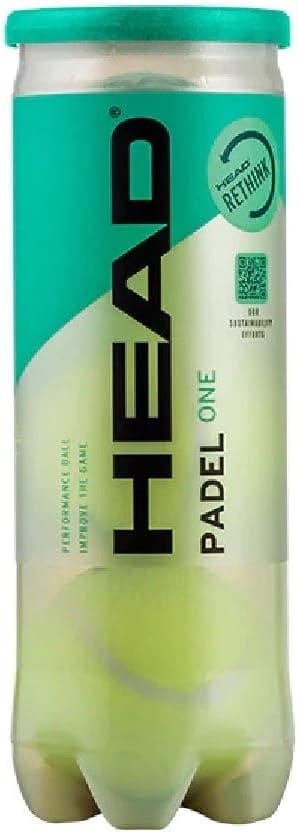
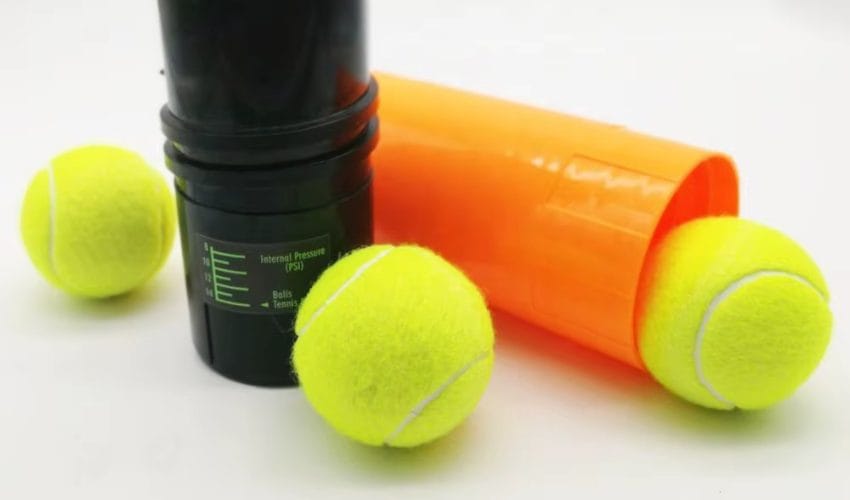
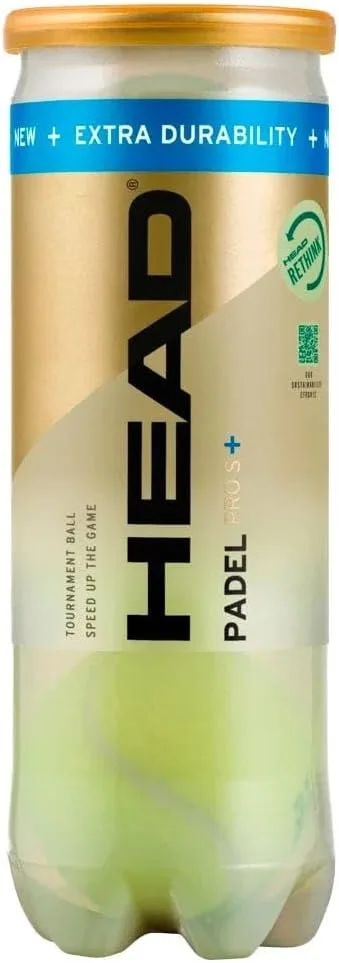
The balls look similar, but they are not identical. Padel balls use a pressure and rebound specification designed for the enclosed court. A tennis ball can feel too lively during padel, so players should use the ball specified for their sport.Footwear
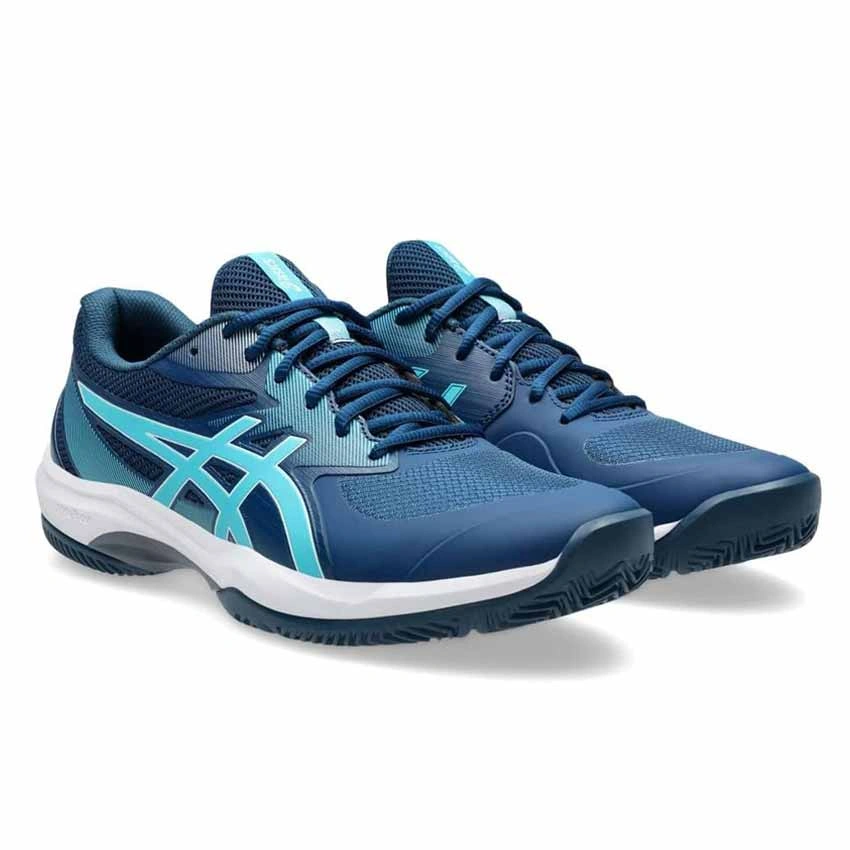
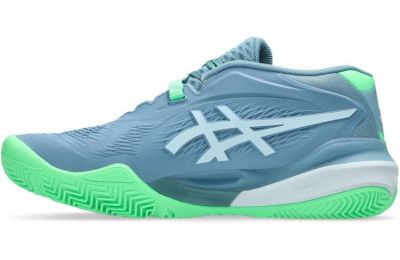
Both sports require stable shoes that support lateral movement. Padel footwear should suit the venue’s artificial surface, while tennis footwear should match the court type. Running shoes are designed mainly for forward motion and are not the best default for repeated side-to-side changes of direction.Some product mentions may include affiliate links.
Padel starter equipment
- Padel racket, preferably round and manageable for beginners
- Padel balls
- Padel or suitable court shoes
- Comfortable sports clothing
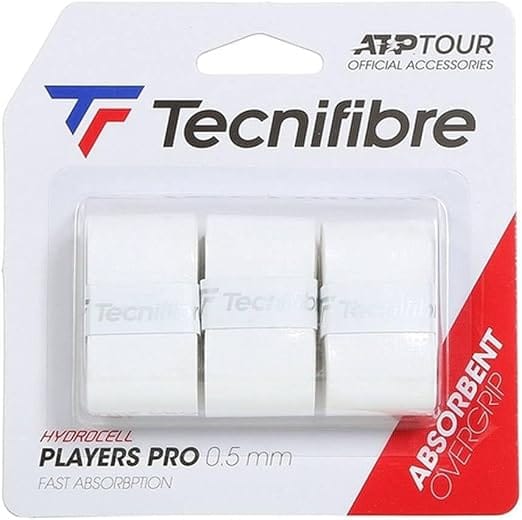
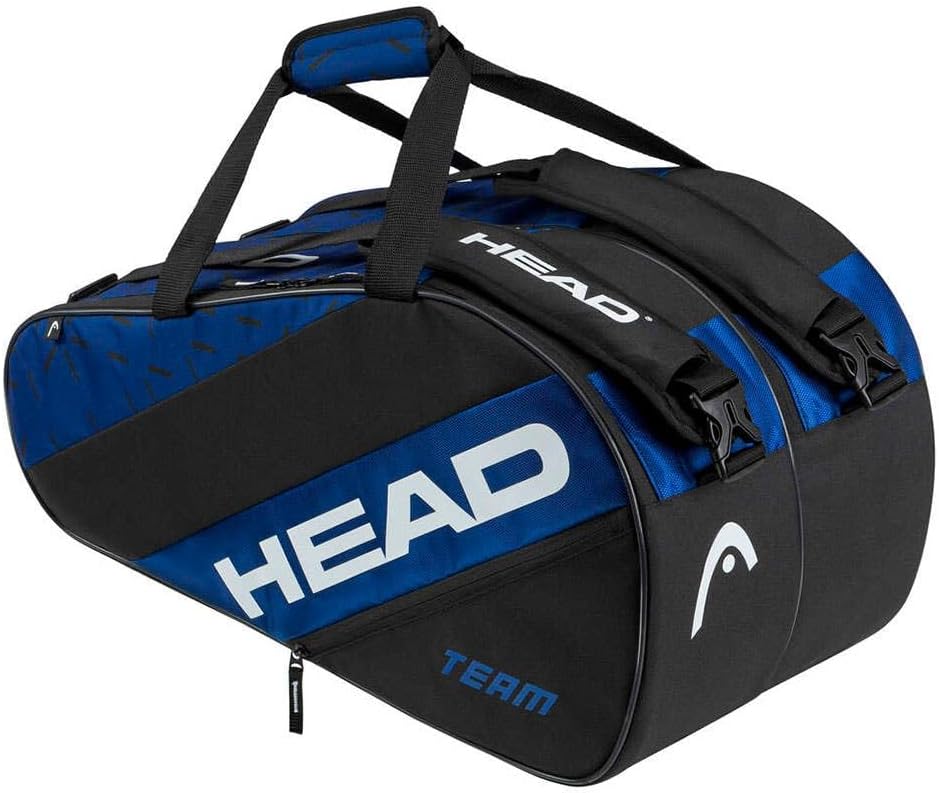
- Optional overgrip and protective bag
Tennis starter equipment
- Tennis racket with an appropriate grip size
- Tennis balls
- Tennis shoes suited to the surface
- Comfortable sports clothing
- Future restringing as strings lose tension or break
4. Singles and Doubles
Standard padel is a doubles sport, so booking usually depends on finding three other players or joining an organised match. Partner positioning and communication are central to the game. Some venues have narrow singles courts, but this is not the standard format used for mainstream competition.Tennis gives players a direct choice between singles and doubles. Singles suits people who want individual responsibility for every shot and full-court coverage. Doubles reduces the area each player covers and adds partner tactics, poaching and coordinated movement.5. Learning Curve for Beginners
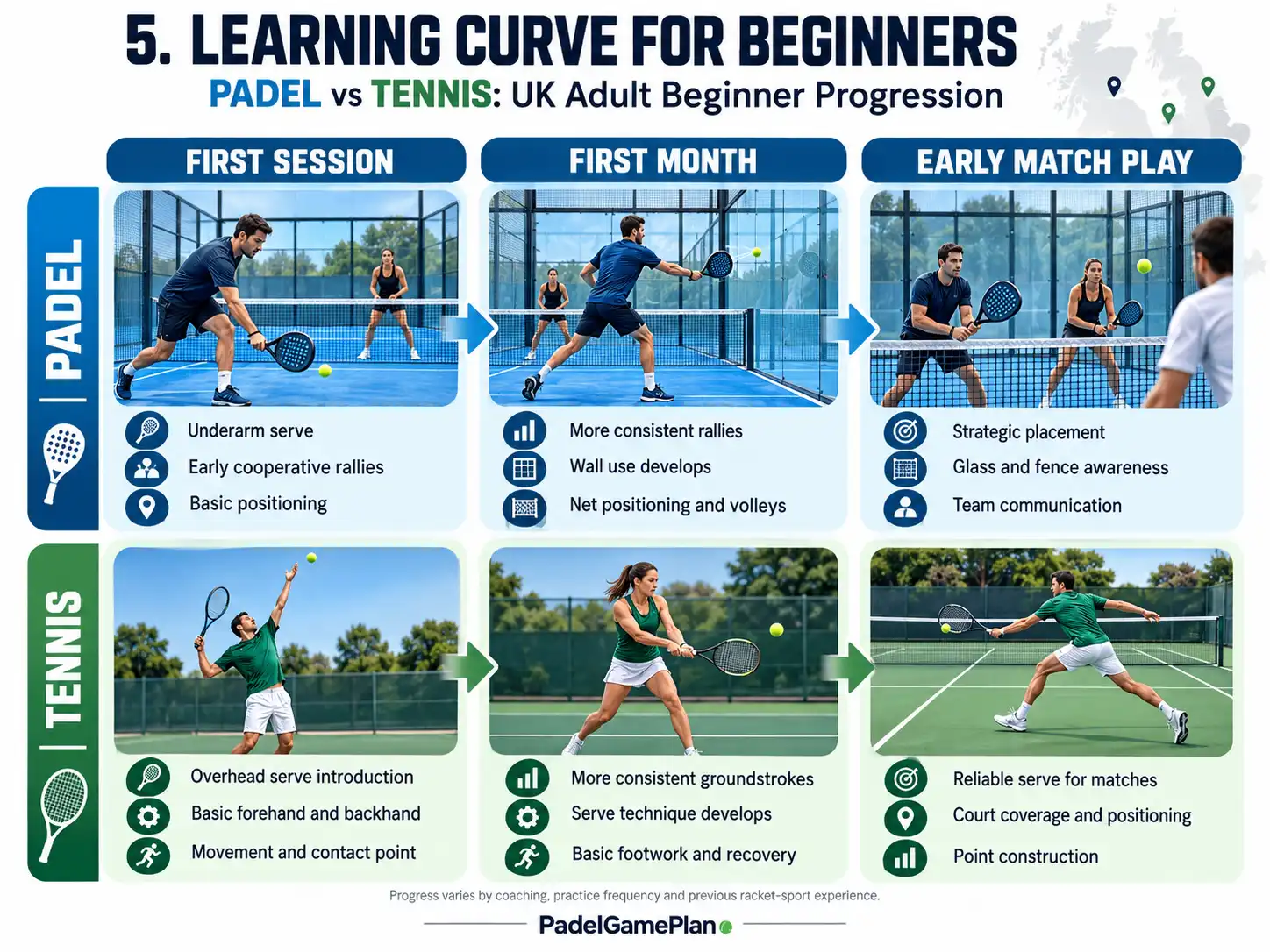
Padel is often easier to enjoy during a first session. The underarm serve is more accessible than a full tennis serve, the racket is shorter and the compact court can help beginners start cooperative rallies. That does not mean padel remains easy. Reading rebounds, defending two walls, controlling the net and moving with a partner take sustained practice.Tennis usually asks for more initial control of racket path, contact point, serve and court depth. Progress can feel slower at first, but beginner balls, smaller courts and structured coaching can make the introduction more manageable.| Learning factor | Padel | Tennis |
|---|---|---|
| First serve | Underarm and usually quicker to make reliable | Overhead serve normally needs more technical work |
| Early rallies | Compact court can support earlier match play | Depth and open boundaries demand greater control |
| Advanced challenge | Wall reading, net control and partnership movement | Serve development, spin, movement and surface adaptation |
| Best first step | Beginner induction or social coaching session | Beginner course using suitable balls and court size |
6. Fitness and Physical Demands
Padel involves frequent split steps, short accelerations, low defensive positions and repeated changes of direction. Points can last because rebounds return the ball to playable areas. Doubles positioning means outright running distance is often lower than in tennis singles, but reaction demands remain high.Tennis singles normally requires more ground to be covered by one player. Serving also places repeated overhead demand on the shoulder and trunk. Tennis doubles changes the profile considerably, so it is more accurate to compare padel doubles with tennis doubles than with a high-level singles match.Neither sport is automatically low impact or injury-free. Session intensity, technique, footwear, surface, age, conditioning and previous injury history all matter. Players returning after injury or managing a medical condition should seek appropriate professional advice before increasing intensity.7. Padel vs Tennis Cost in the UK
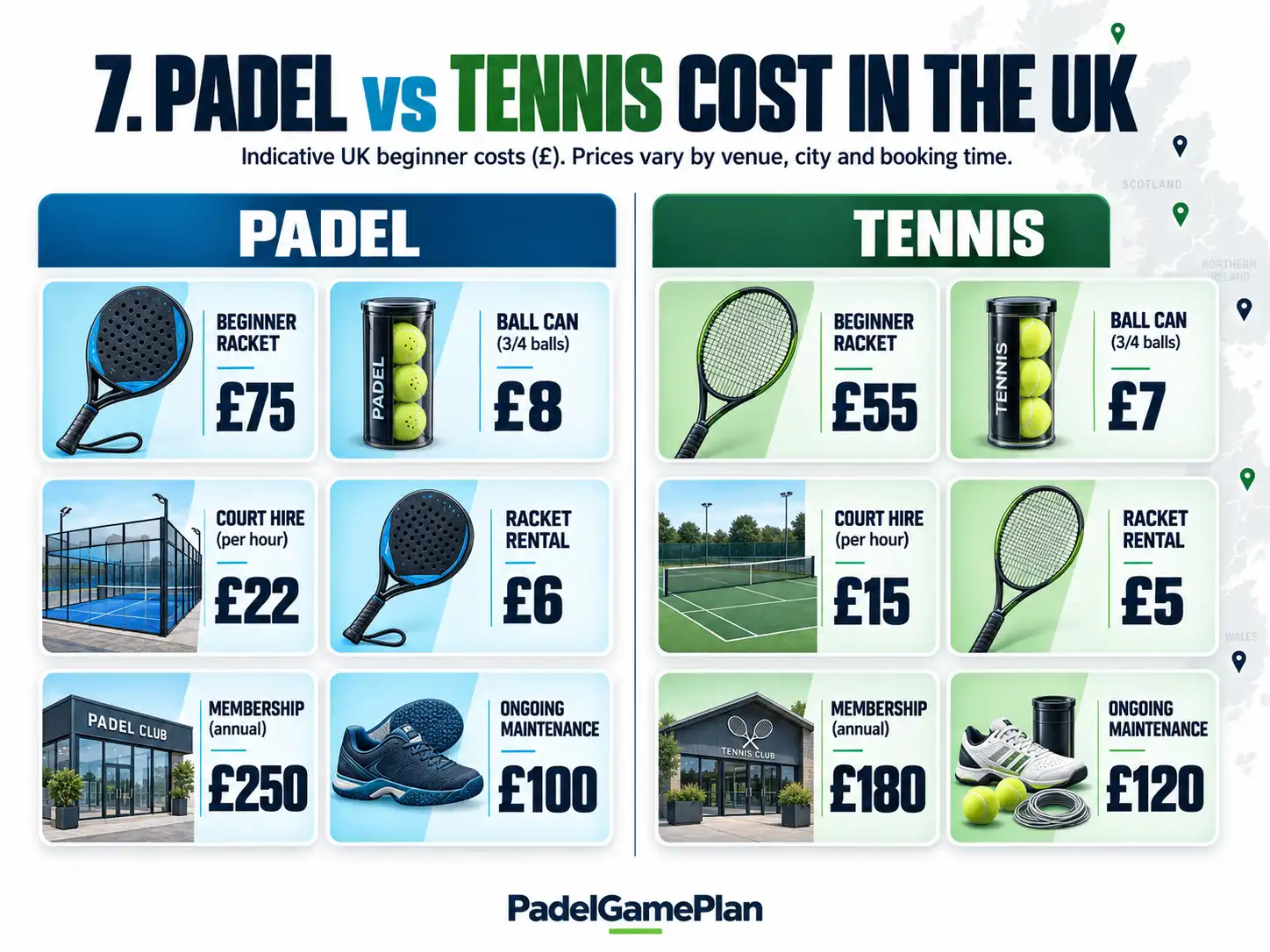
Padel court hire is commonly charged for the whole court and divided among four players. Prices vary materially by city, indoor or outdoor setting, peak period, membership status and booking platform. Across PadelGamePlan’s UK venue guides, examples range from lower-cost community sessions to premium peak bookings. A broad planning range of about £6 to £18 per person for one hour is useful, but it is not a national tariff.Tennis can be less expensive through council park courts, community programmes and annual club membership. Commercial indoor courts and coaching can cost more. A fair comparison should include the number of players, session length, membership fees, racket hire and any floodlight charge.| Cost item | Padel | Tennis |
|---|---|---|
| Beginner racket | Often about £50-£120 | Often about £30-£100 |
| Ball can | Often about £5-£8 | Often about £5-£8 |
| Court booking | Usually a whole-court fee split by four | Park, club and commercial rates vary widely |
| Ongoing equipment | Overgrips, balls and eventual racket replacement | Strings, grips, balls and eventual racket replacement |
| Low-cost route | Off-peak open matches, memberships and community sessions | Park courts, local clubs and community programmes |
8. Court Availability and Booking in the UK
Tennis remains easier to find in many parts of Britain because courts exist in parks, clubs, schools and leisure facilities. Padel supply is expanding, but availability still varies sharply by town and region. Large cities may offer several operators, while some areas require a longer journey.Padel booking commonly uses Playtomic, MATCHi, a venue’s own app or a direct website. Tennis bookings frequently use LTA Play, ClubSpark, a club system or a leisure-centre platform. Players should check whether a listed court is indoor, covered or fully outdoor because those labels affect weather reliability.Use the Padel Courts UK guide to compare city guides and find a venue. The site also maintains a regional resource for readers outside Britain: Padel Lifestyle UAE.9. Indoor, Covered and Outdoor Play
British weather is a practical factor in both sports. Rain can make an outdoor surface unsafe and lead to cancellations. Wind has a greater direct effect on tennis ball flight, but it can also alter lobs and overheads in outdoor padel.An indoor padel court provides the most reliable year-round conditions. A covered court protects players from most rain but may retain open sides, so wind and temperature still matter. The same distinction applies to tennis: an indoor centre is more dependable, while outdoor courts can be cheaper and more widely available.10. Coaching and Competition Pathways
Tennis has the more established British pathway, including junior programmes, club leagues, ratings, county competition and a long-standing coaching network. This can make tennis the stronger choice for families seeking a mature junior development structure or players who specifically want singles competition.Padel competition is developing quickly through venue leagues, box leagues, graded tournaments and LTA-sanctioned events. New players should look for an induction, beginner course or coached social before entering unrestricted open matches. A correct starting level improves both safety and match quality.11. Moving from Tennis to Padel
Tennis players usually bring useful coordination, volleys, split steps and an understanding of court positioning. The habits that need adjustment are equally important:- Use a shorter swing rather than trying to generate tennis-style power on every ball.
- Move to the net with a partner instead of leaving large gaps between teammates.
- Let suitable balls rebound from the glass instead of taking every shot before the wall.
- Develop the lob as a positional tool, not only as an emergency shot.
- Accept that control and placement often beat outright pace.
Which Is Better for You: Padel or Tennis?
Padel may suit you better if:
- You want a social four-player format.
- You want to rally and play points quickly.
- You enjoy net play, lobs and team tactics.
- You have three regular partners or want to join open matches.
- A suitable padel venue is convenient to reach.
Tennis may suit you better if:
- You want the option to play singles.
- You value access to parks and established local clubs.
- You enjoy technical serve and groundstroke development.
- You want a mature junior or competitive pathway.
- You want to experience different court surfaces.