
Padel Terms Explained: The Complete Glossary for UAE Players (2026)
By the Padel Gameplan Editorial Team | Published: 20 March 2026 | Updated: 20 March 2026
Understanding padel terms is one of the fastest ways to improve on court. When players know exactly what a bandeja is, when to use a globo, or why the golden point matters, they make better decisions, communicate more clearly with partners, and follow coaching instructions with confidence.
This complete padel glossary covers every key term used in the sport – from basic court zones and scoring language to advanced shot names, Spanish padel terms, tactical vocabulary, and equipment specifications. It is designed for complete beginners and intermediate players across the UAE, whether playing in Dubai, Abu Dhabi, Sharjah, or any other emirate.
All terms in this guide reflect definitions used by the International Padel Federation (FIP) and widely accepted coaching and player communities.
For a complete overview of padel technique, beginner guides and skill development resources, visit the Learn Padel UAE hub.

What Is Padel and Why Does the Terminology Matter?
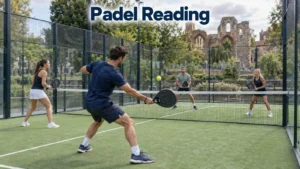
Padel is a racket sport played in doubles on an enclosed court surrounded by glass walls and metal fencing. The game combines elements of tennis and squash, and much of its technical language originates from Spanish – the dominant language of padel’s professional circuits.
In UAE padel communities, coaches, players, and commentators regularly use Spanish padel terms such as bandeja, vibora, globo, and remate. Beginners who do not understand these words often struggle to follow instructions during lessons or communicate clearly with partners during matches.
Learning padel terminology is not just academic. It directly supports faster skill development, better teamwork, and greater enjoyment of the sport.
Section 1 – Court and Equipment Terms
Before learning shot names and tactics, every player needs to understand the physical environment and equipment used in padel.
Court
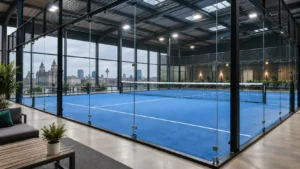
The standard padel court measures 10 metres wide by 20 metres long. It is enclosed by glass walls on the back and sides, and metal fencing on the upper sections. The enclosed structure is fundamental to padel gameplay – walls are part of play, not out-of-bounds boundaries.
Net
The net divides the court into two equal halves. It stands at 0.88 metres in the centre and rises to 0.92 metres at the posts. Net height is important for serving rules and shot selection near the front of the court.
Service Box
The service box is the rectangular zone into which a serve must land. Each side of the court has two service boxes, divided by the centre service line. Serves must travel diagonally from the server’s position into the correct opposite box.
Glass Walls / Back Wall
The glass walls at the back and sides of the court are an active part of gameplay. After the ball bounces on the ground, it may rebound off the glass walls and remain in play. Using the glass effectively is a core skill in padel that distinguishes it from tennis.
Metal Fencing / Wire Mesh
The upper sections of the court enclosure are made of metal fencing. Balls may rebound off the fencing after a ground bounce, though this is less common and requires specific technique to use effectively.
Padel Racket (Pala)
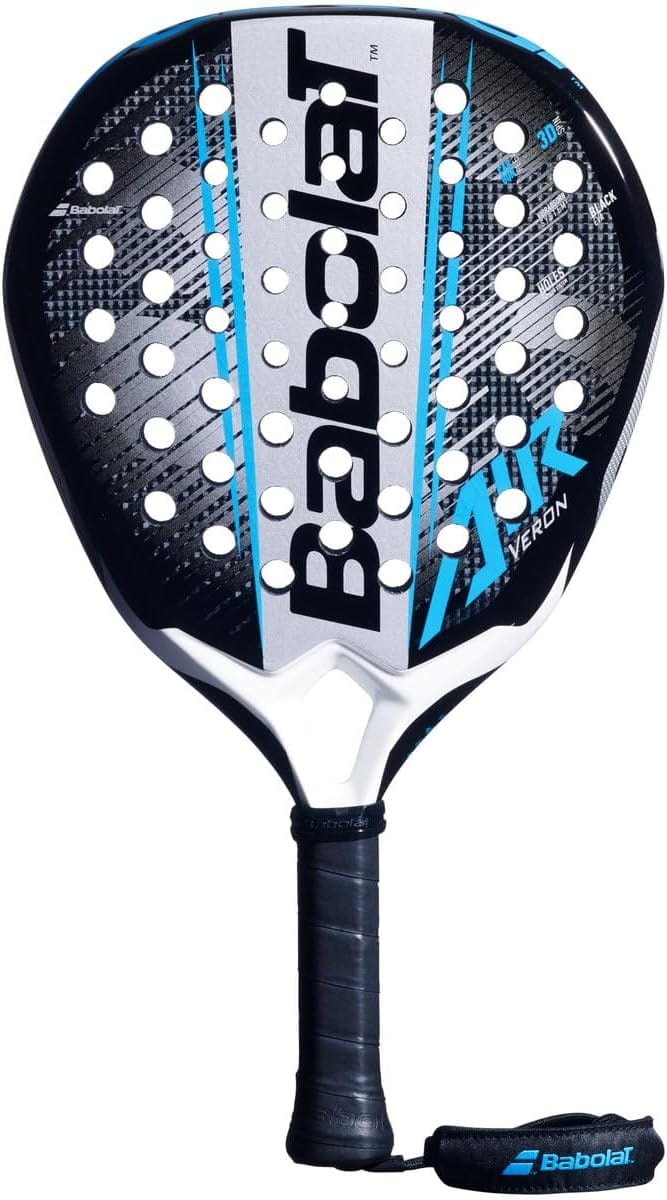
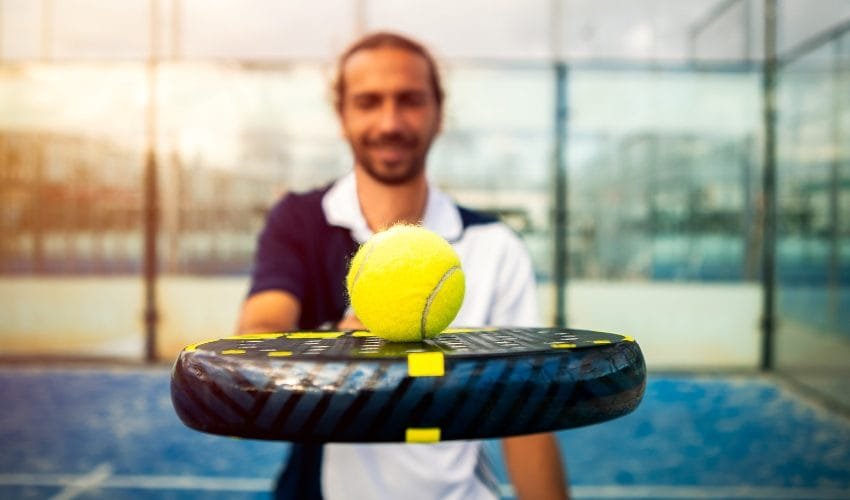
The padel racket – known in Spanish as the pala – is a solid, stringless frame with a perforated face. It is shorter and wider than a tennis racket and is designed for control and touch rather than power. Rackets vary in shape (round, teardrop, diamond), weight (approx. 360g-390g), and core material (EVA foam or soft foam).
Padel Ball
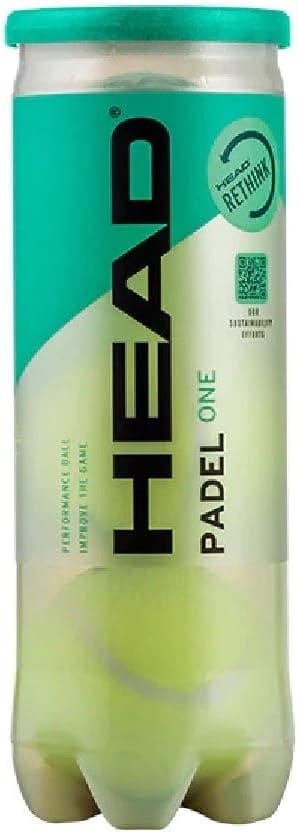
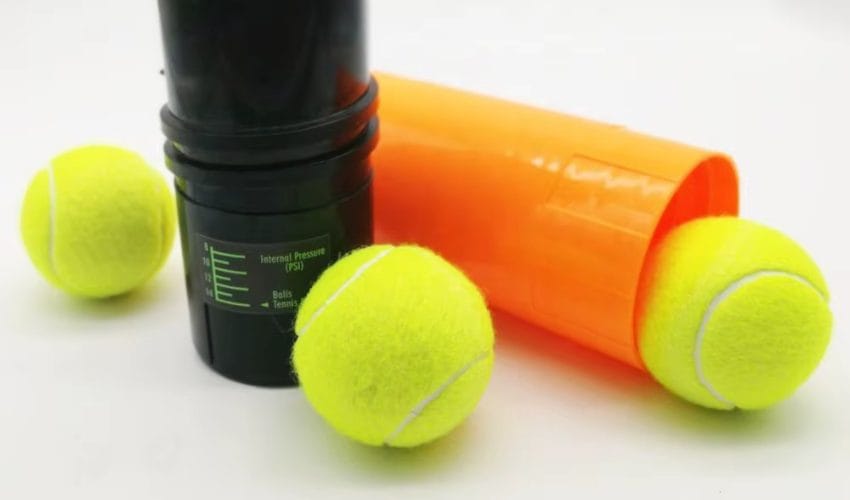
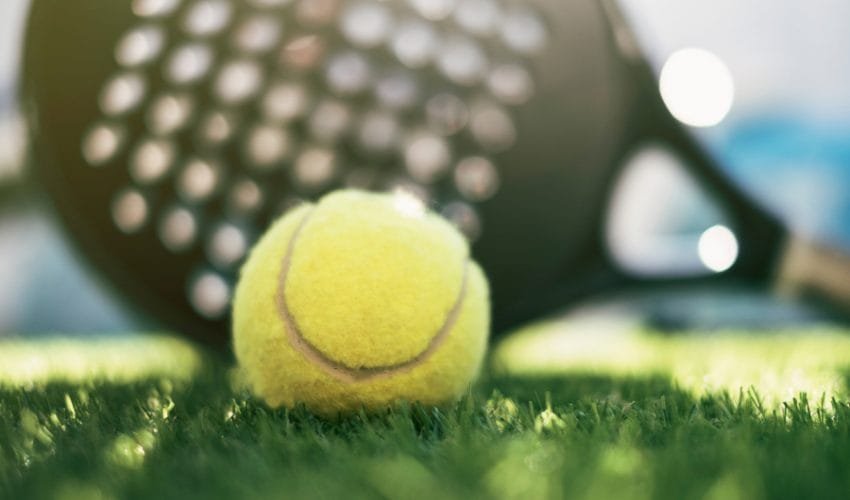
Padel balls are similar to tennis balls but slightly depressurised. Lower internal pressure produces a more controlled bounce suited to the smaller enclosed court. Standard padel balls are used in recreational, club, and competitive play across the UAE.
Section 2 – Basic Gameplay Terms
These are the foundational padel terms that every beginner must understand before their first session.
| Term | Definition | When It Applies |
|---|---|---|
| Serve (Saque) | Underhand shot below waist to start each point | Opening every rally |
| Return | Response to the serve after one bounce | Receiving team’s first shot |
| Rally | The sequence of shots between serve and point end | Active play |
| Volley | Shot hit before the ball bounces | Net play, attacking position |
| Let | Serve replay – ball touched net but landed correctly | Serve only |
| Fault | Illegal serve – wrong box, above waist, over line | Serve – two faults lose point |
| Double Bounce | Ball bounces twice before being hit – point lost | All play |
| Winner | Unreturnable shot that ends the rally | Attack |
| Unforced Error | Point lost due to a mistake rather than opponent pressure | All play |
| Point (Punto) | The smallest unit of scoring | Every rally result |
Section 3 – Scoring Terms
Padel uses the same scoring system as tennis with one common variation used in professional circuits.
Points Within a Game
Points progress as follows: Love (0) – 15 – 30 – 40 – Game. When both teams reach 40-40, the score is called Deuce (Iguales in Spanish). From deuce, a team must win two consecutive points to take the game: first comes Advantage (Ventaja), then Game.
Golden Point
At the professional level, many events replace traditional deuce with the Golden Point rule. At 40-40, the next single point wins the game. The receiving team chooses which player receives the serve. This rule is used in Premier Padel events and is increasingly familiar to UAE players following professional tournaments.
Sets
A set is won by the first team to reach six games with a minimum two-game lead (e.g., 6-4). If the set reaches 6-6, a tiebreak is played – first to seven points with a two-point lead wins the set.
Match
Most competitive padel matches are best of three sets. The first team to win two sets wins the match.
| Scoring Term | Meaning |
|---|---|
| Love | Zero points |
| 15, 30, 40 | Point progression within a game |
| Deuce (Iguales) | Score tied at 40-40 |
| Advantage (Ventaja) | One point ahead after deuce |
| Golden Point | Sudden death at 40-40 |
| Tiebreak | Played at 6-6 in a set, first to 7 points |
| Match | Best of 3 sets |
Section 4 – Serving Rules Terminology
The padel serve has specific rules that differ significantly from tennis. Beginners commonly misapply tennis serving habits in padel.
Underhand Serve
All serves in padel must be hit underhand – the racket must make contact with the ball below the server’s waist level. Overhand or shoulder-height serves are not permitted.
Bounce Before Contact
The server must allow the ball to bounce once on the ground before striking it. The server holds the ball, drops it, lets it bounce, and then hits it. The ball must be struck as it is falling below waist height after the bounce.
Diagonal Direction
The serve must travel diagonally across the net into the correct service box on the opposite side of the court.
Service Line Fault
The server’s feet must remain behind the service line until the ball is struck. Stepping on or over the line before contact is a foot fault.
Let
If the serve clips the top of the net but still lands in the correct service box, it is called a let and the serve is replayed with no penalty.
Double Fault
If a server commits two consecutive faults – serving out, hitting the net, or making a foot fault on both attempts – the point is awarded to the receiving team.
Section 5 – Shot Names and Technique Terms
This is one of the most important sections of the padel glossary. Many of the most-used shot names come directly from Spanish and are used internationally in coaching, commentary, and player conversation.
Forehand
A shot played on the dominant side of the body. For right-handed players, this means the ball is hit on the right side. The forehand is one of the first shots taught to beginners and is central to groundstroke rallies.
Backhand
A shot played on the non-dominant side. For right-handed players, this is the left side. Backhands in padel are often played with two hands (for stability) or one hand (for reach and slice).
Volley
A shot played before the ball bounces. Volleys are most commonly executed at or near the net and are a dominant tool in attacking play. Padel volleys require a short compact swing and controlled racket positioning.
Smash (Remate)
A powerful overhead shot intended to win the point outright. The smash is hit with force from above and is used when the opponent has lobbed the ball and the attacking team has time to position for an overhead strike. In Spanish, the term remate is used to describe any finishing overhead shot.
Bandeja
The bandeja – meaning “tray” in Spanish – is a defensive overhead shot played with a controlled, downward angle. Unlike the smash, the bandeja is not intended to end the point immediately. Instead, it allows the player to maintain net position while applying pressure. The racket face is angled, and the ball is directed downward toward the opponent’s feet or the side glass. Coaches commonly recommend the bandeja to intermediate players who are learning to control the net zone.
Vibora
The vibora – Spanish for “viper” – is an aggressive overhead shot played with significant sidespin. It is hit with a fast slicing motion that causes the ball to bounce unpredictably off the side glass, making it difficult to return. The vibora is harder to control than the bandeja and is typically introduced once players have developed reliable overhead mechanics.
Globo (Lob)
The globo – meaning “balloon” in Spanish – is a high, arching lob shot directed over the opponents who are positioned at the net. The objective is to force the net players to retreat toward the back wall. A well-executed globo resets the point and gives the defending team time to recover position. It is one of the most important defensive tools in padel.
Chiquita
The chiquita is a soft, low shot played close to or just over the net, directed at the feet of the opponent at the net. It is used to force a difficult low volley return and disrupt the opponent’s attacking position. Coaches commonly describe it as a “pressure release” shot that can turn a defensive situation into an attacking opportunity.
Drop Shot
A drop shot is a softly played shot that barely clears the net and falls sharply, ideally landing close to the net on the opponent’s side. It is most effective when opponents are positioned deep near the back wall and have limited time to sprint forward.
Bajada
The bajada refers to a shot played as the ball descends after rebounding off the back glass wall. It requires precise timing and positioning. When executed correctly, a bajada can redirect the ball back across the net with pace and accuracy. It is a technically demanding shot that intermediate and advanced players work on specifically.
Salida de Pared (Wall Exit)
The salida de pared describes the act of playing the ball as it exits the back wall or side wall after a bounce. This is one of padel’s most distinctive tactical elements. Players who can read the glass well and position correctly for wall exits gain a significant defensive advantage.
Drive
A drive is a flat, powerful groundstroke played along the sideline or across the court. Unlike a lob, a drive stays low and is intended to push opponents back or create a direct winner. Drives are useful in transitioning from defence to attack.
Slice
A slice is a shot hit with backspin by cutting underneath the ball at contact. It produces a lower, skidding bounce that is harder to attack. Slices are used to control pace, disrupt rhythm, and set up attacking positions.
Passing Shot (Pasada)
A passing shot – pasada in Spanish – is hit past a player at the net, using the sideline or an angled trajectory. The objective is to prevent the net player from intercepting the ball, winning the point outright or forcing a defensive recovery.
Section 6 – Shot Comparison Table
Many beginners confuse similar shots. This table clarifies the key differences.
| Shot | Purpose | Speed | Spin | Best Used When |
|---|---|---|---|---|
| Smash (Remate) | Win the point | Fast | Little or flat | Opponent has lobbed, net position clear |
| Bandeja | Maintain net position | Medium | Moderate slice | Defending a lob, staying at net |
| Vibora | Pressure through spin | Fast | Heavy sidespin | Attacking off a weak lob, glass play |
| Globo (Lob) | Push opponents back | Slow | Little | Opponents dominating net |
| Chiquita | Disrupt opponent at net | Medium | Low | Opponent at net, you are mid-court |
| Drop Shot | Catch opponent deep | Slow | Little | Opponent near back wall |
| Bajada | Play wall exit | Variable | Varies | Ball descending off glass |
| Drive | Flat attack | Fast | Little | Transition from defence to offence |
| Slice | Control pace | Slow-medium | Backspin | Rallying, disrupting opponent rhythm |
| Passing Shot (Pasada) | Bypass net player | Fast | Little | Net player is exposed on one side |
Section 7 – Court Zones and Position Terms
Understanding court zones helps players communicate position and apply correct tactical decisions.
Net Zone / Frontcourt
The area closest to the net on each side. Controlling the net zone is considered a dominant position in padel – from here, players can execute volleys, bandejas, viboras, and smashes. Professional pairs spend most of each point contesting net position.
Backcourt / Baseline Zone
The area near the back glass wall. Defending teams often occupy the backcourt, using the glass walls to extend rallies. Key shots from this position include the globo, drive, and salida de pared.
Service Box Zone
The two rectangular zones on each side of the court, closest to the net, where serves must land. Awareness of service box boundaries prevents foot faults and serving errors.
Middle (El Medio)
The central corridor of the court, running from net to baseline. Attacks directed down the middle exploit the gap between the two opponents and are one of the most effective tactical patterns in doubles padel.
Section 8 – Tactical and Strategic Terms
These padel terms are used by coaches and experienced players to describe match strategy and movement patterns.
| Tactical Term | Meaning | Application |
|---|---|---|
| Net Position | Dominant zone near the net | Control rallies and apply pressure |
| Crosscourt (Diagonal) | Shot hit diagonally across the court | Open angles, safer rally option |
| Down the Line (Paralelo) | Shot hit along the sideline | Aggressive, requires precision |
| Covering / Rotation | Moving to protect partner’s zone | Doubles teamwork |
| Attacking the Middle | Targeting the gap between opponents | Exploit doubles positioning |
| Control vs Power | Trade-off between accuracy and force | Shot selection strategy |
| Approach Shot | Shot used to advance toward the net | Transition from defence to attack |
| Formation | How both players position themselves | Parallel or staggered alignment |
| Switching | Changing sides to cover the court | Response to angled shots |
| Recovery | Returning to optimal court position | After every shot |
Section 9 – Spanish Padel Terms Glossary
Because padel originated in Mexico and grew through Spain and Latin America, many technical terms remain in Spanish and are used globally, including in UAE coaching environments.
| Spanish Term | English Translation | What It Means in Padel |
|---|---|---|
| Pala | Racket / Paddle | The padel racket |
| Pista | Court | The padel court |
| Saque | Serve | The underhand serve that starts each point |
| Globo | Balloon / Lob | High lob over opponents at net |
| Bandeja | Tray | Controlled defensive overhead at net |
| Vibora | Viper | Aggressive spin overhead shot |
| Remate | Smash / Finish | Powerful overhead to end the point |
| Chiquita | Little one | Soft low shot at net player’s feet |
| Pasada | Passing shot | Shot directed past the net player |
| Bajada | Descent | Shot played as ball descends off glass wall |
| Juego | Game | One unit of scoring |
| Iguales | Equals / Deuce | Score tied at 40-40 |
| Ventaja | Advantage | One point ahead after deuce |
| Punto | Point | Smallest unit of scoring |
| El Medio | The Middle | Central corridor between opponents |
Section 10 – Equipment Specification Terms
These terms are relevant for players researching and purchasing rackets and gear.
Racket Shape
Padel racket shapes influence the balance between power and control. Round-shaped rackets have a larger sweet spot lower in the frame, offering more control and forgiveness – commonly recommended for beginners. Teardrop-shaped rackets balance power and control and suit intermediate players. Diamond-shaped rackets place the sweet spot higher, generating more power – preferred by advanced and professional players.
Sweet Spot
The sweet spot is the optimal contact zone on the racket face that produces the best combination of power and control. Larger sweet spots (found on round rackets) are more forgiving of off-centre hits, making them suitable for beginners.
Core Material
The internal foam of the padel racket determines feel, power, and vibration absorption. EVA foam is denser and firmer, offering more power and durability. Soft foam cores are more flexible, producing a softer feel and greater comfort. Many beginner and intermediate rackets use soft foam or multi-layer foam cores.
Frame Material
The outer frame material affects racket durability and rigidity. Fibreglass frames are more flexible and forgiving, suited to beginners. Carbon fibre frames are lighter and stiffer, offering more power and precision at intermediate and advanced levels.
Balance
Racket balance describes where the weight is distributed along the frame. A head-heavy balance adds power to overhead shots. A head-light balance increases manoeuvrability and control. An even balance suits all-round play.
Weight
Standard padel rackets weigh approx. 360g to 390g. Lighter rackets (approx. 360g-370g) are easier to manoeuvre and are commonly recommended for beginners and players with arm injuries. Heavier rackets (approx. 375g-390g) generate more power but require greater arm strength and conditioning.
For a complete guide to padel rackets, shoes and equipment available in the UAE, visit the Padel Gear UAE hub.
| Specification | Beginner Recommendation | Intermediate Recommendation |
|---|---|---|
| Shape | Round | Teardrop |
| Core | Soft foam | EVA or multi-layer foam |
| Frame | Fibreglass or hybrid | Carbon fibre |
| Balance | Even or head-light | Even or slight head-heavy |
| Weight | approx. 360g-370g | approx. 365g-380g |
Section 11 – Match Format Terms
Beyond standard play, UAE padel communities regularly use several informal and social match formats.
Americano
Americano is a popular social format in which players rotate partners between games. Each player partners with every other player at least once. Points are accumulated individually rather than by team. It is widely used at UAE padel clubs for social evenings and beginner-friendly events.
Mexicano
Mexicano is a variation of Americano in which each round pairs teams of similar accumulated scores. Players who are winning are paired against other leading players, and those with fewer points are paired together. This creates balanced, competitive matches across skill levels.
Round Robin
A round-robin format sees every team or player compete against all others. Points or wins determine the final standings. It is commonly used in club leagues and social tournaments across Dubai and Abu Dhabi.
Tiebreak
A tiebreak is played at 6-6 in a set. The first team or player to reach seven points with a minimum two-point lead wins the set. Some shorter match formats use a single tiebreak to decide the match instead of a full third set.
Section 12 – Training and Coaching Terms
Players attending lessons, clinics, or academies across the UAE will encounter this vocabulary regularly.
For a complete guide to padel coaching programmes and kids classes across the UAE, visit the Padel Coaching UAE hub.
| Training Term | Definition |
|---|---|
| Drill | A structured repetitive practice exercise targeting a specific skill |
| Lesson | One-on-one or small group instruction led by a coach |
| Clinic | A larger group session focused on skills development |
| Feed | A controlled ball delivered by the coach to initiate a drill |
| Warm-Up | Pre-session movement and ball-striking to prepare the body |
| Cool-Down | Post-session stretching and light movement to aid recovery |
| Match Simulation | Practice play designed to replicate real match conditions |
| Footwork Drill | Exercise focused specifically on court movement and positioning |
| Progression | The structured advancement from basic to more complex skills |
| Continental Grip | The most commonly recommended grip for padel, used for volleys, serves, and groundstrokes |
Section 13 – Common Beginner Mistakes with Padel Terms
Several terms are frequently confused by players new to the sport. Understanding the distinctions helps avoid errors on court.
For more details on Padel mistakes, please read the article Common Padel Mistakes Beginners Make in the UAE and How to Fix Them.
| Confusion | Clarification |
|---|---|
| Smash vs. Bandeja | A smash (remate) is aggressive and aims to win the point. A bandeja is controlled and defensive, maintaining net position. |
| Let vs. Fault | A let replays the serve with no penalty. A fault counts as one failed serve attempt. |
| Volley vs. Half-Volley | A volley is hit before any bounce. A half-volley is struck immediately after the ball bounces, close to the ground. |
| Globo vs. Lob | These are the same shot. Globo is the Spanish term used in coaching and commentary. |
| Vibora vs. Slice | A vibora is an overhead shot with sidespin. A slice is a groundstroke or mid-height shot hit with backspin. |
| Backcourt vs. Out | The backcourt is a valid zone of play, not out of bounds. Padel’s back walls are in play after a ground bounce. |
Using Padel Terms in UAE Club and Coaching Environments
Across Dubai and Abu Dhabi, padel coaches regularly use both Spanish padel terms and English equivalents during lessons and group sessions. Beginners who arrive familiar with this vocabulary can absorb instructions more quickly and spend more time practising technique.
Many UAE padel academies – including those operating across Al Quoz, Business Bay, and Abu Dhabi – offer structured beginner programs where coaches introduce terminology progressively alongside physical drills. Parents enrolling children in junior programs will also find that coaches use terms such as globo, bandeja, and remate from early levels.
Players looking to find coaching, book courts, or connect with partners can verify availability and program structures directly with individual venues across the UAE.
10 FAQs – Padel Terms for UAE Players
1. What are the most important padel terms for a complete beginner in the UAE?
The most essential padel terms for beginners are: serve (saque), volley, let, fault, double bounce, globo (lob), net position, backcourt, deuce, and golden point. These cover the basic rules, positions, and scoring language needed for a first session on court.
2. What does bandeja mean in padel?
Bandeja means “tray” in Spanish. In padel, it refers to a controlled defensive overhead shot that allows the player to maintain net position while directing the ball downward toward the opponent. It is slower and more angled than a smash. Coaches commonly recommend the bandeja as a priority shot for intermediate players to develop.
3. What is the difference between a vibora and a smash in padel?
A smash (remate) is a powerful, direct overhead shot intended to win the point outright. A vibora is an aggressive overhead hit with heavy sidespin, causing the ball to bounce unpredictably off the side glass wall. The vibora does not always win the point directly but creates pressure through difficult, angled rebounds.
4. What is a golden point in padel?
The golden point is a rule used in many professional tournaments, including Premier Padel events, where at deuce (40-40) the next single point wins the game rather than requiring two consecutive points. The receiving team selects which player receives the serve. Many UAE social leagues are also adopting this format to speed up matches.
5. Why do padel coaches use so many Spanish terms?
Padel originated in Mexico and developed its professional structure primarily through Spain and Latin America. The sport’s coaching methodology, technical vocabulary, and professional commentary have been built in Spanish. Terms like bandeja, vibora, globo, chiquita, and remate are used globally because no widely accepted English equivalents exist for all of them. In UAE coaching environments, Spanish padel terms are used alongside English explanations.
6. What does globo mean in padel?
Globo means “balloon” in Spanish and refers to the lob – a high, arching shot hit over opponents at the net to push them back toward the baseline zone. It is one of the most important defensive shots in padel and is used to reset point control and recover net position.
7. What is the difference between a let and a fault in padel?
A let occurs when the serve clips the top of the net but still lands in the correct service box – the serve is replayed with no penalty. A fault occurs when the serve is illegal – for example, landing in the wrong box, being hit above waist height, or involving a foot fault. Two consecutive faults result in the point being awarded to the receiving team.
8. What is the Americano format used in UAE padel clubs?
Americano is a social padel format in which players rotate partners between games. Points are accumulated individually rather than by team. It is widely used in Dubai and Abu Dhabi clubs for casual evenings because it ensures every player competes with and against all others, regardless of skill differences.
9. What does backcourt mean in padel, and is it a weak position?
The backcourt refers to the zone near the back glass wall on each side of the court. While net position is considered dominant in padel, the backcourt is a valid and strategic position. Skilled backcourt play using well-timed globos, drives, and wall exits (salida de pared) can neutralise net pressure and create opportunities to reclaim net position.
10. What padel terms should parents know before enrolling their child in a junior program in the UAE?
Parents enrolling children in UAE junior padel programs will benefit from understanding the following terms: serve, volley, globo, bandeja, net position, backcourt, drilling, progression, and scoring (love, 15, 30, 40, deuce). Coaches at junior academies across Dubai and Abu Dhabi introduce these terms progressively alongside practical drills. Most programs welcome children with no prior padel experience.
Content produced by the PadelGamePlan Editorial Team. All definitions are based on International Padel Federation (PadelFip) rules, widely accepted coaching methodology, and established player community knowledge.