

How to Find a Padel Partner in Dubai and the UAE – 2026 Guide
By the Padel Gameplan Editorial Team | Published: 20 March 2026
Finding a padel partner in Dubai or anywhere across the UAE is one of the most common practical challenges new players face when starting the sport. Padel is a doubles game by design – the standard competitive and recreational format is two players per side – which means the on-court relationship between partners directly shapes the quality of every match and the pace of improvement for both players.
This guide explains what traits define a strong padel doubles partner, the most common partnership types observed at UAE club level, how to find padel players in Dubai, Abu Dhabi, and Sharjah using platforms and club resources, and how to develop reliable on-court chemistry over time. Whether beginning padel for the first time or looking to build a more consistent regular partnership, understanding these fundamentals makes the process more straightforward.
For a complete overview of padel technique, beginner guides and skill development resources, visit the Learn Padel UAE hub.
Why the Padel Partner Relationship Matters
Padel is fundamentally a team sport. Unlike singles tennis, where individual performance determines outcomes, padel doubles requires shared court coverage, coordinated positioning, consistent communication, and mutual tactical awareness during every rally.
Coaches commonly note that two technically average players who work well together will frequently outperform two stronger players who lack coordination. The enclosed padel court – compact, wall-dependent, and fast-paced – demands that partners read each other’s movement, anticipate shot selections, and cover each other’s positions without constant instruction.
For players new to padel in the UAE, selecting an appropriate partner early in the learning process directly influences how quickly skills develop. Pairing with someone of a significantly different ability level, communication style, or availability creates friction that slows progress for both players. Starting with a compatible partner makes the development process more productive and the experience more consistent.
In 2026, with over 950 padel courts across more than 320 venues in the UAE, there are more options than ever to find a padel partner in Dubai, Abu Dhabi, Sharjah, and beyond – the challenge is knowing where to look and what to prioritise.
For a complete directory of padel venues across all seven emirates, visit the Padel Courts UAE hub.
Core Traits of a Good Padel Doubles Partner
Based on widely accepted coaching principles and player community feedback from UAE clubs, the following traits are consistently associated with effective padel doubles partnerships.
Reliability is the most practical foundation. A padel partner who shows up consistently makes it possible to build the court time together that partnerships depend on. Court bookings, coaching sessions, and competitive matches all require both players to be present and committed. Irregular availability is one of the most commonly cited reasons for partnership breakdown at club level.
Honest skill self-assessment allows partners to select appropriate match formats, drills, and courts. Players who accurately represent their level – rather than overstating or understating ability – make it possible for both partners to plan sessions realistically and enjoy balanced match play.
Positive on-court communication underpins doubles coordination. Partners who call shots clearly – “mine,” “yours,” “out,” “leave” – reduce errors caused by hesitation and collision. Equally important is a calm communication style between points, which coaches consistently identify as a marker of experienced doubles players.
Complementary playing style is a recognised feature of many successful padel doubles pairings. A player with strong net presence benefits from a partner with solid defensive skills and reliable wall play. An aggressive attacker pairs effectively with a patient, consistent player who maintains court coverage under pressure. Coaches commonly recommend assessing playing style compatibility before committing to a regular padel partnership.
Tactical openness – the ability to discuss strategy between games, adapt to opponents, and accept constructive observations from a partner – is one of the defining traits that separates developing players from those who plateau. Partners who resist tactical exchange limit the pair’s ability to improve as a unit.
Emotional consistency during difficult matches is frequently underestimated by newer players. Visible frustration, blame after errors, or emotional withdrawal disrupts concentration for both players. Coaching guidance consistently advises maintaining composed, steady body language regardless of score.
Common Padel Partnership Types Seen at UAE Clubs
Coaches and experienced players across Dubai and Abu Dhabi clubs commonly observe several recurring partnership dynamics. Understanding these types helps players identify what they are looking for in a padel partner – or what they may be contributing to a partnership themselves.
For a complete guide to padel coaching programmes and kids classes across the UAE, visit the Padel Coaching UAE hub.
| Partnership Type | Common Characteristics | Key Strengths | Common Challenges |
|---|---|---|---|
| Balanced Skill Pair | Similar playing levels, shared tactical approach | Consistency, equal responsibility | May lack tactical specialisation |
| Attack and Defence Split | One net-dominant player, one defensive player | Clear role division, strong court coverage | Requires high coordination and trust |
| Experienced and Beginner | Significant skill gap between partners | Fast development for the newer player | Pressure on the experienced partner to carry |
| Social Play Pair | Enjoyment-focused, low competitive pressure | Relaxed atmosphere, high participation retention | Less structured tactical development |
| Competitive Training Pair | Results-focused, regular structured practice together | Rapid improvement, strong match preparation | Risk of tension when results disappoint |
Identifying which dynamic applies to a current or potential pairing helps both players set realistic expectations and structure training time appropriately.
Red Flags to Watch For Before Committing to a Pairing
Some partnership dynamics are counterproductive to both development and enjoyment. The following patterns are commonly flagged in padel coaching contexts as signs that a doubles pairing may not be functioning well.
Consistent attribution of errors to the other player creates a climate that undermines confidence and discourages on-court risk-taking. In padel doubles, most points involve decisions by both players – assigning individual blame is rarely accurate and consistently damaging to partnership quality.
Resistance to discussing tactics or adjusting positioning makes it difficult for the pair to improve as a unit. Partners who are unwilling to debrief after matches or engage with coaching feedback limit the team’s ceiling.
Frequent last-minute cancellations or irregular commitment prevent the pair from building the court familiarity that doubles improvement depends on. Consistent availability is a precondition for effective partnership development.
Significant misrepresentation of skill level – whether overstating or understating ability – creates mismatched match dynamics and poorly calibrated drill sessions.
Persistent negativity in response to errors – whether expressed through visible frustration, silence, or negative body language – introduces psychological pressure that reduces performance for both players. Coaches regularly note this as one of the most damaging patterns in developing padel partnerships.
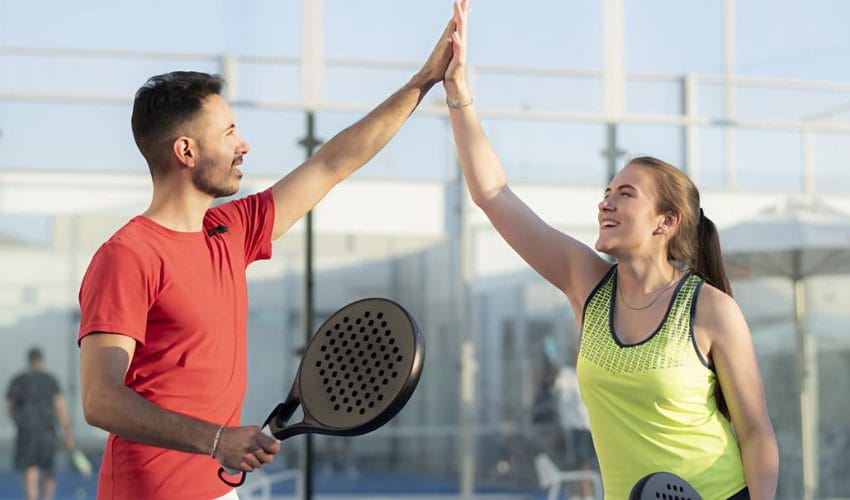
How to Find a Padel Partner in Dubai and the UAE
Finding a padel partner in Dubai and across the UAE has become considerably more accessible as the sport has expanded. The following channels and resources are the most practical options for players at all levels.
Playtomic is the most widely used platform for padel court bookings and matchmaking in the UAE. Many clubs in Al Quoz, Business Bay, JVC, Downtown Dubai, and across Abu Dhabi and Sharjah are listed on the platform. The matchmaking function allows players to join open games and connect with others at a similar level. Confirm current availability with each venue directly.
Club social leagues and open play sessions are one of the most structured routes to finding a regular padel partner in Dubai. Many major venues – including World Padel Academy in Al Quoz, Central Padel Dubai, Club Padel Dubai, and Padel Pro – organise social play sessions and beginner leagues where players of similar ability are grouped together. These sessions create natural opportunities to identify compatible playing partners.
Group coaching programmes at UAE academies – including the WPA Junior and Adult Academy, Viya Padel, and Premier Sports Academy – group players by ability level, providing regular contact with others at the same stage of development and natural opportunities to arrange regular play outside of coached sessions.
WhatsApp communities organised through clubs and padel social media channels are actively used across Dubai and Abu Dhabi. These groups post court availability, organise social games, and welcome new players. Many clubs publish group links on their Instagram pages or venue noticeboards.
Online communities including Reddit (r/dubai, r/padel), local Facebook groups, and padel-specific Instagram accounts are used by UAE players to find partners, share recommendations, and arrange games. Posting in these communities with a brief note on playing level and preferred session times is a straightforward first step for newer players.
How to Build On-Court Chemistry with Your Padel Partner
On-court chemistry between padel partners develops through consistent shared court time. Coaches commonly note that meaningful coordination generally emerges after multiple sessions of regular play – many training guides suggest that intuitive doubles partnership begins to develop after approximately 15 to 20 sessions together, though this varies significantly with session frequency and individual learning pace.
Play together regularly rather than booking occasional one-off sessions. Consistency builds the familiarity that allows partners to anticipate each other’s movement, positioning, and shot tendencies without verbal instruction during rallies.
Develop agreed default court responsibilities. While positioning in padel is fluid and context-dependent, establishing baseline agreements – who takes central balls, who tracks back under the lob, who leads at the net in an attacking position – provides a structural foundation that both players can adapt from in response to match conditions.
Use non-verbal cues alongside verbal communication. Experienced padel pairs rely on movement, hand signals, and positioning to communicate intent during rallies. Developing a shared vocabulary of non-verbal signals reduces hesitation and improves response time.
Debrief briefly after matches. Short, forward-focused post-match conversations – discussing positioning patterns, tactical adjustments, and what worked well – help partners consolidate learning without turning sessions into extended analytical reviews.
Practice specific doubles scenarios together. Drills that replicate real match situations – lob recovery and net transition, side wall rebound sequences, defending from the baseline against an attacking pair – build shared instincts that transfer directly into match play. Coaches commonly recommend that at least a portion of each practice session involves pair-specific scenario drills rather than individual skill repetition alone.
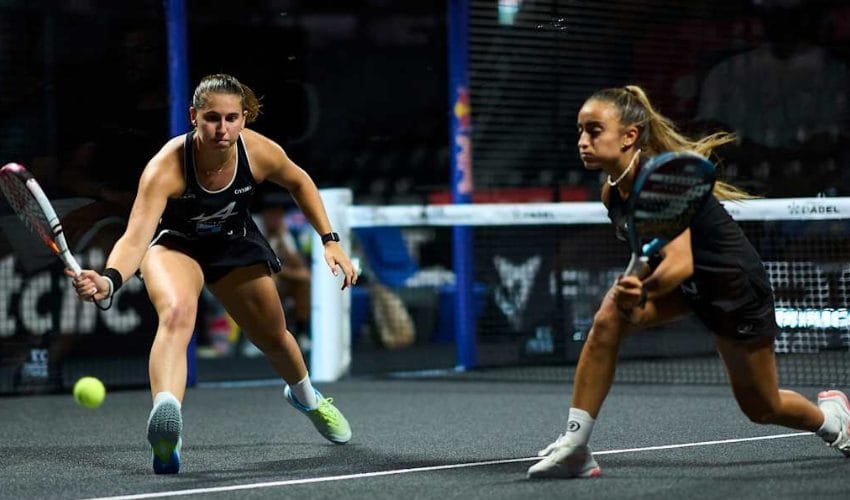
Communication Rules for Padel Doubles Partners
Clear and consistent communication is one of the most measurable skills a padel doubles pair can develop. The following principles are drawn from widely accepted coaching guidance for on-court doubles communication.
Shot calling should be short and consistent. “Mine” and “yours” indicate ball ownership clearly. “Leave” signals that the calling player believes the ball is heading out. Establishing these calls early in a partnership – and using them consistently – reduces collision errors and hesitation, which are among the most common sources of lost points at beginner and early intermediate level.
Between-point communication is the primary opportunity for tactical exchange. Short, specific observations – noting that an opponent is consistently targeting a particular area of the court, confirming serve direction, or adjusting net coverage responsibilities – are more productive than general encouragement alone.
Encouragement language after errors helps maintain partner confidence and refocuses attention on the next point. Coaches commonly recommend brief, neutral resets – “next one,” “let’s go,” “no problem” – rather than detailed error analysis during a match.
Tactical instruction should happen at changeovers and between points, not during rallies. Attempting to coach a partner mid-point divides attention, introduces doubt, and is generally counterproductive regardless of intention.
How to Handle Difficult Matches as a Padel Pair
Match pressure reveals the quality of a padel partnership more clearly than comfortable, winning performances. When a pair is underperforming or facing a stronger opponent, the ability to communicate, adjust, and maintain composure as a unit often determines whether the team recovers or continues to decline.
Redirect attention from the scoreboard to specific, controllable process elements – serve placement, first shot after the return, net positioning on attack. Coaches commonly describe this as “playing the next point” rather than managing the deficit.
Use changeovers deliberately. The time between games is an opportunity to reset communication rhythm, make tactical adjustments, and acknowledge what is working rather than focusing exclusively on what is not. Experienced padel pairs treat changeovers as a structured part of match management rather than passive rest.
Treat errors as information rather than as failures. Coaches consistently advise that accepting variance as a normal feature of padel – at all levels – allows players to maintain the composure that performance under pressure requires.
Maintain consistent body language between points regardless of score. Research in doubles sports consistently indicates that visible frustration or withdrawal in one partner adversely affects the other player’s confidence and execution. Composed, consistent posture and movement between points is a practical habit with measurable performance benefits.
What Professional Padel Partnerships Teach Us
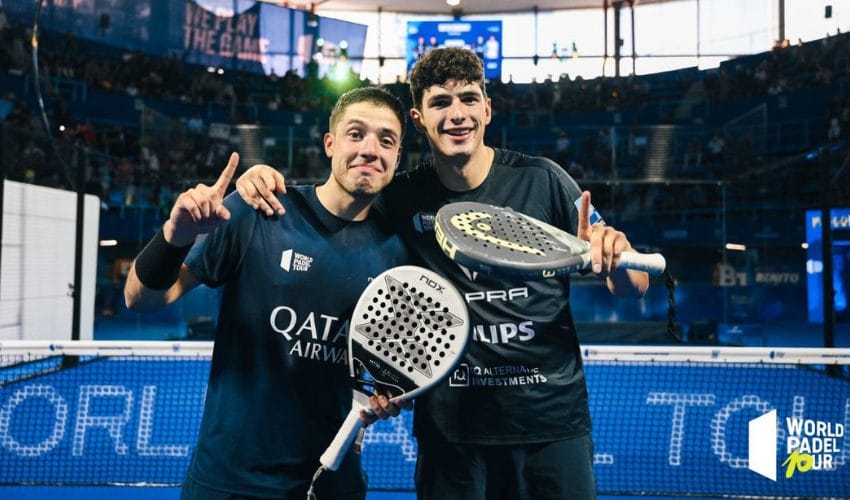
Observing professional padel partnerships on the Premier Padel and FIP circuits provides directly applicable models of effective doubles coordination. At the professional level, consistent communication between points, clear and rehearsed court coverage responsibilities, rapid tactical adjustment between games, and composed responses to adversity are all consistently observable traits.
Many professional players discuss in interviews the importance of trust, mutual preparation, and shared tactical understanding as the foundations of successful partnerships – reinforcing that the relational dynamics valued at recreational club level are the same ones cited at elite level.
Coaches regularly use professional match footage in training contexts to illustrate positioning principles, communication habits, and tactical decision-making patterns that developing players can apply directly to their own partnerships.