What Are Padel Racket Materials?
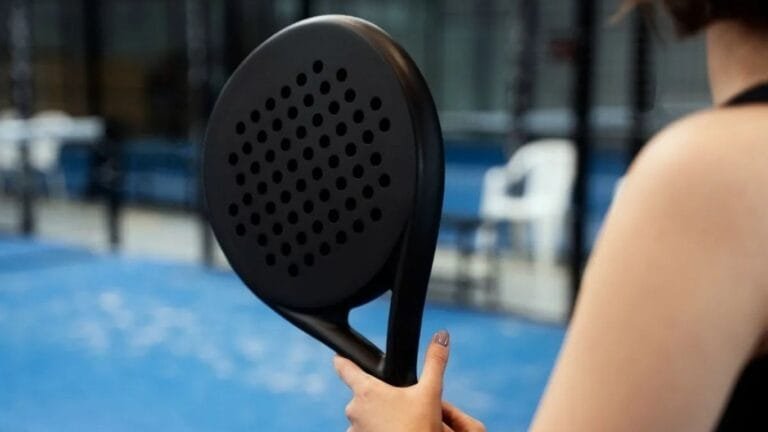
When manufacturers and retailers refer to padel racket materials, they are describing the substances used to construct three distinct zones of the racket: the outer face sheets, the internal foam core, and the surrounding frame. Understanding how these three zones relate to each other physically is the foundation for making a good racket choice.
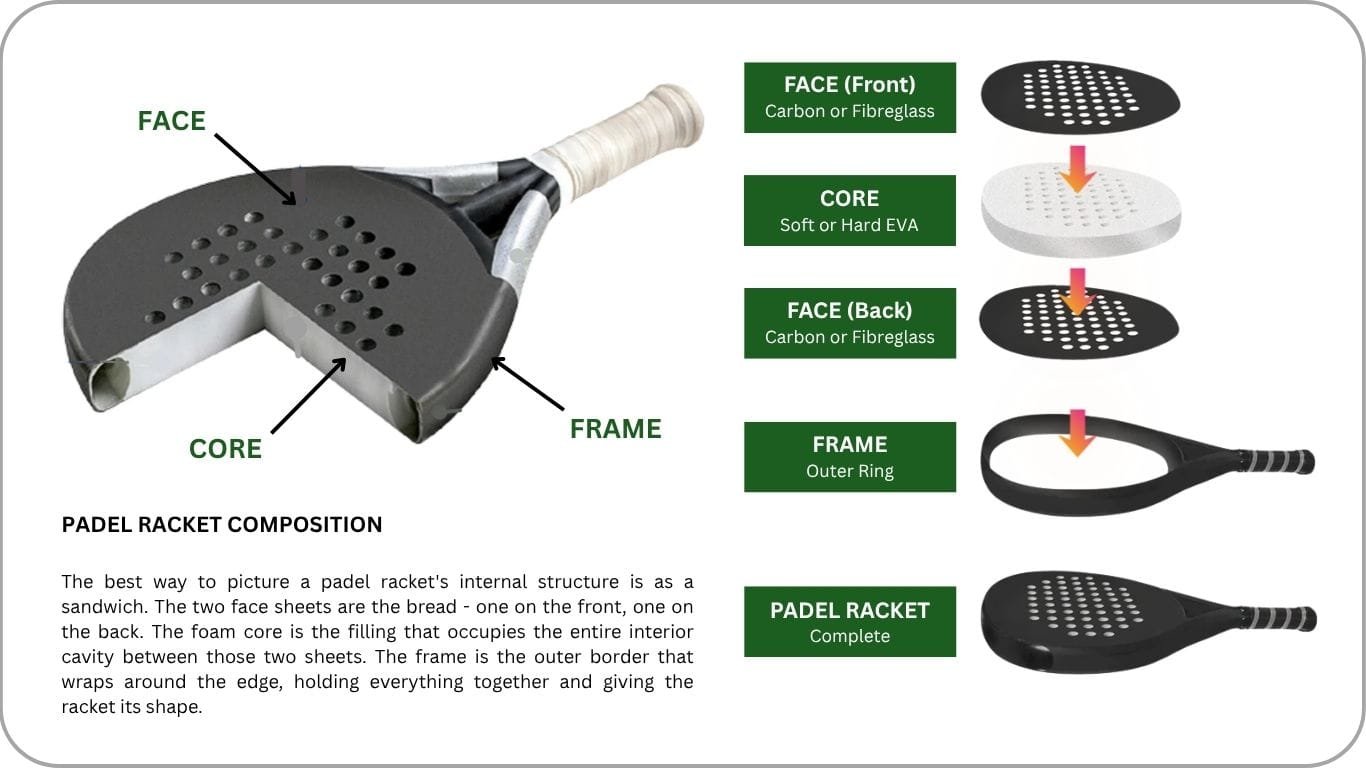
The best way to picture a padel racket’s internal structure is as a sandwich. The two face sheets are the bread – one on the front, one on the back. The foam core is the filling that occupies the entire interior cavity between those two sheets. The frame is the outer border that wraps around the edge, holding everything together and giving the racket its shape.
When the ball makes contact with the racket, it strikes one of the face sheets, which compresses slightly into the foam core beneath it. How stiff or flexible that face sheet is, and how firm or soft that foam core is, determines almost everything about how the racket feels and performs. The core itself is never visible – it is entirely enclosed inside the racket head.
Understanding padel racket materials matters more than many players initially realise. Two rackets of similar shape and weight can play entirely differently depending on what they are made from. A fiberglass face produces a noticeably different sensation to a carbon fiber face when striking the ball – and that difference has real consequences for control, arm comfort, and performance consistency.
For players in the UAE, where indoor courts are heavily used during summer months and outdoor surfaces vary across emirates, material awareness can also influence how a racket holds up under sustained heat and varied playing conditions.
Why Padel Racket Materials Matter More Than Brand Name
Most players spend time comparing brands when buying their first or second racket. The more useful comparison is materials. Two rackets from different brands at a similar price point can play completely differently depending on whether the face sheets are carbon or fiberglass, and whether the foam core is soft or hard density.
Brand reputation reflects overall quality control and design investment – but it is the material specification that determines whether a racket suits a player’s current level, protects their arm, and supports their development on court. A well-matched racket built from the right materials for a player’s stage will outperform a premium brand racket built from the wrong materials every time.
For players who are still developing consistency and technique, this distinction matters most. Coaches working with beginners across Dubai, Abu Dhabi, and Sharjah consistently recommend material-first thinking over brand-first thinking when a player is selecting their first racket.
Main Materials Used in Padel Rackets
Racket anatomy: the sandwich structure explained
Before examining individual materials, it helps to understand how the three zones sit in relation to each other. The table below summarises each zone, where it sits in the racket, and what it does.
| Zone | Position in racket | Material options | Primary function |
|---|---|---|---|
| Face sheets | Front and back outer surfaces | Carbon fiber, fiberglass, or hybrid | Ball contact, initial feel, vibration transmission |
| Core | Full interior cavity between face sheets | Soft EVA foam, medium EVA foam, hard EVA foam | Shock absorption, dwell time, power or comfort |
| Frame | Outer border wrapping the full head | Carbon composite | Structural rigidity, shape, durability |
The core is not a small central insert. It fills the entire interior volume of the racket head from one face sheet to the other – which is why core density has such a significant effect on how the racket plays.
Carbon Fiber
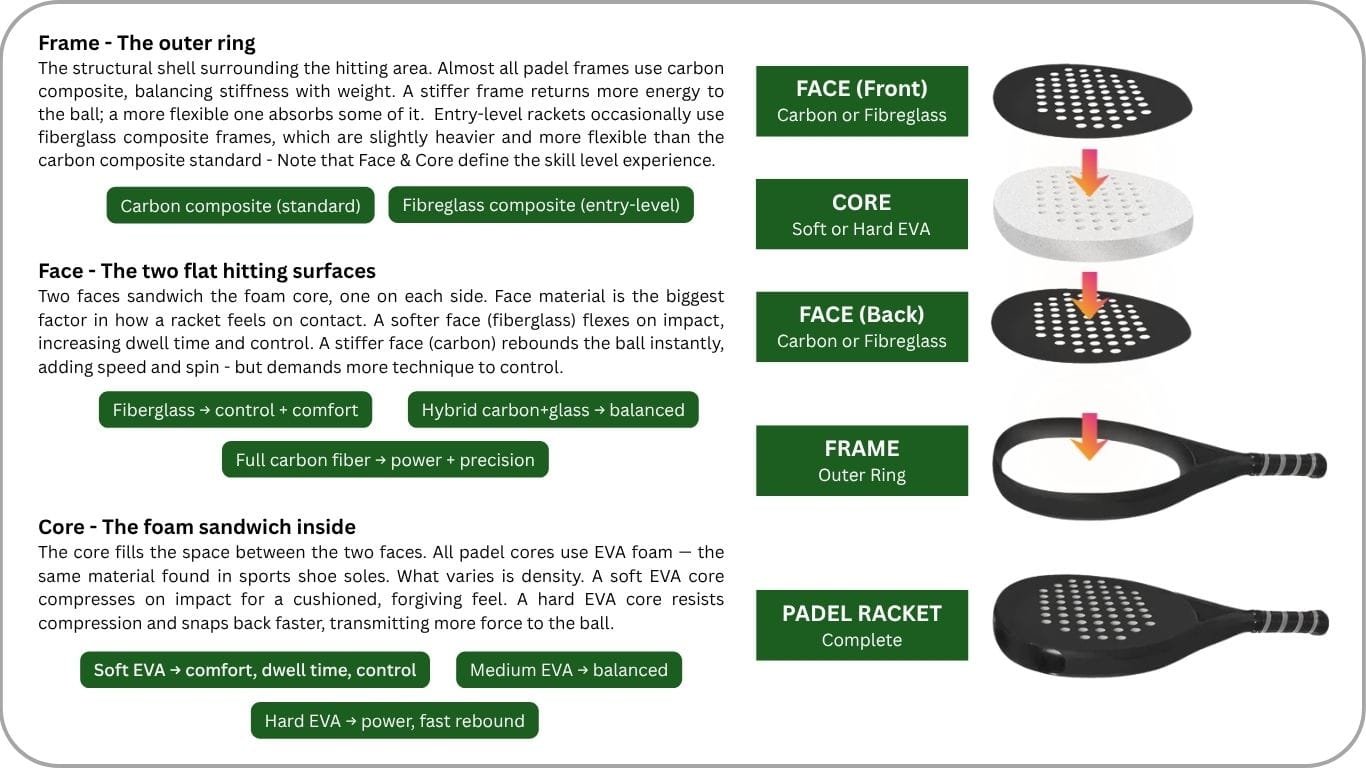
Carbon fiber is the most widely referenced material in padel rackets at intermediate and advanced level. It is manufactured from thin strands of carbon woven into sheets and bonded with resin, producing a material that is both stiff and remarkably light for its strength.
In a padel racket face sheet, carbon fiber transmits energy efficiently at impact. Coaches and manufacturers consistently describe carbon fiber as producing a faster, more direct ball exit – meaning the ball leaves the face surface with less flex and more precision. For players who have developed a consistent technique, this precision is an advantage.
Carbon fiber is also notably durable. The material resists surface deformation and maintains its structural integrity across extended periods of play, making it a practical choice for players who train regularly.
The tradeoff is vibration. Carbon fiber conducts impact shock more directly than softer materials. Players with arm sensitivity or those still developing their technique may find this characteristic less forgiving. Manufacturers address this in different ways – layering carbon with softer materials or incorporating vibration-dampening features in the frame.
Carbon fiber rackets are generally positioned for intermediate to advanced players who already have reliable groundstrokes and are looking to sharpen precision and power.
Fiberglass
Fiberglass is produced from fine glass fibers woven into a sheet and bonded with resin, similar in construction to carbon fiber but with notably different physical properties. The key distinction is flexibility: fiberglass bends slightly more at impact before returning to shape, and this flex creates what many players describe as a trampolining effect – the ball sits briefly on the face before being projected with added control and comfort.
For beginners and developing players, fiberglass face sheets are widely favoured by coaches as a starting point. The added flex means the face sheet absorbs more shock at impact before that energy reaches the foam core and the player’s arm, reducing the vibration transmitted through the racket. This is a relevant consideration for players building their game from scratch, as incorrect technique generates irregular impacts that a stiffer material would transmit more harshly.
Fiberglass rackets are generally found at beginner and lower-intermediate level. They are frequently described as more forgiving on off-centre hits compared to carbon fiber equivalents, which makes them more consistent for players still developing their contact point. Players working through padel beginner drills will typically find a fiberglass racket more suitable during this phase of development.
Durability is slightly lower than carbon fiber over time, but for club players and beginners using a racket for recreational play, lifespan is rarely a practical concern.
EVA Foam Core
The foam core occupies the entire interior cavity of the racket head, sandwiched between the two face sheets. It is not a small central component – it fills the full space from one face sheet to the other, across the entire head of the racket. The two principal core materials used across modern padel rackets are EVA (ethylene-vinyl acetate) foam and polyethylene foam, with EVA being the more common of the two. EVA foam comes in a meaningful range of densities that produce significantly different performance outcomes.
Soft EVA foam compresses more when the face sheet presses into it at ball impact, creating a larger dwell time – the brief moment the ball and face sheet work together before the ball departs. Players commonly describe soft EVA cores as offering a more comfortable, controlled sensation. The softer compression absorbs more impact energy across the full depth of the core, which reduces the shock transferred to the wrist, elbow, and shoulder. For this reason, soft EVA cores are frequently recommended for beginners and players returning from arm injuries, based on available coaching and sports medicine guidance.
Hard EVA foam compresses less at impact. The ball departs more quickly, generating greater rebound speed and a sharper, more connected feel. Advanced players who rely on aggressive net play, powerful smashes, and precise direction often prefer hard EVA for the feedback it provides.
It is important to note that core density is not always clearly labelled by manufacturers. Players should consult retailer descriptions or seek guidance from coaches familiar with specific models before purchasing based on core type alone.
The table below compares soft and hard EVA foam across the properties that matter most to players at different levels.
| Property | Soft EVA core | Hard EVA core |
|---|---|---|
| Ball dwell time | Longer – more feel | Shorter – faster exit |
| Shock absorption | High – gentler on arm | Low – more vibration |
| Power output | Medium | High |
| Control feel | High | Medium |
| Best suited for | Beginners and intermediate | Advanced players |
| UAE climate consideration | Performs consistently indoors | Well-suited to fast indoor surfaces |
Frame vs Face vs Core: How Each Zone Affects Performance
Understanding the distinction between the three structural zones helps players interpret product descriptions more accurately and avoid being misled by marketing language that emphasises one zone while omitting another.
The face sheets are the two outermost surfaces – front and back – that make direct contact with the ball on one side and compress into the foam core on the other. Face material primarily determines control, vibration transmission, and the initial feel of a hit.
The core fills the entire interior cavity between the two face sheets. Core material primarily determines the depth of feel, comfort, shock absorption, and how fast or slow the ball exits the racket. Because the core occupies the full interior volume of the racket head, even small differences in foam density have a noticeable effect on how the racket plays.
The frame is the surrounding border structure that holds the face sheets and core together and gives the racket its shape. Frame material – which is frequently carbon fiber or a carbon composite even in beginner rackets – determines structural rigidity, durability against impacts with walls and floors, and overall weight distribution.
Manufacturers combine these three zones in different ways to achieve specific performance profiles. A racket with fiberglass face sheets and a soft EVA core is engineered for comfort and beginner accessibility. A racket with full carbon fiber face sheets, a hard EVA core, and a reinforced carbon frame is engineered for power and precision at advanced level. Most rackets sit somewhere along this spectrum with varying combinations designed for specific skill brackets.
How Padel Racket Materials Affect Performance
The table below provides a quick reference for how the main face sheet and core materials compare across the four performance properties that matter most to players making a buying decision.
| Material | Power | Control | Comfort | Durability | Best level |
|---|---|---|---|---|---|
| Carbon fiber face sheets | High | High | Low | Excellent | Intermediate – Advanced |
| Fiberglass face sheets | Medium | Medium-High | High | Good | Beginner – Early Intermediate |
| Hybrid carbon-fiberglass face | Medium-High | High | Medium | Very Good | Intermediate |
| Soft EVA foam core | Medium | High | High | Good | Beginner – Intermediate |
| Hard EVA foam core | High | Medium | Low | Excellent | Advanced |
Power
Power in a padel racket is most directly influenced by the stiffness of the face sheets and the density of the core. Stiffer face sheets and harder cores reduce the energy lost at impact, returning more force to the ball. Manufacturers often refer to this as a higher coefficient of restitution – a technical measure of how efficiently the racket transfers energy. In practical terms, players using carbon face sheets and hard EVA cores can generate greater ball speed with equivalent swing force compared to softer constructions.
Control
Control relates to how precisely a player can direct the ball, and it is influenced by the combination of face sheet flex and core density. A small amount of flex in the face sheet – as found in fiberglass constructions – allows the ball to sit briefly against the surface before departure, giving players a fractional additional moment of directional influence. Many intermediate players report a greater sense of control using fiberglass or hybrid carbon-fiberglass face sheets compared to full carbon constructions. Advanced players, by contrast, often prefer the sharper feedback of full carbon because their technique is refined enough to utilise precision rather than require additional correction time.
Comfort and Vibration Absorption
Comfort is primarily determined by how much impact shock the racket absorbs before it reaches the player’s hand. The shock travels from the ball through the face sheet, through the foam core filling, and into the frame and handle. Soft EVA cores and fiberglass face sheets both contribute to vibration reduction at each stage of that path. The frame also plays a role – wider frames and reinforced structures can disperse vibration more effectively than narrow or lightweight designs.
Coaches commonly advise players with a history of elbow or wrist discomfort to prioritise softer face sheets and core materials, and to avoid full carbon constructions until technique is consistent and contact quality is reliable. This is not a medical recommendation – players with persistent discomfort should seek appropriate professional guidance – but it is widely cited as a practical precaution within coaching communities. Players who are still making common padel mistakes such as late contact or incorrect swing paths are particularly susceptible to arm strain from overly stiff rackets.
Durability and Lifespan
Carbon fiber face sheets consistently outperform fiberglass in terms of resistance to surface wear and structural fatigue. In the UAE context, where rackets are exposed to high temperatures during transport and storage, this matters. Prolonged heat exposure can affect the resin bonding in any composite racket, though carbon fiber generally maintains structural integrity better than fiberglass under these conditions.
Players who play multiple times per week will typically notice face sheet wear on fiberglass rackets sooner than on carbon equivalents. Grit from outdoor courts – present at many venues across Sharjah, Ras Al Khaimah, and other emirates – can abrade face sheet surfaces over time, regardless of construction type.
Some product mentions in this article include affiliate links to Amazon.ae.
| Beginner | Intermediate | Advanced |
|---|---|---|
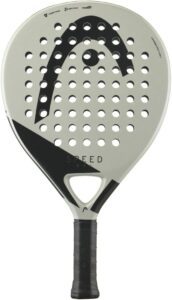 HEAD Evo SpeedCheck Price on Amazon.ae | 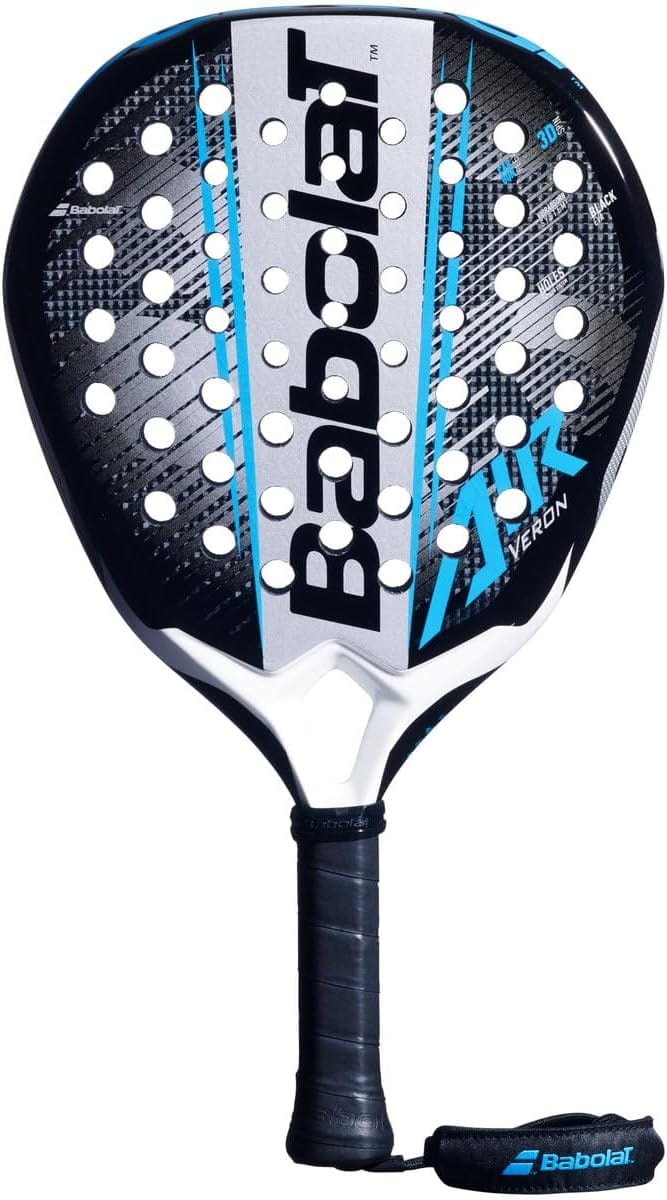 Babolat Air VeronCheck Price on Amazon.ae |  Babolat Technical Viper SoftCheck Price on Amazon.ae |
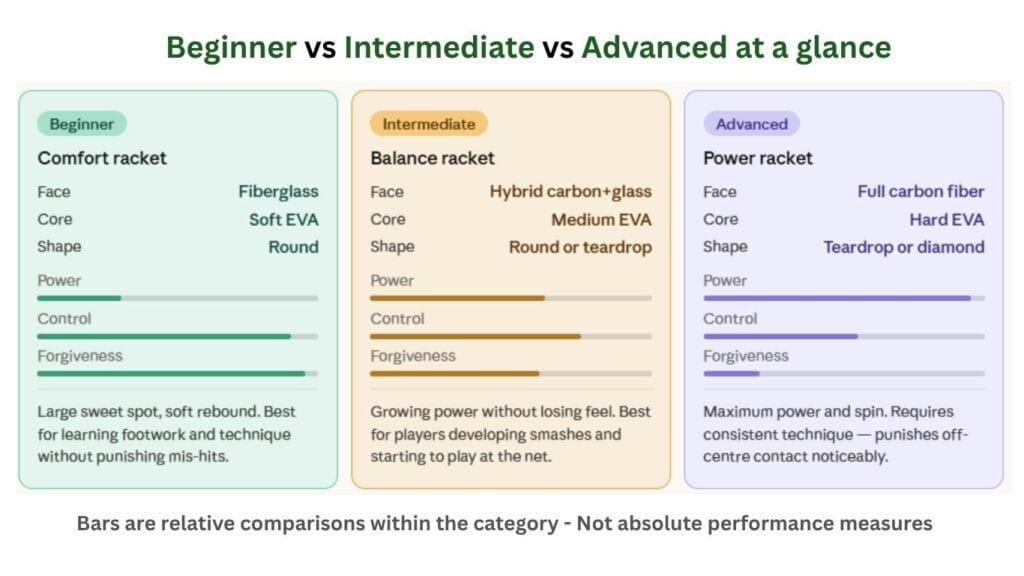
Choosing the Right Padel Racket Materials Based on Skill Level
The table below summarises the recommended material combination for each skill level, along with the playing profile each combination is designed to support.
| Skill level | Recommended face sheets | Recommended core | Frame | Playing profile |
|---|---|---|---|---|
| Beginner | Fiberglass | Soft EVA | Carbon composite | Forgiving, comfortable, reduces arm strain |
| Intermediate | Hybrid carbon and fiberglass | Medium EVA | Reinforced carbon composite | Balanced power and control, developing precision |
| Advanced | Full carbon fiber | Hard EVA | Full carbon | Maximum power, sharp feedback, high precision |
Beginners
Players new to padel are strongly advised by coaches to start with a round or teardrop-shaped racket built with fiberglass face sheets and a soft or medium EVA foam core. This combination provides the most forgiving contact zone, absorbs impact shock effectively across both the face sheet and the full depth of the foam filling, and does not punish off-centre hits as severely as stiffer alternatives.
Beginners in the UAE who are learning at indoor clubs during summer months will benefit from the additional comfort margin these materials provide, especially when technique is inconsistent and rally length is short. Players at this stage who are also looking for structured learning options can explore padel lessons in the UAE to find coaching programmes that match their level.
There is no developmental benefit to starting with a carbon fiber racket at beginner level. The precision carbon offers is only meaningful when a player already produces reliable, consistent contact with the centre of the face sheet.
Intermediate Players
Intermediate players – those who can sustain rallies, use the glass effectively, and have a functional serve and volley game – commonly move toward hybrid constructions. A hybrid face typically layers carbon fiber on one or both face sheets while incorporating a medium-density EVA core, balancing the responsiveness of carbon with enough flex for continued control development.
Intermediate players in the UAE club scene across Dubai, Abu Dhabi, and Sharjah will find the widest range of rackets at this level. Brands such as HEAD, Bullpadel, and Adidas position several models specifically for this skill bracket, with hybrid material combinations across their entry-to-mid-range lines.
Advanced Players
Advanced players typically select rackets built with full carbon fiber face sheets, hard EVA cores, and reinforced frames. These constructions deliver maximum power and precision for players whose technique is consistently reliable.
The decision at advanced level often shifts from material type to specific carbon weave patterns, frame geometry, and balance point – refinements that fall outside the scope of a beginner or intermediate buying decision. Advanced players are generally best served seeking guidance from coaches familiar with their specific game style before committing to a racket at this level.
For UAE players ready to apply this material knowledge to a specific purchase, the best padel rackets under AED 600 guide covers 10 beginner-suitable options with fiberglass surfaces and soft EVA foam cores verified on Amazon.ae.
For intermediate players looking to upgrade to carbon construction, the best padel rackets under AED 1200 guide reviews 10 options from HEAD, NOX, Adidas, Babolat and Bullpadel covering the full carbon and multi-density foam range available in the UAE in 2026.
Common Misconceptions About Padel Racket Materials
“Carbon Fiber Is Always Better”
This is the most persistent misconception in padel racket purchasing. Carbon fiber is not universally superior – it is superior for players at the right skill level. A beginner using full carbon fiber face sheets will typically experience more arm discomfort, reduced forgiveness on off-centre hits, and no performance gain over fiberglass because their technique does not yet generate consistent, centred contact with the face sheet.
“Expensive Materials Equal Better Performance for All Players”
Higher material quality in the top tier of padel rackets is designed to serve players who can fully exploit those properties. A beginner or recreational player spending significantly more on a professional-grade carbon racket will not play better than they would on a well-constructed beginner model. Many experienced coaches actively recommend against premium racket purchases until players have consolidated their technique.
“All Carbon Fiber Is the Same”
Manufacturers differentiate significantly within carbon fiber products. Woven carbon, described as 3K or 12K weave patterns based on the number of fiber bundles, produces different stiffness profiles and surface textures. Some manufacturers layer carbon at different angles across the face sheet to influence directional stiffness. These distinctions are real but relevant primarily at advanced level.
“The Core Is Just a Small Central Component”
A common misunderstanding is that the foam core is a discrete insert sitting in the middle of the racket head. In reality the core is the foam filling that occupies the entire interior cavity between the two face sheets – the full volume of the racket head from front to back. This is why core density has such a significant impact on how the racket feels: the foam is not a small element but the primary structural filling of the entire head.
“Fiberglass Is Outdated”
Fiberglass remains the recommended starting material for beginners and is actively specified by manufacturers as the appropriate choice for developing players. It is not an inferior or obsolete material – it is purpose-built for a specific playing stage. For unfamiliar padel terminology that comes up when reading racket descriptions, the Padel Gameplan glossary of terms provides clear definitions for commonly used words across equipment and gameplay.
Final Thoughts on Padel Racket materials
Padel racket materials determine far more than how a racket looks or how it is marketed. They establish how the racket performs at impact, how it protects the arm from shock, how it responds to the ball across different shot types, and how long it holds up under regular play in the UAE climate.
Understanding the sandwich structure – two face sheets bonded to a foam core that fills the entire interior – gives players a clear mental model for evaluating any racket. The face sheets determine the initial impact character. The core filling determines the depth of feel and comfort. The frame holds it all together and contributes to durability.
The core principle for buying is straightforward: match materials to skill level. Fiberglass face sheets and soft EVA cores suit beginners and players who prioritise comfort and control. Hybrid constructions bridge the gap for developing intermediate players. Full carbon fiber face sheets and hard EVA cores serve advanced players with consistent technique who require precision and power above all else.
Brand reputation and price are secondary to understanding this material logic. A well-matched racket at any price point will outperform an expensive, mismatched racket on a player’s development and enjoyment of the game. Players who want to build on this foundation can explore the full padel learning pathway for technique guides, drill references, and UAE-specific coaching resources.
What to do next?
Now that padel racket materials are clearer, the next step is to apply this knowledge when choosing or upgrading your racket.
Here is a simple path to follow:
- Step 1 – Identify your playing level
Knowing whether you are beginner or intermediate helps narrow down the right material combinations. Start with the Padel Level Guide to confirm your level. - Step 2 – Match materials to your needs
- Fiberglass + soft EVA for comfort, control, and forgiveness
- Carbon + harder EVA for power, precision, and durability
- Step 3 – Choose the right racket based on materials
Apply what you learned by reviewing real options in Best Beginner Padel Rackets or Best Intermediate Padel Rackets UAE. - Step 4 – Improve technique with the right feel
Materials affect how you control shots and generate power. Improve consistency with Padel Backhand Drills and other technique guides. - Step 5 – Complete your setup
Once your racket is selected, make sure the rest of your gear supports your performance using the Padel Equipment Checklist.