

How Many Calories Does Padel Burn in 1 Hour or 90 Minutes?
By the Padel Gameplan Editorial Team | Published: 08 Aug 2025 | Updated: 19 Sep 2026
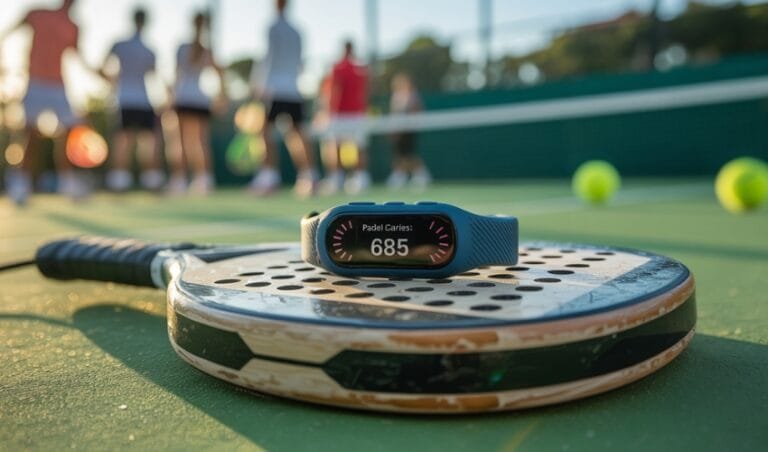
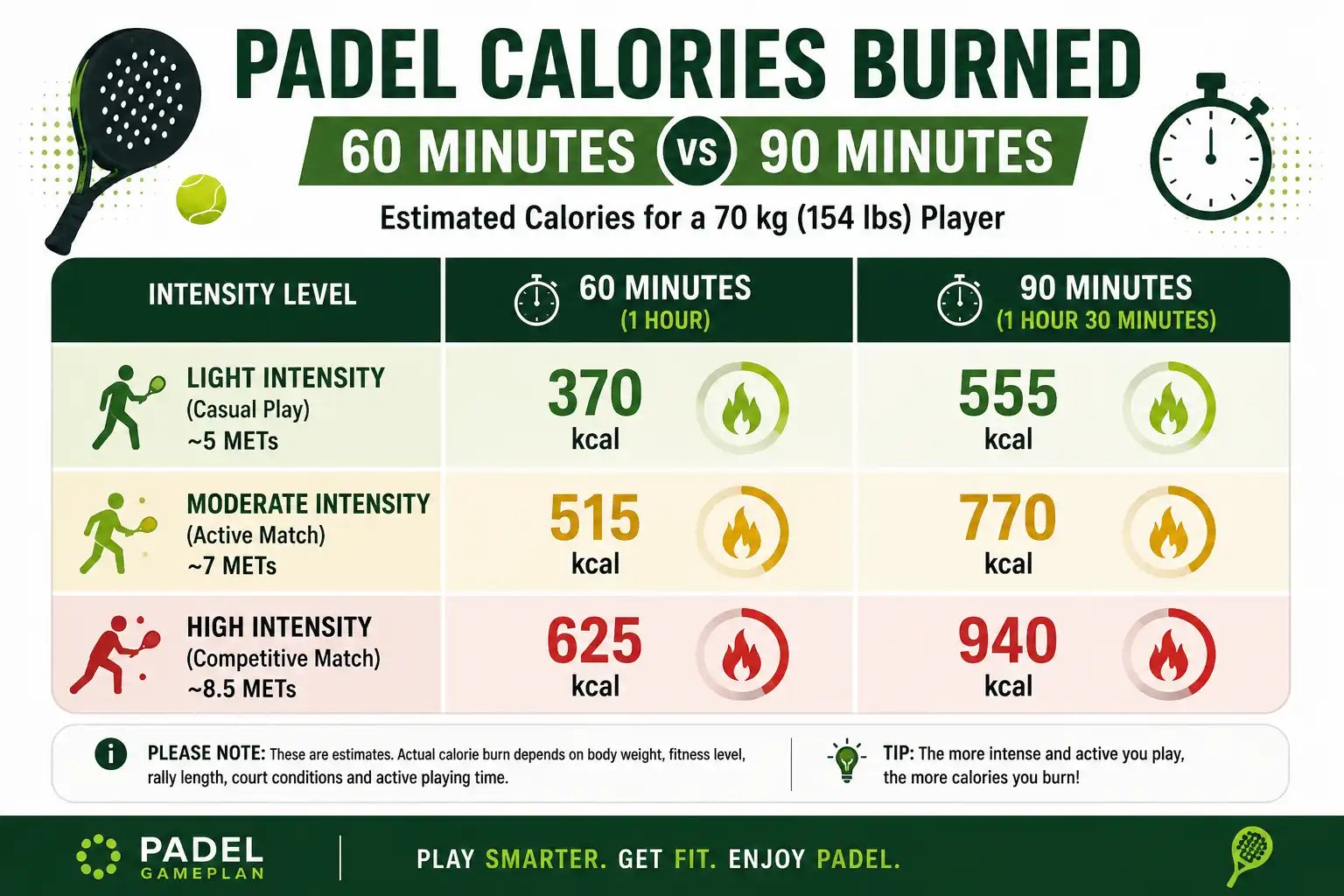
How many calories does padel burn? A 70 kg player may burn approximately 370 calories during a light one-hour session, 515 calories during moderate play or 625 calories during a high-intensity match. Over 90 minutes, the same player may burn roughly 555 to 940 calories.
These practical UK estimates depend on body weight, match intensity, rally length and active playing time. They are useful ranges rather than guaranteed figures.
This guide compares padel calories burned per hour and over 90 minutes by weight and intensity, then explains why smartwatch and online calorie readings can differ.

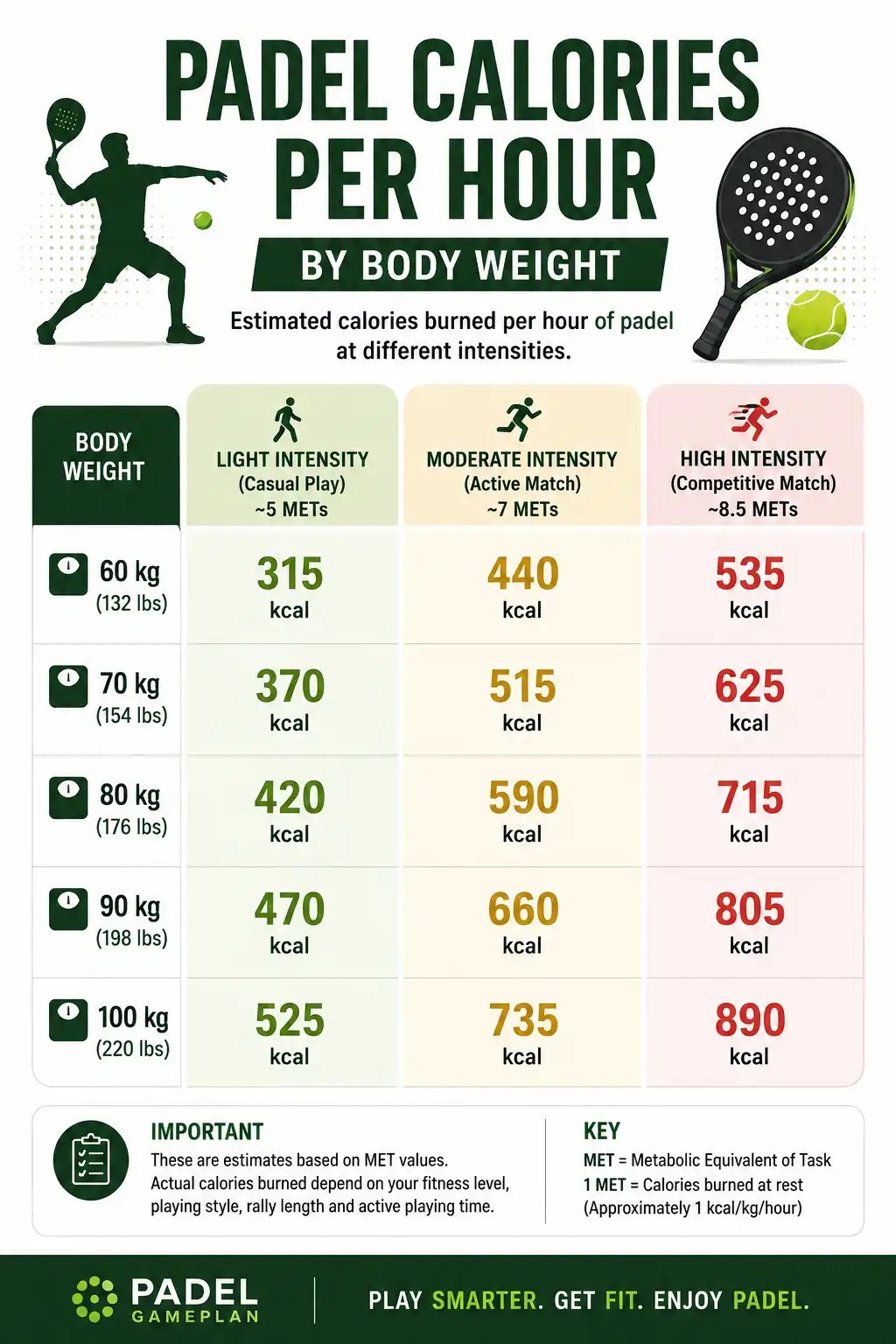
Padel Calories Burned Per Hour by Body Weight
| Player Weight | Light Session | Moderate Match | High-Intensity Match |
|---|---|---|---|
| 60 kg | ~315 kcal | ~440 kcal | ~535 kcal |
| 70 kg | ~370 kcal | ~515 kcal | ~625 kcal |
| 80 kg | ~420 kcal | ~590 kcal | ~715 kcal |
| 90 kg | ~470 kcal | ~660 kcal | ~805 kcal |
| 100 kg | ~525 kcal | ~735 kcal | ~890 kcal |
These figures are estimates rather than exact measurements. Actual padel calories burned can vary depending on body weight, fitness level, rally length, playing standard, match intensity and the amount of time spent actively moving.
How These Padel Calorie Estimates Were Calculated
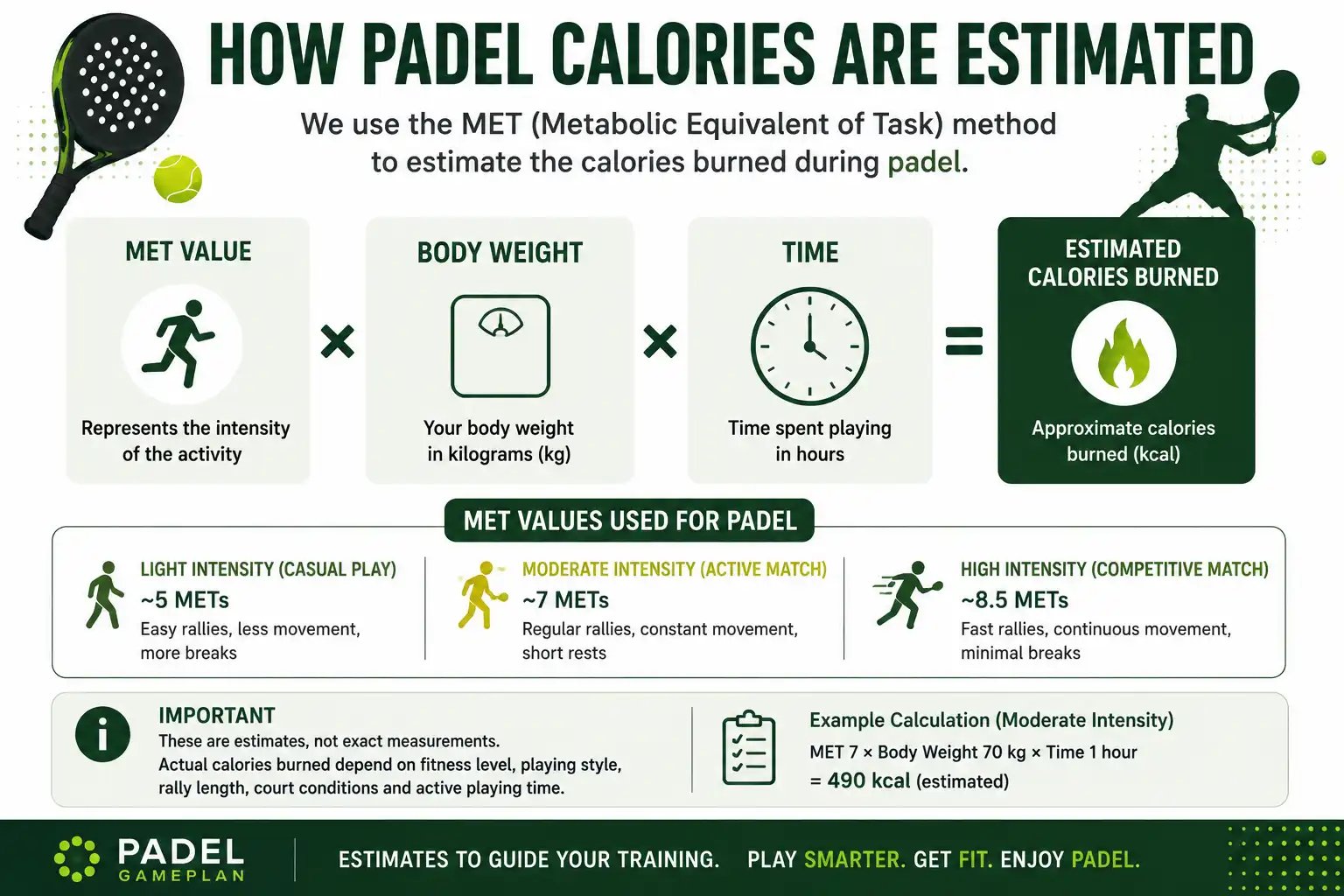
Padel calorie burn is usually estimated using METs, or Metabolic Equivalent of Task, which are commonly used to estimate how much energy different activities require.
A standard calculation is:
Calories per minute = MET × body weight in kg × 3.5 ÷ 200
For the estimates in this guide, three practical intensity levels are used:
- Light padel session: about 5 METs
- Moderate padel match: about 7 METs
- High-intensity padel match: about 8.5 METs
These are working estimates, not official padel-specific values.
What Affects Padel Calories Burned?
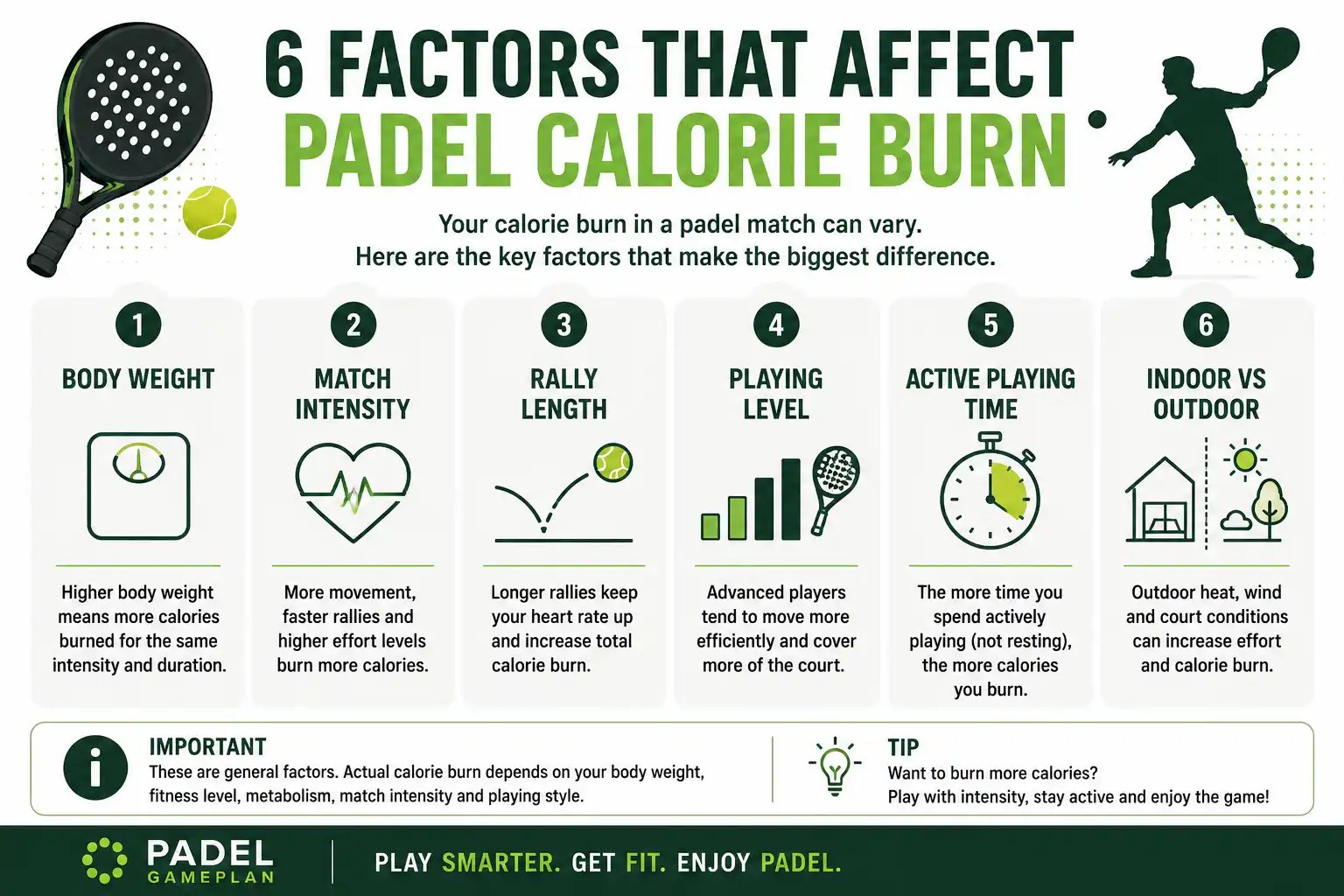
The number of calories burned during padel can vary significantly from one session to another. The main factors are body weight, playing intensity, rally length, experience level and how much of the booked court time is actually spent moving.
Body Weight
Body weight has a direct effect on calorie estimates. Under the same exercise conditions, a heavier player will usually have a higher estimated calorie expenditure than a lighter player.
Match Intensity
A relaxed social game with frequent pauses will usually burn fewer calories than a fast competitive match with repeated sprints, lunges and changes of direction.
Rally Length
Longer rallies generally mean more continuous movement and less recovery time. Short points with frequent breaks may reduce overall calorie expenditure.
Playing Level
Higher-level players often move more efficiently, but their matches may also be faster and more physically demanding. Playing level alone does not determine calorie burn.
Active Playing Time
A one-hour court booking does not always mean one full hour of exercise. Warm-ups, ball collection, changeovers, conversations and breaks can all reduce the amount of active playing time.
Indoor vs Outdoor Conditions
Indoor and outdoor conditions can affect how hard a session feels, especially during warm weather. However, sweating more does not automatically mean substantially more calories are being burned.
For UK players, indoor courts can make it easier to maintain a consistent playing schedule throughout autumn and winter.

Does Padel Burn More Calories Than Tennis, Running or Other Sports?
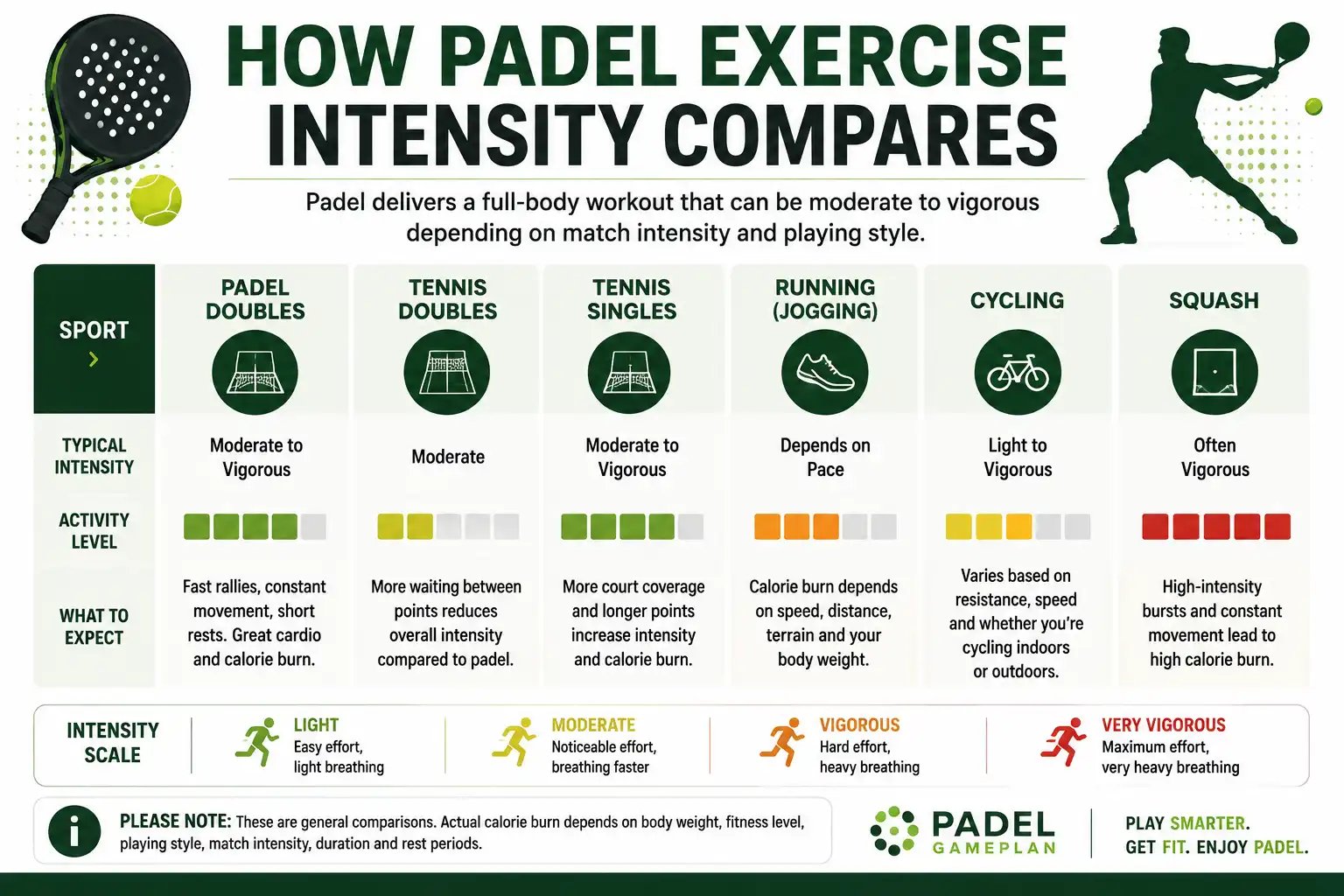
Padel can provide a useful cardiovascular workout, but it should not automatically be described as burning more calories than tennis, running or squash. The actual calorie burn depends more on body weight, duration and intensity than on the name of the sport.
| Activity | Typical Movement Pattern | General Exercise Demand |
|---|---|---|
| Padel doubles | Short bursts, lateral movement, lunges and recovery | Moderate to vigorous |
| Tennis doubles | Intermittent court movement | Often moderate |
| Tennis singles | Greater individual court coverage | Moderate to vigorous |
| Running | Continuous movement | Depends strongly on pace |
| Cycling | Continuous repetitive movement | Light to vigorous |
| Squash | Frequent acceleration and rapid changes of direction | Often vigorous |
Padel is an intermittent sport. Players repeatedly accelerate, stop, change direction and recover between points rather than maintaining one continuous pace.
For many recreational players, a normal doubles match may provide moderate-intensity exercise, while faster competitive padel can become vigorous for parts of the session.
The most useful comparison is therefore not simply “padel vs tennis” or “padel vs running,” but how hard the individual session is actually played.
How Many Calories Does 90 Minutes of Padel Burn?
A 90-minute padel session can burn significantly more calories than a one-hour match, but the total still depends on body weight, intensity and how much of the booking is spent actively playing.
Using the same estimates from the table above, a 70 kg player might burn approximately:
- Light session: ~555 kcal in 90 minutes
- Moderate match: ~770 kcal in 90 minutes
- High-intensity match: ~940 kcal in 90 minutes
These figures are calculated by multiplying the one-hour estimate by 1.5.
However, a 90-minute court booking does not always mean 90 minutes of continuous exercise. Warm-ups, changeovers, ball collection, short breaks and conversations can all reduce active playing time.
For that reason, calories burned in 90 minutes of padel should be treated as an estimate rather than a guaranteed figure.
Is Padel Good for Weight Loss?
Padel can support weight management because it increases overall energy expenditure, but playing padel does not automatically lead to weight loss.
Body weight changes depend on overall energy balance over time, including:
- food and drink intake
- total daily activity
- exercise frequency
- sleep
- individual metabolism
- body composition
A regular padel routine can contribute to an active lifestyle, especially when combined with other forms of exercise and sensible nutrition.
For UK adults, NHS guidance recommends at least 150 minutes of moderate-intensity activity per week or 75 minutes of vigorous activity, together with muscle-strengthening activity on at least two days each week.
Depending on how intensely it is played, padel can contribute towards those weekly activity targets.
The more useful question is therefore not simply whether padel “burns fat,” but whether it is an activity that can be played consistently enough to support long-term fitness and energy expenditure.
Is Padel Good Cardio?
Padel can provide a useful cardiovascular workout because matches involve repeated movement, short accelerations, lateral steps, lunges and recovery between points.
The intensity can vary considerably. A relaxed social session may feel moderate, while a fast competitive match can become vigorous for parts of the game.
A simple way to judge exercise intensity is the talk test:
- During moderate activity, breathing is faster but conversation is still possible.
- During vigorous activity, speaking more than a few words without pausing becomes difficult.
Padel can therefore contribute to cardiovascular fitness, particularly when matches are played regularly and at a sufficiently active pace.
However, not every hour on court provides the same training effect. Coaching sessions with frequent explanations, short rallies or long breaks may be less demanding than continuous match play.
For players looking to improve fitness away from the court, the padel training at home guide includes exercises that can complement regular matches.
How Accurate Are Apple Watch, Garmin and Fitbit Padel Calories?
Smartwatches can be useful for tracking padel sessions, but their calorie figures should be treated as estimates rather than exact measurements.
Devices such as Apple Watch, Garmin and Fitbit usually estimate calorie expenditure using a combination of:
- heart rate
- body weight
- age
- movement data
- exercise duration
- device-specific algorithms
Padel can be difficult for wearables to measure precisely because the sport includes short bursts of movement, rapid direction changes, recovery periods and frequent wrist action.
For example, if the same watch records:
- Session 1: 420 kcal
- Session 2: 510 kcal
- Session 3: 610 kcal
the most useful interpretation is usually that Session 3 was probably more demanding for that player.
The exact number should not be treated as a laboratory measurement.
For most players, smartwatch calorie data is most useful for comparing their own sessions over time, rather than comparing calorie totals directly with another player using a different device.
How to Burn More Calories During Padel Safely
Players who want a more physically demanding padel session do not need to turn every rally into a sprint. A better approach is to increase overall movement quality, consistency and playing intensity gradually.
Useful ways to make a session more demanding include:
- staying active between shots instead of standing flat-footed
- improving recovery position after each shot
- working on lateral footwork and short acceleration
- playing opponents of a similar or slightly higher standard
- reducing unnecessary pauses between points
- adding conditioning sessions away from the court
- increasing weekly playing time gradually rather than suddenly adding several long matches
A proper warm-up is also important before higher-intensity sessions, especially because padel involves repeated stopping, turning and lateral movement.
Footwear becomes more important as playing frequency and intensity increase. Padel-specific shoes are designed to support grip, movement and stability on court.
For more detail, see the Best Padel Shoes UK guide.
Padel Calorie Burn: Bottom Line
For many recreational players, padel calories burned per hour may fall somewhere around 300 to 700 calories, although lighter sessions can fall below this range and more demanding matches can exceed it.
There is no single exact answer to how many calories does padel burn because calorie expenditure depends on:
- body weight
- match intensity
- rally length
- playing level
- session duration
- active playing time
For a 70 kg player, a practical estimate is around 370 calories during lighter play, 515 calories during moderate play and 625 calories during a demanding one-hour session.
These numbers are best used as a guide rather than treated as exact measurements. For most players, the more important factor is whether padel is played regularly enough to contribute meaningfully to weekly physical activity and overall fitness.
Frequently Asked Questions
1. How many calories does padel burn in one hour?
For many adults, padel may burn roughly 300 to 700 calories per hour, depending on body weight, match intensity and active playing time. Lighter recreational sessions may fall below this range, while demanding matches may exceed it.
2. How many calories does 90 minutes of padel burn?
A 70 kg player might burn around 555 calories in a light session, 770 calories in a moderate match and 940 calories in a high-intensity 90-minute session. These are estimates rather than exact measurements.
3. Can padel burn 1,000 calories?
It is possible during a long or particularly demanding session, especially for heavier players, but 1,000 calories should not be treated as a typical one-hour padel figure.
4. Does padel burn more calories than tennis?
Not necessarily. Tennis singles generally requires more individual court coverage, while both sports can range from moderate to vigorous intensity. The actual calorie burn depends more on the player, duration and intensity than on the sport itself.
5. Is padel good cardio?
Yes, padel can provide a useful cardiovascular workout because matches involve repeated movement, short accelerations, lateral steps, lunges and recovery between points.
6. Is padel good for weight loss?
Padel can support weight management by increasing overall energy expenditure, but weight loss depends on total energy balance over time, including diet, activity levels and exercise frequency.
7. How accurate are smartwatch calorie estimates for padel?
Apple Watch, Garmin, Fitbit and similar devices provide estimates rather than direct measurements. They are often most useful for comparing the intensity of your own sessions over time.
8. Do heavier players burn more calories playing padel?
Generally, yes. Under the same exercise conditions, a heavier player will usually have a higher estimated calorie expenditure than a lighter player.
9. Does competitive padel burn more calories than beginner padel?
Often, yes. Competitive matches may involve faster movement, longer rallies and less recovery time. However, playing level alone does not determine calorie burn.
10. Is one hour of padel enough exercise?
One hour of active padel can make a meaningful contribution towards UK weekly physical activity targets. Adults are generally advised to accumulate at least 150 minutes of moderate activity or 75 minutes of vigorous activity each week, together with muscle-strengthening exercise.
Sources and Methodology
The calorie figures in this guide are estimates, not direct laboratory measurements.
The calculations use the standard exercise-energy formula:
Calories per minute = MET × body weight in kg × 3.5 ÷ 200
The article uses practical intensity assumptions of approximately:
- 5 METs for lighter padel
- 7 METs for moderate recreational play
- 8.5 METs for high-intensity play
These values are used as modelling assumptions rather than official padel-specific classifications.
The main references used for this guide include:
- 2024 Compendium of Physical Activities – a widely used reference for MET values and estimating the energy cost of different physical activities.
- NHS Physical Activity Guidelines for Adults Aged 19 to 64 – used for UK guidance on moderate and vigorous exercise intensity and weekly activity targets.
- UK Chief Medical Officers’ Physical Activity Guidelines – the official UK-wide physical activity recommendations, updated in July 2026.
- LTA Padel Information and Participation Data – used for UK-specific context on the development and participation of padel in Britain.
Because padel intensity can vary considerably between social, coaching and competitive sessions, all calorie figures in this article should be treated as a practical guide rather than a guaranteed result.