


Learn Padel UK: From First Session to Confident Player
Learn Padel UK 2026 through a clear progression covering rules, scoring, court positioning, essential shots, structured drills, player levels and practical equipment guidance.
A learning path matched to your experience
There is no need to read every guide at once. Select the route that best reflects your current experience and use the linked stages in order.
Complete beginner
Start with how the court works, then learn the UK rules and the basic terms used during lessons and social sessions.
Begin with Stage 1 →Played a few times
Correct common positioning and shot-selection errors before adding serve, backhand and wall-play practice.
Go to Stage 2 →Improving player
Use technique guides and repeatable drills, then assess your level to identify the next skill that needs attention.
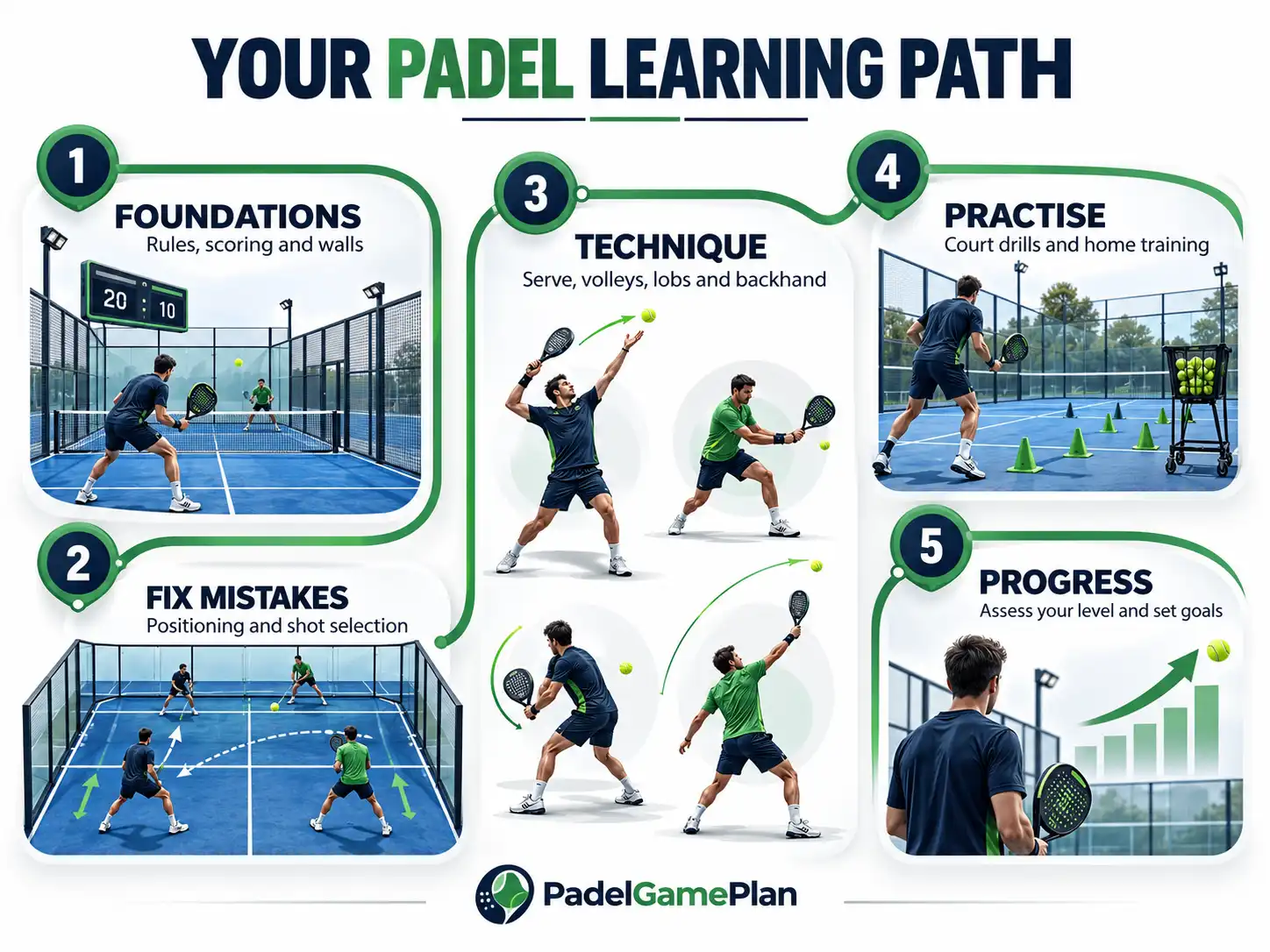
Go to Stage 3 →Learn padel in five practical stages
The sequence moves from match basics to technique, purposeful practice and self-assessment. Each stage links to existing PadelGamePlan guides so readers can continue without searching the site.
Understand the game before your first match
Learn court layout, the underarm serve, scoring, legal wall rebounds and the terms commonly heard during a beginner session.
Build reliable habits from the start
Recognise common beginner errors such as overhitting, staying in no-man’s-land, separating from a partner and avoiding the back glass.
Develop the essential shots
Work on controlled groundstrokes, volleys, lobs, serves and overheads. Consistency and placement are usually more useful than maximum power.
Turn knowledge into repeatable skills
Use structured on-court exercises and simple home sessions to practise movement, control, reaction and shot selection between matches.
Assess your level and choose the next goal
Use familiar playing characteristics to estimate your current level. Revisit the stage that best matches the weakest part of your game.
Find a UK court and practise consistently
Use the UK city guides to compare venue locations, court types, indicative prices and known booking routes before confirming with the operator.
Which padel guide should you use first?
Use this comparison table to choose the most relevant starting point. On smaller screens, swipe horizontally to view every column.
| Your situation | Start with | Main focus | Continue to |
|---|---|---|---|
| Never played padel | How to Play Padel | Court, scoring, serve and walls | Padel Rules UK |
| Coming from tennis | Padel vs Tennis | Movement, technique and tactical differences | Common Mistakes |
| Struggling with consistency | Beginner Drills | Control, positioning and repetition | Essential Shots |
| Want to improve away from court | Training at Home | Footwork, movement and reaction | Padel Level Guide |
| Unsure which group to join | Padel Level Guide | Consistent self-assessment | Suitable socials, lessons or matches |
Practical note: Venue labels and rating systems are not always identical. Describe recent match experience honestly and ask the organiser which session best matches your level.
What to know and bring before playing
Many UK clubs offer beginner lessons, social sessions or racket hire. Check the venue’s arrangements before travelling because equipment, footwear rules and access terms vary.
Know the basics
- Padel is normally played as doubles.
- The serve is underarm after the ball bounces.
- The serve travels diagonally into the opposite service box.
- A wall may be used after the ball first bounces on the court.
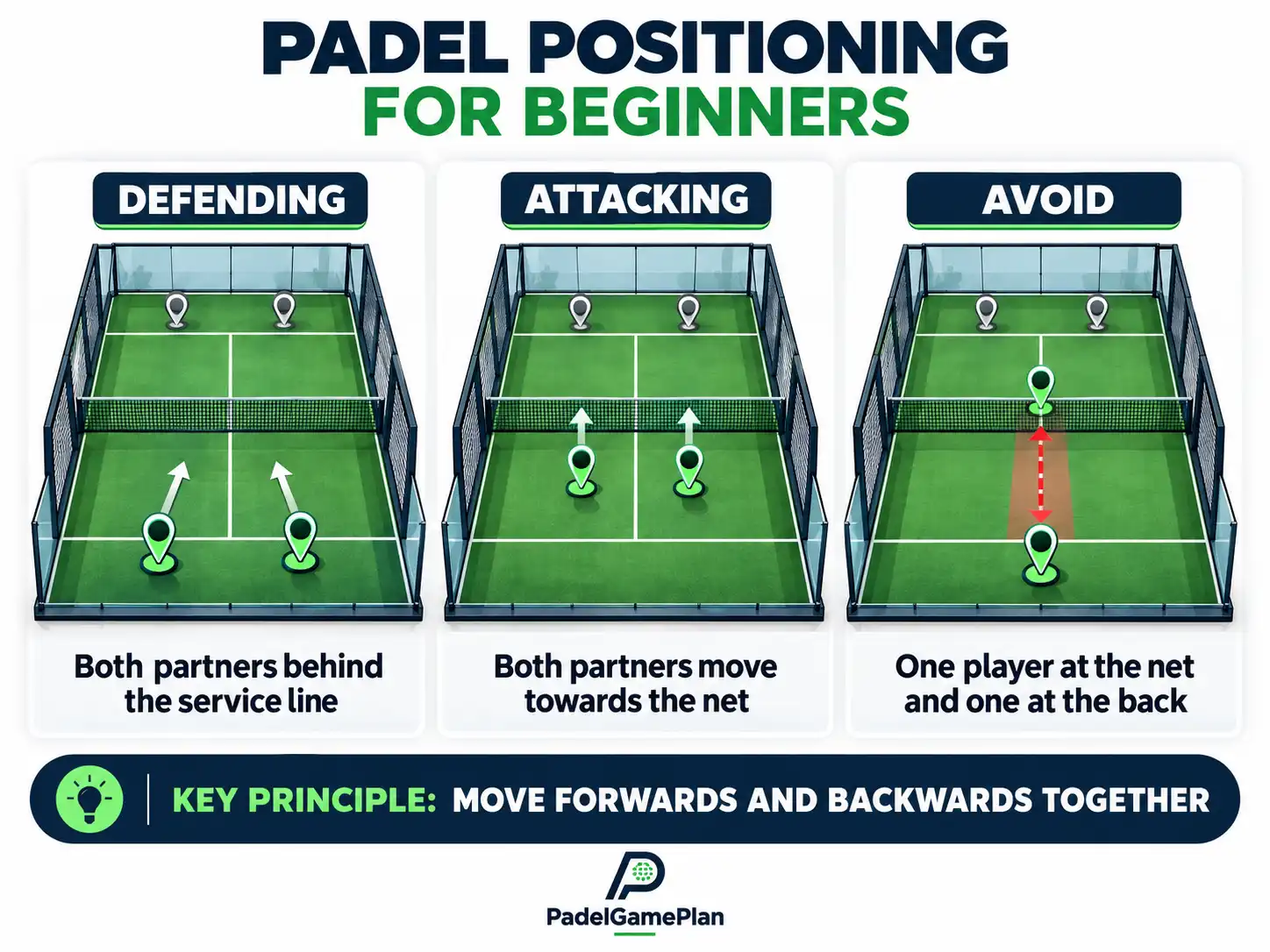
- Pairs generally move forwards and backwards together.
Bring or confirm
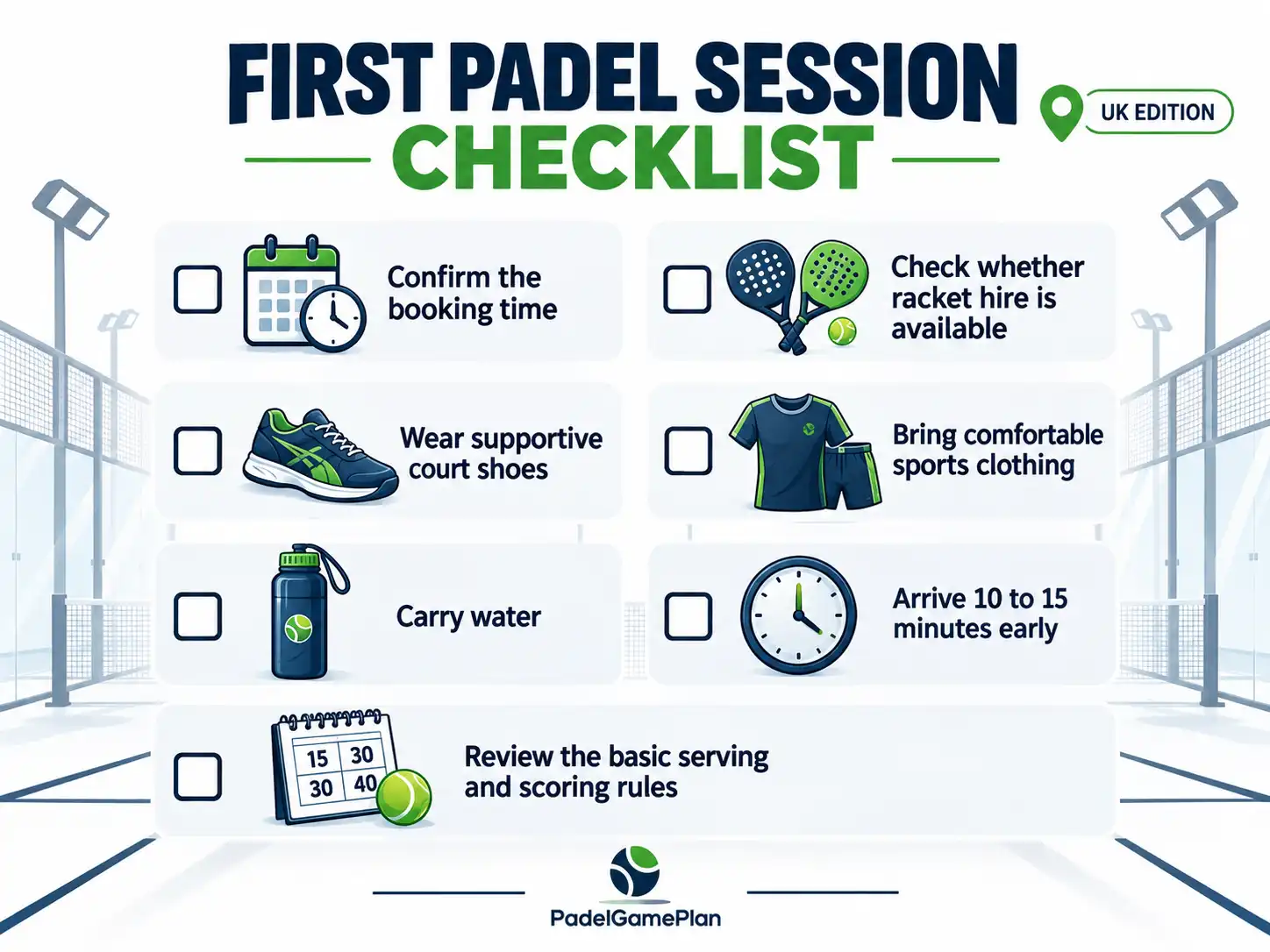
- A padel racket or confirmed venue rental.
- Supportive court shoes suitable for lateral movement.
- Comfortable sports clothing and a water bottle.
- Padel balls if they are not supplied.
- Your booking time, cancellation terms and arrival instructions.
Prepare the right kit for regular play
Beginners do not need the most expensive equipment. Start with a comfortable racket, supportive footwear and a small set of useful essentials.
Some product mentions may include affiliate links.
Padel Starter Kit UK
Five core items to consider before regular sessions.
View starter kit →Best Padel Rackets UK
Compare shape, balance, intended level and typical playing style.
Compare rackets →Best Padel Shoes UK
Review grip, support, fit and comfort for court movement.
Compare shoes →Best Padel Balls UK
Compare bounce, durability, tube size and likely value.
Compare balls →Best Padel Overgrips UK
Options for tack, feel, sweat absorption and replacement value.
Compare overgrips →Best Padel Bags UK
Carry rackets, shoes, clothing and accessories more securely.
Compare bags →Padel Clothing UK
Practical clothing choices for indoor and outdoor sessions.
View clothing guide →Rackets Under £100
Lower-cost racket options for beginners and occasional players.
View budget rackets →Organise your own padel tournament
Create a knockout or round-robin schedule, allocate courts and prepare a shareable plan for a club, workplace or social group.
How these learning guides are prepared
Rules content is checked against governing-body information, while practical explanations draw on established coaching principles and clearly identified sources. Guidance is written to help UK recreational players understand the sport, not to replace instruction from a qualified coach.
Rules, coaching methods and venue arrangements can change. Readers should check current competition rules with the organiser and confirm booking details directly with the venue.
Last reviewed: 15 September 2026
By: PadelGamePlan Editorial Team
Learn Padel UK FAQs
Ten practical answers for new and improving players in the UK.
Is padel suitable for complete beginners?
Yes. The underarm serve and smaller court can make the first session accessible, although wall rebounds and doubles positioning take time to understand. A beginner lesson or coached social can provide a useful introduction.
How long does it take to learn padel?
Many beginners can understand the basic scoring and sustain short rallies within a few sessions. Developing consistent positioning, wall play and shot selection normally requires regular practice over a longer period.
What are the main padel rules in the UK?
Padel is normally played in doubles. The serve is underarm after a bounce and travels diagonally into the opposite service box. The ball may rebound from the glass or fence after first bouncing on the court. The full Padel Rules UK guide explains scoring, faults and wall play.
Is padel easier to learn than tennis?
Some beginners find padel more accessible because the serve is underarm and the court is smaller. It is not automatically easy, however. Reading rebounds, moving with a partner and controlling the net are distinct skills.
Do beginners need their own padel racket?
Not always. Many clubs offer rental rackets for lessons or bookings, but availability and fees vary. Confirm with the venue before arriving. Regular players may benefit from choosing a racket suited to their comfort and level.
Can tennis shoes be used for padel?
Some tennis shoes can be suitable if they provide secure lateral support and an outsole appropriate for the court surface. Ordinary running shoes are generally less suitable for repeated side-to-side movement.
Should beginners learn to use the walls immediately?
Beginners should first understand when the ball remains in play, then introduce simple back-glass rebounds with controlled feeds. Avoiding the walls completely can limit defensive development, but complex rebounds need not be rushed.
What is the best way to improve at padel?
Combine regular matches with focused practice. One or two simple objectives per session, such as moving with a partner or playing a controlled lob, are easier to assess than trying to improve every part of the game at once.
How can a UK beginner find an appropriate game?
Look for beginner lessons, introductory courses, open socials or level-based sessions at local venues. Booking platforms and club communities may also help. Ask how the venue defines each level before joining a session.
Are indoor courts better for learning padel in the UK?
Indoor courts reduce disruption from rain and wind, which can support consistent practice. Covered and outdoor courts can also be suitable. The best option depends on local availability, price, lighting, court condition and weather.
Choose your next padel step
Learn the UK rules, check your current level or find a city guide before your next session.