How to Play Padel Tennis in the UK – Complete Beginner’s Guide (2026)
Learning how to play padel tennis UK is relatively straightforward once the court, scoring, serve and wall rules make sense. This 2026 beginner guide explains the essential rules, how points and sets work, how to serve legally, when the glass and fencing are in play, the basic shots to learn first, and practical ways to start playing padel across the UK.
What Is Padel Tennis?
Padel – often called padel tennis by new players – is a racket sport normally played as doubles on an enclosed court. The court is smaller than a tennis court and uses glass walls and metal fencing as part of play. The scoring structure is closely related to tennis, but the serve is underarm and wall rebounds create a different tactical game.
In Great Britain, the LTA is the national governing body for padel. For beginners, one of the main attractions is that rallies can often be started quickly because the serve is underarm, the court is compact and the ball can remain in play after a legal rebound from the walls.
The Padel Court – Dimensions and Layout
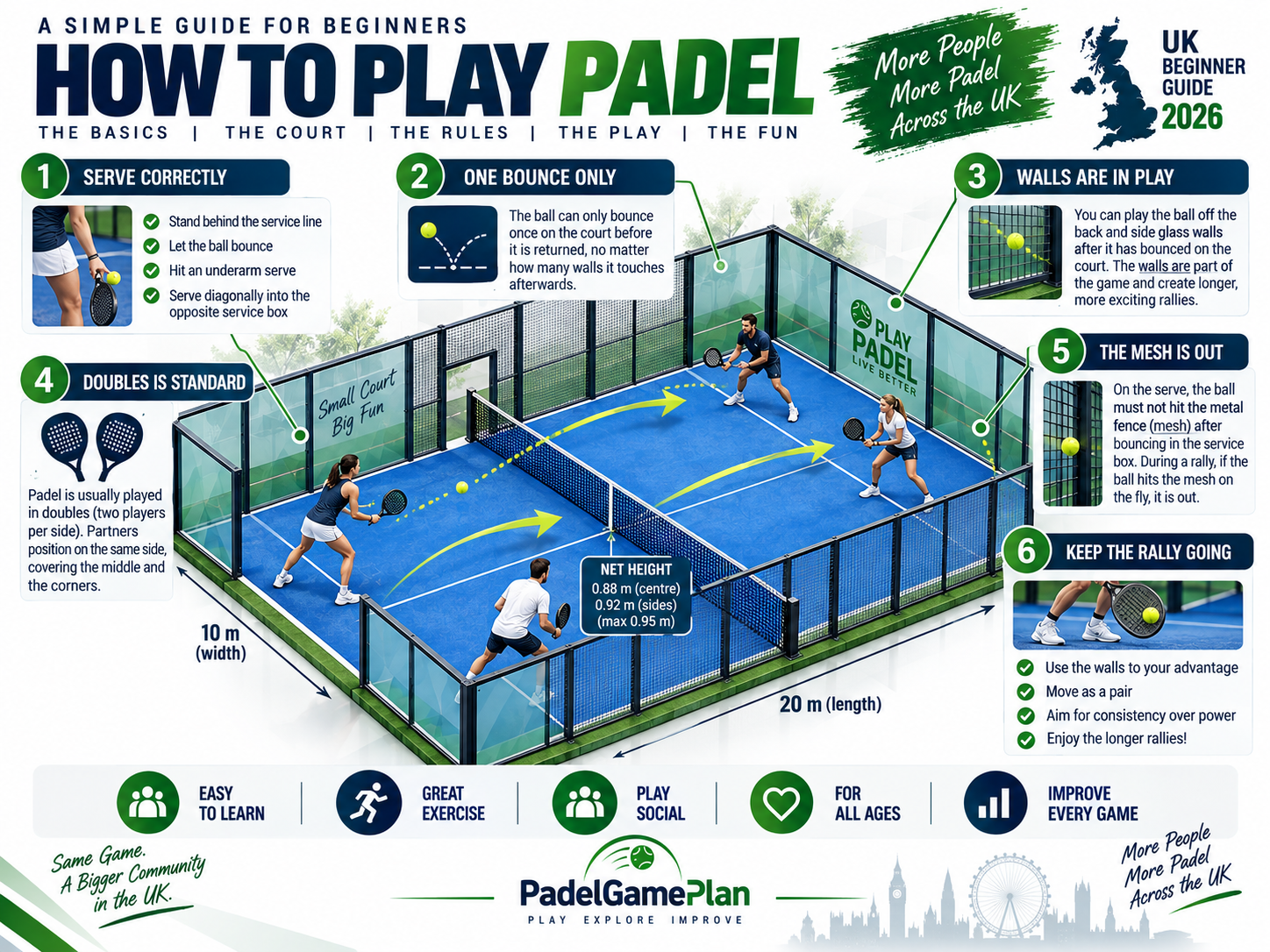
A regulation padel court measures 20 metres long by 10 metres wide. It is divided into two equal halves by a net and fully enclosed by a combination of walls and metal fencing.
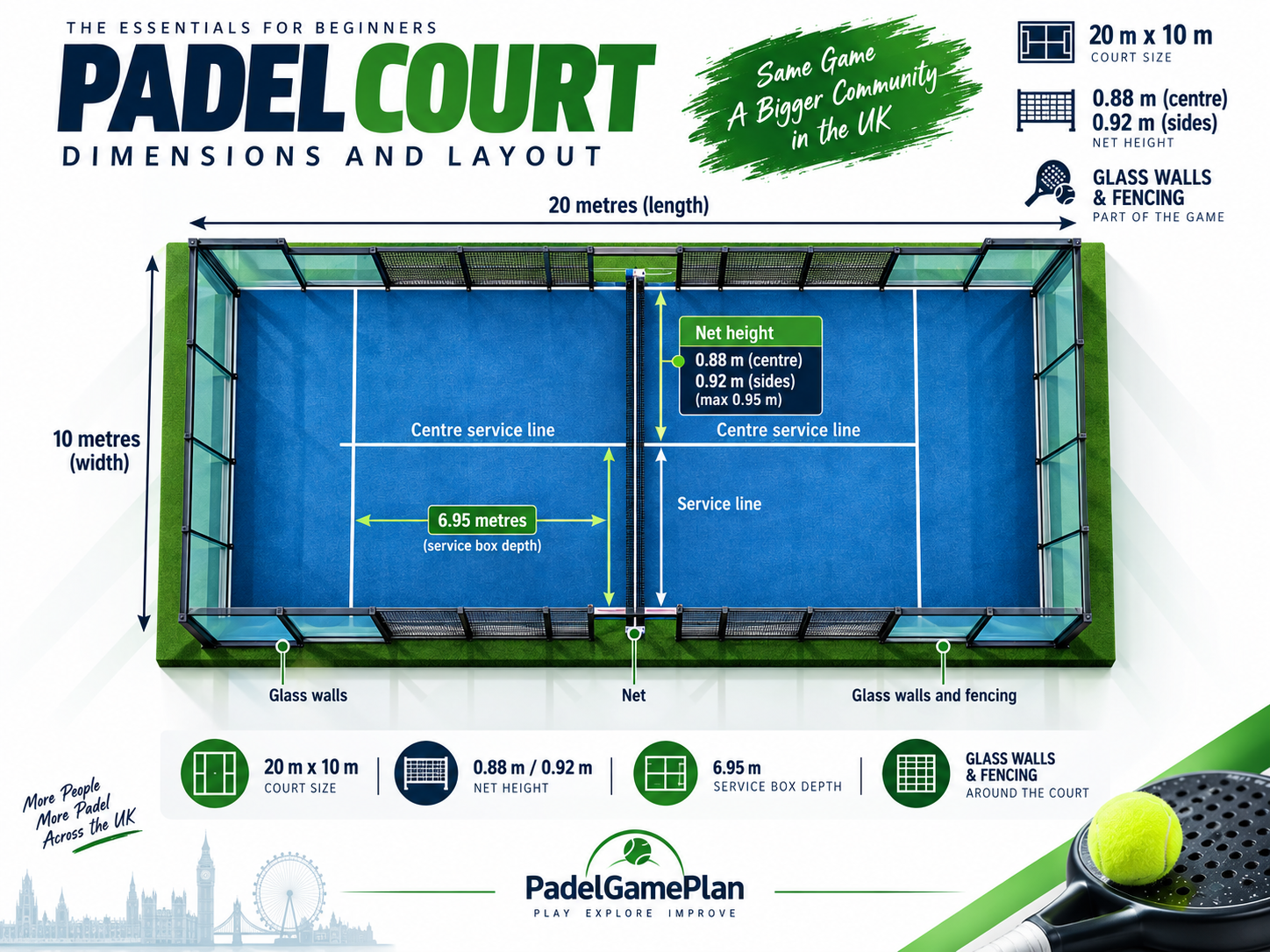
The service lines run parallel to the net. Each side is divided into left and right service boxes. The enclosing glass and fencing are not simply barriers – after a legal bounce, they can become part of the rally.
Equipment Needed to Start Playing Padel
A first session does not require a large amount of equipment. Many UK venues offer racket hire, although availability and charges vary by club.
| Equipment | What It Is | Beginner Guidance |
|---|---|---|
| Padel racket | Solid racket with perforations and no strings | Round or forgiving teardrop shapes are commonly easier to control when starting |
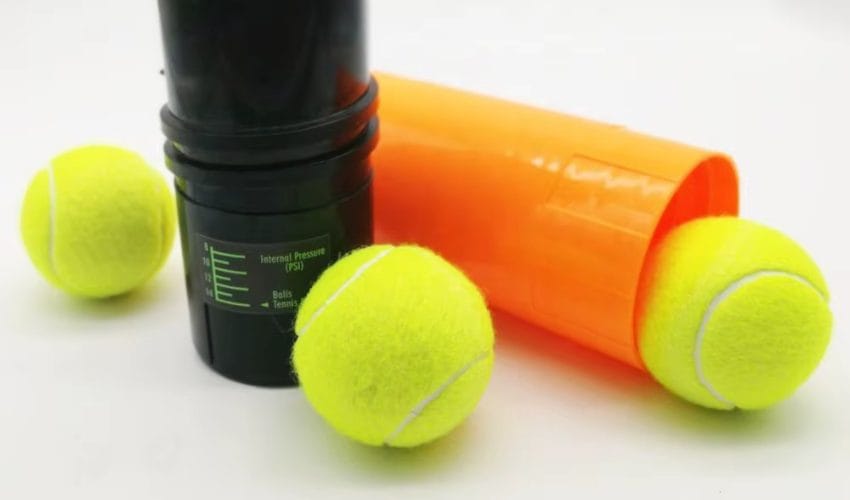
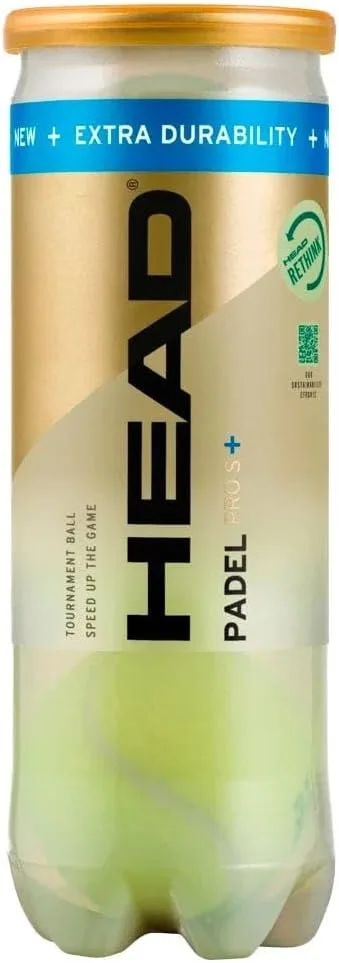
| Padel balls | Similar in appearance to tennis balls but made to padel specifications | Use proper padel balls rather than assuming any tennis ball will behave the same |
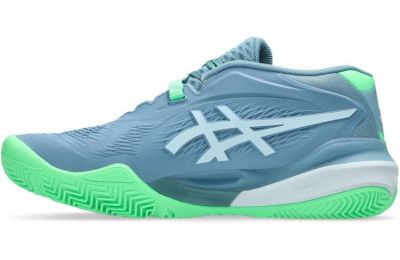
| Court shoes | Shoes designed for lateral movement and grip | Prioritise stability and traction rather than soft running-shoe cushioning |
| Sportswear | Comfortable clothing that allows movement | Layer appropriately for indoor, covered or outdoor UK courts |
The racket wrist cord is an important safety feature. Under FIP rules, use of the racket’s non-elastic safety cord around the wrist is compulsory.
Padel Rules for Beginners
These are the core rules worth learning before a first match. For a more detailed UK rules guide, see Padel Rules UK.
Standard padel is a doubles game, with two players on each side of the net.
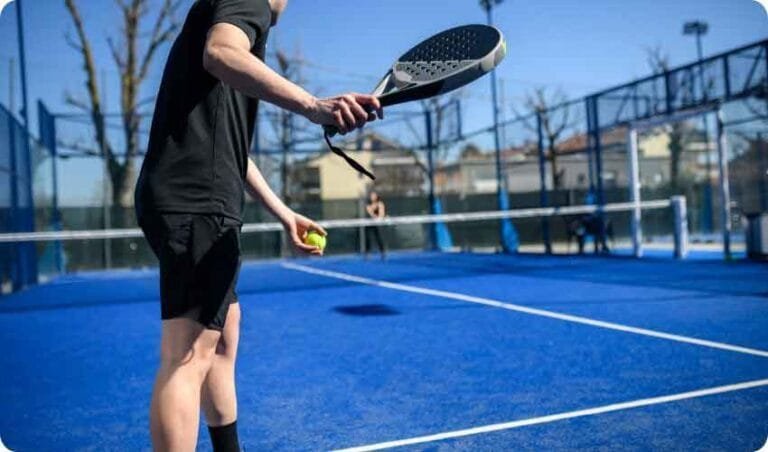
The server bounces the ball and strikes it at or below waist level into the diagonally opposite service box.
The receiver must allow the serve to bounce in the correct service box before returning it.
During a rally, the ball must be returned before it bounces twice on the same side.
After the ball has bounced legally on your side, it can rebound from the surrounding wall or fencing and still be played.
Players can volley during normal play, but the serve return itself must first bounce.
How Padel Scoring Works in 2026
Padel commonly uses familiar tennis scoring: Love, 15, 30, 40 and game. Under the 2026 FIP rules, different approved game-scoring options exist, including traditional advantage scoring, Star Point and Golden Point. The format used at a UK club session, league or tournament can therefore vary, so check the event rules before play.
| Stage | Typical Format |
|---|---|
| Points | Love, 15, 30, 40, Game |
| Advantage game | At deuce, a pair needs two consecutive points to win the game |
| Golden Point option | A deciding point is played at deuce |
| Star Point option | Advantage cycles are limited before a deciding Star Point |
| Set | Normally first to six games with a two-game margin; tie-break at 6-6 |
| Match | Commonly best of three sets, although shorter formats can be used |
How to Serve in Padel – Step by Step
The padel serve is deliberately different from a tennis serve. FIP Rule 6 requires the server to bounce the ball in the service area and strike it at or below waist level.
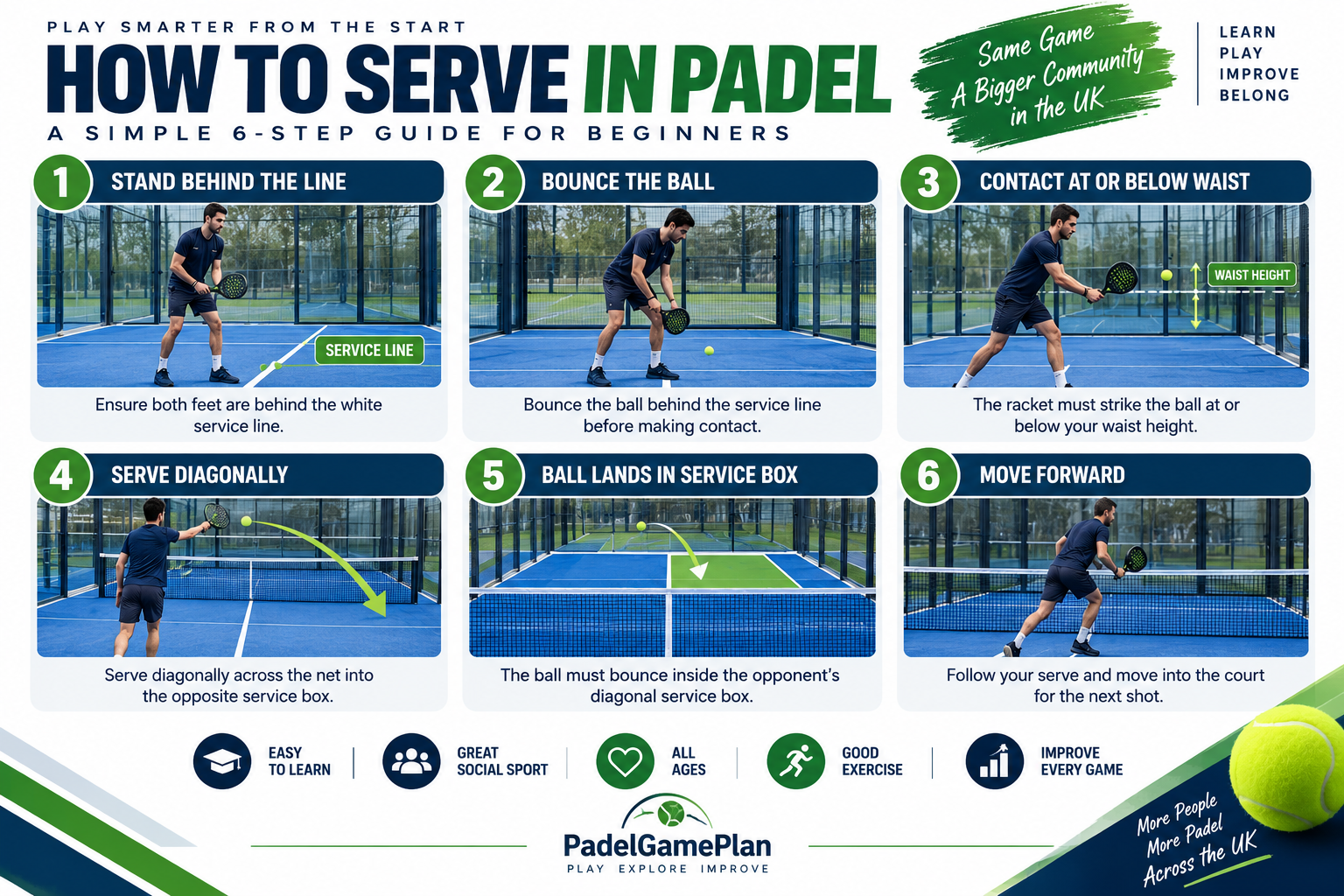
- Start behind the service line. Keep at least one foot behind the service line and remain in the correct service area.
- Bounce the ball. The ball is bounced on the ground before it is struck.
- Contact at or below waist level. The server must have at least one foot in contact with the ground when striking the ball.
- Serve diagonally. The ball must cross the net and bounce inside the diagonally opposite service box.
- Watch what happens after the bounce. A serve is a fault if it lands correctly and then touches the metal fence before the second bounce.
- Use the second serve if needed. If the first serve is a fault, the server has a second attempt.
Beginners usually benefit more from a reliable, well-placed serve than from trying to serve hard. A controlled serve gives time to move forward with a partner and prepare for the next shot.
Padel Wall Rules Explained
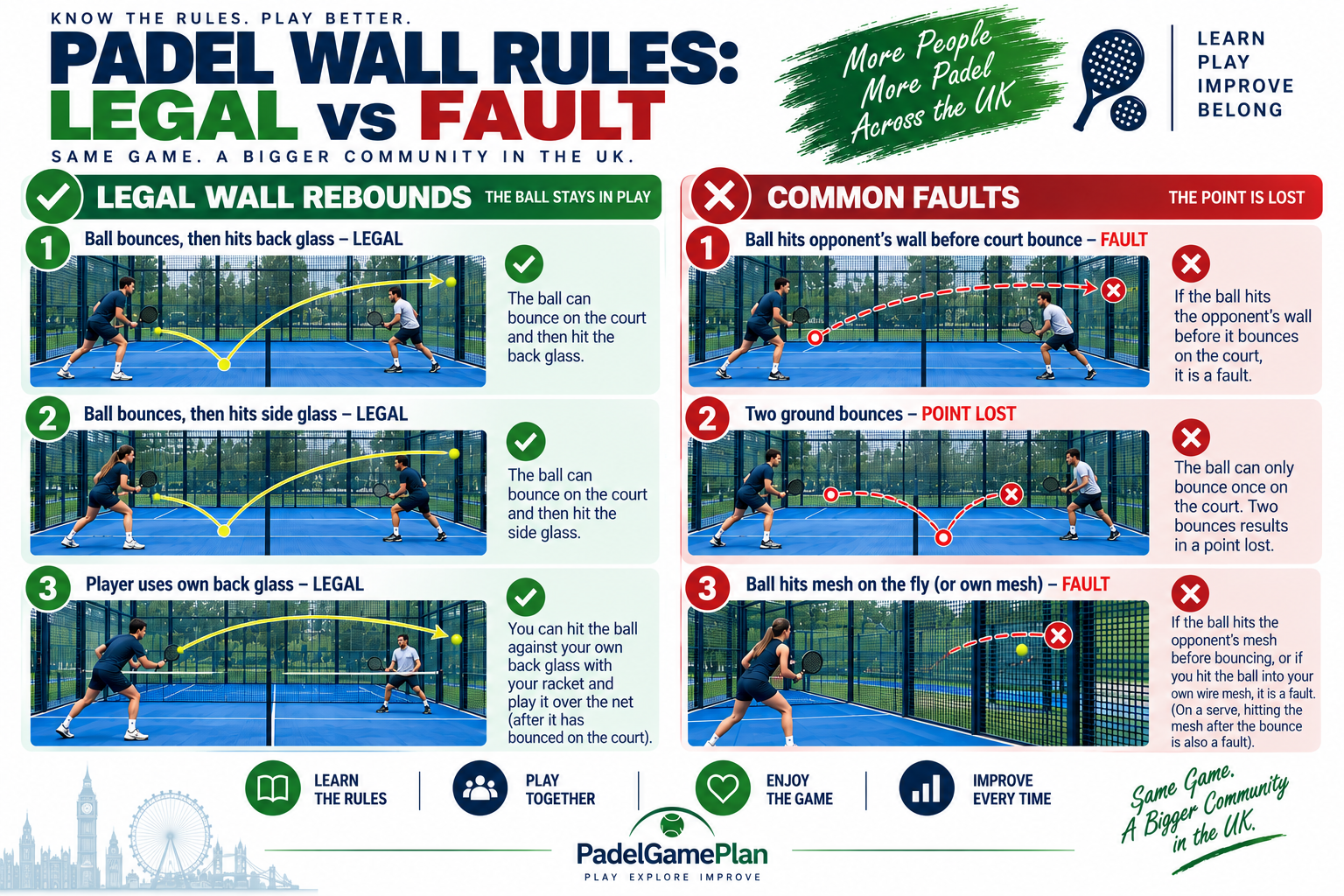
Wall play is the feature that usually feels most unfamiliar to new players. The easiest way to understand it is to separate the opponent’s side from your own side.
Legal Examples
- The opponent’s shot bounces on your court and then rebounds from your back glass before you return it.
- You play the ball into your own back glass so that it then travels over the net into the opponents’ court.
- The ball bounces once on your court, touches the enclosure, and you return it before a second ground bounce.
Common Faults
- Your shot hits the opponents’ wall directly before bouncing on their court.
- You wait so long that the ball bounces twice on your side.
- The ball hits the opponent’s mesh on the fly, or you hit the ball into your own wire mesh.
Basic Padel Shots Every Beginner Should Know
New players do not need every advanced overhead immediately. Building reliable groundstrokes, volleys and lobs usually produces better early results.
| Shot | What It Does | Beginner Priority |
|---|---|---|
| Forehand | Basic groundstroke from the dominant side | High |
| Backhand | Basic groundstroke from the non-dominant side | High |
| Volley | Plays the ball before it bounces, normally near the net | High |
| Lob | Sends the ball high over opponents at the net to recover position | High |
| Smash | Attacking overhead used on suitable high balls | Medium |
| Bandeja | Controlled overhead used to retain net position | Medium |
| Víbora | More aggressive sliced overhead | Later skill |
| Chiquita | Soft, low shot toward opponents’ feet near the net | Medium |
For a deeper technical breakdown, see the essential padel shots guide and beginner padel drills.
Padel Tips for Beginners – Positioning and Strategy
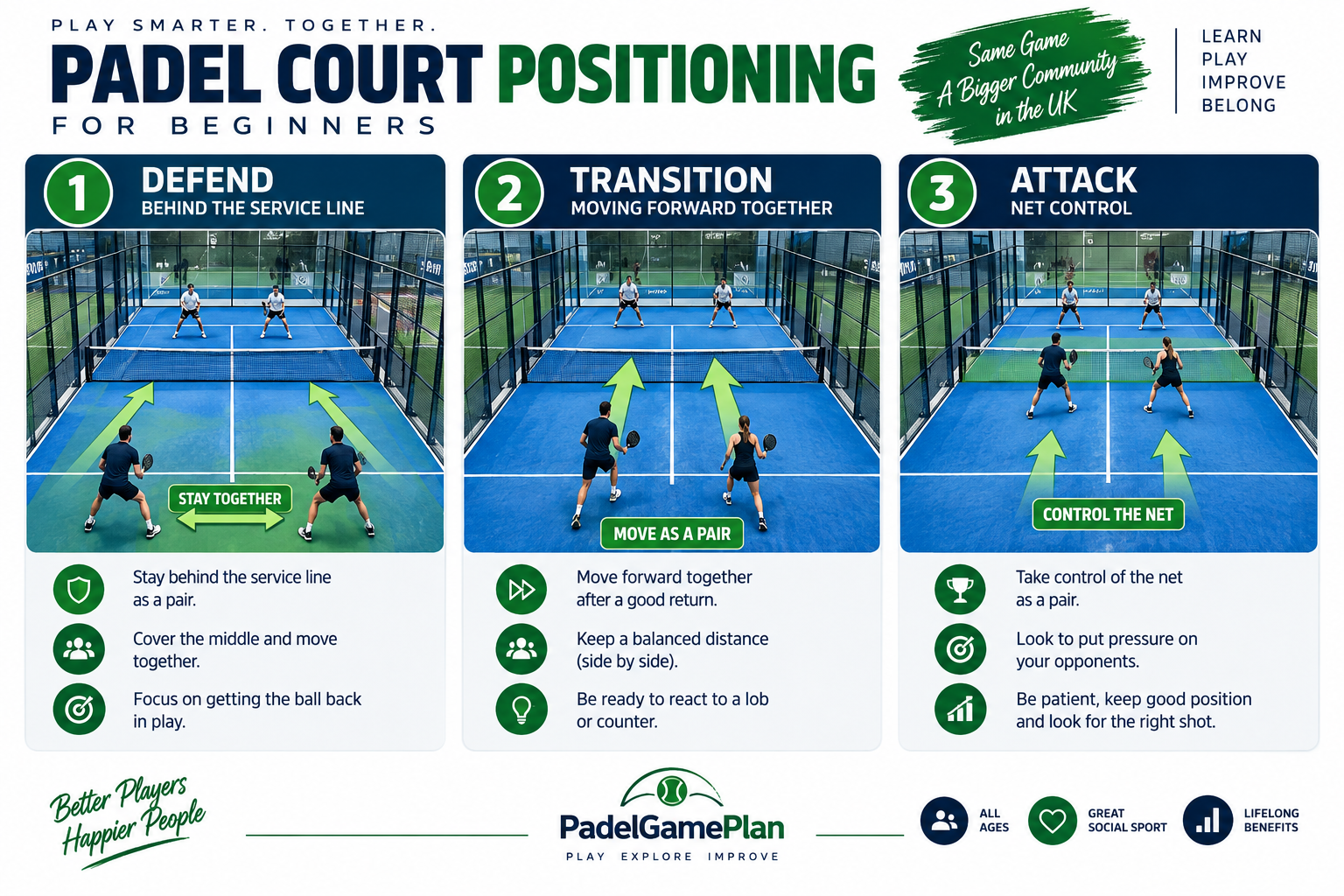
Try not to leave one player at the net while the partner stays deep. Good spacing makes the middle of the court easier to defend.
The pair controlling the net can volley downward and apply pressure, so learn when to move forward together.
A well-placed lob can push opponents away from the net and give your pair time to advance.
Hard shots can rebound from the glass and return to opponents. Placement, depth and consistency often matter more.
Call balls clearly and agree how to handle shots through the middle.
Being comfortable with rebounds reduces panic and gives more options in defence.
Padel vs Tennis – Key Differences for UK Beginners
Tennis experience can help with timing, hand-eye coordination and basic racket skills, but padel has important structural differences. For a dedicated comparison, see Padel vs Tennis.
| Feature | Padel | Tennis |
|---|---|---|
| Court | 20m x 10m and enclosed | Larger open court |
| Walls | Active part of play after a legal bounce | Not part of standard play |
| Normal format | Doubles | Singles or doubles |
| Serve | Underarm after a bounce, contact at or below waist level | Overarm serve from a toss |
| Racket | Solid, perforated face | Strung racket |
| Ball | Padel-specification ball | Tennis-specification ball |
| Scoring | Tennis-style scoring with approved alternative formats | Traditional tennis scoring with competition variations |
| Beginner focus | Wall awareness, pair movement, lobs and net transitions | Stroke production, court coverage and serve/return patterns |
Common Padel Mistakes Beginners Make
See the full guide to common padel mistakes for more detail.
How to Start Playing Padel in the UK
The simplest first session is usually a beginner lesson, introductory social or coached group session. This gives new players a chance to learn the serve, scoring, basic positioning and wall rebounds before joining open matches.
- Find a nearby venue. Start with the Padel Courts UK hub or one of the city guides below.
- Check whether racket hire is available. New players can often avoid buying equipment before their first session.
- Choose a beginner or improver session. A coached introduction is usually more useful than entering a competitive match immediately.
- Learn the venue’s booking system. UK venues use different booking platforms and membership models, so check the venue’s own booking page.
- Use an appropriate starting level. The LTA Padel Rating scale begins at 1.0 for a new beginner and progresses as control, consistency, wall use and tactical understanding improve.
Padel Gear for Beginners in the UK
Some product mentions may include affiliate links.
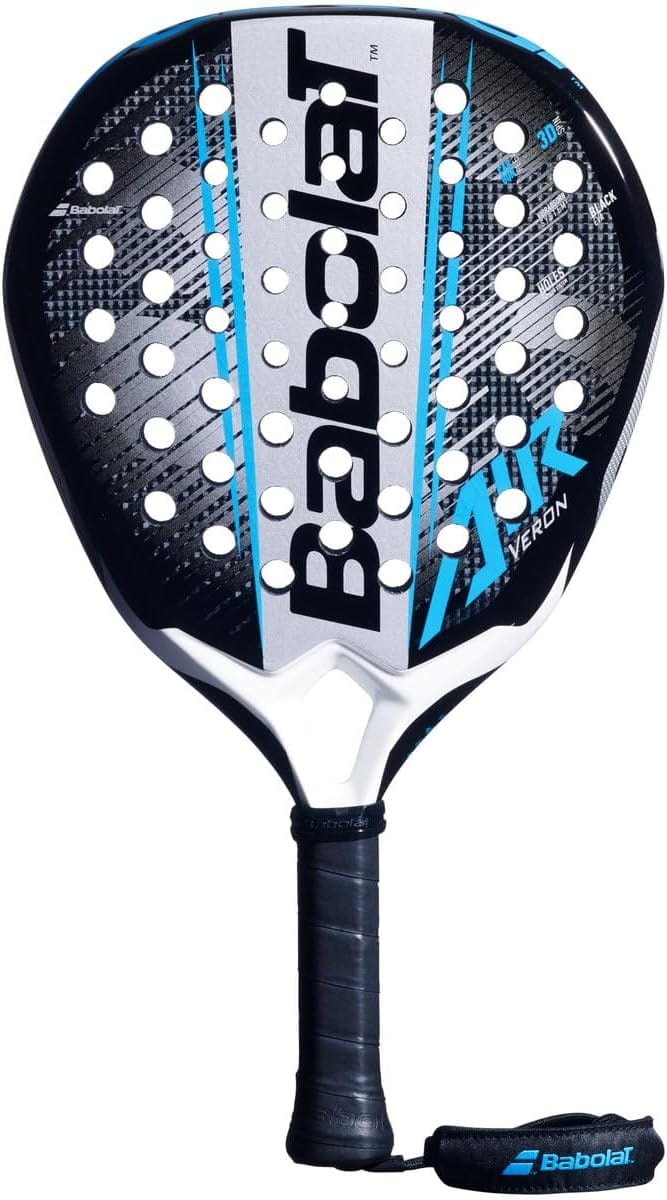
There is no need to buy a complete kit before a first session. Once playing regularly, these guides can help compare the main equipment categories.


Your First Padel Match – A Simple Game Plan
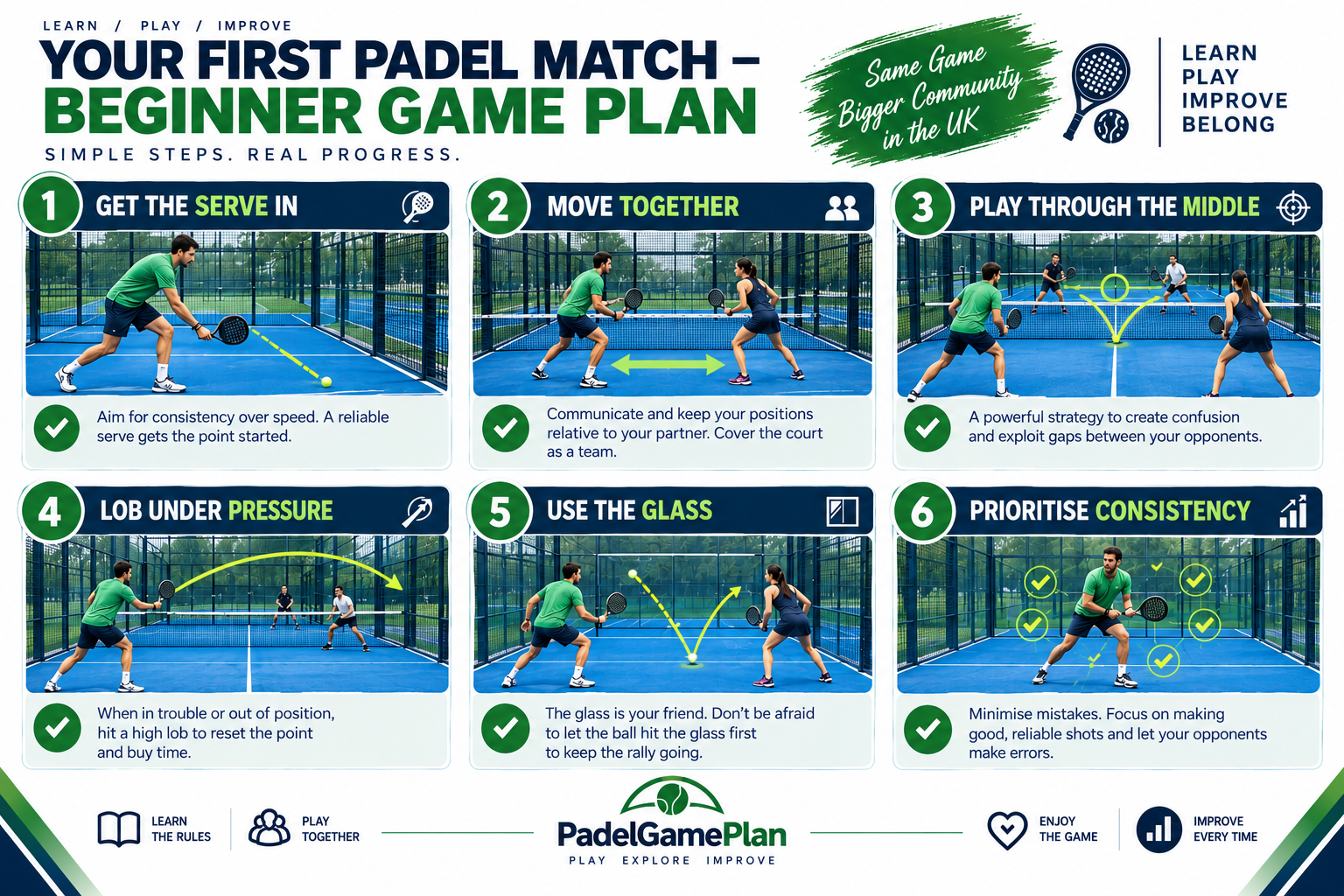
Use a controlled serve rather than chasing speed.
Try to stay on roughly the same depth line.
Central shots can reduce angles and create uncertainty.
Use height to regain time and court position.
Do not rush every deep ball before it reaches the wall.
At beginner level, one more ball in play is often enough.
Frequently Asked Questions
1. How do you play padel tennis for complete beginners?
Padel is normally played as doubles on an enclosed 20m x 10m court. Serve underarm after bouncing the ball, play it diagonally into the correct service box, return the ball before a second bounce, and use the surrounding walls after a legal ground bounce.
2. What are the most important padel rules for beginners?
Learn the underarm serve, the requirement for the return of serve to bounce, the one-bounce rule during rallies, how wall rebounds work, and the basic tennis-style scoring structure.
3. Is padel easier to learn than tennis?
Many beginners find padel accessible because the court is smaller, the serve is underarm and the walls can keep rallies alive. However, reading rebounds, positioning as a pair and controlling the net still take practice.
4. What equipment is needed for a first padel session in the UK?
A padel racket, padel balls, suitable court shoes and sportswear are the basics. Many UK venues offer racket hire, so check the venue before buying equipment.
5. How does padel scoring work?
Traditional padel scoring follows Love, 15, 30, 40 and game. Sets are normally first to six games with a two-game margin and a tie-break at 6-6. The 2026 FIP rules also recognise alternative scoring methods such as Star Point and Golden Point.
6. Can the ball hit the glass in padel?
Yes. During a rally, once the ball has bounced legally on your side, it can rebound from the glass and still be returned before a second ground bounce. Players can also use their own wall to help send the ball back over the net.
7. Can you volley in padel?
Yes, volleys are a major part of padel. The important exception for beginners is the return of serve: the receiver must let the serve bounce in the service box before returning it.
8. What is the correct padel serve technique?
Stand in the correct service area behind the line, bounce the ball, strike it at or below waist level with at least one foot on the ground, and send it diagonally into the opponent’s service box. A first fault is followed by a second serve.
9. How do beginners find padel games in the UK?
Start with a local venue’s beginner lesson, social session or open match system. Booking platforms and membership requirements differ between clubs, so use the venue’s current booking page and level guidance.
10. What LTA padel rating should a new beginner use?
The LTA rating scale starts at 1.0 for a player who is just starting and still working on getting the ball in play. Players can move upward as consistency, control, wall play and tactical understanding improve.
Rules and UK Reference Sources
- International Padel Federation – Rules of Padel and official documents
- Lawn Tennis Association – Padel
- LTA – Padel Rating System
Rules, competition formats, venue access and booking policies can change. Check the current FIP rules and the relevant UK venue or competition organiser before play.