
Padel Beginner Drills: 15 Essential Drills to Improve Fast in the UAE (2026)
By the Padel Gameplan Editorial Team | Published: 18 March 2026
Structured padel beginner drills are one of the most effective ways to develop technique, build consistency, and progress through the early levels of the sport more quickly than match play alone. Playing games is enjoyable and necessary, but without deliberate practice targeting specific skills, many beginners plateau at the same technical level for months.
This guide presents 15 padel drills specifically designed for beginner to early intermediate players in the UAE, structured in the order coaches commonly introduce them – from grip and ready position through to doubles positioning, tactical serve sequences, and off-court physical conditioning. Each drill includes a step-by-step execution guide, the primary skill it develops, number of players required, and a coaching focus point.
All drills in this guide are based on widely accepted padel coaching methodology used by academies and coaches across the UAE and internationally, including guidance from LTA Padel (UK governing body), UAE-based coaching programs at Just Padel, Club Padel Dubai, and Danube Padel Academy, and established padel coaching communities globally. Players new to padel are encouraged to complement structured drill sessions with formal coaching from a certified instructor, particularly for the first four to six weeks. Many UAE padel academies across Dubai, Abu Dhabi, Sharjah, and other emirates offer beginner group coaching programs where these foundational drills are introduced progressively alongside supervised match play.
For a complete overview of padel technique, beginner guides and skill development resources, visit the Learn Padel UAE hub.
Why Padel Beginner Drills Matter More Than Extra Match Play
Many players new to padel in the UAE make the same pattern of improvement: initial rapid progress in the first few sessions, followed by a plateau where game results stop improving despite continued play. This plateau is most commonly caused by ingrained technique errors that are reinforced through repetition in match play rather than corrected through focused drilling.
Coaches consistently note that players who incorporate structured drills alongside match play develop technical accuracy, movement habits, and tactical awareness significantly faster than those who only play games. Drills allow a specific skill to be isolated, practised at reduced pace, corrected, and then progressively loaded with difficulty until reliable under match conditions.
A widely cited coaching principle is that padel is more about accuracy and ball placement than power. This makes drilling particularly high-value – the habits formed in structured practice directly translate to the precision and consistency that define improvement in padel.
Before the Drills: Two Foundational Habits
Before beginning the drills below, coaches recommend ensuring two foundational elements are correct. These are the single most common sources of technique problems in beginner padel players.
Continental Grip
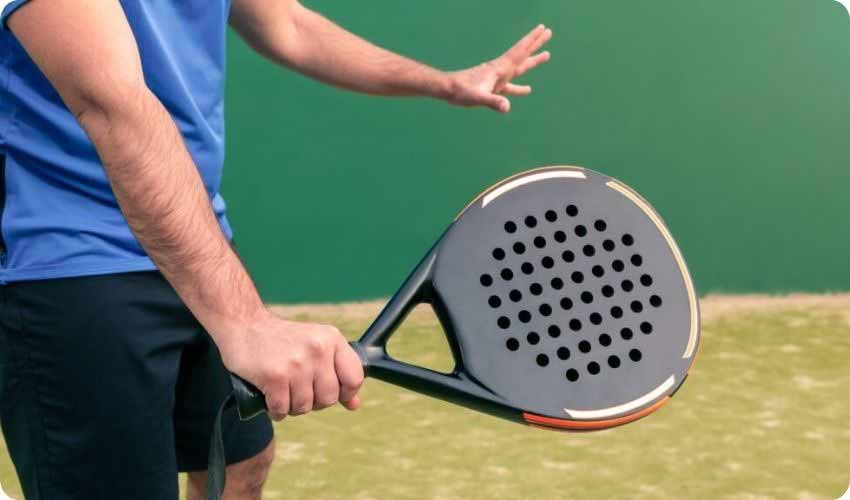
The continental grip is the most widely recommended starting grip for padel. To find it, hold the racket as if gripping a hammer – the base knuckle of the index finger rests on the second bevel of the handle, and the thumb rests flat against the back of the handle. Fingers wrap around the grip with moderate tension – not tightly clenched.
The continental grip is versatile enough for volleys, serves, overheads, and groundstrokes without requiring a grip change between shots – important given the pace of padel rallies. Coaches across UAE academies consistently introduce this grip in the first lesson.
Short Backswing Principle
LTA Padel coaching guidance identifies the short backswing as one of the most impactful fundamentals for beginner padel players. Unlike tennis, where a full backswing generates power, padel rewards a compact, shorter backswing on both forehand and backhand sides. A shorter backswing allows faster reaction to opponent shots and gives more control and accuracy. This principle applies across all padel shots and should be in mind throughout every drill in this guide.
Drill Overview Table
| # | Drill Name | Skill Focus | Players Needed | Level |
|---|---|---|---|---|
| 1 | Ready Position Shadow Drill | Ready position and movement | 1 | Beginner |
| 2 | Hand Feed Forehand and Backhand | Groundstroke contact point | 2 | Beginner |
| 3 | Forehand-Backhand Transition Drill | Smooth shot alternation | 2 | Beginner |
| 4 | Mini Volley Circuit | Volley control and soft hands | 2 | Beginner |
| 5 | Split-Step Activation Drill | Footwork and reaction | 1-2 | Beginner |
| 6 | Serve Target Practice | Serve placement and consistency | 1-2 | Beginner |
| 7 | Serve and First Volley | Serve to net transition | 2 | Beginner-Intermediate |
| 8 | Back Wall Rebound Drill | Wall reading and timing | 1-2 | Beginner |
| 9 | Side Glass Rebound Drill | Side wall awareness | 1-2 | Beginner |
| 10 | Cross-Court Consistency Rally | Rally control and direction | 2 | Beginner-Intermediate |
| 11 | Basket Feed Drill | Shot isolation under feed | 2 | Beginner-Intermediate |
| 12 | Lob (Globo) Target Drill | Defensive lob placement | 2 | Beginner-Intermediate |
| 13 | Up and Down Drill | Net to backcourt transition | 2 | Early Intermediate |
| 14 | 1 Up 1 Back Defence and Attack | Defensive depth and volley attack | 2 | Early Intermediate |
| 15 | Doubles Positioning Pattern | Court coverage and rotation | 4 | Early Intermediate |
Drill 1 – Ready Position Shadow Drill
Skill focus: Ready position, court movement, recovery habit Players needed: 1 Time: approx. 5-7 minutes Equipment: Court space, 5-6 cones (optional)
Purpose
This drill builds the habit of maintaining correct ready position and returning to it after every movement. It is most effective as the opening drill of any training session.
How to Execute
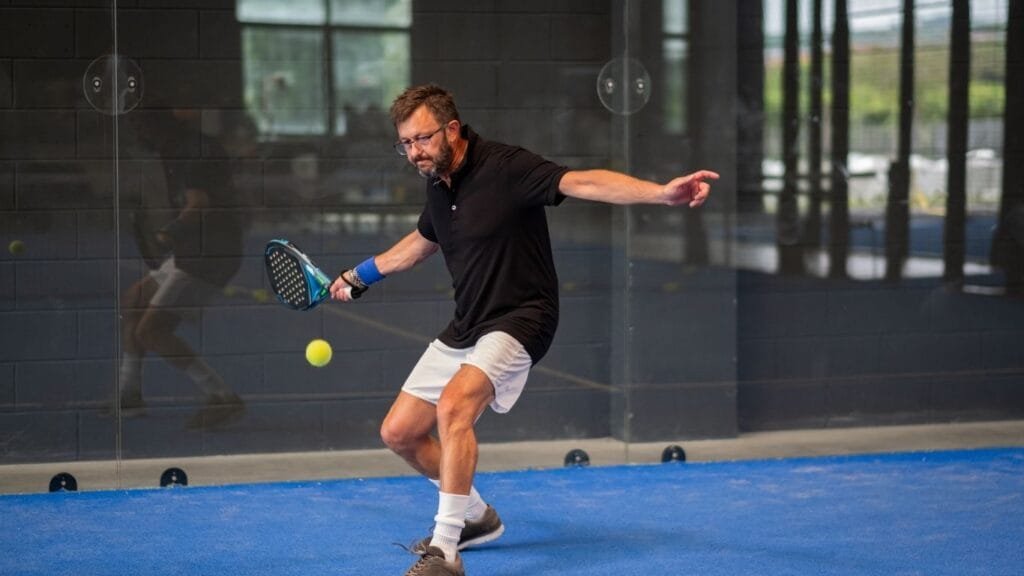
- Stand at the centre of the court in ready position – knees bent, weight on balls of feet, racket in front at waist height.
- Move quickly to one of five positions: net zone centre, left net corner, right net corner, left backcourt, right backcourt.
- After arriving at each position, simulate a shot with a brief racket swing, then immediately return to centre and re-establish ready position.
- A partner or coach calls the position, or the player moves through a set sequence.
- Repeat for approx. 5-7 minutes, gradually increasing movement speed.
Coaching Focus
The return to ready position after every simulated shot is the key habit being built. Beginners commonly stop and watch after hitting rather than recovering immediately. This drill trains the recovery reflex essential in real match play.
Drill 2 – Hand Feed Forehand and Backhand
Skill focus: Groundstroke contact point, short backswing mechanics Players needed: 2 (feeder and hitter) Time: approx. 10 minutes per side Equipment: Basket of balls
Purpose
This is typically the first technical drill introduced in beginner coaching sessions. A partner or coach hand-feeds the ball to a consistent location, allowing the beginner to focus entirely on body position, contact point, and compact swing path.
How to Execute
- The hitter stands at the service line in ready position.
- The feeder stands 2-3 metres away and hand-tosses the ball softly to the hitter’s forehand side at a consistent height and pace.
- The hitter steps toward the ball, makes contact in front of the body with a compact, short backswing.
- Repeat 15-20 times on the forehand side, then switch to backhand.
- Progress to feeding from slightly further distances once contact consistency improves.
Coaching Focus
Contact point in front of the body and short backswing are the two corrections most commonly needed at this stage. Beginners frequently let the ball travel past them before swinging, and use a long backswing that reduces control. The feeder should maintain a consistent location for the first set of repetitions before introducing any variation.
| Stage | Feeder Distance | Ball Variation |
|---|---|---|
| Stage 1 | 2-3 metres | Consistent height and pace |
| Stage 2 | 3-5 metres | Slight height variation |
| Stage 3 | Service line distance | Left/right variation introduced |
Drill 3 – Forehand-Backhand Transition Drill
Skill focus: Smooth transitions between forehand and backhand, footwork positioning Players needed: 2 Time: approx. 10 minutes Equipment: Ball basket or single ball
Purpose
Smooth transitions between forehand and backhand shots are vital for maintaining control during rallies. Many beginners struggle to shift their body position cleanly between the two sides – this drill builds the footwork and preparation habits needed for seamless transitions.
How to Execute
- The hitter stands at the baseline in ready position.
- The feeder alternates shots – one forehand, then one backhand, then one forehand – at a moderate pace from the opposite service line.
- The hitter focuses on: resetting to ready position between each shot, using quick footwork to face the incoming ball direction, and using a compact swing on each side.
- Complete 20 alternating repetitions, then rest and repeat.
- Progress by reducing the time between feeds to increase transition speed demand.
Coaching Focus
Agility and footwork to position correctly are the primary coaching points. Beginners often attempt to reach across the body for the wrong-side shot rather than moving their feet to face the ball. The LTA Padel coaching guideline is to always position so that the ball can be hit with the body facing the direction of play – footwork moves the body into position; the arm should not compensate for static feet.
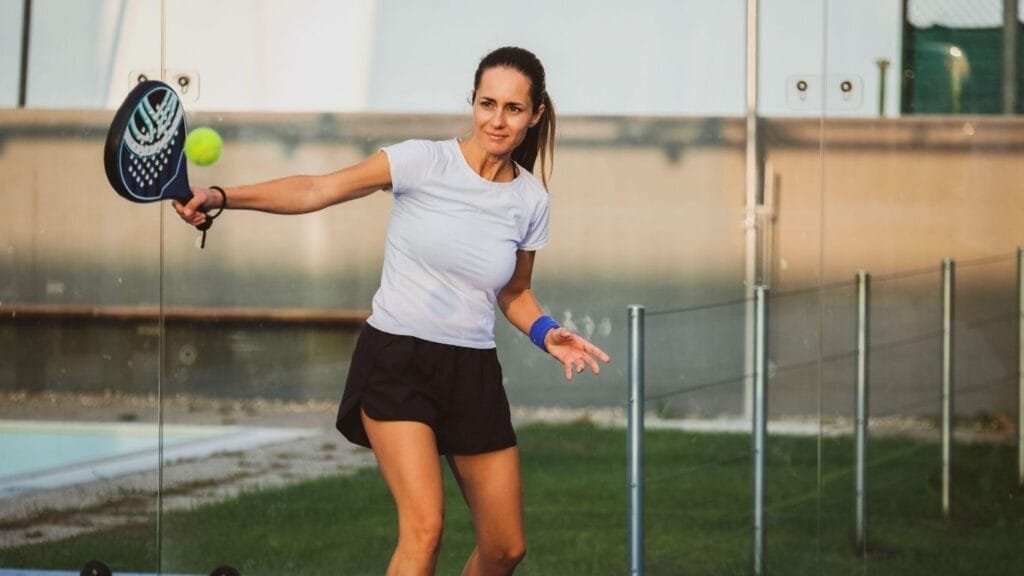
Drill 4 – Mini Volley Circuit
Skill focus: Volley control, racket face stability, soft hands Players needed: 2 Time: approx. 8-10 minutes Equipment: 1 ball
Purpose
Volleys are central to attacking play in padel. LTA Padel coaching guidance recommends that beginners develop clean volley mechanics early, with emphasis on keeping the racket up and staying on the toes for quick net reactions. Coaches consistently describe the volley as a push, not a swing – and this drill builds that habit directly.
How to Execute
- Both players stand 1-2 metres apart on the same side of the net, facing each other.
- Begin a continuous volley exchange – hitting back and forth without allowing the ball to bounce, keeping the swing very compact (no backswing).
- After 10 consecutive volleys at close range, both players take one step back.
- After 10 more at the new distance, step back again.
- Continue stepping back progressively until reaching the service line or control breaks down.
Coaching Focus
The racket face should remain stable and angled slightly forward at contact. The most common beginner error is using a large backswing on volleys – the coach should reinforce that the volley is a forward push from the ready position. The wrist stays firm throughout contact.
Drill 5 – Split-Step Activation Drill
Skill focus: Footwork, split-step timing, lateral movement Players needed: 1-2 Time: approx. 5-8 minutes Equipment: Court space, optional cones
Purpose
The split-step is a small two-footed jump timed to land just as the opponent makes contact with the ball, placing the player in a balanced, loaded position from which movement in any direction is fastest. Coaches consistently identify the split-step as the single most impactful footwork habit for beginner padel players. LTA Padel coaching notes that padel requires sharp and explosive movements and that always staying on the toes is fundamental.
How to Execute
- Stand at the service line in ready position.
- A partner stands at the opposite baseline and bounces a ball rhythmically.
- Each time the partner catches the ball before bouncing it again (simulating opponent contact moment), perform a small split-step – both feet leave the ground and land simultaneously.
- After the split-step, shuffle quickly two steps left or right as directed.
- Repeat 20-30 times, building the timing reflex between partner’s contact moment and the player’s split-step.
Coaching Focus
Timing is more important than height. The split-step should be small and controlled – just enough to shift weight onto the balls of both feet. Players who jump too high lose time. The drill is also effective as part of a warm-up before match play.
Drill 6 – Serve Target Practice
Skill focus: Serve placement, legal contact mechanics, consistency Players needed: 1-2 Time: approx. 10-12 minutes Equipment: Basket of balls, 2-4 cones as targets
Purpose
A reliable, accurately placed serve removes double fault pressure and sets up better starting positions in the rally. Padelsouq coaching guidance and UAE academy programs consistently note that a reliable serve is built through accuracy and controlled depth – not speed or spin – at beginner level.
How to Execute
- Place two cones in the diagonal service box – one near the service line and one nearer the side glass.
- Stand behind the service line and drop the ball to the ground.
- Allow the ball to bounce once, then strike it with underhand contact below waist height.
- Direct the serve toward the near cone for the first 10 serves.
- Shift target to the far cone for the next 10 serves.
- Record how many serves land in the correct box and near the target.
Coaching Focus
Three mechanics must be correct on every serve: the ball must bounce before being struck, contact must be below waist height, and the server’s feet must remain behind the service line until contact. Beginners from tennis backgrounds frequently attempt an overhand motion – this must be corrected immediately.
Serve Fault Reference
| Common Fault | Cause | Correction |
|---|---|---|
| Ball not bouncing before contact | Tennis habit | Drop ball, wait for bounce, then swing |
| Contact above waist height | Swing starting too high | Focus contact point below belt level |
| Foot on or over service line | Leaning forward during swing | Step deliberately back before serving |
| Landing in wrong service box | Aiming forward instead of diagonally | Stand at correct angle, aim across court |
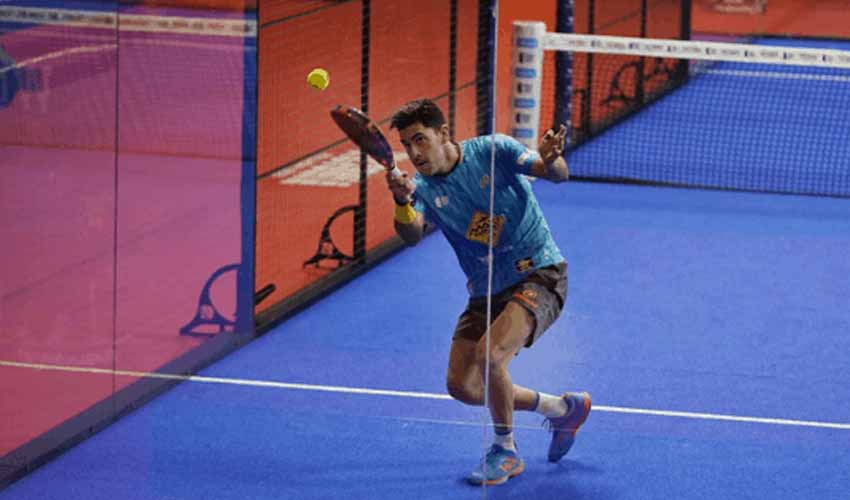
Drill 7 – Serve and First Volley
Skill focus: Serve placement, transition to net zone, first volley under pressure Players needed: 2 Time: approx. 10 minutes Equipment: Ball basket
Purpose
This drill is drawn from padel coaching practice documented by Padel39. It teaches the player to serve with accuracy and immediately advance to the net to control the first volley. Coaches describe it as one of the most effective drills for beginners who already have a reliable serve and want to understand how the serve connects to point control.
How to Execute
- The server stands behind the service line and serves into the correct diagonal service box with a controlled underhand serve.
- Immediately after the serve, the server advances toward the net zone.
- The feeder/returner plays the serve back at a moderate pace.
- The server volleys the return from the net zone toward a target area – if the serve went wide, aim the volley centrally; if the serve went toward the T (centre), aim the volley back toward the side glass.
- Alternate serving sides for 15 repetitions each.
Coaching Focus
As Padel39 coaching guidance notes: aim for accuracy on the serve, not speed, and then direct the first volley to a different position from the serve. This variation disrupts the opponent’s expectation and builds early tactical awareness. Beginners who rush the net without a controlled first volley lose the advantage gained by the advance.
Drill 8 – Back Wall Rebound Drill
Skill focus: Reading back glass rebounds, timing, positioning Players needed: 1-2 Time: approx. 8-10 minutes Equipment: Ball, back wall
Purpose
Playing the ball off the back glass wall is one of padel’s most distinctive skills and has no equivalent in tennis. LTA Padel coaching guidance identifies four key principles for playing off the glass: give yourself space, prepare early, read the incoming ball speed, and prioritise control over power. This drill builds all four.
How to Execute
- Stand approximately 2-3 metres from the back glass wall.
- Toss the ball underhand gently against the back wall.
- Allow the ball to bounce once off the wall, track where it travels, and position the body accordingly.
- Strike the ball back toward the net with a controlled groundstroke.
- Progress by having a partner feed toward the back wall with increasing pace.
- Practice on both forehand and backhand sides.
Coaching Focus
The most common beginner error is attempting to hit the ball as it contacts the wall rather than waiting for it to descend from the rebound. The player must let the ball travel off the wall and position before the second bounce. Players should give themselves more space than feels natural and reduce pace to achieve consistent contact.
Wall Play Progression
| Stage | Ball Source | Difficulty |
|---|---|---|
| 1 | Player self-tosses gently to wall | Low – predictable trajectory |
| 2 | Partner feeds low-pace groundstroke to back wall | Medium – reading partner’s shot |
| 3 | Partner feeds with pace and height variation | Higher – tracking faster rebounds |
| 4 | Live rally incorporating back wall | Match condition |
Drill 9 – Side Glass Rebound Drill
Skill focus: Side wall awareness, angles, lateral positioning Players needed: 1-2 Time: approx. 8 minutes Equipment: Ball, side glass wall
Purpose
Side glass rebounds produce some of the most tactically important scenarios in padel. Beginners who are comfortable with side glass angles are more defensively reliable and read opponent shots more accurately. EverythingPadel coaching guidance identifies off-the-wall shots as among the highest priority shots to practise in basket and rebound sessions.
How to Execute
- Stand at the backcourt zone, 1-2 metres from the side glass.
- Toss the ball gently against the side glass at approximately hip height.
- Allow the ball to rebound off the glass, let it bounce on the ground, and position to play it.
- Strike back toward the net or return it to the side glass in a continuous sequence.
- Vary the angle of the initial toss to experience different rebound trajectories.
- Progress by having a partner direct balls into the side glass zone during a controlled rally.
Coaching Focus
The angle of the ball coming off the side glass reflects based on the angle at which it hit the glass. Beginners benefit from understanding this principle before starting the drill. Developing this spatial awareness early reduces confusion during live match play and builds the anticipation needed for wall-integrated point construction.
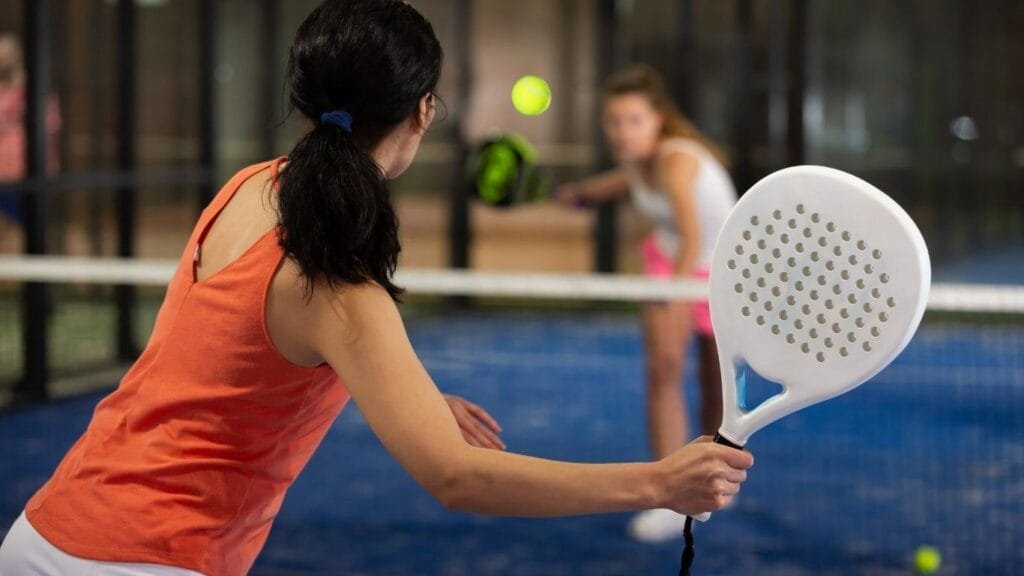
Drill 10 – Cross-Court Consistency Rally
Skill focus: Rally consistency, groundstroke direction, patience Players needed: 2 Time: approx. 10-12 minutes Equipment: 1 ball
Purpose
The cross-court consistency rally is one of the most widely used padel drills at all ability levels. EverythingPadel identifies the crosscourt drill as uniquely effective because it develops consistency, defence, attack, and tactical awareness simultaneously – and because responsibility for errors cannot be shared with a partner. Padel39 coaching guidance also highlights the drill for building placement, anticipation, and control.
How to Execute
- Both players start at their respective baselines.
- One player feeds the ball crosscourt to start the rally.
- Both players maintain the crosscourt pattern – every shot must land in the crosscourt half of the opponent’s court.
- Count consecutive shots before an error.
- Set progressive targets: first reach 10 consecutive shots, then 20, then 30.
- Once 20 shots can be maintained at moderate pace, introduce a depth target – all balls must land behind the service line.
Coaching Focus
Direction before power. Coaches consistently emphasise that beginners should reduce swing speed to maintain the crosscourt pattern. Padel39 coaching guidance recommends using angles and height to keep the opponent moving while the player stays balanced. A slow, accurately placed crosscourt shot is more developmental than a powerful shot that misses the target zone.
Drill 11 – Basket Feed Drill
Skill focus: Shot isolation, building consistency on weak shots Players needed: 2 (feeder with basket and hitter) Time: approx. 10-15 minutes Equipment: Ball basket
Purpose
EverythingPadel coaching guidance places the basket drill among the most important practices available, noting that feeding 50 balls to one specific shot and barely missing by the end builds the consistency needed before competitive match play. The critical coaching principle is to prioritise weak shots and high-value shots first – volleys, overheads, and wall shots – rather than groundstrokes from the baseline.
How to Execute
- The hitter stands at the relevant position for the shot being practised (net zone for volleys, backcourt for wall shots, service line for overheads).
- The feeder delivers balls one at a time at a consistent pace and location.
- Complete 20-50 repetitions of one specific shot before switching to another.
- Priority order for beginners: volleys first, then bandejas/overheads, then wall shots, then groundstrokes.
- The feeder should ensure a consistent delivery so the hitter can focus entirely on shot mechanics, not on reading ball trajectory.
Coaching Focus
EverythingPadel’s basket checklist for effective sessions: maintain a consistent feed location, focus on weak and important shots first, position the basket diagonally from the hitter to allow a natural feed angle. The basket drill is also an excellent warm-up before competitive matches, giving the player a feel for the ball and racket before point play begins.
Drill 12 – Lob (Globo) Target Drill
Skill focus: Defensive lob placement, height, depth Players needed: 2 Time: approx. 10 minutes Equipment: Basket of balls, 2 cones as targets
Purpose
The globo (lob) is one of the most important shots in padel for beginners to develop. LTA Padel coaching guidance identifies hitting a lob over opponent heads as an effective counter when opponents are dominating the net zone – it resets the point and can turn defence into attack. Padelsouq coaching guidance also lists the lob as indispensable for breaking opponents’ rhythm and creating offensive opportunities.
How to Execute
- Place two cones at the back corners of the opponent’s court as landing targets.
- The hitter stands at the baseline.
- The feeder delivers the ball mid-court at a comfortable pace.
- The hitter plays a lob with enough height to clear a hypothetical opponent at the net (coaches suggest aiming for at least 4-5 metres of height) and land deep in the backcourt zone.
- Target the cones in the back corners alternately.
- Complete 15-20 repetitions on each side.
Coaching Focus
The two most common beginner lob errors are insufficient height (ball is too low and can be smashed back) and insufficient depth (ball lands short, giving opponents an easy attacking position). A lob that lands near the service line rather than the baseline is not a functional defensive reset.
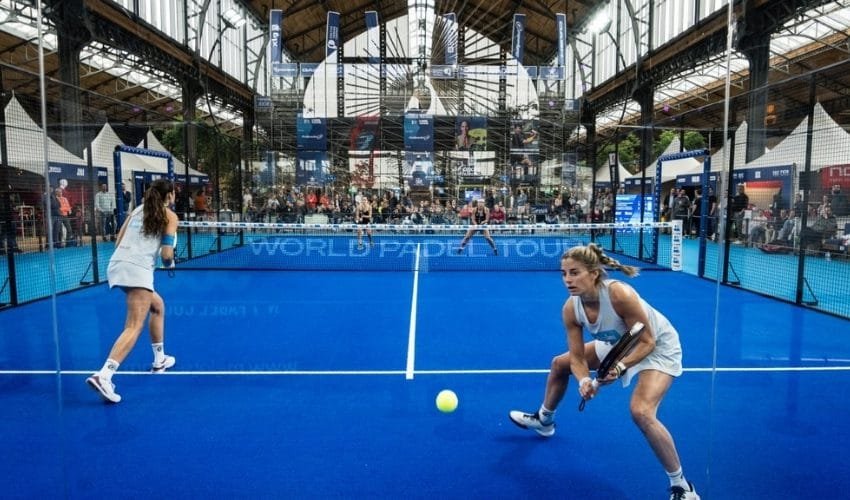
Drill 13 – Up and Down Drill
Skill focus: Net to backcourt transition, volley and bandeja/vibora under fatigue Players needed: 2 (feeder with basket and hitter) Time: approx. 8-10 minutes Equipment: Ball basket
Purpose
This drill is drawn from EverythingPadel coaching practice and is described as one of the most important movement-combined technique drills available. It builds volleys and overhead shots in a realistic game-situation format where the player is tired, moving, and under physical demand – conditions that match play produces but static basket work does not.
How to Execute
- The hitter starts at the net zone in ready position.
- The feeder delivers a forehand volley at the net.
- After the volley, the feeder immediately plays a deep, high ball toward the backcourt.
- The hitter runs back, tracks the ball, and plays a bandeja or controlled overhead from the backcourt.
- The feeder delivers the next net volley and the sequence continues.
- Complete 10-15 repetitions before resting.
Coaching Focus
EverythingPadel coaching guidance notes that this drill is harder than a standard basket because the player is tired and moving constantly – which replicates what a game actually demands. In a game, the bandeja will not arrive as a comfortable, nicely paced feed – it will arrive when the player is moving, fatigued, and needing to get behind the ball. This drill builds the habit of reading the lob early and moving back before the ball has reached its peak.
Drill 14 – 1 Up 1 Back Defence and Attack Drill
Skill focus: Defensive consistency, wall usage, attacking volley variety Players needed: 2 Time: approx. 10-12 minutes per role Equipment: 1 ball
Purpose
This drill is widely used across coaching programs and is documented in EverythingPadel coaching guidance as one of the most effective drills for improving both defensive depth and attacking variety simultaneously. One player defends from the back with no lob permitted; the other attacks from the net. Both skills develop under realistic pressure.
How to Execute
- One player takes the net zone (attacker); the other takes the backcourt (defender).
- A ball is fed into play.
- The backcourt player must play every ball back without lobbing – only groundstrokes and wall shots. The objective is to get every ball back and use the glass walls to extend the rally.
- The net player volleys from the net zone, testing different volley types – deep, angled, drop volley.
- Play until one player makes an error, then reset.
- Switch positions after a set number of points or at a designated time – both players must experience both roles.
Coaching Focus
EverythingPadel coaching guidance notes two specific benefits: for the defender, this drill builds wall play and defensive consistency under constant attack pressure – if the player can dig out every ball from the back, they become significantly harder to beat in matches. For the attacker, the drill builds volley variety and teaches which volley types are most effective against a well-positioned defensive player.
Drill 15 – Doubles Positioning Pattern Drill
Skill focus: Court coverage, partner rotation, doubles formation Players needed: 4 Time: approx. 10-15 minutes Equipment: Ball basket, full court
Purpose
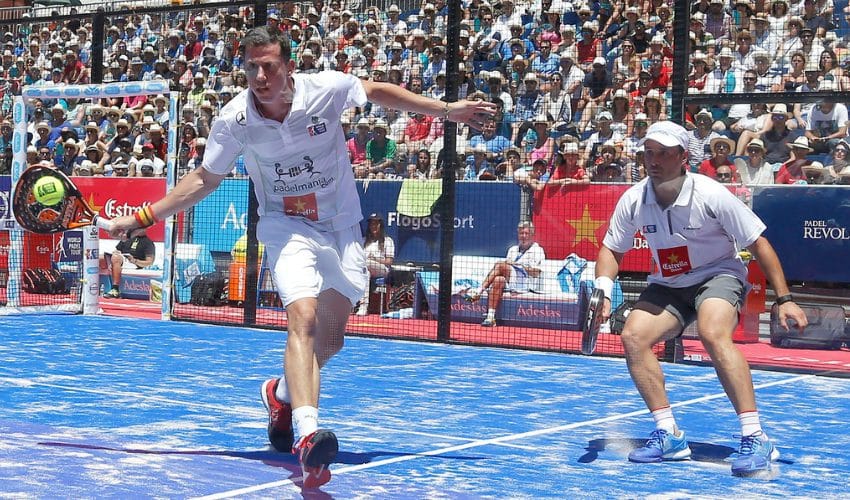
Padel is a doubles sport. LTA Padel coaching guidance emphasises that the best padel teams are those who move around the court together to cover space and leave fewer options for opponents. This drill introduces the parallel formation and rotation principle in a structured, coached format.
How to Execute
- All four players take starting positions – one pair at the net zone, one pair at the baseline.
- A feeder or coach feeds the ball into play from outside the court.
- After each shot, pause play to check and correct positioning if either pair is out of formation.
- The net pair should remain side-by-side (parallel) with approximately 2 metres between them. The baseline pair maintains lateral alignment.
- When a lob is played over the net pair, pause and walk through the correct rotation – both net players move back together, re-establishing their baseline position.
- Progress to playing full points without stopping once the positioning pattern is understood.
Coaching Focus
Both players must move together – not independently. When one player moves left, the other shifts left to maintain spacing and court coverage. The middle of the court (el medio) is the most commonly targeted zone in doubles padel, and closing it through correct parallel alignment is the primary structural objective of this drill.
Off-Court Physical Conditioning for UAE Padel Players
Just Padel UAE identifies several off-court exercises that directly support on-court padel performance. These are particularly relevant for players in the UAE who play during summer months in indoor air-conditioned facilities and need to maintain physical conditioning between court sessions.
Speed and Explosive Start Drill
Run short distances of 5-10 metres at full speed, then stop abruptly. Wait 5 seconds, then run again. Repeat 8-10 times. This builds the explosive first-step speed that padel requires for reaching balls in the corners and recovering to ready position.
Lateral Jump Drill
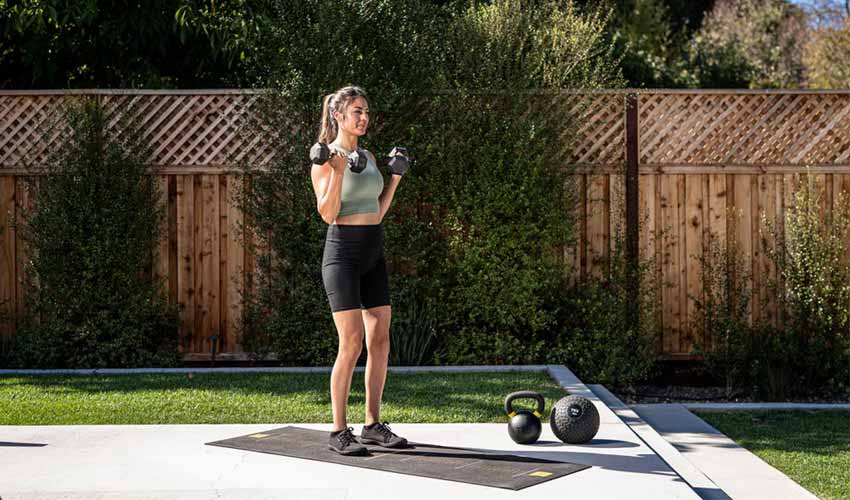
Stand with feet slightly apart. Jump to the right, return to centre, jump to the left. Maintain balance throughout. Repeat for 30 seconds with rest intervals. This builds lateral leg strength for the side-to-side movement that padel demands on every point.
Balance Work
Sitting on a stability ball and performing controlled back-and-forth motion for 2-3 minutes strengthens core and back muscles that support balance on court. Padel requires constant balance adjustment during wall play and rapid directional changes – core stability directly underpins shot consistency.
Shoulder Rotation Exercise
Hold a light weight in each hand at shoulder height. Rotate arms in a slow clockwise circle for 15 seconds, then counterclockwise for 15 seconds. Repeat 3 times. Padel’s overhead shots and sustained rallies place repeated demand on shoulder muscles – maintaining shoulder strength and flexibility reduces injury risk and supports consistent overhead mechanics.
Endurance Base
Running at a moderate pace for 20 minutes, increasing speed gradually every 5 minutes, builds the aerobic base that supports sustained padel performance across long matches. This is relevant for UAE summer play in particular, where heat – even in indoor air-conditioned venues – places additional physical demand on the body.
For a complete guide to the padel lifestyle across the UAE including seasonal play, injury prevention and community tips, visit the Padel Lifestyle UAE hub.
Structuring a Training Session in the UAE
Recommended Beginner Session Structure (60-90 minutes)
| Phase | Duration | Drills to Include |
|---|---|---|
| Warm-Up | approx. 10 minutes | Drills 1 and 5 (shadow movement, split-step) |
| Technical Foundation | approx. 20 minutes | Drills 2, 3, and 4 (hand feed, transitions, mini volley) |
| Wall Play | approx. 15 minutes | Drills 8 and 9 (back wall and side glass) |
| Serve Practice | approx. 10 minutes | Drills 6 and 7 (serve targets, serve + first volley) |
| Rally and Tactical | approx. 20-30 minutes | Drills 10, 12, 13, and 15 |
| Cool-Down | approx. 5-7 minutes | Light stretching – calves, hamstrings, shoulders |
A three-session weekly structure is commonly recommended for beginner players: one session focused on foundational technique, one on wall play and serve, and one combining rally consistency with doubles positioning.
Home Practice Without a Court
LTA Padel coaching guidance recommends that players can improve control without court access by simply tapping a ball upward in the air repeatedly with the racket. Once this feels comfortable, alternating the hitting side of the racket on each tap increases the challenge and builds ambidextrous racket familiarity. Players with access to an outside wall at home can also practise volleying against it to build consistency between court sessions.
Getting Coached in the UAE
While these drills can be practised by self-directed players, the fastest route to improvement at beginner level is structured coaching from a certified instructor. Coaches provide immediate feedback that written drill descriptions cannot replicate and can identify grip, footwork, and contact errors before they become ingrained habits.
For a complete guide to padel coaching programmes and kids classes across the UAE, visit the Padel Coaching UAE hub.
UAE padel academies offering structured beginner coaching programs include World Padel Academy (WPA) with locations across Dubai, Sharjah, and Abu Dhabi; Club Padel Dubai; Just Padel across multiple Dubai venues; Danube Padel Academy at Danube Sports World; and Viya Padel at Emirates Golf Club. Players in all emirates – including Sharjah, Ras Al Khaimah, Abu Dhabi, and others – should verify current program availability and coaching schedules directly with local venues.