

This guide provides 7 structured, coach-aligned padel training at home drills, the correct equipment to use, how to warm up properly, a sample weekly training plan for UK players, and specific guidance on training safely through the UK’s colder, wetter months. Every drill and exercise in this article is grounded in widely accepted coaching methodology and physical conditioning principles for racket sport athletes. No unverifiable claims are made, and no personal testing is implied.
For a complete overview of padel technique, beginner guides and skill development resources, visit the Learn Padel hub. For technical shot references to practise alongside these drills, the Padel Shots guide provides a complete breakdown.
Why Home Training Helps UK Padel Players
The gap between court sessions is where most recreational padel players lose ground. Muscle memory fades, footwork patterns revert, and physical conditioning declines faster than most players expect – particularly during UK winter, when shorter days, colder temperatures, and wet weather reduce outdoor court access and make some players less inclined to train at all.
Coaches working with intermediate players consistently identify physical conditioning and movement habits as the primary differentiators between players who plateau and those who continue improving. A player who practises shots twice a week on court but neglects lateral agility, core strength, and shoulder stability between sessions will progress more slowly than a player combining court time with targeted home training three to four times per week.
Many players across the UK report that structured home training between court sessions produces more visible on-court improvement than simply adding more court hours, because the physical foundation – stronger core, faster footwork, more stable shoulder – directly upgrades every shot, every rally, and every movement pattern simultaneously.
The UK context adds a practical dimension of its own. Cold temperatures, rain, and reduced daylight from around October through March can make consistent outdoor training difficult, and many recreational players play exclusively indoors during this period. Indoor home training becomes a valuable supplement for players without regular access to covered or indoor courts. Players who build a reliable home training routine through the darker months commonly arrive at spring in better physical condition than those who pause padel-related activity over winter.
How to Get Better at Padel at Home
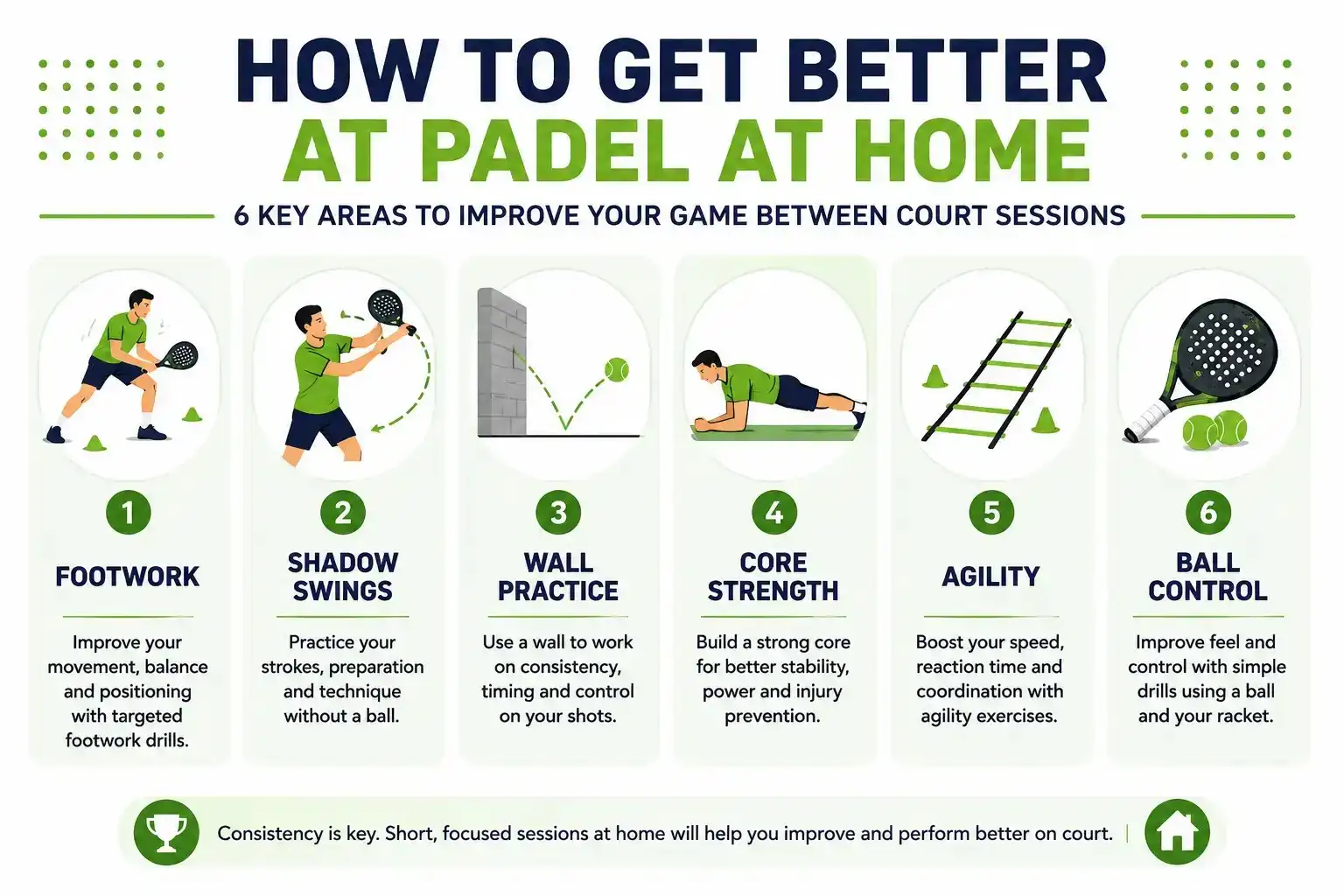
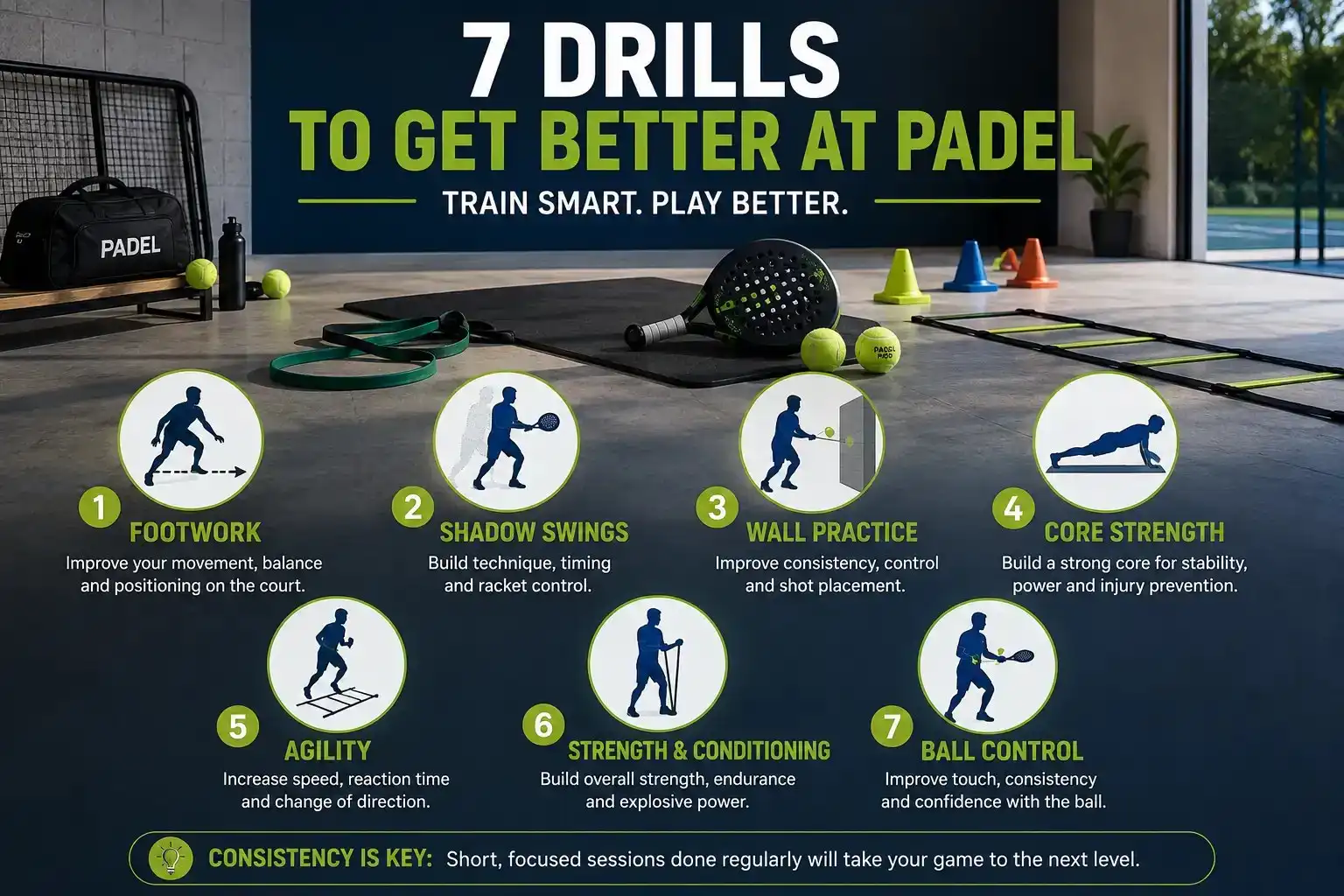
You do not need a padel court every time you want to improve. Home training can help you build the movement, strength, coordination and repetition that support better performance when you return to court.
The most useful areas to work on at home are:
- Footwork: practise lateral movement, split steps and quick changes of direction so you arrive at the ball in a more balanced position.
- Shadow swings: rehearse forehands, backhands, volleys and overhead preparation without a ball to reinforce racket preparation and movement patterns.
- Wall practice: if you have access to a safe wall, controlled forehand, backhand and volley repetitions can improve consistency and timing.
- Core strength: stronger trunk control helps with balance, rotation and stability during strokes.
- Shoulder strength and mobility: resistance-band work can support the shoulder muscles used repeatedly during serves, volleys and overheads.
- Agility and conditioning: short movement circuits can improve your ability to recover between shots and maintain intensity during longer matches.
- Ball control: simple racket-and-ball coordination exercises can improve touch and hand-eye coordination.
Home training works best as a complement to court practice rather than a replacement for it. Some parts of padel, including glass rebounds, partner positioning, tactical decision-making and realistic match pressure, are difficult to reproduce properly away from a court.
For most recreational players, the best approach is to use home sessions to improve physical preparation and movement habits, then use court time to apply those improvements to real rallies and match situations.
How to Practice Padel Without a Court
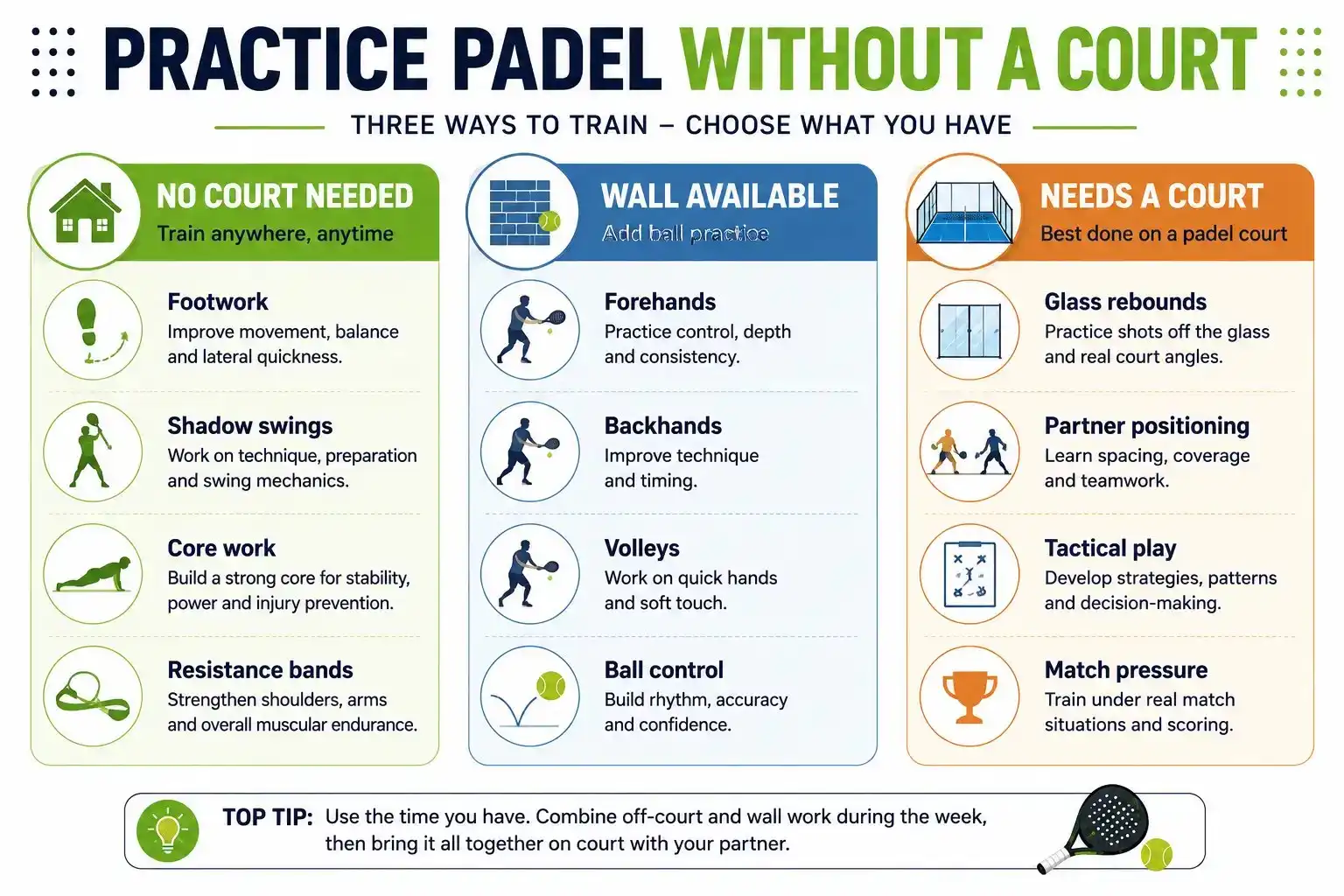
You can practise several important parts of padel without access to a court. The key is to focus on skills and physical qualities that transfer well to match play, such as footwork, racket preparation, coordination, strength and conditioning.
What You Can Practise Without a Court
- Footwork and movement: work on lateral steps, split-step timing, recovery movement and changes of direction.
- Shadow swings: rehearse forehands, backhands, volleys and overhead preparation without a ball.
- Strength and conditioning: use bodyweight or resistance-band exercises to improve core stability, shoulder strength, balance and general fitness.
- Ball control: practise simple racket-and-ball coordination drills in a safe space.
- Agility: use cones or floor markers for short movement patterns that simulate court recovery.
If You Have Access to a Safe Wall
A suitable wall gives you more options for padel practice at home. You can work on controlled forehands, backhands and volleys while focusing on consistency, timing and racket preparation.
Start slowly and prioritise control rather than hitting hard. The aim is to build repeatable movement and clean contact, not to reproduce full match speed.
What Still Needs Court Practice?
Home training cannot fully reproduce every part of padel. Glass rebounds, partner positioning, tactical decision-making, realistic overheads and match pressure are best developed on a proper court.
For that reason, practising without a court works best as a supplement to regular court sessions rather than a complete replacement.
The drills below combine footwork, strength, shadow practice, wall work and conditioning to help you stay sharp between court sessions.
What Should You Practise First?
If you are unsure where to start, prioritise the area that most often causes problems during matches:
| If You Struggle With… | Focus on at Home |
|---|---|
| Reaching balls late | Footwork and agility |
| Losing balance during shots | Core stability |
| Tiring during long matches | Conditioning |
| Slow racket preparation | Shadow swings |
| Inconsistent contact | Wall drills and ball control |
| Shoulder fatigue | Resistance-band strength and mobility |
The seven drills below combine these areas into a simple home-training routine you can use between court sessions.
Padel Footwork Exercises You Can Do at Home
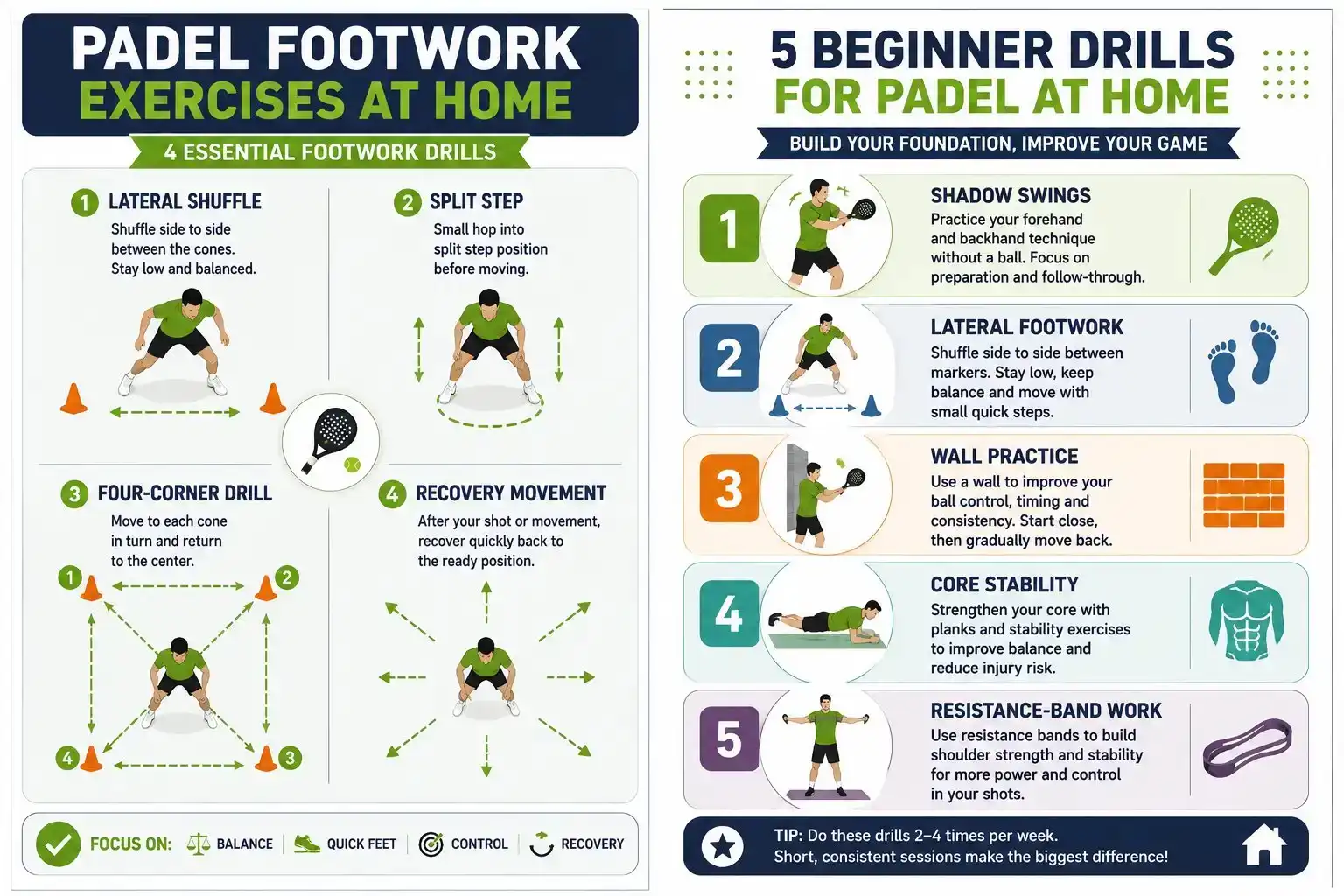
Good footwork helps you reach the ball earlier, stay balanced and recover more efficiently after each shot. You do not need a full padel court to work on these movement patterns. A small, clear training area is enough for several useful exercises.
1. Lateral Shuffle Drill
Place two markers around 2 to 3 metres apart. Start in a ready position with your knees slightly bent, then shuffle sideways between the markers without crossing your feet.
- Keep your chest facing forward.
- Stay low and balanced.
- Use short, quick steps rather than long strides.
- Complete 20 to 30 seconds, rest, then repeat.
This exercise helps develop the lateral movement used when defending and adjusting position during rallies.
2. Split-Step and First-Movement Drill
Start in a neutral ready position. Perform a small split step, then move quickly one or two steps to the left or right before returning to the centre.
- Land lightly on the balls of your feet.
- React immediately after the split step.
- Focus on the first movement rather than maximum speed.
This is useful for practising the quick reaction movement needed before volleys, returns and defensive shots.
3. Four-Corner Movement Drill
Set out four markers in a small square. Start in the centre and move towards each marker in sequence before recovering back to the middle.
- Move forward, sideways and diagonally.
- Return to a balanced ready position after each movement.
- Keep the movements controlled before increasing speed.
This drill develops recovery movement and helps reinforce the habit of returning to a useful court position after playing a shot.
4. Shadow Footwork with Racket Preparation
Combine movement with shadow swings by stepping into an imaginary forehand, backhand or volley position and preparing the racket as if you were about to strike the ball.
- Move first, then prepare the racket.
- Keep your body balanced throughout the movement.
- Recover to the ready position after every simulated shot.
This makes the exercise more padel-specific because it links your footwork with racket preparation rather than training movement in isolation.
5. Quick-Feet Line Drill
Use a floor line, tape or an imaginary line and make fast, controlled steps from side to side for short intervals.
- Keep the movements small and light.
- Avoid letting your heels stay planted.
- Work for 15 to 20 seconds at a time.
This simple drill can help develop quicker feet and coordination without requiring a speed ladder.
How Often Should You Practise Padel Footwork?
Two or three short footwork sessions per week can fit easily around normal court sessions. Quality is more important than doing long workouts. Stop if your movement becomes sloppy or you are too tired to maintain good balance and control.
For a simple home session, choose two or three of the exercises above and complete two to four rounds, allowing enough rest to keep each repetition sharp.
Best Padel Drills for Beginners at Home
Beginner padel players can benefit from home training by focusing on simple movements and repeatable technique rather than trying to copy advanced match situations. The aim is to build better coordination, balance, racket preparation and movement habits that can later be applied on court.
1. Shadow Swings
Practise forehand and backhand movements without a ball. Start from a balanced ready position, prepare the racket early and finish each movement under control.
- Use slow, deliberate repetitions.
- Focus on balance rather than power.
- Return to the ready position after every swing.
2. Basic Lateral Footwork
Place two markers a short distance apart and move side to side using small shuffle steps. This helps develop the lateral movement used frequently in padel.
- Avoid crossing your feet where possible.
- Keep your knees slightly bent.
- Stay balanced as you change direction.
3. Simple Wall Practice
If you have access to a safe and suitable wall, practise gentle forehands and backhands with the goal of keeping the ball under control rather than hitting hard.
- Start close enough to maintain consistency.
- Let the ball slow down before increasing the pace.
- Focus on clean contact and early racket preparation.
4. Core Stability Exercises
Simple exercises such as planks, side planks and controlled rotational movements can help improve the balance and trunk stability needed for padel movement and stroke production.
Beginners should prioritise good form and short, controlled sets rather than long or highly demanding workouts.
5. Resistance-Band Shoulder Work
Light resistance-band exercises can be used to strengthen the shoulder and surrounding muscles involved in racket sports.
- Use light resistance at first.
- Keep movements slow and controlled.
- Avoid training through pain or discomfort.
Which Beginner Padel Drill Should You Start With?
| If You Want to Improve… | Start With |
|---|---|
| Racket preparation | Shadow swings |
| Court movement | Basic lateral footwork |
| Ball control | Controlled wall practice |
| Balance and stability | Core exercises |
| Shoulder strength | Resistance-band exercises |
Beginners do not need to complete every drill in one session. Choose two or three exercises, practise them consistently and then use your next court session to apply the same movement and technique with a ball, partner and realistic court positioning.
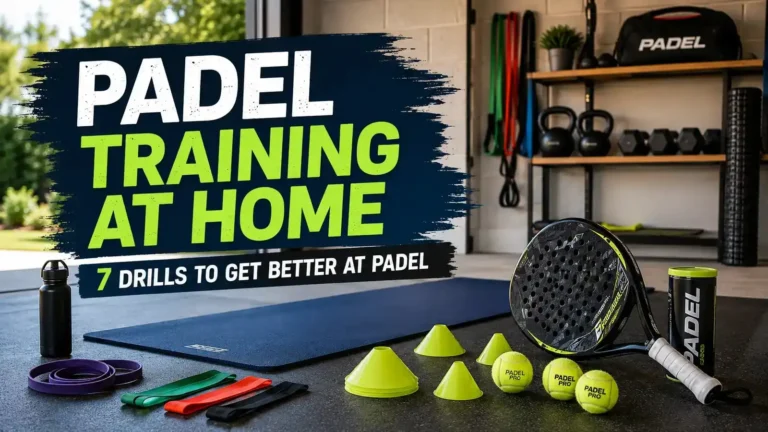
Essential Equipment for Padel Training at Home
Effective home training does not require expensive or specialist equipment. Some product mentions may include affiliate links.
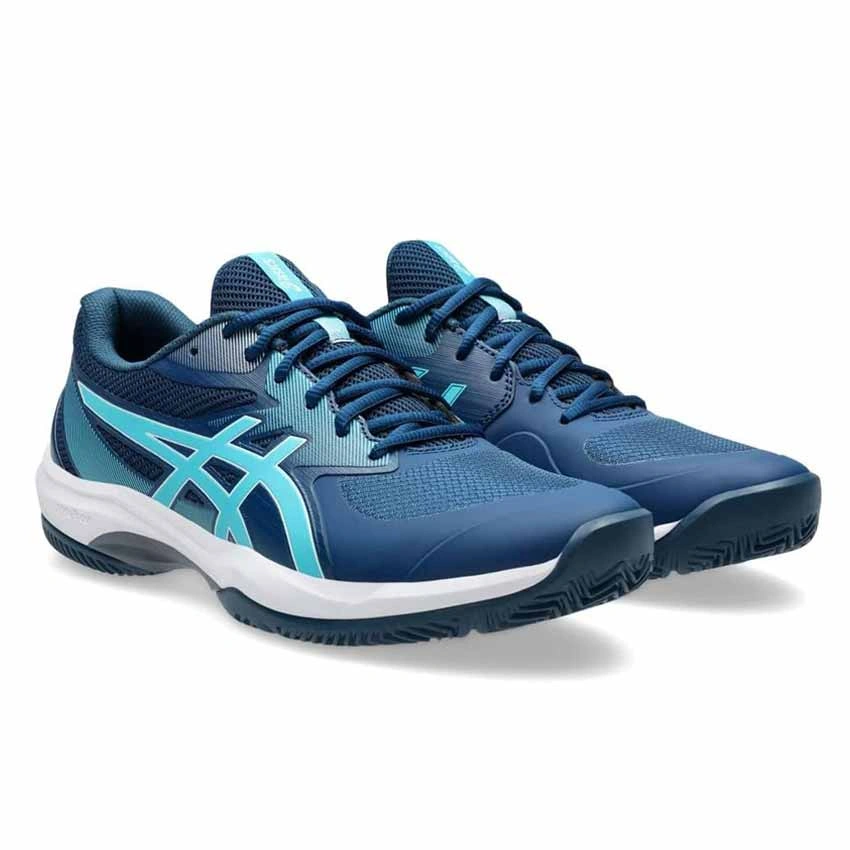
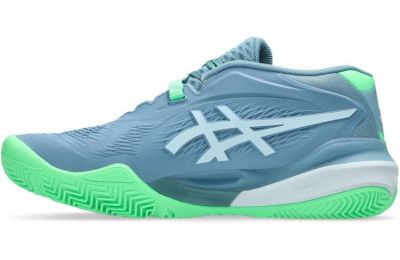
For a complete guide to padel rackets, shoes and equipment available in the UK, see the Best Padel Rackets UK and Best Padel Shoes UK guides.
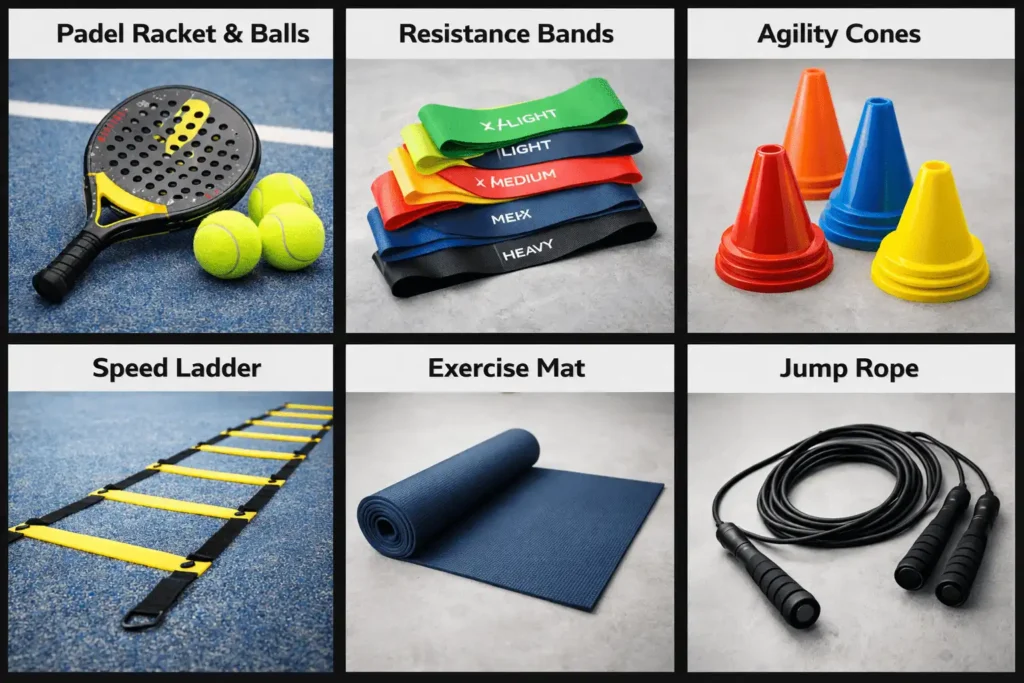
The following setup covers everything needed to complete every drill in this guide:
| Equipment | Primary Training Use | Approximate Cost in the UK (£) |
|---|---|---|
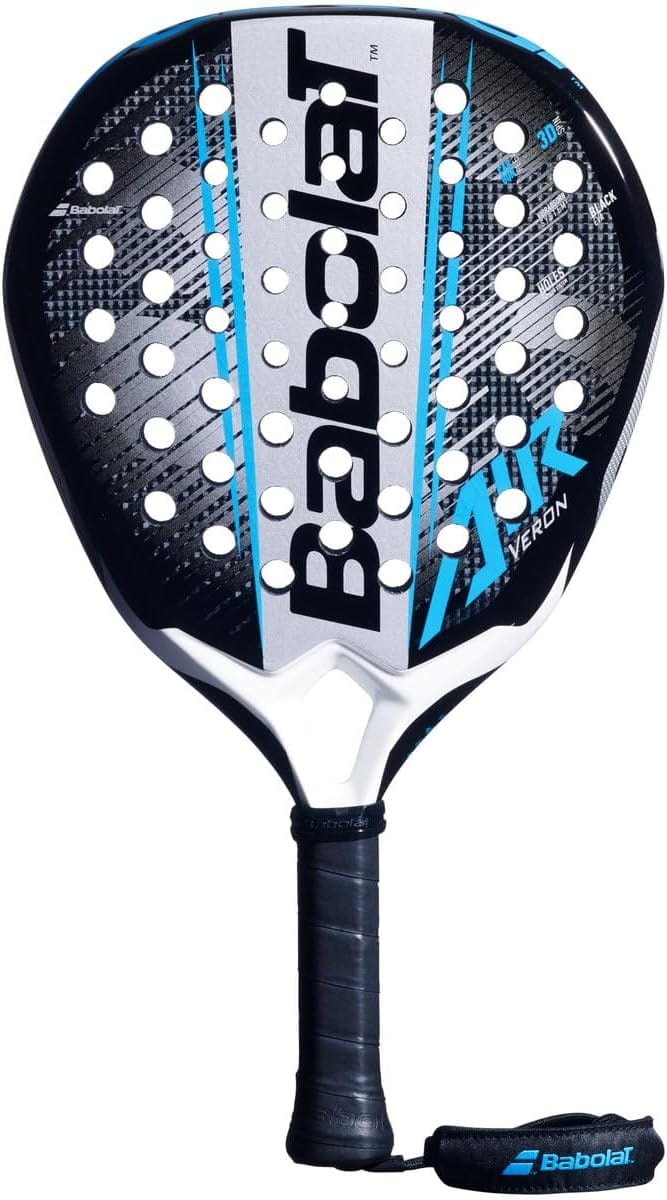
| Padel racket | Shadow swings, grip work, wall drills | Use existing match racket |
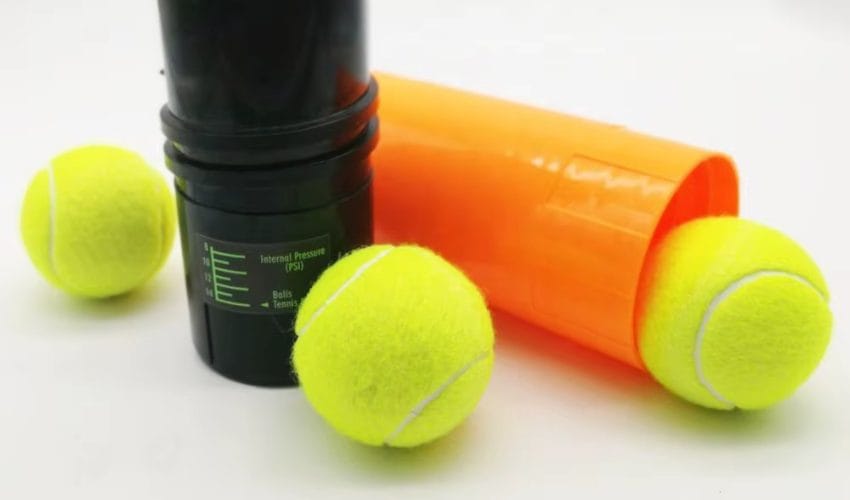
| Padel balls (pack of 3) | Wall contact drills | Approx. £3-£7 per pack |
| Resistance bands (light to medium) | Shoulder stability, rotational strength | Approx. £8-£25 per set |
| Agility cones (set of 6-10) | Footwork pattern drills | Approx. £10-£20 per set |
| Speed ladder (4-6 metres) | Lateral agility, foot speed | Approx. £10-£25 |
| Exercise mat | Core circuit, flexibility | Approx. £10-£25 |
| Jump rope | Cardiovascular warm-up, footwork rhythm | Approx. £3-£10 |
| Smooth flat wall | Forehand, backhand, volley drills | Garage wall, boundary wall, or rebound net (indoor or covered is preferable in wet weather) |
Prices are indicative UK high-street and online retail ranges as of 2026 and should be verified with individual retailers before purchase. For a complete equipment checklist covering home training and court play requirements, see the Padel Equipment Checklist. For racket guidance relevant to wall drilling and shadow practice, the Padel Rackets section covers options and specifications available to UK buyers.
Padel Warm-Up Exercises Before Home Training
Skipping or shortening the warm-up before home training sessions is one of the most commonly cited causes of overuse injury in recreational racket sport athletes, according to widely referenced coaching and sports medicine guidelines. The shoulder, elbow, wrist, and knee joints used in padel require deliberate preparation before loading – and coaching bodies working with UK padel players note that cold conditions make muscles and joints more vulnerable, so warming up thoroughly matters even more in autumn and winter.
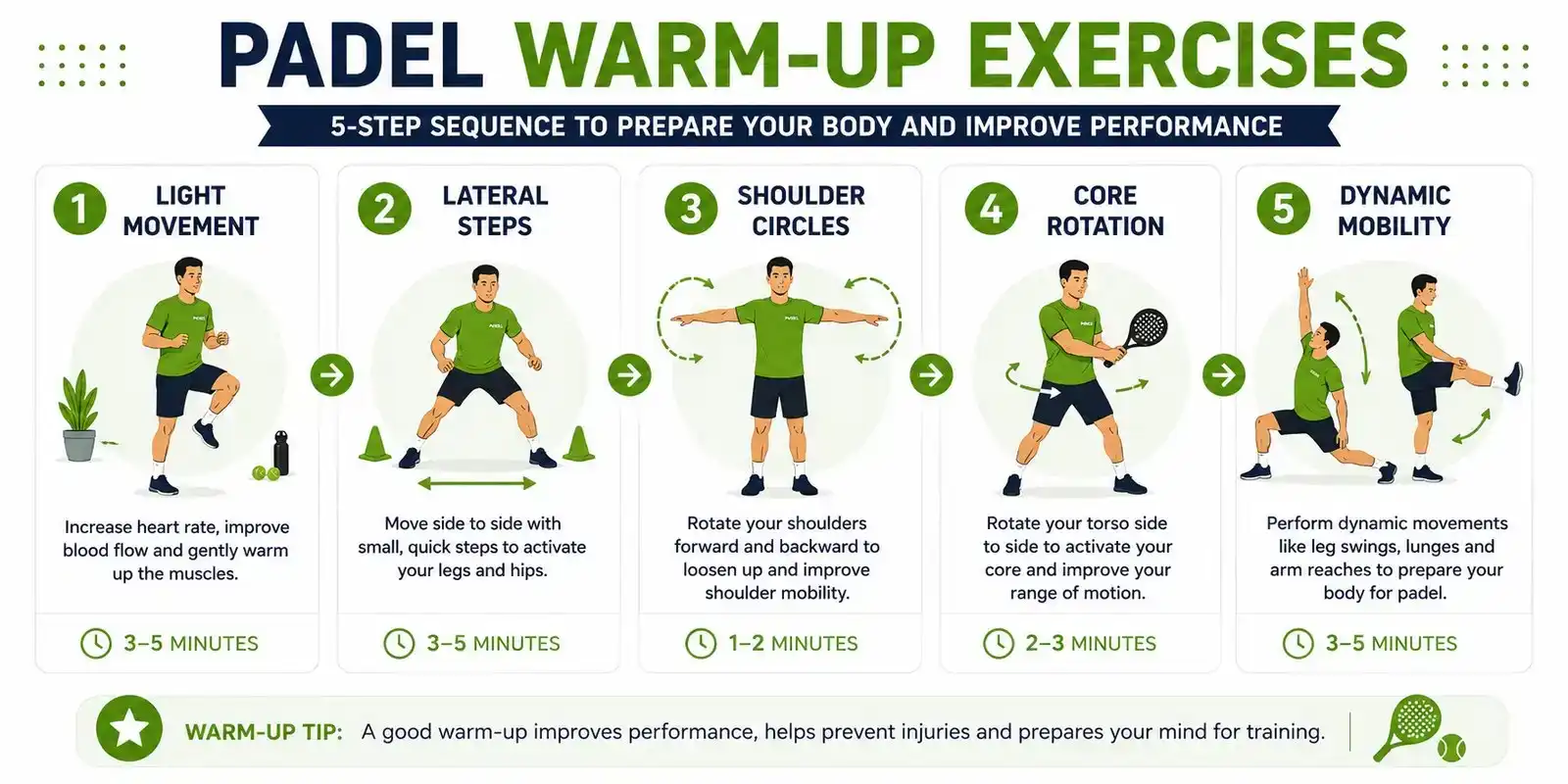
Phase 1 – Dynamic joint mobilisation (approx. 3 to 5 minutes)
Perform arm circles progressing from small to large arcs, wrist rotations in both directions, hip circles, and ankle mobility rotations. These movements prepare the joints most loaded in padel movement for the work that follows. Coaches commonly recommend this phase be performed slowly and deliberately rather than rushed.
Phase 2 – Cardiovascular activation (approx. 3 to 4 minutes)
Light jogging on the spot, high knees, lateral side shuffles, and jump rope sequences raise the heart rate and increase blood flow to working muscles. This phase should feel moderately challenging but not exhausting. It is preparation for training, not conditioning work in itself.
Phase 3 – Shadow padel movements (approx. 3 to 5 minutes)
With racket in hand, perform slow-motion forehand and backhand swing patterns, compact volley punch motions, and overhead preparation sequences. Move laterally between imagined shot positions to simulate the footwork of a real rally. Shadow practice activates the specific neuromuscular patterns of padel without impact load, making it the most padel-specific warm-up tool available without a court.
Total warm-up: approx. 10 to 15 minutes, extending to approx. 15 minutes in cold weather. This investment in preparation consistently reduces injury risk and improves the quality of the training session that follows.
For a breakdown of the main strokes to include in shadow practice, see the essential padel shots guide.
Players unsure which training intensity suits them can first assess their padel level.
The 7 Padel Training at Home Drills
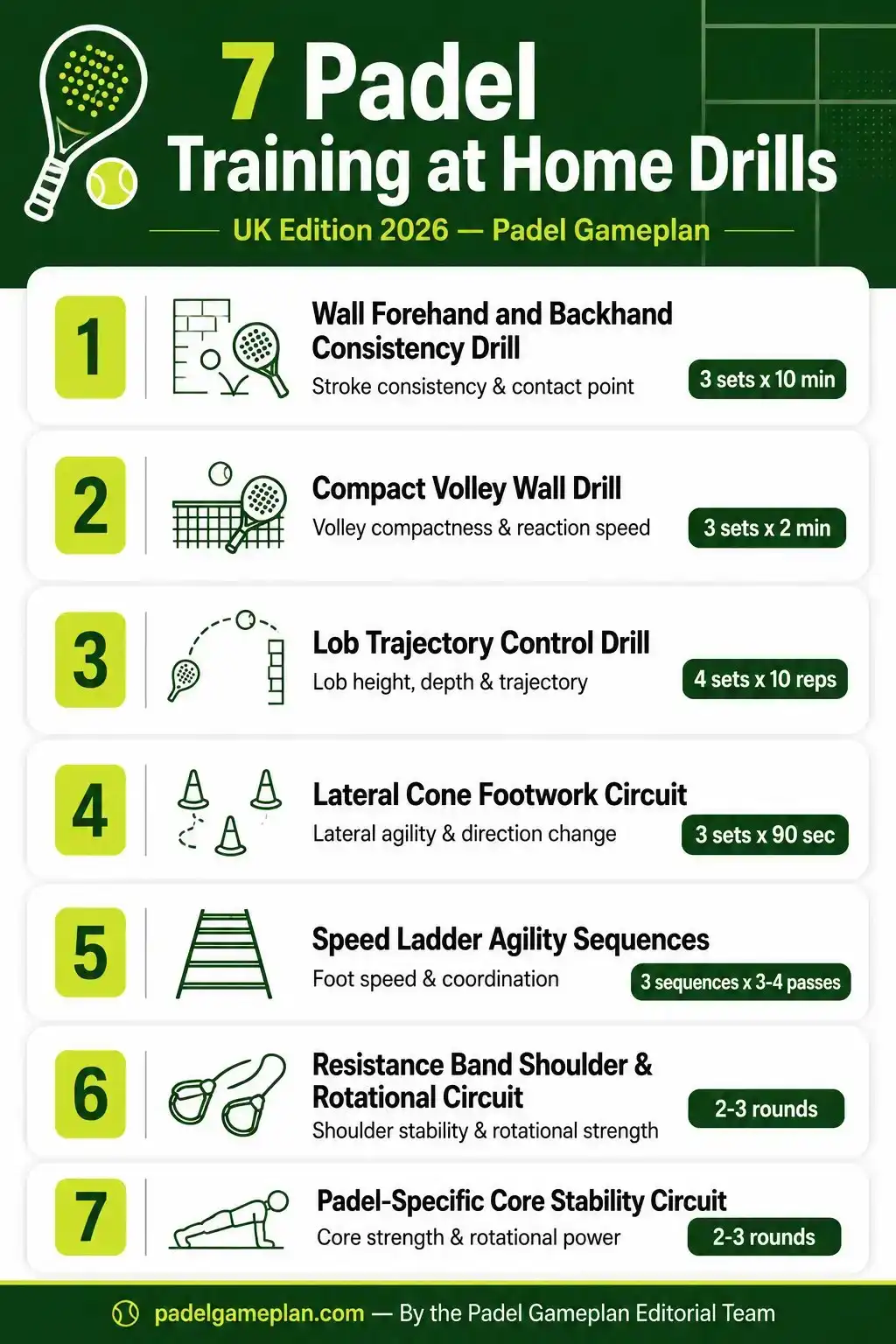
Drill 1 – Wall Forehand and Backhand Consistency Drill
Skill trained: Stroke consistency, contact point precision, racket face control, early preparation habit
Why it works: The wall provides immediate, objective feedback on every strike. A poorly angled racket face or late contact point produces an erratic return that cannot be disguised. Coaches commonly describe wall drilling as one of the most honest training tools available to solo players because it removes all variables except technique quality.
Setup: Stand approx. 1 to 1.5 metres from a smooth, flat wall. Mark a target zone at padel net height – approx. 88 cm from the ground – with tape if possible. A dry, covered or indoor wall is preferable in wet weather, since a damp surface changes ball bounce and increases slip risk.
Execution:
- Drop the ball and allow it to bounce once before striking it toward the wall with a controlled forehand.
- As the ball returns, prepare the racket early – before the ball reaches the hip – and strike again with consistent technique.
- Focus on making contact in front of the body. Coaches consistently identify late contact – alongside or behind the hip – as the primary forehand and backhand error in beginner and early intermediate players.
- After 20 consistent forehand repetitions, switch to backhand using the same controlled approach.
- Progress to alternating forehand and backhand shots as consistency develops.
Duration: 3 sets of 10 minutes, alternating forehand and backhand sets with 60 seconds rest between sets.
Common error to avoid: Standing too far from the wall and chasing the return rather than holding a controlled position. A closer, more controlled distance builds better stroke habits than a reactive wider stance.
Players working specifically on their backhand can also use these padel backhand drills to develop the stroke further.
Drill 2 – Compact Volley Wall Drill
Skill trained: Volley compactness, reaction speed, soft hands, net position habit formation
Why it works: The volley is the shot most frequently undermined by excessive backswing under match pressure. The wall drill at close range physically prevents a long backswing by reducing reaction time, forcing the correct compact punch motion that coaches consistently teach as the foundation of effective net play.
Setup: Stand approx. 1 metre from the wall. The ball should not bounce between strikes.
Execution:
- Strike the ball firmly toward the wall at net height.
- As it returns, punch it back immediately with a short, forward motion – no backswing.
- Keep the racket face above the wrist throughout and maintain the elbow slightly forward of the body.
- Focus on contact in front of the body. The racket head should not drop below the wrist at any point.
- As proficiency increases, step slightly closer to demand faster reactions.
Duration: 3 sets of 2 minutes with 60 seconds rest between sets.
Many players report that consistent volley wall drill practice over four to six weeks produces noticeable improvement in net play compactness – one of the most visible markers of progression from beginner to intermediate padel.
Beginners who want additional court-based exercises can also follow these padel beginner drills
Drill 3 – Lob Trajectory Control Drill
Skill trained: Lob height, depth, and trajectory consistency – the defensive shot used most frequently to recover from net pressure
Why it works: The lob is the single most important defensive shot in padel doubles, yet it is rarely practised deliberately by recreational players. Coaches commonly note that inconsistent lob depth – either too short for the opponent to smash easily, or too long and hitting the back wall awkwardly – is one of the primary tactical errors in beginner and intermediate doubles play.
Setup: Stand 3 to 4 metres from the wall with sufficient overhead clearance. An outdoor boundary wall or high garage wall is ideal. A minimum wall height of 3 metres is recommended for this drill. If training outdoors, check the surface is dry and non-slip before starting.
Execution:
- Drop the ball and, with an open racket face angled upward, strike it on a high arc toward the upper section of the wall.
- As the ball returns downward, step back into position and execute another controlled lob.
- Focus on consistent arc height and depth. Every lob should clear the imagined net height comfortably and land in the imagined back court zone.
- Avoid generating pace. Lob control is entirely about trajectory and placement, not power.
Duration: 4 sets of 10 repetitions with 45 seconds rest between sets.
Drill 4 – Lateral Cone Footwork Circuit
Skill trained: Lateral agility, direction change speed, court coverage positioning, ready position habit
Why it works: Padel court movement is almost entirely lateral. Players who use crossing steps rather than side steps to cover the court lose balance, reduce shot preparation quality, and arrive at the ball out of position. Cone footwork drills are the most widely used tool in coaching programmes to correct this pattern and build correct lateral movement habits.
Setup: Place 4 to 6 cones in a line with approx. 1 metre spacing along a straight line. Designate the two end cones as return points.
Execution:
- Start at one end cone in a ready position – knees slightly bent, weight on the balls of both feet, racket raised.
- Side-step rapidly to the opposite end cone, maintaining a low stance throughout. Do not cross the feet.
- Without pausing, side-step back to the starting cone.
- After 4 lengths, add a shadow shot at each end cone – a forehand shadow at the right cone and a backhand shadow at the left cone before each direction change.
- Increase speed progressively as the movement pattern becomes consistent.
Duration: 3 sets of 90 seconds with 60 seconds rest between sets.
Drill 5 – Speed Ladder Agility Sequences
Skill trained: Foot speed, coordination, explosive lateral direction changes, the rapid small-step movement pattern that underpins padel court coverage
Why it works: Padel rallies require repeated rapid foot adjustments to set up correctly for each shot. The speed ladder builds the neuromuscular speed and coordination for these quick adjustments more effectively than most other training tools, which is why it features in professional and academy padel training programmes worldwide.
Setup: Lay the speed ladder flat in an open, dry indoor space, garage, or hallway. Minimum recommended length is 4 metres.
Three sequences to rotate through each session:
In-out sequence: Step both feet inside each rung then both feet outside before stepping into the next rung, progressing along the ladder. This builds the wide lateral step pattern used in defensive court coverage.
Two-in sequence: Step right foot then left foot into each rung sequentially, progressing forward one rung at a time. This is the most widely used foundational ladder sequence in racket sport training programmes.
Side shuffle sequence: Face sideways to the ladder and shuffle through each rung laterally, stepping in-out per rung. This most closely replicates the specific lateral movement pattern of padel court coverage and is particularly recommended for players working on net position and baseline recovery movements.
Duration: 3 to 4 passes through the ladder per sequence, 3 sequences per session, with 45 seconds rest between each pass.
Drill 6 – Resistance Band Shoulder and Rotational Strength Circuit
Skill trained: Shoulder joint stability, rotational core strength, injury prevention for the striking arm and shoulder – the most commonly injured area in recreational padel players
Why it works: Shoulder and elbow overuse injuries are among the most frequently reported causes of extended absence from padel in recreational player communities across the UK and globally. Coaches and physiotherapists working with racket sport athletes consistently recommend targeted shoulder stability and rotational strength work as the most effective preventive measure. This circuit addresses the specific muscle groups – rotator cuff, shoulder stabilisers, and rotational core – most involved in padel stroke production.
Setup: Secure a resistance band to a fixed point at waist height, or use a loop band around both wrists for the rotational exercises.
Three exercises performed in circuit:
External shoulder rotation: With the elbow at 90 degrees and tucked against the side, rotate the forearm outward against band resistance and return slowly. Perform 15 controlled repetitions on each arm. This directly strengthens the rotator cuff muscles most vulnerable to padel overuse injury. Coaches commonly recommend this exercise be performed slowly and with a light band to prioritise muscle activation quality over resistance level.
Diagonal swing pattern: Standing side-on to the band anchor point, pull the band diagonally upward and across the body in a motion that closely replicates the padel forehand follow-through path. Perform 15 repetitions each side at a controlled pace. This exercise builds strength through the specific range of motion used in forehand and smash execution.
Rotational core pull: Standing facing the band anchor, hold the band with both hands at chest height and rotate the torso away from the anchor against resistance, then return slowly. Perform 15 repetitions in each direction. This develops the rotational core strength that is the primary power source for padel groundstrokes and overheads.
Duration: 2 to 3 rounds of the full circuit with 60 seconds rest between rounds.
full circuit with 60 seconds rest between rounds.
Drill 7 – Padel-Specific Core Stability Circuit
Skill trained: Core strength, anterior and lateral stability, rotational control and balance during padel-specific movement.
Why it works: Core stability helps support balance, body control and rotational movement during padel. A stable core can help players maintain posture during lateral movement, transfer force through groundstrokes and overheads, and stay controlled when changing direction. These exercises provide a simple way to train those qualities between court sessions.
Four exercises performed in sequence:
Plank: Hold a front plank position with a neutral spine – hips level, core engaged and breathing controlled – for 30 to 45 seconds. Progress towards 60 seconds as strength develops. The plank develops anterior core stability and helps reinforce the controlled body position needed during movement and stroke preparation.
Russian twists with racket: Sit with your knees bent and torso leaning slightly backwards. Hold the padel racket in both hands and rotate your torso from side to side while keeping the core engaged. Perform 20 controlled repetitions – 10 per side. The rotational movement helps train the trunk control used during forehands, backhands and overhead preparation.
Side plank: Hold a side plank on each side for 20 to 30 seconds, progressing to 45 seconds. This builds the lateral core stability that supports court coverage, direction changes, and the defensive positions frequently required in padel doubles play.
Glute bridge: Lie on the back with knees bent and feet flat. Drive the hips upward until a straight line forms from shoulders to knees, hold for 2 seconds, and lower with control. Perform 15 repetitions. This builds the glute and posterior chain strength that generates the explosive padel movements – direction changes, split steps, and acceleration toward the ball – that determine court coverage quality.
Duration: 2 to 3 rounds of the full circuit with 60 seconds rest between rounds.
Sample Weekly Padel Home Training Plan for UK Players
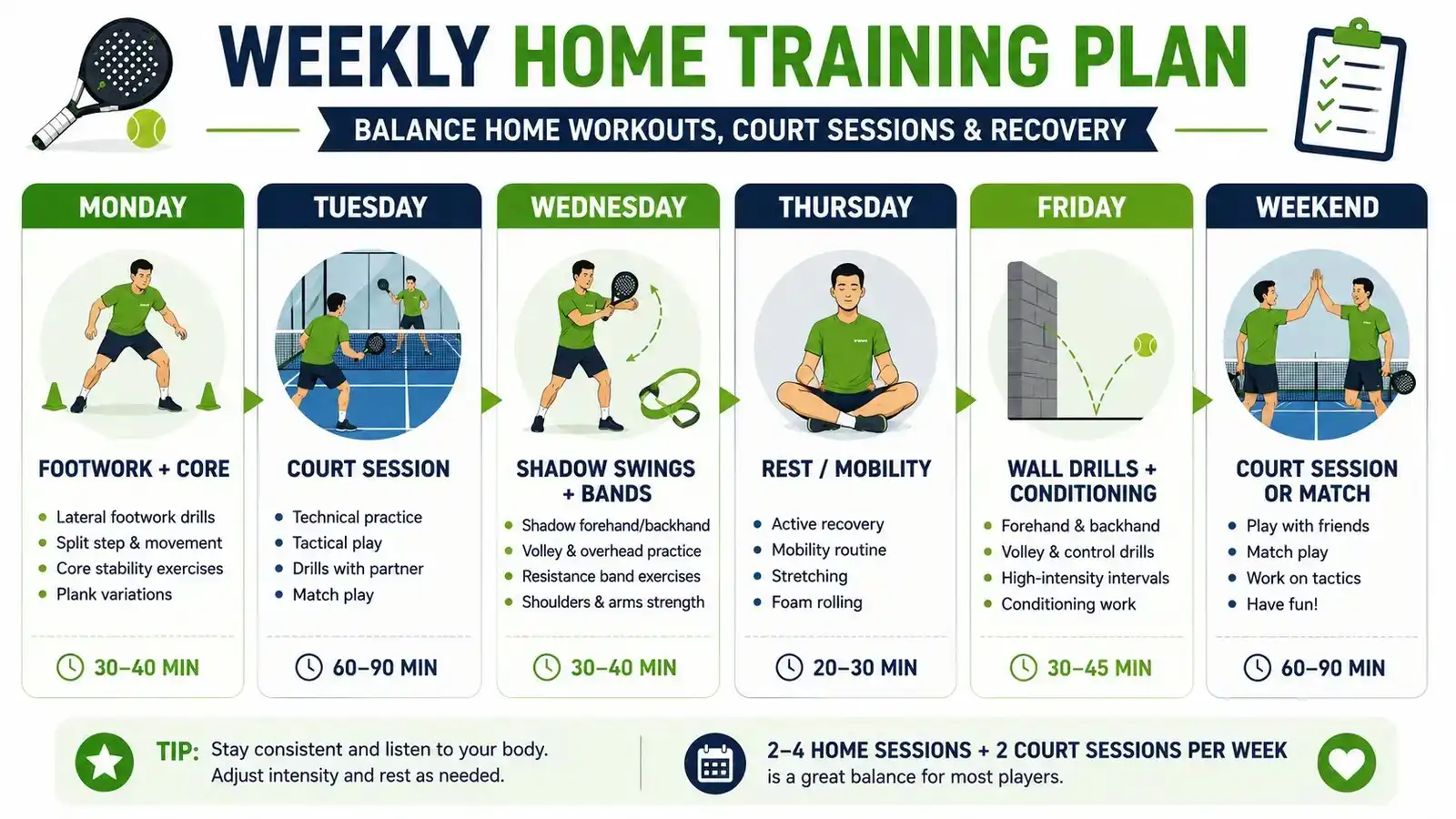
The following weekly structure applies the widely accepted training principle of alternating skill-focused technical sessions with physical conditioning sessions to allow recovery between high-effort sessions while maintaining training frequency.
| Day | Session Type | Approx. Duration | Primary Training Focus |
|---|---|---|---|
| Monday | Wall technique session | 30-40 min | Forehand, backhand, volley wall drills |
| Tuesday | Strength and conditioning | 30-40 min | Core circuit, resistance band shoulder work |
| Wednesday | Active recovery or rest | 15-20 min | Light stretching, mobility |
| Thursday | Footwork and agility | 30-40 min | Cone circuit, speed ladder sequences |
| Friday | Combined skills session | 45-60 min | Shadow padel, lob drill, core circuit |
| Saturday | Court session | Variable | Apply home training gains in live play |
| Sunday | Full rest | – | Recovery |
Three to four home sessions per week is the frequency most commonly recommended by coaches for recreational players balancing padel development with work and family commitments. Sessions can be reduced to 20 minutes on busy days without losing the training benefit – brief, focused sessions maintain muscle memory and conditioning far more effectively than infrequent long sessions with extended gaps between them.
Padel Home Training During UK Winter: Critical Adjustments
UK winter conditions – cold temperatures, rain, and considerably shorter daylight hours from around October through March – require specific adjustments to home training routines. Guidance from the Lawn Tennis Association’s padel programme notes that muscles and joints become more vulnerable in cold weather, which makes a thorough warm-up and sensible session planning especially important during this period.
Extend the warm-up in cold weather. Coaching guidance for winter padel commonly recommends allowing extra time either side of a session – for example, approx. 15 minutes before and after a one-hour block – rather than shortening preparation to save time.
Move wall and floor-based drills indoors or under cover where possible. Core circuits, resistance band work, speed ladder sequences, and shadow padel are all fully executable indoors in a garage, hallway, or living space with enough clearance. These sessions become the primary training format for many UK-based players during the coldest and wettest months.
Treat wet or icy outdoor surfaces with caution. Wet walls and outdoor floors change ball bounce and significantly increase slip risk. If an outdoor wall drill is preferred, check the surface is dry and stable before starting, and move indoors if conditions deteriorate.
Account for shorter daylight hours. With early sunsets common across the UK in December and January, outdoor sessions after work or school often require adequate lighting. Where good lighting is not available, shifting sessions indoors avoids the issue entirely.
Layer clothing and dress for the conditions. Coaches commonly recommend wearing layers for outdoor training and removing them as the body warms up, rather than starting under-dressed and adding layers once cold – along with bringing a spare dry base layer for sessions affected by rain.
Hydration still applies in cold weather. Fluid loss during exertion is commonly underestimated when temperatures are low. Deliberate hydration before, during, and after every training session remains important regardless of season or whether training takes place indoors or outdoors.
How Home Training Connects to On-Court Improvement
Padel training at home is not a replacement for court time – it is the physical and technical preparation that makes court time more productive. The combination of structured home training and quality court sessions with a coach or partner produces faster, more consistent improvement than court time alone.
The physical gains from home training – lateral agility from cone and ladder work, core stability from the circuit, shoulder strength from resistance band work – directly upgrade on-court performance across every shot type simultaneously. A player with a stronger core strikes the ball more consistently. A player with faster lateral footwork arrives in position earlier and with better balance. A player with a stronger, more stable shoulder executes serves, smashes, and bandejas with less effort and lower injury risk.
For a complete guide to the padel lifestyle, including seasonal play, injury prevention and community tips, visit the Padel Lifestyle hub. For guidance on finding and booking courts, the Padel Courts Near Me guide covers popular booking platforms, including Playtomic, used widely across UK cities such as London, Manchester, Birmingham and Glasgow, or go to their website. For technique references to bring to each session, the Best Padel Serve Techniques and How to Play Padel Tennis guides provide structured technical frameworks aligned with what is practised in these home drills.
For context on the physical demands of match play that home training is preparing for, the Padel Calories Per Hour article provides useful reference on energy output at different intensity levels across beginner, intermediate, and competitive padel.