
Padel Rules UK 2026: 15 Essential Rules Every Player Should Know
By the Padel Gameplan Editorial Team | Published: 07 Aug 2026 | Updated: 12 Sep 2026
Padel rules UK players follow are based on the international FIP rules, with LTA competition formats applying additional guidance in some events. If you are new to padel, the main rules to know are simple: serve underarm, allow only one bounce, use the glass after the bounce, and score broadly like tennis. This guide explains the 15 essential padel rules for 2026, including serving, scoring, wall play and Star Point.
Padel is a doubles sport played on an enclosed court, with an underarm serve, glass and fencing that stay in play after the bounce, and a scoring system borrowed from tennis. In 2026, one change matters more than any other: the introduction of the Star Point scoring system, which is now mandatory in some UK competitions and optional in others.
This guide separates the official FIP Rules of Padel from LTA competition formats and from common club conventions, so readers are never left thinking a local house rule is an official law of the game.
Padel rules UK play follows the FIP Rules of Padel: doubles on an enclosed court, an underarm serve that must bounce first and land diagonally, one bounce allowed before return, and tennis-style scoring. In 2026, some LTA competitions also use the FIP Star Point scoring format depending on the event.
Padel Rules UK 2026: Quick Summary
- Padel is normally played as doubles.
- The serve must be underarm and the ball must bounce before you hit it.
- The serve must land diagonally in the opponent’s service box.
- The ball may bounce once before it must be returned.
- After bouncing, the ball may hit the glass and remain in play.
- You may volley during a rally, but not when returning serve.
- A ball that bounces twice loses the point.
- Scoring usually follows tennis scoring: 15, 30, 40 and game.
- UK competitions may use the 2026 Star Point format depending on the event.
Padel Rules UK at a Glance
| Rule | What You Need to Know |
|---|---|
| Format | Almost always played as doubles, two players per side |
| Serve | Underarm only, ball bounced first, struck at or below waist height |
| Serve direction | Diagonal, alternating service boxes after each point |
| Serve attempts | Two attempts per point, as in tennis |
| Serve and glass | A correctly bounced serve may rebound off the back glass and remain legal |
| Serve and fence | A correctly bounced serve that then touches the metal fence is a fault |
| Bounce limit | The ball may only bounce once on your side before you return it |
| Wall play | After the ball bounces on the court, it may hit glass or fence on your side and stay in play |
| Own-side glass | Players may deliberately use their own glass to send the ball back over the net |
| Volleys | Permitted during rallies, except when returning serve |
| Net contact | Touching the net, posts or cable with body, clothing or racket loses the point |
| Scoring | Traditional tennis-style points: love, 15, 30, 40, game |
| Tie-break | Played at 6 games all, first to 7 points with a 2-point margin |
| Star Point (2026) | New deuce option; mandatory at LTA Grade 1 and 2, optional at Grade 3 to 5 |
How Is Padel Played?
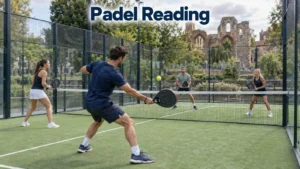
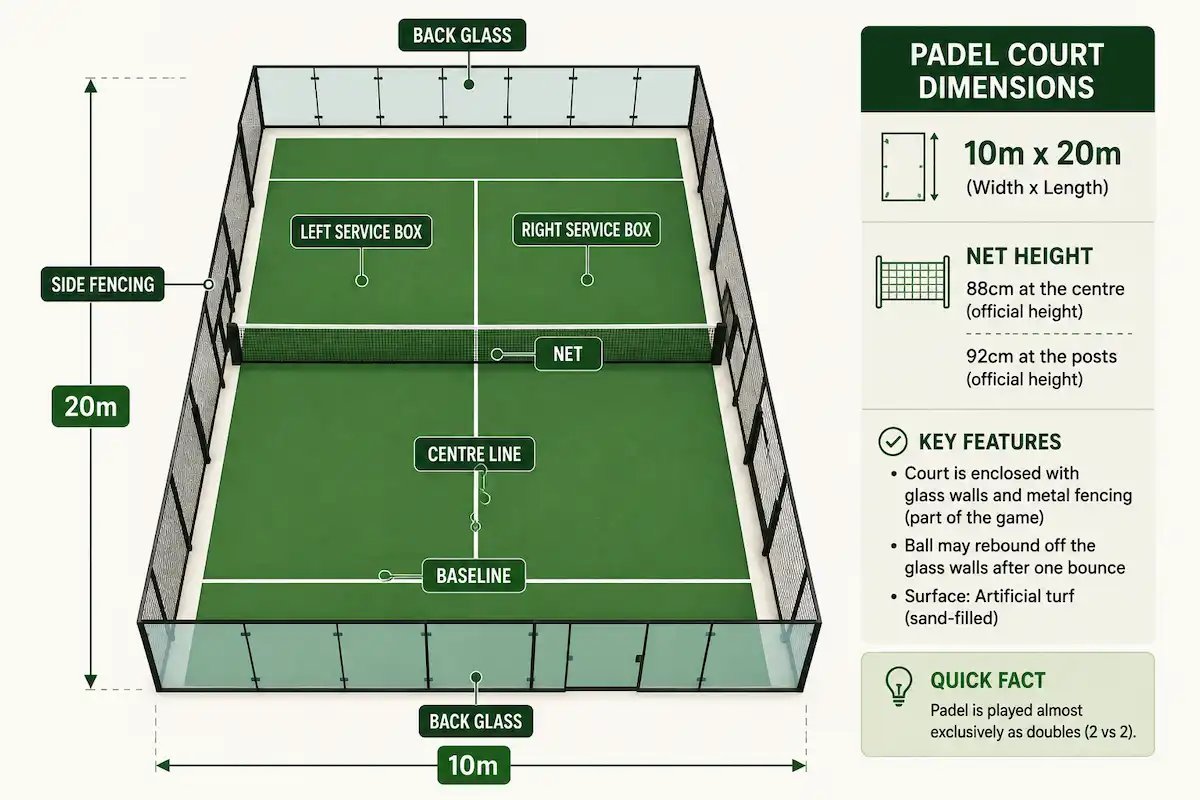
Padel is played by two teams of two, on either side of a net, inside a fully enclosed court measuring 10 metres wide by 20 metres long. The court is surrounded by a mix of glass or solid wall and metallic fencing, and both are part of live play once the ball has bounced.
Each point begins with an underarm serve, and the receiving team must let the ball bounce once before returning it, exactly like tennis. From there, points continue until one team fails to make a correct return, hits the ball out, touches the net, or commits one of the other faults set out later in this guide.
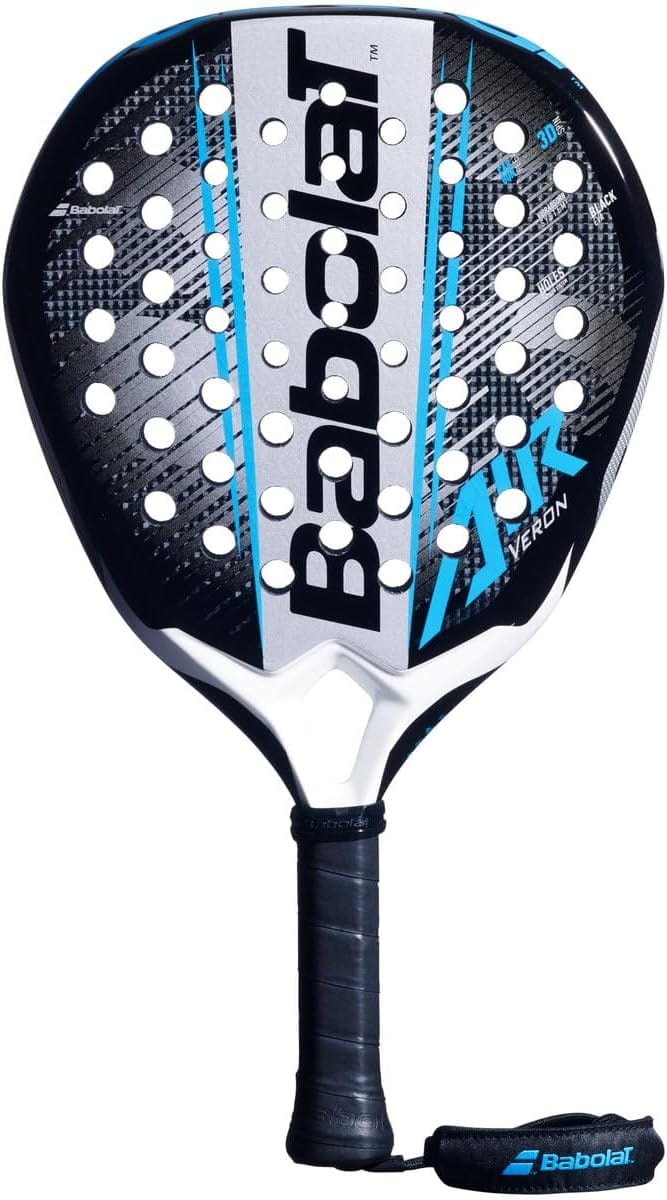
The most fundamental difference from tennis is that padel does not end a rally when the ball leaves the racket-swing zone near the baseline. Because the court is enclosed, the ball can bounce off the back or side walls and still be playable, which changes footwork, shot selection and patience compared with an open tennis court. Players preparing for their first session can also use the Padel Starter Kit UK guide for equipment basics before stepping on court.
15 Essential Padel Rules UK Players Should Know
These are the core padel rules UK players should understand before stepping on court. UK recreational play follows the same fundamental FIP rules used internationally, while LTA competitions may apply specific scoring formats and event regulations.
1. Padel Is Normally Played as Doubles
Padel is designed and officially played as a doubles game, with two players on each team. Singles is sometimes played socially at UK clubs, but it is not the standard FIP or LTA competition format. The dimensions of a full padel court and the way the walls are used are designed primarily around doubles play.
2. The Serve Must Be Underarm
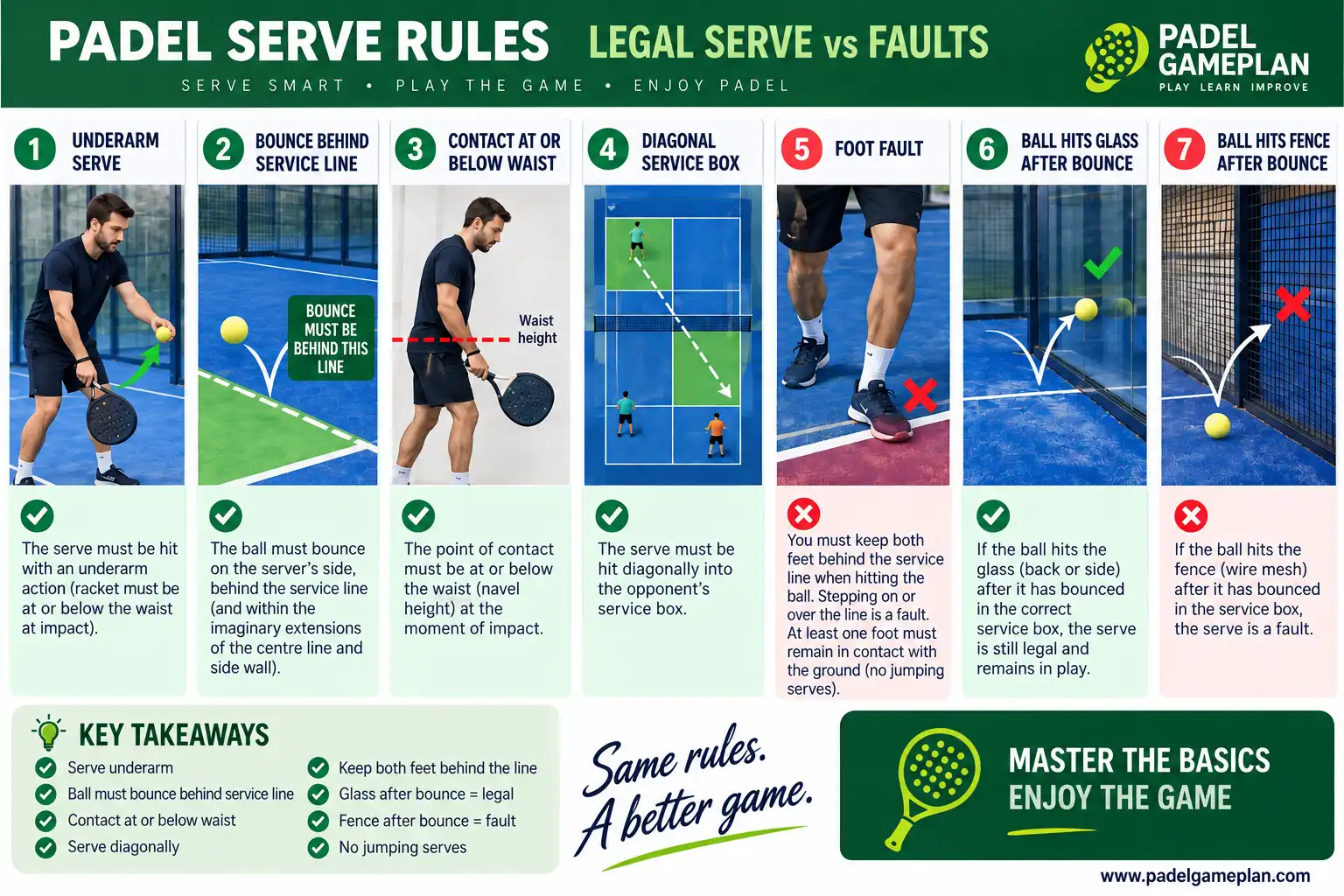
Every point begins with an underarm serve. The server must first bounce the ball on the ground and then strike it at or below waist height. At least one foot must remain in contact with the ground when the ball is struck. An overarm tennis-style serve is not permitted.
3. The Serve Must Travel Diagonally
The serve must cross the net diagonally and land inside the opposite service box. The first point of a game is served into the receiver’s service box on the left, viewed from the server’s side. The server then alternates sides after every point for the rest of the game.
4. You Get Two Attempts to Serve
As in tennis, the server is allowed two attempts to complete a legal serve. If the first serve is a fault, the server takes a second serve from the same side. If the second serve is also a fault, the serving team loses the point.
5. A Serve Can Hit the Glass but Not the Fence
A serve that first bounces correctly inside the receiver’s service box may then rebound from the glass and remain in play. However, if the ball bounces correctly and then touches the metallic fence before its second bounce, the serve is a fault.
| Serve Result | Decision |
|---|---|
| Bounces in the correct service box, then hits glass | In play |
| Bounces in the correct service box, then hits the metallic fence | Fault |
| Touches the net, then lands correctly | Let — replay the serve |
| Touches the net, then lands outside the correct service box | Fault |
| Lands outside the correct service box | Fault |
6. The Ball Can Bounce Only Once
During a rally, the ball may bounce only once on your side before you return it. If it bounces twice before you make contact, your team loses the point.
For example, if the opponent’s shot bounces once on the court and then rebounds from the back glass, you may still return it because the glass contact does not count as a second ground bounce.
7. The Glass Is Part of the Game
One of the biggest differences between padel and tennis is that the surrounding glass walls are part of normal play. After the ball has bounced on your side of the court, it may rebound from the back or side glass and remain playable, provided you return it before a second ground bounce.
However, if your shot travels over the net and hits the opponent’s glass directly without first bouncing on their court, the ball is out.
8. The Fence Follows Different Rules from the Glass
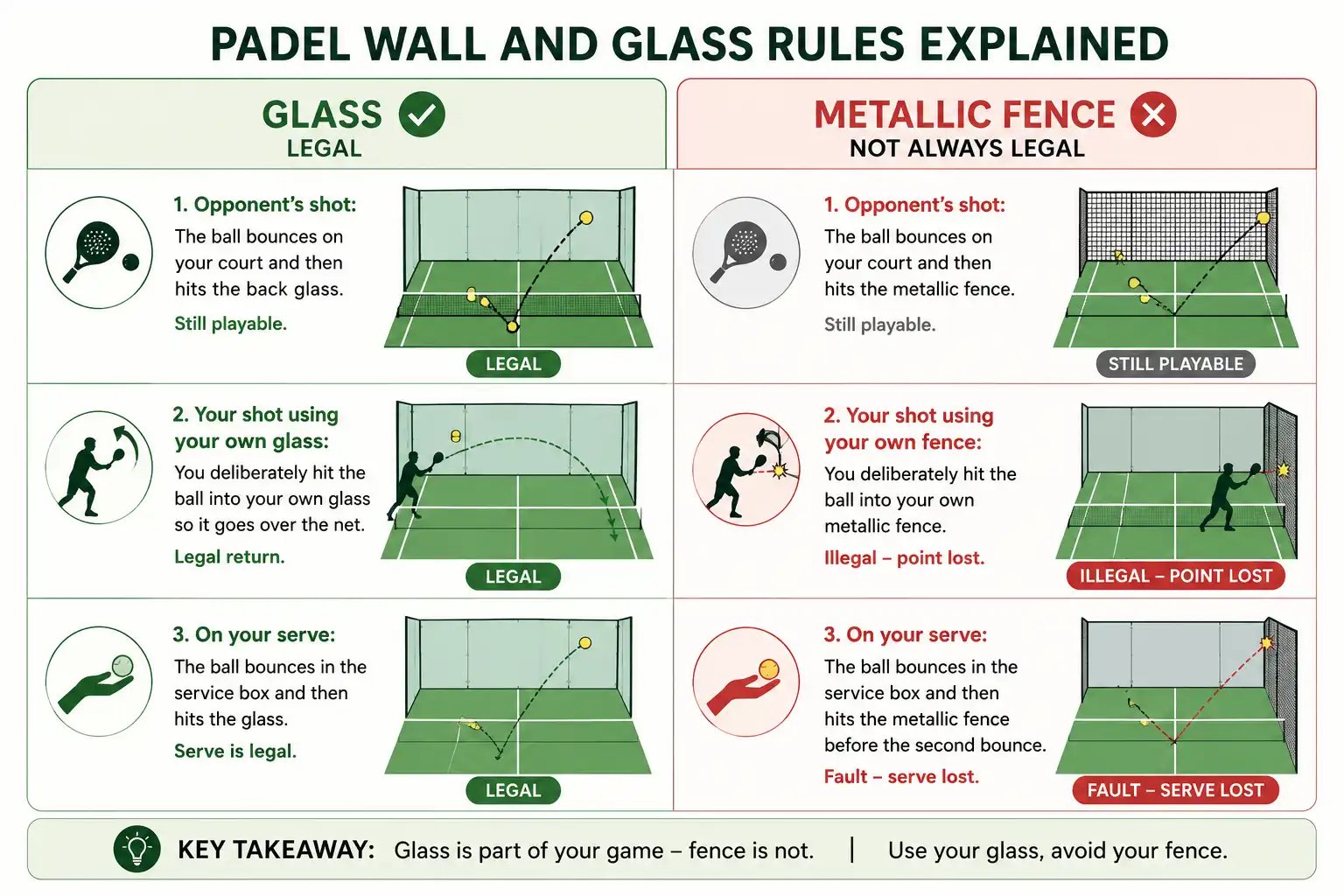
During a rally, an opponent’s shot may bounce on your court and then rebound from either the glass or the metallic fence and remain playable. But there is an important difference when you make your own return: you may deliberately play the ball off your own glass before it crosses the net, but you may not deliberately use your own metallic fence in the same way.
Serving has another separate rule: if the serve bounces correctly in the service box and then touches the metallic fence before the second bounce, it is a fault.
9. You Can Deliberately Use Your Own Glass
Players may intentionally hit the ball into their own back or side glass so that it rebounds over the net and lands in the opponent’s court. This is one of padel’s distinctive defensive and tactical shots.
The ball does not need to bounce on your court before you use your own glass for this type of return. The important requirement is that the rebounding ball then crosses the net and lands correctly in the opponent’s court. The same technique cannot be used with your own metallic fence.
10. Volleys Are Allowed During a Rally
You may volley the ball — hit it before it bounces — during a normal rally. This is why net play is such an important part of padel.
The main exception is the return of serve. The receiving player must allow the served ball to bounce inside the service box before returning it, so you cannot volley a serve.
11. You Cannot Touch the Net During a Live Point
If a player, their racket, clothing or anything they are carrying touches the net, net posts or tension cable while the ball is still in play, their team loses the point. It does not matter whether the contact affected the rally.
12. Out-of-Court Play Is Allowed Only on Suitable Courts
Some padel courts are designed with access openings and safety areas that allow players to leave the enclosed court and return certain balls from outside. This is known as out-of-court play.
It is not automatically allowed at every venue. The court needs the appropriate access points and safety area, and the club or competition must permit this type of play.
13. Padel Uses Tennis-Style Scoring
Traditional padel scoring uses the familiar tennis sequence of love, 15, 30, 40 and game. A set is normally won by the first pair to reach six games with a two-game advantage. If the score reaches six games all, a tie-break is normally played.
A standard match is usually played as the best of three sets, although tournament organisers may use different approved competition formats.
14. Star Point Is a New Scoring Option for 2026
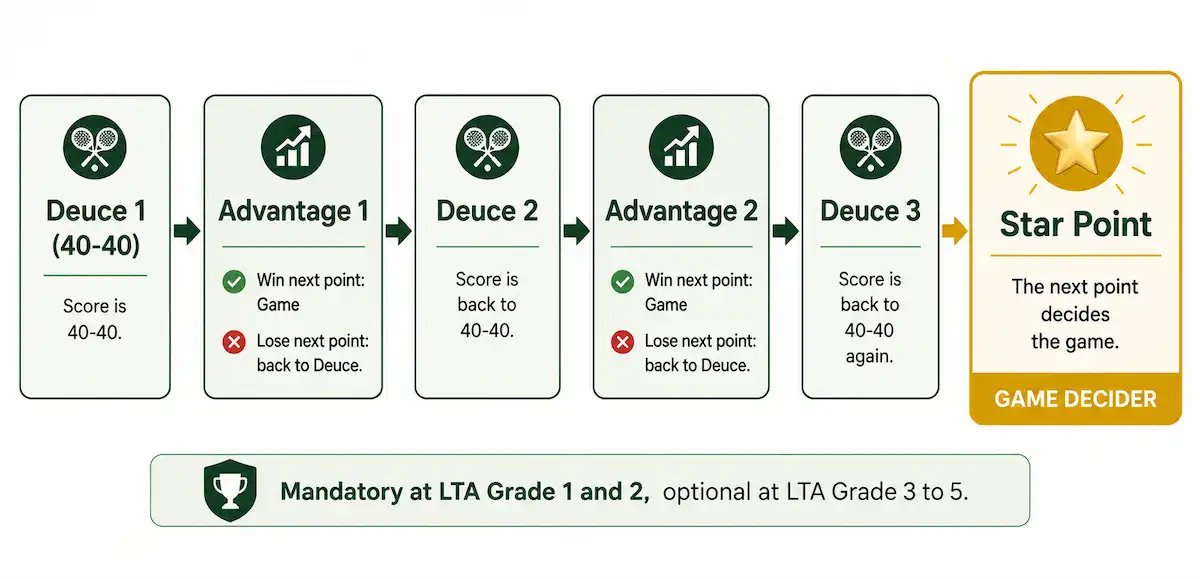
From 1 January 2026, the FIP Rules of Padel introduced Star Point as another official way of deciding games that reach deuce, alongside traditional Advantage scoring and Golden Point.
Under Star Point, a game reaching 40-40 begins at Deuce 1. The next point creates Advantage 1. If the team with advantage wins the following point, it wins the game; if not, the score moves to Deuce 2. The pattern repeats through Advantage 2 and Deuce 3.
At Deuce 3, a single deciding Star Point is played. The receiving pair chooses whether to receive on the right or left side. In mixed competition, the receiving player for the Star Point must be the same sex as the server.
| Stage | What Happens |
|---|---|
| Deuce 1 | Next point creates Advantage 1 |
| Advantage 1 | Win the next point to win the game; lose it and move to Deuce 2 |
| Deuce 2 | Next point creates Advantage 2 |
| Advantage 2 | Win the next point to win the game; lose it and move to Deuce 3 |
| Deuce 3 / Star Point | One deciding point determines the game |
For LTA competitions in 2026, Star Point is used according to the competition grade and event regulations. Recreational and social club matches are not automatically required to use it, so players should agree the scoring format before starting or check the rules issued by the tournament organiser.
15. A Tie-Break Is Normally Played at Six Games All
When a set reaches six games all under standard scoring, a tie-break is normally used. The first pair to reach seven points with at least a two-point advantage wins the tie-break and the set.
The player due to serve next begins the tie-break with one serve from the right side. The opposing pair then serves the next two points, after which service continues in two-point rotations while maintaining the original serving order. Players change ends every six points.
Some LTA competition formats may use a match tie-break instead of a full deciding third set. That is a tournament-format decision rather than a change to the normal tie-break rule.
| Stage | What Happens |
|---|---|
| Deuce 1 (40-40) | Next point wins advantage 1, or returns to deuce 2 if the point is lost after advantage |
| Advantage 1 | Win the following point to win the game, or drop back to deuce 2 |
| Deuce 2 | Next point wins advantage 2, or returns to deuce 3 if lost after advantage |
| Advantage 2 | Win the following point to win the game, or drop to deuce 3 |
| Deuce 3 / Star Point | One deciding point; receiving pair chooses side; winner takes the game |
Padel Serving Rules UK: How to Serve Legally
Where do you stand when serving?
The server stands with one foot behind the service line, between the imaginary extension of the centre service line and the side wall, and must not touch the service line or the centre line with either foot before the ball is struck.
How high can you hit a padel serve?
The ball must be struck at or below waist height at the moment of contact, with at least one foot on the ground.
Does the ball have to bounce before a padel serve?
Yes. The server must bounce the ball on the ground within their own service box before striking it.
Can you serve overarm in padel?
No. All padel serves must be underarm.
Can a padel serve hit the glass?
Yes, provided the serve has already bounced correctly inside the receiver’s service box first. A serve that bounces correctly and then rebounds off the back glass remains legal.
Can a padel serve hit the fence?
If a serve bounces correctly in the receiver’s service box and then touches the metallic fence before its second bounce, it is a fault, not a legal serve.
What happens if a padel serve hits the net?
If the served ball clips the net or posts and still lands correctly in the receiver’s service box, it is a let and the serve is replayed, as long as it has not also touched the metallic fence. If it clips the net and lands outside the correct box, it is a fault.
How many serves do you get in padel?
Two attempts per point, exactly as in tennis.
| Situation | Decision |
|---|---|
| Correct box, then glass | Legal serve |
| Correct box, then fence | Fault |
| Hits net and lands correctly | Let, replayed |
| Hits net then fence | Fault |
| Wrong service box | Fault |
| Contact above waist height | Fault |
| Server’s foot touches the service line before contact | Fault |
Padel Wall Rules: Glass vs Fence
The opponent’s wall
Generally, the ball must bounce on the court on the opponent’s side before it touches any wall on their side. A ball hit directly into the opponent’s glass or fence, without a bounce first, is out.
A player’s own glass
A player may hit the ball into their own back or side glass so that it rebounds over the net and then bounces in the opponent’s court. The ball does not need to bounce on the player’s own floor first. This use of the glass is a legal return under FIP rules.
The fence
The metallic fence is treated more strictly than the glass in several situations. The clearest way to see the distinction is to separate what happens when receiving a shot from what happens when playing your own return.
| Situation | Glass | Metallic Fence |
|---|---|---|
| Opponent’s shot bounces on your floor, then hits it | Still playable | Still playable |
| You play your own return off it before crossing the net | Legal, correct return | Point lost |
| A correctly bounced serve then hits it | Legal | Fault |
Once a ball has bounced on a player’s own side of the court, it may go on to hit any part of that side, including the metallic fence, and remain playable. The fence only causes a problem when a player uses it, or is served into it, in one of the specific situations set out above.
Padel Wall Rules: Legal or Illegal?
| Scenario | Legal? | Why |
|---|---|---|
| Ball bounces on your side, then hits your back glass, then you return it | Legal | Wall play after a bounce is part of the game |
| Ball is hit directly into the opponent’s glass with no bounce first | Illegal | The ball must bounce on the opponent’s side before touching their wall |
| Player deliberately plays the ball off their own glass and over the net | Legal | A return may hit your own glass before travelling over the net and bouncing in the opponent’s court |
| Serve bounces correctly, then hits the back glass | Legal | Serve rules allow a correct glass rebound |
| Serve bounces correctly, then hits the metal fence | Illegal | Treated as a service fault under FIP rules |
| Rally ball is struck and hits the metallic fence on the striker’s own side without crossing the net correctly | Illegal | Point lost to the opposing team |
| Ball hits the net, then lands correctly in the opponent’s court during a rally | Legal | Net-clipped rally shots remain live if they land correctly |
| Player’s racket touches the net while the ball is still in play | Illegal | Net contact during a live point loses the point |
Padel Scoring Rules UK: Games, Sets, Deuce and Star Point
| Format | How It Works | Where You May Encounter It |
|---|---|---|
| Traditional advantage | Two consecutive points required from deuce | Social and recreational matches, and formats where organisers specify it |
| Star Point | Up to two advantage cycles, then one deciding point | Mandatory at LTA Grade 1 and 2; optional at Grade 3 to 5 |
| Golden Point | One deciding point as soon as the game reaches deuce | A FIP-recognised scoring option, and common in club and social play |
| FAST4 | First to 4 games, tie-break at 3 all, no-ad scoring at deuce, match tie-break at one set all | Minimum scoring format at LTA Grade 3 and 4 |
| One tie-break set | A single set played to completion, with a tie-break at 6 games all | Minimum scoring format at LTA Grade 5 |
Padel Star Point Rule 2026: Star Point vs Golden Point
Golden Point, sometimes called no-ad scoring, decides the game on a single sudden-death point as soon as the score reaches deuce. There is no advantage stage at all. Star Point sits between traditional advantage scoring and Golden Point: it allows up to two ordinary advantage cycles first, and only moves to a single deciding point, the Star Point itself, if the score returns to deuce a third time.
| Feature | Star Point | Golden Point |
|---|---|---|
| Advantage points played | Up to two cycles before the decider | None |
| Maximum points after deuce | Five | One |
| Receiving side choice | Yes, on the deciding point only | Yes |
| Where it applies in the UK | Mandatory LTA Grade 1 and 2; optional Grade 3 to 5 | Common in social and informal club play |
When Do You Lose the Point in Padel?
- The ball bounces twice on your side before you return it
- You, your racket, or your clothing touches the net, posts or cable while the ball is live
- You hit the ball into your own fence, or into the ground on your own side, without it having correctly crossed the net
- You hit the ball and it lands on the opponent’s wall or fence without first bouncing on their side
- The ball touches you or your partner after being struck by the opposing team
- You deliberately or separately hit the ball twice rather than making a single continuous stroke
- You serve two consecutive faults
- Your racket’s safety cord breaks or you drop the racket during a point
When Is a Padel Point Replayed as a Let?
A let is different from a fault. A let means the point, or the serve, is simply replayed, with no point awarded to either side. Under FIP rules, a let can occur if the ball splits during play, if an object unrelated to the game enters the court, or if the receiver was genuinely not ready when the server served. A service let specifically applies when a served ball clips the net and still lands correctly in the receiver’s box. This is not the same as a service fault, which results in the loss of that serve attempt.
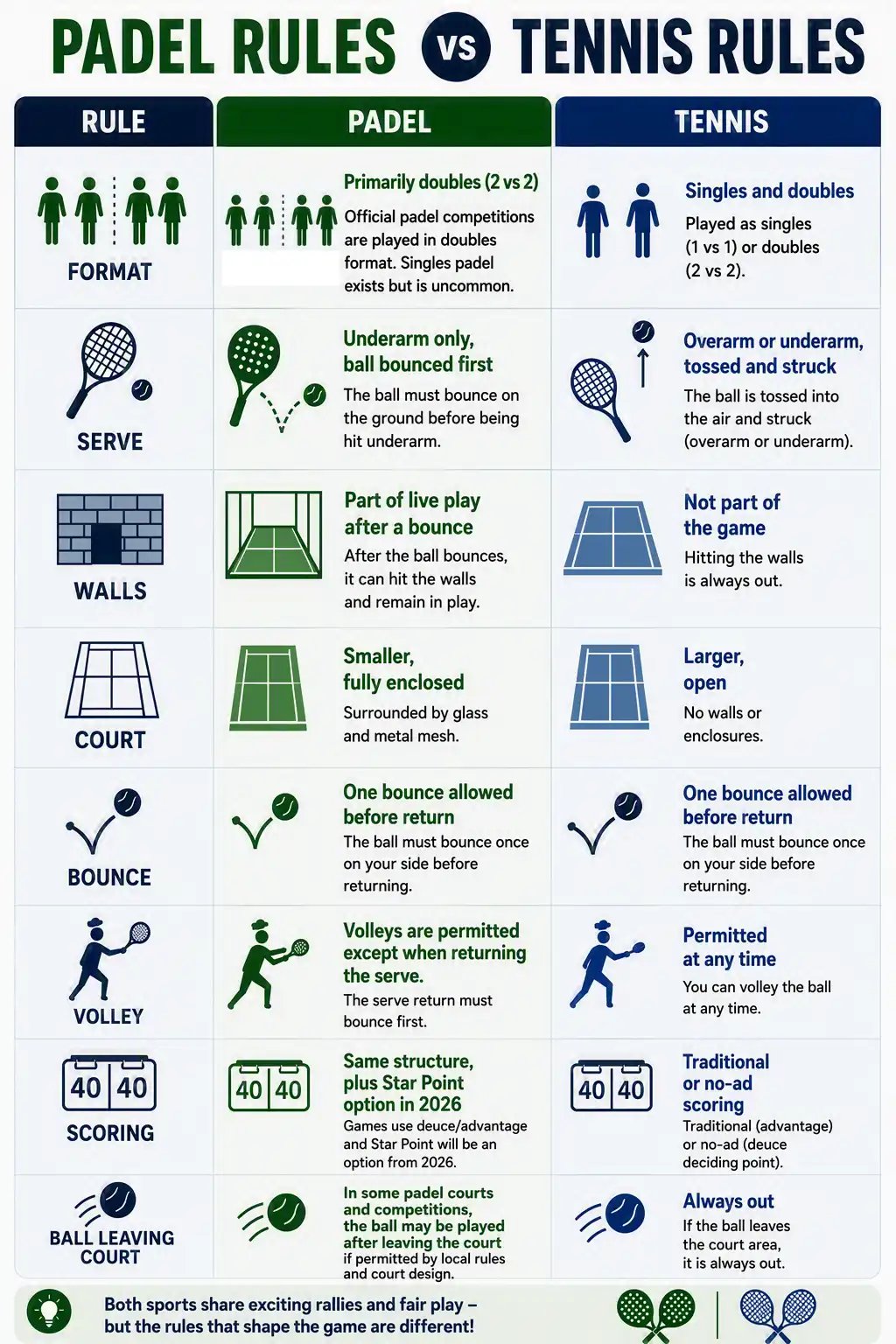
Padel Rules vs Tennis Rules: Key Differences
| Rule | Padel | Tennis |
|---|---|---|
| Format | Almost always doubles | Singles and doubles |
| Serve | Underarm only, ball bounced first | Overarm or underarm, tossed and struck |
| Walls | Part of live play after a bounce | Not part of the game |
| Court | Smaller, fully enclosed | Larger, open |
| Bounce | One bounce allowed before return | One bounce allowed before return |
| Volley | Permitted, except on return of serve | Permitted at any time |
| Scoring | Same structure, plus Star Point option in 2026 | Traditional or no-ad scoring |
| Ball leaving court | Sometimes playable outside authorised courts | Always out |
UK Padel Rules: Social Play vs Tournament Rules
Club and social matches in the UK are free to agree their own practical scoring format depending on court time and player preference, including traditional advantage, Golden Point, or an informal Star Point. Official LTA and FIP competitions, however, follow the format set out in their competition regulations, which is not something players can change on the day.
A club convention, such as always playing Golden Point at deuce to keep court bookings on schedule, is a local practice, not an official FIP or LTA rule, and should not be treated as one when players move into sanctioned competition.
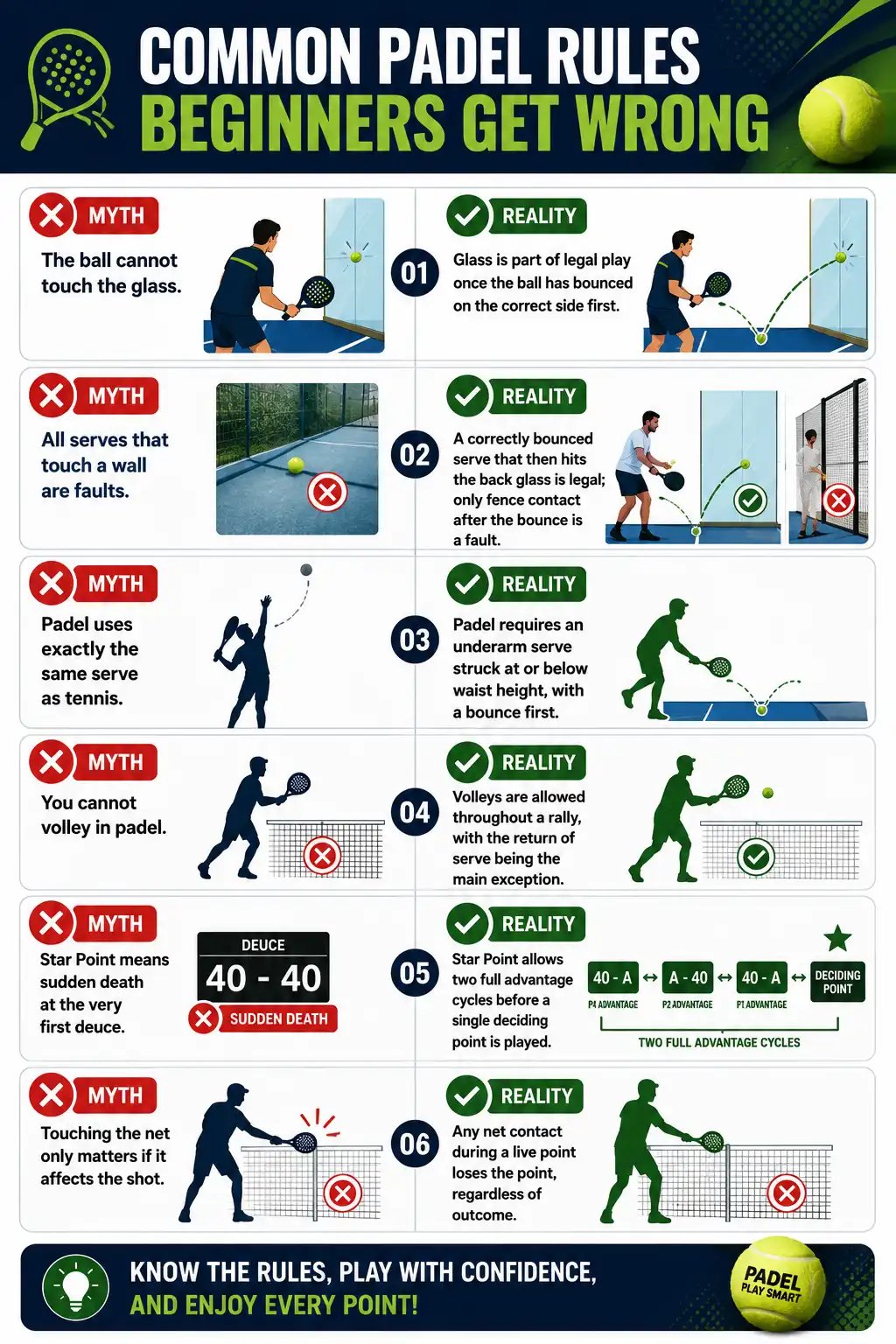
Common Padel Rules Beginners Get Wrong in the UK
Myth: The ball cannot touch the glass.
Reality: Glass is part of legal play once the ball has bounced on the correct side first.
Myth: All serves that touch a wall are faults.
Reality: A correctly bounced serve that then hits the back glass is legal; only fence contact after the bounce is a fault.
Myth: Padel uses exactly the same serve as tennis.
Reality: Padel requires an underarm serve struck at or below waist height, with a bounce first.
Myth: You cannot volley in padel.
Reality: Volleys are allowed throughout a rally, with the return of serve being the main exception.
Myth: Star Point means sudden death at the very first deuce.
Reality: Star Point allows two full advantage cycles before a single deciding point is played.
Myth: Touching the net only matters if it affects the shot.
Reality: Any net contact during a live point loses the point, regardless of outcome.
Beginner Padel Rules Checklist
Before starting a match:
- Confirm who serves first and which scoring format is being used
- Remember the serve must be underarm, bounced first, and struck at or below waist height
- Aim the serve diagonally into the correct service box
- Remember there are two serve attempts per point
- Let wall rebounds develop before assuming the point is over
- Keep track of the one-bounce rule before returning
- Avoid touching the net at any point during a rally
- Confirm whether Star Point applies before a competitive match
- Check whether the venue permits out-of-court play before relying on it
- Agree the format for deuce with opponents in social matches
Padel Rules UK Quick Decision Guide
| What Happened? | What Is the Call? |
|---|---|
| Serve bounced correctly, then hit glass | Legal serve |
| Serve bounced correctly, then hit fence | Fault |
| Rally ball bounced, then hit glass on the receiver’s side | Legal, playable |
| Rally ball hit the fence on the striker’s own side without crossing the net | Point lost |
| Ball bounced twice before being returned | Point lost |
| Player touched the net during a live point | Point lost |
| Ball hit a player after being struck by opponents | Point lost by the player hit |
| Serve clipped the net and landed correctly | Let, replayed |
| Ball went out over the end wall on an unauthorised court | Point lost |
Official Padel Rules Sources for UK Players
Padel rules can be updated by the FIP General Meeting and by LTA competition regulations, so it is worth checking the governing bodies directly before a competitive match, particularly around scoring format. The full source list for this article appears at the end of this guide.
Padel Rules UK 2026: Final Takeaways for Beginners
Getting to grips with padel rules UK style does not require memorising a full rulebook before a first game. The essentials are the underarm diagonal serve, the one-bounce rule, how glass and fencing behave differently after a bounce, the net-contact rule, and the basic tennis-style scoring structure.
The one genuinely new item for 2026 is the Star Point, which UK players competing at LTA Grade 1 or 2 level will meet as standard, while everyone else may encounter it only if their event or club chooses to use it. Beyond that, padel rewards patience with the walls and a clear understanding of when a point has actually been lost, which comes with time on court rather than rule memorisation.
Readers building out their kit ahead of a first competitive match may also want to compare options in the Best Padel Rackets UK guide or check footwear suited to UK indoor and outdoor courts in the Best Padel Shoes UK 2026 guide.
If you are new to the sport, you may also find our best padel rackets UK guide, best padel shoes UK guide, and padel starter kit UK guide useful when getting ready for your first games.
Padel Rules UK FAQs
What are the basic rules of padel in the UK?
Padel in the UK follows the FIP Rules of Padel: doubles play, an underarm serve that must bounce first and land diagonally, one bounce allowed before return, wall play after the bounce, and tennis-style scoring. LTA competitions add specific formats on top of these basics.
Does a padel serve have to be underarm?
Yes. The FIP Rules of Padel require every serve to be struck underarm, at or below waist height, with the ball bounced on the ground first.
Can the ball hit the glass in padel?
Yes. Once the ball has bounced on the correct side of the court, it may rebound off the glass and remain in play, including on a correctly bounced serve.
Can the ball hit the fence in padel?
During a serve, fence contact after a correct bounce is a fault. During a rally, hitting the ball into the fence on your own side without it correctly crossing the net loses the point.
Can you volley in padel?
Yes, volleys are permitted throughout a rally. The main exception is the return of serve, which must be allowed to bounce first.
Can a padel serve hit the side glass?
Yes. If the serve first bounces correctly inside the receiver’s service box, it may subsequently touch the glass, including the side glass, and remain in play. However, if it touches the metallic fence before the second bounce, the serve is a fault.
What happens if the serve hits the net in padel?
If the serve touches the net or supporting post and then lands correctly in the service box, it is a let and is replayed, provided it does not subsequently touch the metallic fence before the second bounce. If it lands outside the box, it is a fault.
How does padel scoring work in the UK?
UK padel uses tennis-style scoring: love, 15, 30, 40, game, with sets won at 6 games and a 2-game margin. From 2026, some UK competitions also use the Star Point at deuce instead of traditional advantage.
What is the Star Point rule in padel in 2026?
Star Point is a deuce scoring option introduced by the FIP for 2026. It allows up to two advantage cycles after deuce before a single deciding point, the Star Point, settles the game. It is mandatory at LTA Grade 1 and 2 competitions and optional at Grade 3 to 5.
Are UK padel rules different from international FIP rules?
The fundamental rules of padel in the UK are the same FIP Rules of Padel used internationally. LTA competitions apply their own regulations on top of those fundamentals, particularly around which scoring format is used at each competition grade.
Official Padel Rules Sources for 2026
This guide is based primarily on the official rules and competition guidance published by the International Padel Federation (FIP) and the Lawn Tennis Association (LTA). Rules and competition formats can change, so players entering an organised event should also check the regulations provided by the tournament organiser.
- International Padel Federation (FIP) – Rules of Padel 2026: The official international rules covering the court, scoring, service, return of serve, lets, ball in play, walls, point loss, correct returns and out-of-court play. Read the official FIP Rules of Padel.
- International Padel Federation (FIP) – Official Documents: FIP’s central document library containing the current Rules of Padel and other official competition regulations. View the FIP official documents library.
- Lawn Tennis Association (LTA) – Padel Referee and Organiser Guide 2026: Official guidance for LTA-sanctioned padel competitions in Britain, including competition grades, tournament organisation, officiating requirements and the application of padel rules in LTA events. Read the LTA Padel Referee and Organiser Guide 2026.
- Lawn Tennis Association (LTA) – Competition Organiser and Official Resources: Current LTA resources for organisers and officials, including 2026 padel competition information and supporting documents. View LTA competition resources.
Last checked: August 2026. For competitive play, always confirm the rules and scoring format being used by the specific LTA, FIP or club event before your match.