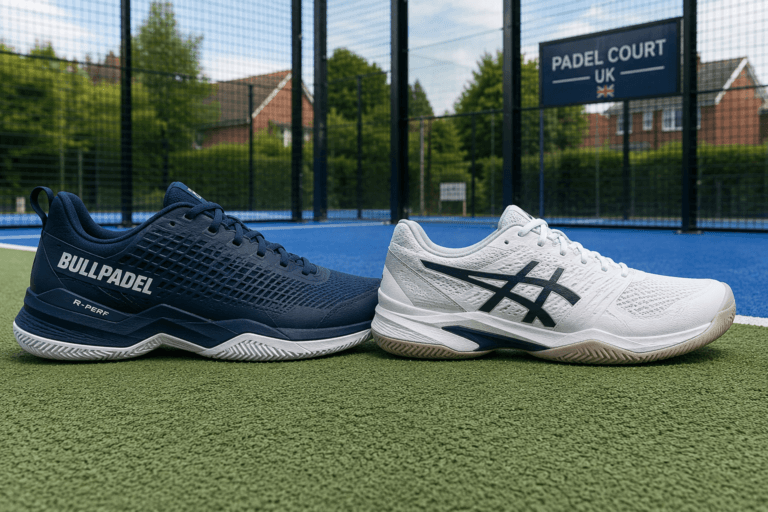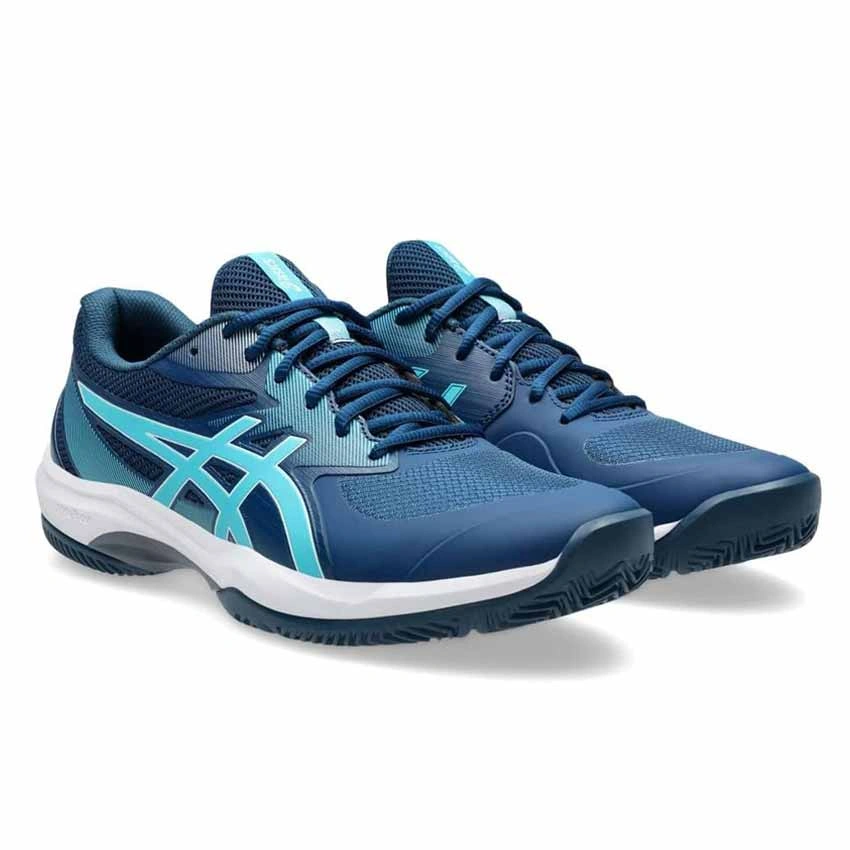
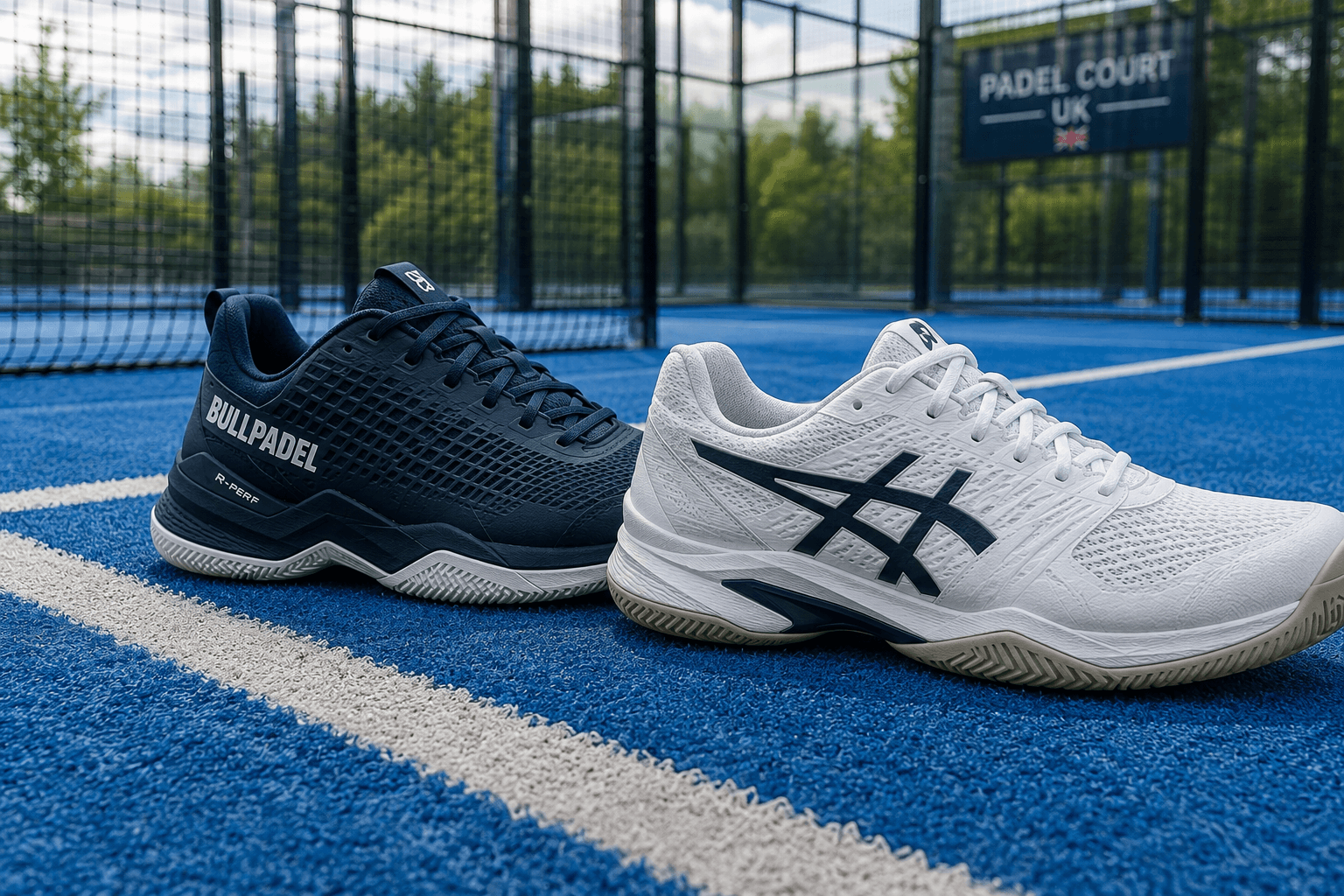
Padel Shoes vs Tennis Shoes: Quick Comparison
| Feature | Padel Shoes | Tennis Shoes |
|---|---|---|
| Main use | Designed specifically for padel movement and court surfaces | Designed for tennis surfaces such as clay, hard court or grass |
| Grip | Often uses herringbone, omni or hybrid tread patterns | Varies significantly by tennis court type |
| Lateral support | Built for repeated side-to-side movement and quick direction changes | Generally strong, but depends on the model and intended tennis surface |
| Best tennis alternative | Not applicable | Clay-court tennis shoes are usually the closest alternative |
| Best for beginners | A good choice if you plan to play regularly | Suitable for starting if grip and lateral support are appropriate |
| Running shoes? | No | Running shoes are generally not recommended for padel |
Padel shoes and tennis shoes share some similarities, but there are several important differences in outsole design, grip, support and court suitability.
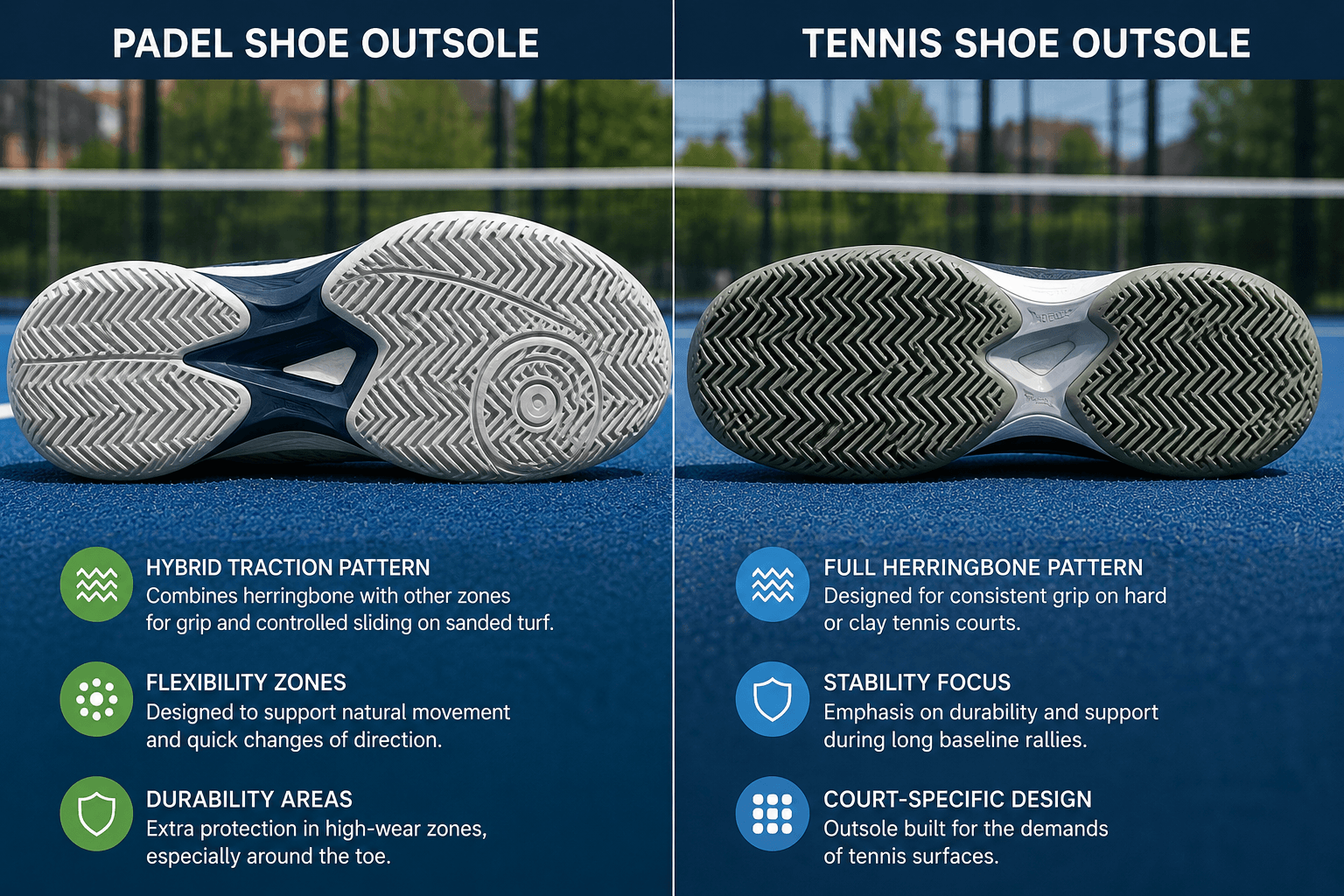
- Outsole design: Padel shoes commonly use herringbone, omni or hybrid tread patterns designed for artificial-turf courts, while tennis shoes vary according to clay, hard court or grass use.
- Grip: Padel footwear is designed to provide traction while still allowing controlled rotation and movement on turf and sand.
- Lateral support: Padel involves frequent side-to-side movement, so dedicated padel shoes usually place strong emphasis on midfoot and heel stability.
- Sand management: Herringbone and similar tread patterns can perform better on sandier padel courts than smoother hard-court tennis soles.
- Rotation and quick turns: Padel shoes are designed for repeated changes of direction, short sprints and rotational movement.
- Court suitability: Tennis shoes are highly surface-specific, while padel shoes are designed around the artificial-turf surfaces commonly used for padel.
- Long-term use: Suitable clay-court or all-court tennis shoes can work for beginners, but dedicated padel shoes are generally the more purpose-built choice for regular players.
Bottom line: Tennis shoes can work for padel, especially clay-court models, but dedicated padel shoes are usually better suited to regular play because their grip, support and outsole design are built around padel movement and court conditions.
What Is the Main Difference Between Padel Shoes and Tennis Shoes?
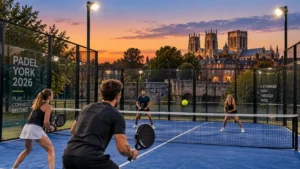
Padel is played on a smaller, enclosed court that encourages short accelerations, repeated lateral movement, quick braking, frequent changes of direction and rotational movements, particularly when defending near the back glass or transitioning towards the net. These demands differ from many tennis movement patterns, even though both sports share some overlapping footwork.
Padel shoes are commonly designed with these specific movements in mind, alongside the characteristics of artificial-turf surfaces, which can include varying amounts of sand. Tennis shoes, by comparison, are made for a wider range of surfaces, including hard court, clay court, grass court and all-court use. Each of these tennis surfaces places different demands on an outsole.
Because “tennis shoes” covers such a broad category, it is not accurate to say tennis shoes are simply unsuitable or simply suitable for padel. The answer depends on which type of tennis shoe is being considered, and how that outsole responds to the specific court a player is using.
Indoor vs Outdoor Padel Shoes: Does It Really Matter?
The more important factor is usually the court surface and sand level, rather than whether the court is indoors or outdoors. Many indoor and outdoor padel courts use artificial turf, but the amount of sand, turf type and surface condition can vary between venues.
- Sandier artificial-turf courts: herringbone or suitable hybrid outsoles may provide more predictable traction.
- Lower-sand modern turf: multidirectional or hybrid padel soles may offer a better balance of grip and rotation.
- Smoother indoor surfaces: where used, flatter non-marking outsoles may be more appropriate.
- Outdoor UK courts: damp conditions can affect traction, so players should check the court condition and venue guidance before playing.
Players who regularly use different UK venues should check the court surface and the shoe manufacturer’s intended-surface guidance rather than choosing footwear based only on an “indoor” or “outdoor” label.
Can You Wear Tennis Shoes for Padel?
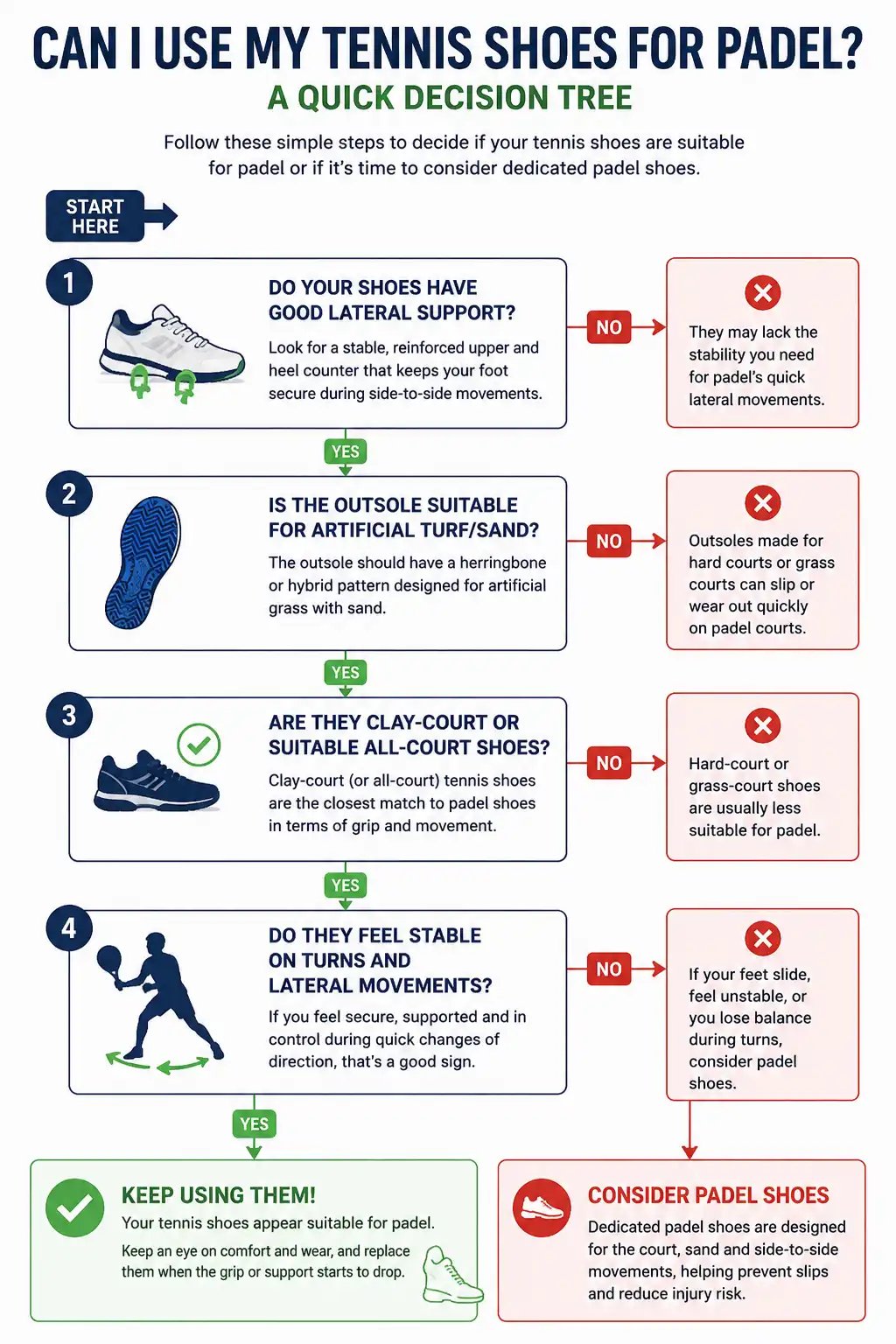
Tennis shoes may be suitable for padel when they offer reliable lateral support, a suitable outsole pattern, secure heel lockdown, appropriate grip for the court surface, sufficient durability and a comfortable fit. Clay-court tennis shoes are often considered the closest tennis alternative to dedicated padel shoes, largely because many clay shoes use a herringbone-style outsole that shares some characteristics with common padel soles. The LTA notes that clay-court tennis shoes are the tennis footwear style most similar to the shoes used for padel.
However, several factors mean this is not a universal guarantee:
- Not every clay tennis shoe behaves identically, since tread depth and rubber compound vary by brand and model
- Not every UK padel court has the same sand level, so grip that feels appropriate at one club may feel different at another
- Excessive grip can make rotational movements feel restricted, which some players notice when turning quickly near the glass
- Insufficient grip may cause unwanted sliding, particularly on courts with more surface sand
- Players are generally advised to check the court manufacturer’s and the club’s footwear guidance where available
For a first session, players may be able to use clean, non-marking court shoes that provide reasonable lateral support and suitable traction. Clay-court tennis shoes are generally the closest tennis alternative. Running shoes, heavily worn trainers and shoes with aggressive outdoor lugs are less suitable. Some UK venues also require appropriate non-marking footwear, so it is worth checking venue rules in advance.
Padel Shoe Sole Types: Herringbone, Omni and Hybrid
Padel shoe outsoles are generally grouped into a small number of common categories, although brands do not always use these terms in exactly the same way. Checking the manufacturer’s own product description remains the most reliable way to confirm what a specific shoe offers.
Herringbone or Clay-Style Sole
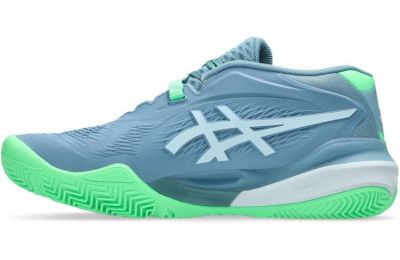
A herringbone pattern can provide traction while still allowing some movement on sanded artificial turf. Performance depends on tread depth, rubber compound, court surface and the amount of sand. Footwear manufacturers also offer dedicated padel shoe ranges designed specifically for padel use.
Omni Sole
Omni soles typically feature small circular studs or short tread elements distributed across the outsole. This design is often associated with grip during multidirectional movement and may suit certain artificial-turf courts. Shorter tread elements may offer less purchase when loose sand is particularly heavy, although performance varies by model and court.
Hybrid Sole
Hybrid soles combine different outsole zones within a single shoe, often pairing herringbone sections with separate pivot or rotational zones positioned under the forefoot or heel. This approach is common in modern padel-specific footwear, as it allows different parts of the sole to manage grip and rotation differently depending on the movement being performed.
All-Court Tennis Sole
Some all-court tennis shoes may be usable for padel, since they are built to handle a range of tennis surfaces and often include a modified herringbone pattern. However, performance varies considerably between brands and models. A shoe’s durability on a hard tennis court does not automatically mean it will provide ideal grip on padel’s artificial turf, so the specific outsole should be checked rather than assumed.
| Sole Type | Typical Characteristics | Possible Court Suitability | Main Advantage | Possible Limitation |
|---|---|---|---|---|
| Herringbone / clay-style | Zigzag tread | Sandier artificial turf | Traction on many sanded courts | Performance varies by tread depth and compound |
| Omni | Small circular studs | Certain artificial-turf courts | Multidirectional grip | May feel less effective on heavily sanded courts |
| Hybrid | Combined tread zones | Varied court conditions | Different grip by zone | Design and quality vary by brand |
| All-court tennis | Modified herringbone, durable rubber | Occasional or beginner padel use | Versatility across surfaces | Not built specifically for padel turf |
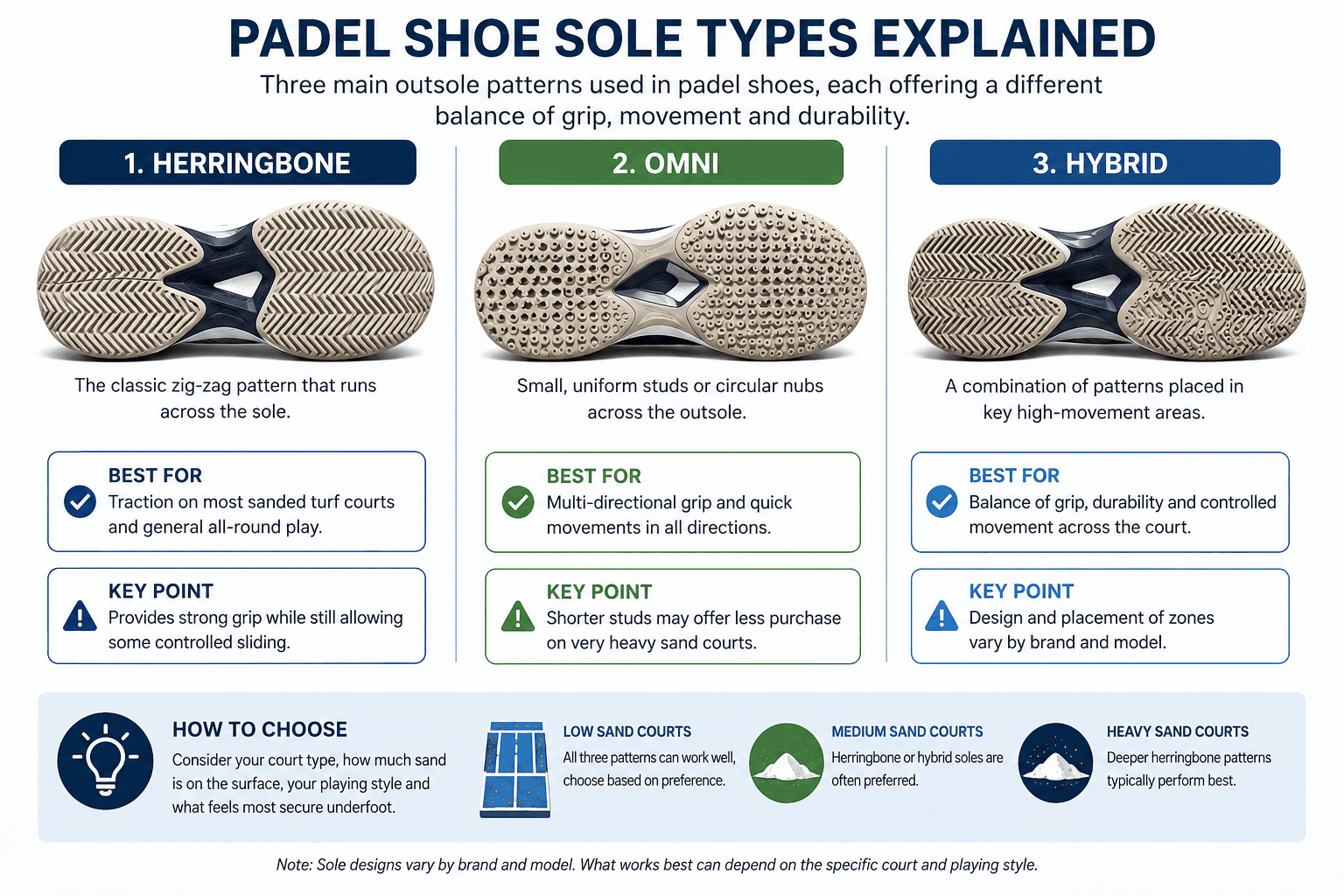
No single sole type should be considered universally best. Suitability depends on the specific court being used and the player’s own movement style.
How Court Surface and Sand Affect Padel Shoe Grip
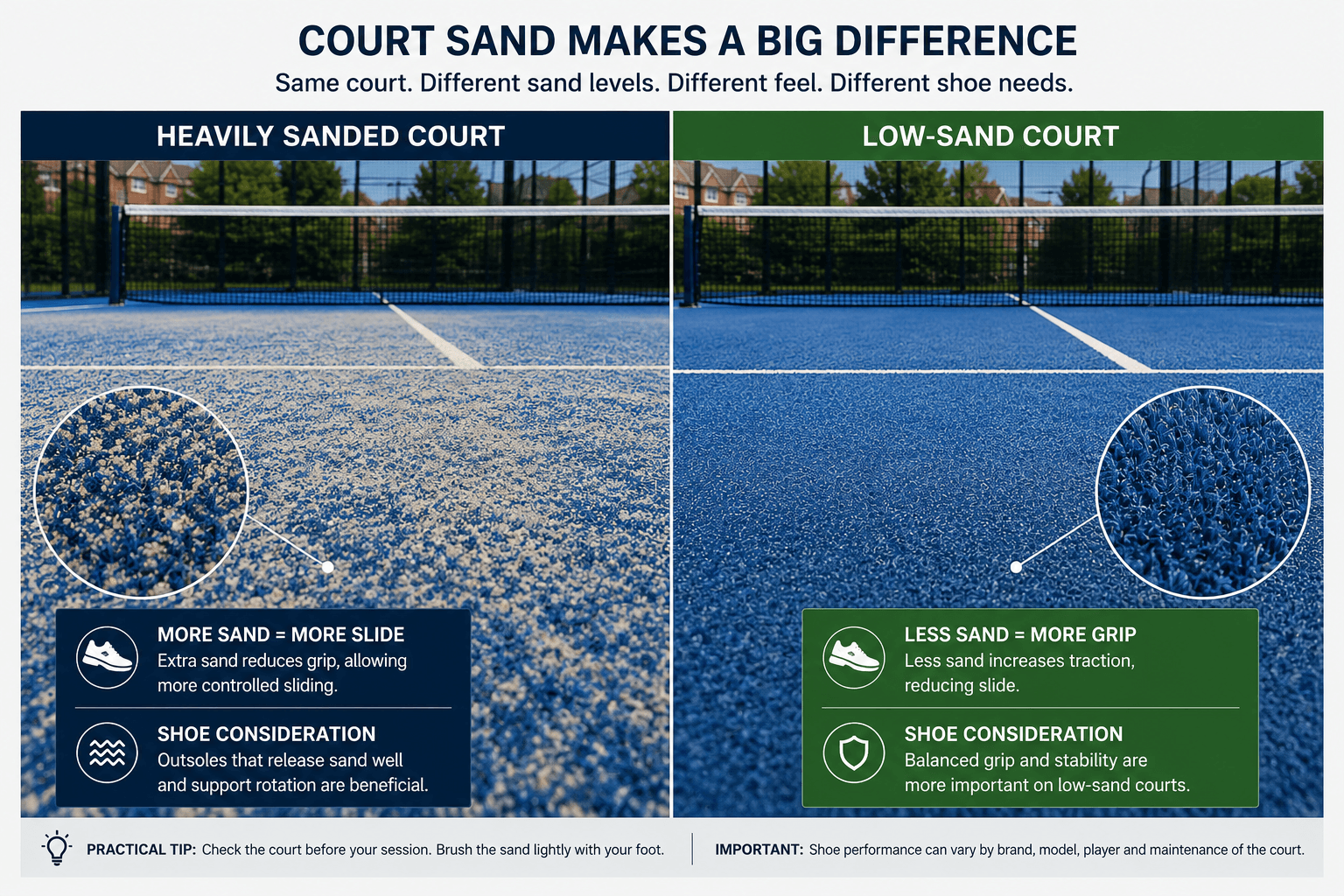
UK padel clubs use artificial-turf courts that can include visible or partly embedded sand, and the amount can vary considerably between venues. Some courts are heavily sanded, others use a lower-sand or newer textured turf system, and indoor and outdoor courts can also behave differently, particularly when outdoor surfaces become damp.
Sand levels are not static either. In busy clubs, sand can shift or become displaced over time with heavy use, which means a court’s grip characteristics can change gradually between resurfacing or maintenance. This is one reason the same pair of shoes can feel noticeably different at two separate UK clubs.
Practical note: Before assuming any shoe will perform consistently, it is worth inspecting the court surface and asking the club which footwear regular players tend to use. Club staff are often a useful source of practical, court-specific guidance.
Important: A shoe described generally as an “artificial-turf shoe” is not automatically suitable for padel. Football turf shoes can use short rubber lugs developed for artificial football pitches, while padel footwear uses outsole patterns intended for court movement. Check that the shoe is designed for padel, tennis or a comparable court surface.
Movement and Lateral Support
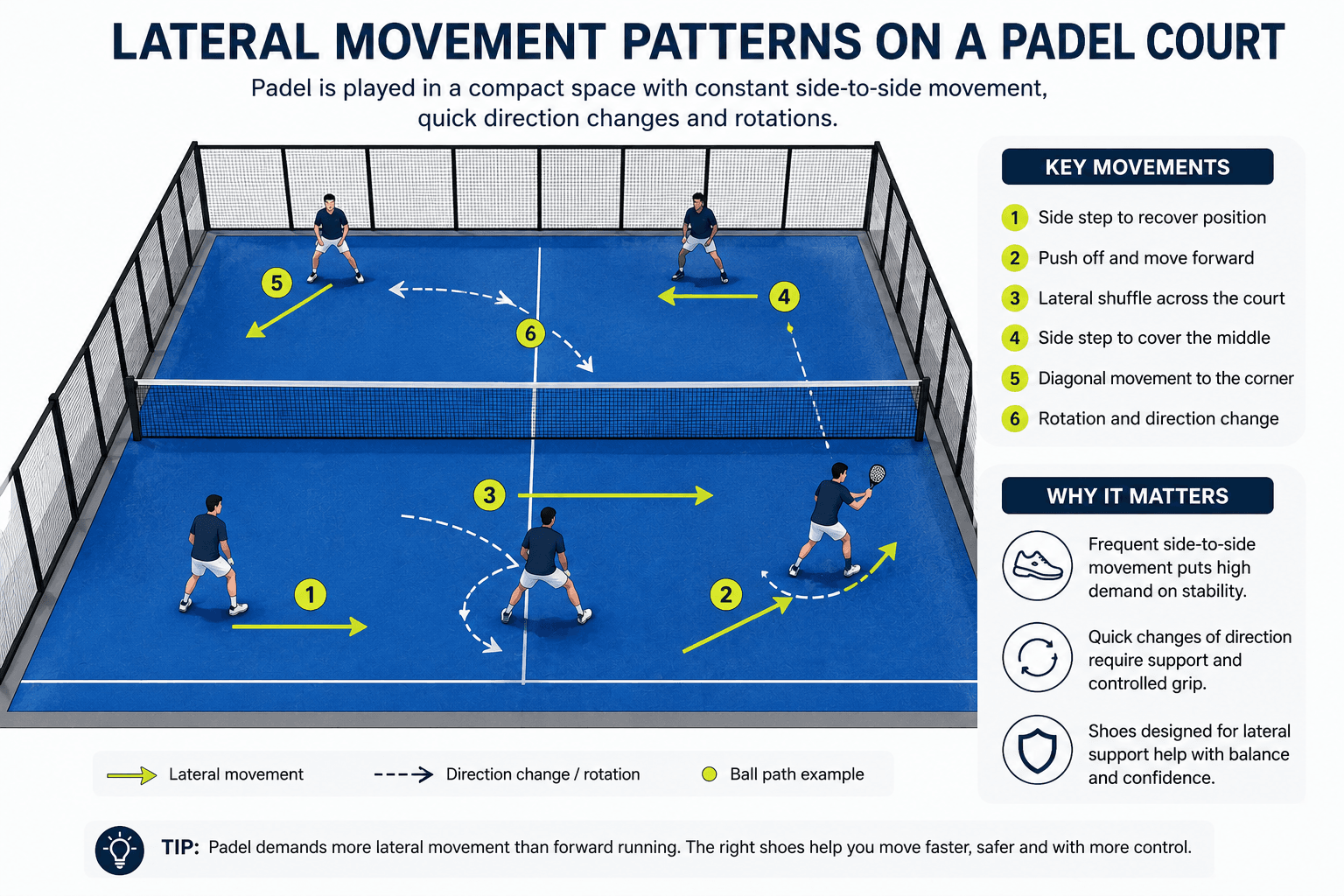
Lateral support is particularly relevant in padel because the sport involves repeated side-to-side movement, split steps, defensive recovery towards the back glass, quick net approaches and sudden changes of direction. A shoe that is not built to manage sideways loading may feel less stable during these movements.
Relevant shoe features often include:
- A wider, more stable base underfoot
- A supportive heel counter
- Midfoot support built into the upper
- A structured upper that resists excessive lateral flex
- Secure lacing that keeps the foot in place during quick turns
- Toe reinforcement for players who drag the toe when reaching
- Forefoot flexibility that supports natural push-off
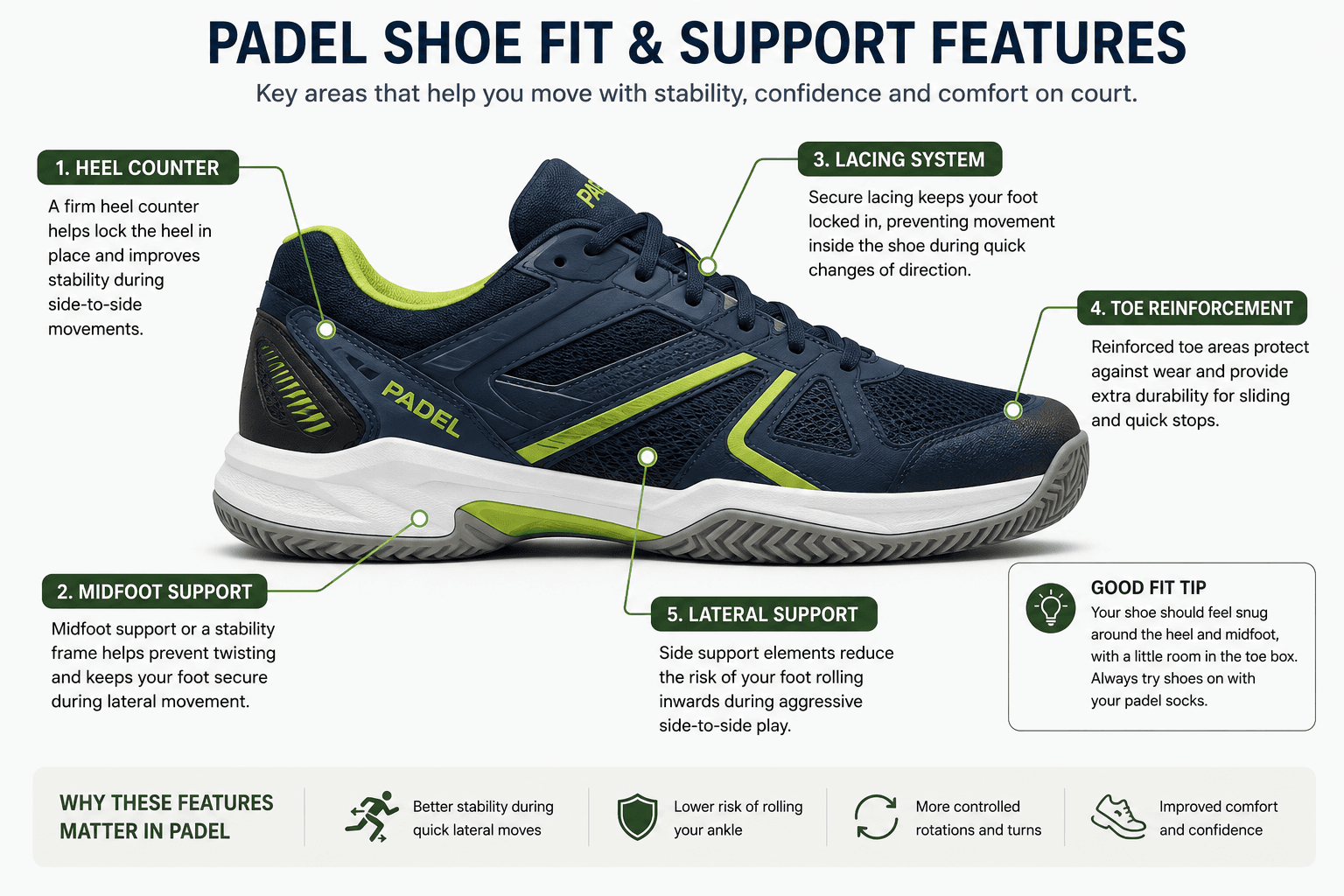
Fit and movement control can be more useful than simply choosing the most heavily cushioned shoe available, since excess cushioning without stability can make lateral movements feel less secure.
Finding the Right Balance Between Grip and Rotation
Grip in padel footwear is generally a balance between traction and the ability to rotate naturally. Grip that helps a player accelerate and stop reliably is useful, but excessive grip may make some rotational movements feel restricted, while insufficient grip can cause unwanted sliding.
A common example is turning after playing a defensive shot near the back glass. An outsole that grips very firmly may make the rotation feel less natural, while an outsole with insufficient traction may slide farther than expected. The aim is predictable traction that allows the player to accelerate, stop and turn comfortably on the particular court surface.
Cushioning and Comfort
Cushioning affects comfort during longer sessions, but it should be considered alongside stability rather than in isolation. Relevant factors include heel and forefoot cushioning, overall court feel, midsole softness, stack height, player weight and typical session length. Personal footwear preferences from other sports can also influence what feels comfortable.
Softer cushioning is not automatically better if it reduces the stability needed for padel’s quick, low, lateral movements. Many players find a moderate balance between comfort and support works better over a full session than maximum softness alone. This guide does not provide medical recommendations, and players with specific foot, ankle or joint concerns are encouraged to seek advice from a qualified professional.
Which Tennis Shoes Can You Wear for Padel?
Clay-Court Tennis Shoes
Clay-court tennis shoes are usually the closest tennis alternative to dedicated padel shoes. Many use a herringbone-style outsole, which can provide useful traction on artificial-turf courts and help manage loose sand.
They can be a practical option for beginners or occasional players who already own a suitable pair. However, outsole depth, rubber compound and lateral support still vary by model, so not every clay-court shoe will feel the same on a padel court.
All-Court Tennis Shoes
All-court tennis shoes can also work for padel, especially on modern courts with lower sand levels. Their tread is designed to handle several tennis surfaces, so they may offer a reasonable balance of grip and movement.
Check that the outsole is not excessively smooth and that the shoe provides good lateral stability before using it regularly for padel.
Hard-Court Tennis Shoes
Hard-court tennis shoes can sometimes be used for padel, but they are generally less suited to sandier artificial-turf courts. Their outsoles are designed primarily for durability on abrasive hard surfaces rather than managing loose sand.
They may feel acceptable on lower-sand courts, but players who notice slipping or inconsistent traction should consider a more suitable padel or clay-style outsole.
Grass-Court Tennis Shoes
Grass-court tennis shoes are generally not the best choice for padel. Their outsole pattern is designed for natural grass rather than artificial turf and sand, so the grip characteristics can be very different.
Running Shoes
Running shoes are not recommended for regular padel. They are designed mainly for forward movement and often have softer, higher midsoles that can feel less stable during lateral movement, sudden stops and rapid changes of direction.
Can You Wear Running Shoes for Padel?
Running shoes are generally not recommended for regular padel. They are designed mainly for forward movement, while padel involves repeated side-to-side movement, sudden stops, short sprints and rapid changes of direction.
Many running shoes also have softer or higher midsoles than court shoes, which can feel less stable during lateral movement. Their outsoles are designed primarily for roads or trails rather than padel court surfaces, so traction may also be less predictable.
For a first padel session: a supportive pair of general trainers may be workable if they provide secure lateral support and appropriate grip, but running shoes should not be your long-term footwear choice if you begin playing regularly.
For regular play, suitable tennis court shoes or dedicated padel shoes are usually the better options.
| Tennis Shoe Type | General Suitability for Padel | Best Use Case | Main Concern |
|---|---|---|---|
| Clay | Often suitable | Occasional or regular padel play | Tread depth still varies by model |
| Hard-court | Generally less suitable | Occasional use on low-sand courts | Tread may not manage sand well |
| All-court | May be suitable | Beginners and occasional players | Highly dependent on the specific outsole |
| Grass-court | Generally not the first choice for padel | Use on its intended grass-tennis surface | Stud pattern is not designed for sanded padel turf |
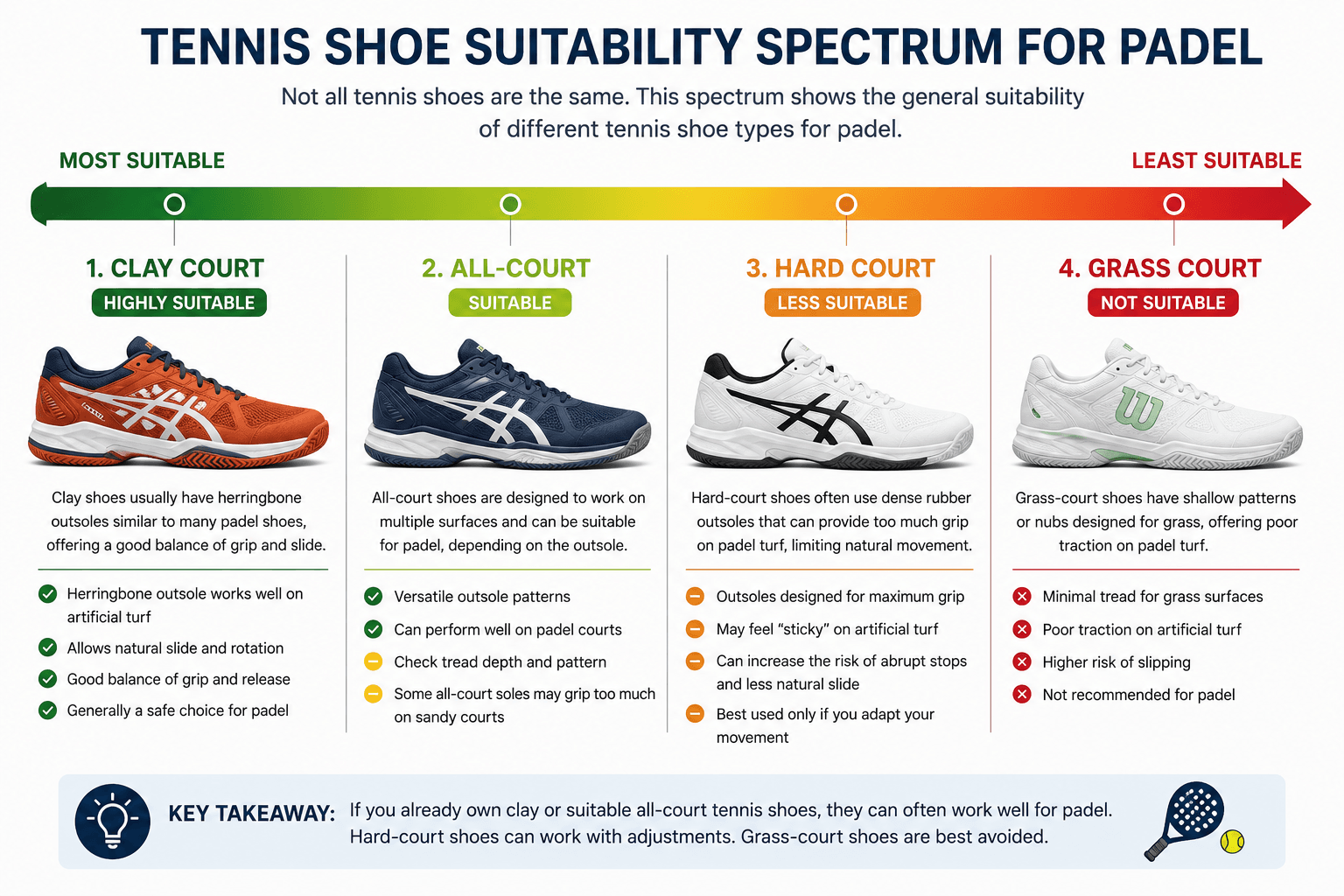
Padel Shoes vs Running Shoes
Running shoes are generally not recommended for padel. They are built around forward, linear movement rather than lateral footwork, often use higher, softer midsoles, and have outsoles intended for roads, tracks or trails rather than artificial turf, all of which can make direction changes feel less secure. Some UK clubs also restrict certain outdoor trainers to help protect the turf, so it is worth checking a venue’s footwear policy in advance.
Do Beginners Need Dedicated Padel Shoes?
Not always. If you are trying padel for the first time and already own supportive clay-court or suitable all-court tennis shoes, you may not need to buy dedicated padel shoes immediately.
For beginners who plan to play regularly, however, padel-specific footwear can be a worthwhile upgrade because it is designed around lateral movement, quick direction changes and the artificial-turf surfaces commonly used on padel courts.
Beginner rule of thumb: use suitable tennis shoes for your first few sessions if they provide stable grip and lateral support, then consider dedicated padel shoes once you start playing weekly or notice that your current shoes do not feel secure on court.
| Beginner Situation | Existing Tennis Shoes May Be Enough When… | Consider Padel Shoes When… |
|---|---|---|
| First trial session | Shoes offer reasonable lateral support and grip | Existing shoes are running shoes or heavily worn |
| Occasional social player | Court sessions are infrequent and low-intensity | Slipping or discomfort becomes noticeable |
| Playing once a week | Current shoes still grip and support well | Tread is starting to wear unevenly |
| Playing two or more times a week | They are supportive court shoes with suitable tread and consistent traction | The player wants footwear designed specifically for padel movement and court surfaces |
| Competitive or tournament player | The shoes remain stable, comfortable and appropriate for the court | More predictable court-specific traction, support or fit is required |
When Should You Replace Your Current Court Shoes?
Rather than relying on a fixed timeframe or the product category alone, players can look for specific signs of wear. Shoe life depends on playing frequency, body weight, movement style, court surface and construction. A suitable clay-court or all-court tennis shoe does not need to be replaced solely because it is marketed for tennis. The decision should be based on signs such as:
- Unpredictable slipping during normal movement
- Excessive sticking during turns near the glass
- Visibly worn or smoothed tread
- Reduced lateral stability compared with when the shoes were new
- Noticeable heel movement inside the shoe
- Toe discomfort during defensive reaching
- An increase in how frequently padel is played
- Playing across multiple padel courts with different surface conditions
Should You Buy Padel Shoes or Keep Your Tennis Shoes?
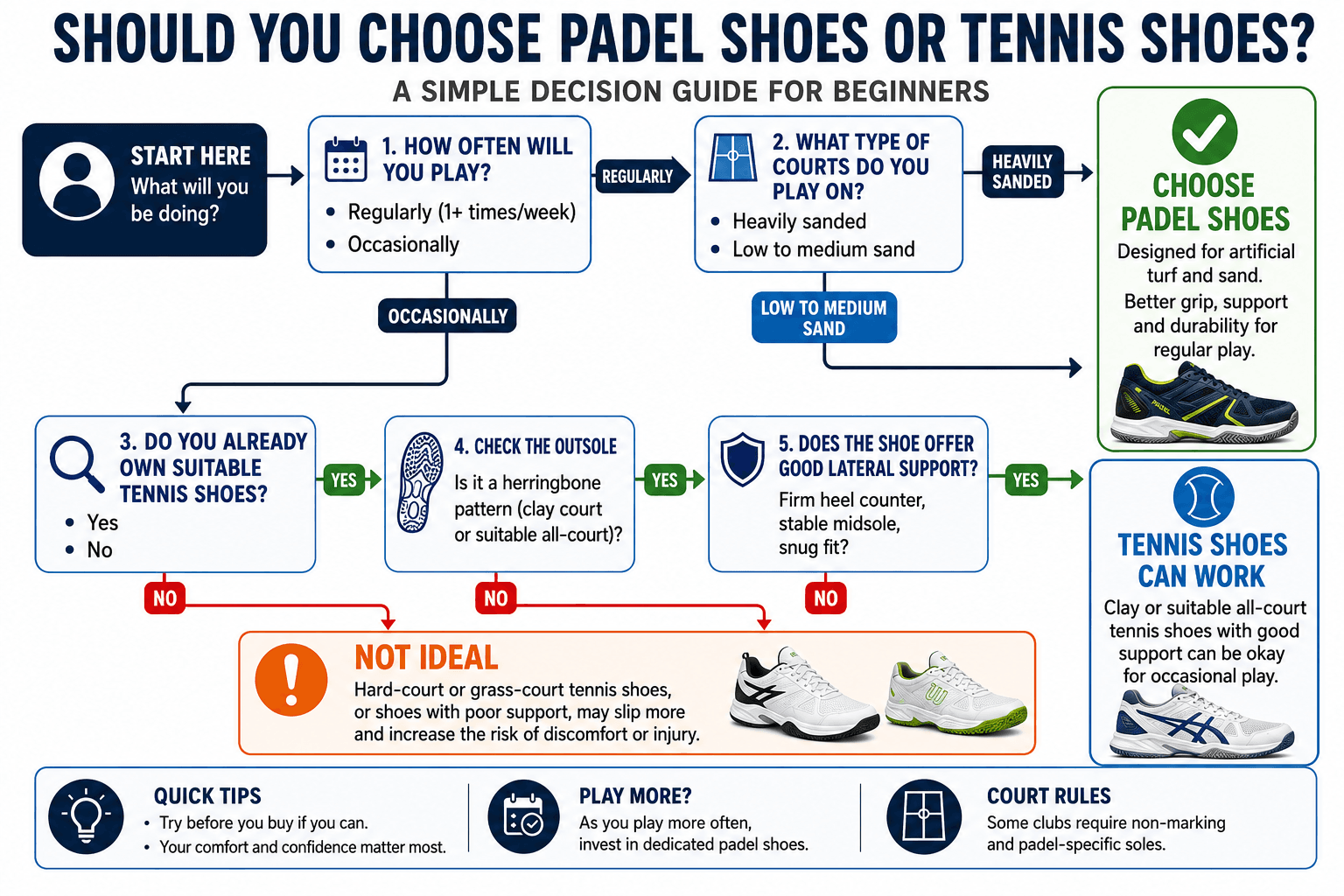
You do not always need to buy dedicated padel shoes immediately. If you already own suitable tennis shoes with good lateral support and an outsole that works well on your local padel court, they may be enough for occasional play.
However, dedicated padel shoes usually make more sense once you start playing regularly, especially if you notice slipping, excessive grip during turns or a lack of stability during side-to-side movement.
- Keep your tennis shoes if you are a beginner, play occasionally and already own clay-court or suitable all-court shoes with good grip and support.
- Consider dedicated padel shoes if you play weekly, use sandier artificial-turf courts or want footwear designed specifically for padel movement.
- Replace your current shoes if the tread is badly worn, traction feels unpredictable or your foot moves excessively inside the shoe.
- Avoid running shoes for regular padel because they are designed mainly for forward movement rather than repeated lateral changes of direction.
Simple rule: If your current tennis shoes feel stable, grip the court predictably and match the surface, there is no need to replace them just because they are labelled “tennis”. If you play padel regularly, dedicated padel footwear is usually the more purpose-built long-term choice.
| Question | If Yes | If No |
|---|---|---|
| Do current shoes have a herringbone or similar outsole? | May be suitable for now | Consider padel-specific or clay tennis shoes |
| Playing padel two or more times a week? | A purpose-specific padel shoe may be worth considering | Existing suitable shoes may be enough |
| Noticing slipping or sticking? | Reassess outsole and court sand level | Continue monitoring wear over time |
Which Players Benefit Most From Dedicated Padel Shoes?
Dedicated padel shoes may be especially useful for the following player profiles:
- Frequent players, who place more repeated stress on the outsole
- Fast and aggressive movers, who load the shoe more heavily during direction changes
- Players who defend deeply, relying on quick recovery towards the back glass
- Players who regularly rotate and change direction during rallies
- Players using sandy artificial-turf courts, where outsole design matters more
- Players whose existing tennis shoes already feel unstable on court
- Players competing regularly, where consistent grip may support performance
Casual players using appropriate tennis footwear may notice a smaller practical difference, particularly if they play infrequently.
Common Mistakes When Choosing Padel Footwear
- Wearing running shoes on court
- Choosing maximum grip without considering rotational movement
- Assuming all tennis shoes behave the same way
- Ignoring the amount of sand on the court
- Buying shoes that are too narrow for comfortable lateral movement
- Prioritising cushioning over stability
- Continuing to use visibly worn tread
- Buying shoes based only on appearance
- Wearing outdoor shoes that carry stones or dirt onto the court
- Ignoring a club’s published footwear requirements

What to Compare When Buying Padel or Tennis Shoes
Some product mentions may include affiliate links.
Rather than pointing to a single “best” shoe, readers comparing real products can look at the following features, which are typically listed in a manufacturer’s own specifications:
- Outsole type (herringbone, omni or hybrid)
- Stated court compatibility
- Lateral stability features
- Heel support and lockdown
- Toe protection and reinforcement
- Midsole cushioning level
- Available width options
- Overall weight
- Manufacturer guidance on intended surface
Players comparing footwear can review the Best Padel Shoes UK guide. Beginners building a complete setup can also use the Padel Starter Kit UK guide, while the Best Padel Rackets UK guide covers racket options separately.
Final Verdict: Padel Shoes vs Tennis Shoes
For occasional padel, suitable tennis shoes can be enough. Clay-court tennis shoes are usually the closest alternative because many use a herringbone-style outsole that can work well on artificial turf and sand.
For regular players, dedicated padel shoes are generally the better long-term choice. They are designed specifically for padel movement, including repeated lateral steps, quick turns, sudden stops and the grip requirements of modern padel court surfaces.
Choose tennis shoes if: you are a beginner or occasional player and already own supportive clay-court or suitable all-court shoes that grip your local court well.
Choose padel shoes if: you play weekly or more often, want footwear designed specifically for padel movement, or notice that your current tennis shoes provide inconsistent traction or stability.
Bottom line: you do not need to replace suitable tennis shoes simply because they are labelled “tennis”. But once padel becomes a regular part of your routine, dedicated padel shoes are usually the more purpose-built option.
Ready to switch? Compare our Best Padel Shoes UK 2026 picks for grip, comfort, beginners and different court conditions.
New to the sport? Our Padel Starter Kit UK guide covers the essential equipment for your first sessions, while the Best Padel Racket for Beginners UK guide can help you choose your first racket.
Padel Shoes vs Tennis Shoes FAQs
Can you wear tennis shoes for padel?
Yes. Some tennis shoes can work well for padel, particularly clay-court or suitable all-court models with good lateral support and an outsole that matches the court surface. Dedicated padel shoes are usually the more purpose-built option for regular players.
Are padel shoes different from tennis shoes?
Yes, although there is some overlap. Padel shoes are generally designed around artificial-turf courts, lateral movement, quick turns and varying sand levels. Tennis shoes are designed for different tennis surfaces such as clay, hard court, grass or all-court use.
Are clay-court tennis shoes good for padel?
Clay-court tennis shoes are usually the closest tennis alternative to padel shoes. Many use a herringbone-style outsole that can provide useful traction on artificial turf and help manage loose sand. Suitability still depends on the individual shoe and the specific court surface.
Can you use hard-court tennis shoes for padel?
Hard-court tennis shoes can sometimes be used for padel, particularly on courts with lower sand levels. However, their outsoles are designed mainly for durability on abrasive hard surfaces, so grip may be less predictable on sandier artificial-turf courts.
Can beginners wear normal trainers for padel?
For a first session, supportive general trainers may be workable if they provide secure lateral support and suitable grip. However, running shoes are generally not recommended, and beginners who start playing regularly should consider suitable tennis court shoes or dedicated padel shoes.
Can you wear running shoes for padel?
Running shoes are generally not recommended for regular padel because they are designed mainly for forward movement. Padel involves frequent side-to-side movement, sudden stops and quick direction changes, so court shoes with stronger lateral stability and appropriate traction are usually a better choice.
What sole is best for padel?
There is no single outsole that is best for every padel court. Herringbone soles are often suited to sandier artificial-turf courts, while omni and hybrid tread patterns can work well on other modern padel surfaces. The best choice depends on the turf, sand level and shoe manufacturer’s surface guidance.
Do you need different shoes for indoor and outdoor padel?
Not necessarily. The court surface and sand level usually matter more than whether the court is indoors or outdoors. Many indoor and outdoor padel courts use artificial turf, so choose footwear based on the specific surface, traction requirements and venue conditions.
How should padel shoes fit?
Padel shoes should feel secure around the heel and midfoot without being uncomfortably tight. Your foot should not slide excessively inside the shoe during lateral movement, while the toe box should still provide enough room for comfort during sudden stops.
When should you replace padel shoes?
There is no fixed replacement schedule because wear depends on playing frequency, court surface and movement style. Consider replacing your shoes when the tread is heavily worn, traction becomes unpredictable, cushioning feels compressed or the upper no longer keeps your foot securely in place.
Sources
This guide was researched using official padel footwear information from major manufacturers and tennis footwear guidance from the Lawn Tennis Association. These sources were used to check outsole design, grip, support, court-surface suitability and the differences between padel-specific and tennis footwear.
- Lawn Tennis Association (LTA): How to Choose the Right Tennis Shoes . The LTA explains how tennis shoe outsoles differ by court surface, including the use of herringbone-patterned soles for clay courts and different tread designs for hard and grass courts.
- HEAD: HEAD Padel Footwear . HEAD describes its padel footwear as being designed specifically for padel movement, with features focused on court grip, stability, cushioning and heel security.
- Babolat: Babolat Padel Shoes . Babolat provides information on padel-specific footwear, including traction, support, cushioning and outsole designs developed for padel court surfaces.
- Babolat – Padel Sole Technology: Babolat 100% Padel Shoes . Babolat explains that its padel-specific soles combine features such as herringbone tread for sand and omni-style areas for artificial grass, helping illustrate why outsole design matters on different padel surfaces.
Court surfaces, sand levels and shoe designs vary between venues and manufacturers. Players should therefore check the footwear manufacturer’s intended-surface guidance and, where necessary, ask their local padel venue which outsole types are most commonly used on its courts.
Last checked: August 2026.