Common Padel Mistakes Beginners Make in the UAE and How to Fix Them (2026)
By the Padel Gameplan Editorial Team | Published: 20 March 2026 | Updated: 20 March 2026
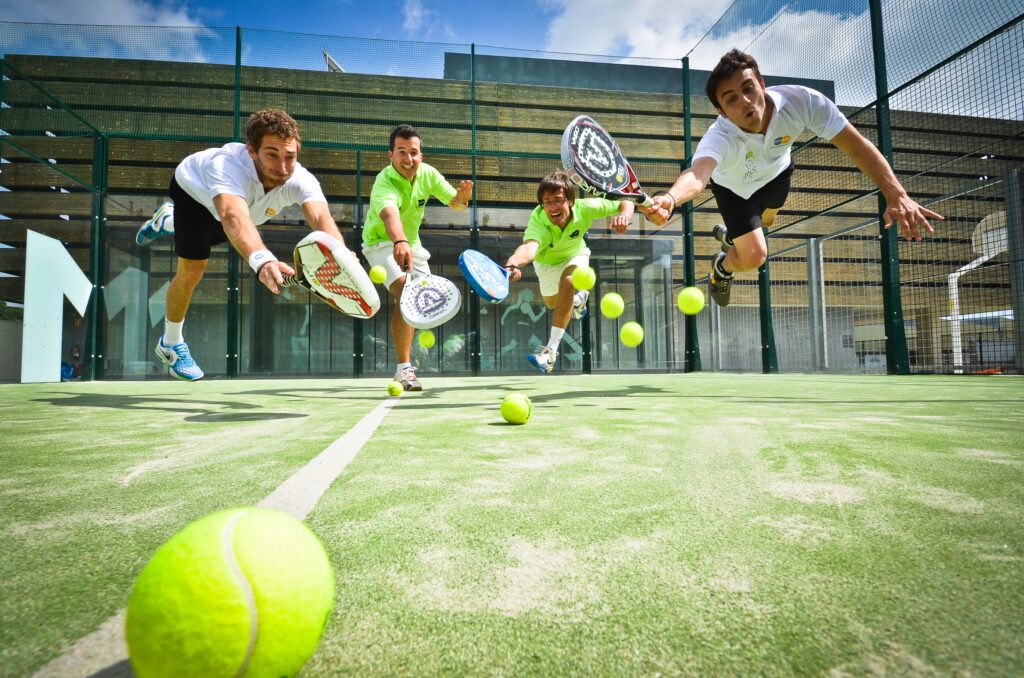
Padel is one of the most accessible racket sports to start, but like any technical sport, it comes with a well-documented set of errors that most beginners repeat in the early stages of learning. Identifying and correcting these padel mistakes early leads to faster improvement, fewer unforced errors, and a more enjoyable experience on court.
This guide covers the most common padel mistakes observed among beginner and intermediate players in the UAE, with structured coaching fixes for each one. The corrections are based on widely accepted coaching methodology and reflect principles used by padel academies and instructors across Dubai, Abu Dhabi, and the broader region.
Why Correcting Padel Mistakes Early Matters
In padel, bad habits formed early tend to become deeply ingrained. A player who learns to grip the racket incorrectly, stand in the wrong court position, or serve with poor mechanics will find these errors increasingly difficult to correct as they progress. Coaches across UAE padel academies consistently note that beginner players who receive structured feedback in their first few weeks develop significantly faster than those who practice without guidance.
The mistakes listed in this article are not rare – they appear in nearly every beginner player’s game. Recognising them is the first step toward removing them.
Overview of the Most Common Padel Mistakes
| # | Padel Mistake | Core Problem | Fix Category |
|---|---|---|---|
| 1 | Incorrect grip | Reduces shot control and consistency | Technique |
| 2 | Poor footwork and static positioning | Limits court coverage and shot preparation | Movement |
| 3 | Prioritising power over control | Increases unforced errors | Tactics |
| 4 | No communication with partner | Breaks doubles coordination | Teamwork |
| 5 | Sloppy or illegal serve | Gives away easy points | Technique |
| 6 | Staying in no man’s land | Creates vulnerability on both sides | Positioning |
| 7 | Smashing at the wrong time | Produces errors from poor balance | Shot selection |
| 8 | Playing without a tactical plan | Disorganised, reactive play | Strategy |
| 9 | Ignoring the glass walls | Misses a fundamental game element | Rules awareness |
| 10 | Using incorrect or unsuitable gear | Increases injury risk, reduces performance | Equipment |
| 11 | Skipping warm-up and cool-down | Raises injury risk | Physical preparation |
Mistake 1 – Using the Wrong Grip
What the Mistake Looks Like
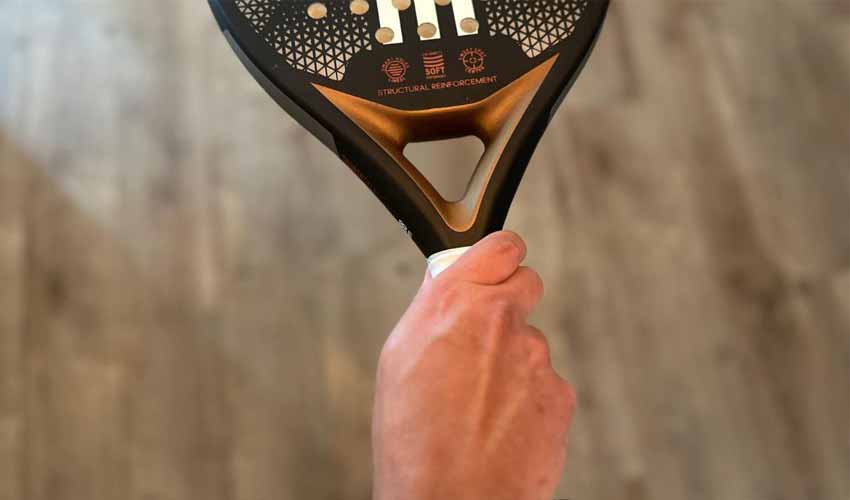
Many beginners hold the padel racket using a tennis forehand grip or a grip that feels comfortable but is not suited to padel’s technical demands. A poor grip reduces the ability to switch quickly between shots, limits wrist flexibility, and produces inconsistent contact on volleys, serves, and overhead shots.
Why It Happens
Players transitioning from tennis often carry their existing grip habits onto the padel court. Those with no prior racket sport experience sometimes grip the handle too tightly, too loosely, or in a position that prevents proper racket face control.
The Correct Approach
Coaches commonly recommend the continental grip as the most versatile starting point for padel. To find this grip, hold the racket as if gripping a hammer – with the base knuckle of the index finger resting on the second bevel of the handle. The thumb should rest flat against the back of the handle. Fingers wrap around the handle with moderate tension, not clenched tightly.
The continental grip works across volleys, serves, smashes, bandejas, and groundstrokes without requiring a grip change between shots – an important advantage given the speed of padel rallies.
Key Points for Beginners
- Avoid gripping too tightly – a relaxed grip improves feel and racket-head speed.
- Practice switching the grip from the correct position before beginning drills.
- Ask a coach to check grip position during the first few sessions.
Mistake 2 – Poor Footwork and Static Court Positioning
What the Mistake Looks Like
Beginner players frequently stand flat-footed between shots, waiting for the ball to arrive rather than moving proactively into a prepared position. This static stance reduces reaction time, limits shot options, and forces awkward, off-balance contact.
Why It Happens
Without structured footwork training, players naturally default to a stationary stance. In padel’s enclosed court, the compressed space creates a false sense that little movement is needed – in reality, efficient small-step movement is essential for consistent shot preparation.
The Correct Approach
Coaches consistently teach the ready position as the foundation of good movement: knees slightly bent, weight on the balls of the feet, racket held in front of the body at mid-height. From this position, players can move efficiently in any direction.
Key footwork patterns for beginners include side-shuffles for lateral coverage, crossover steps for longer distances, and a split-step – a small jump to land just before the opponent strikes the ball – to improve reaction speed.
Recommended Drill
Ladder footwork drills are widely used in UAE padel coaching sessions. A simple court shadowing routine – moving to five marked positions on the court and returning to the centre after each – builds the movement habits needed for match play.
Mistake 3 – Prioritising Power Over Control
What the Mistake Looks Like
A common padel mistake among beginners is attempting to win points by hitting the ball as hard as possible. This produces a high rate of unforced errors – balls into the net, balls out of court, and poorly directed shots that give the opponent easy opportunities.
Why It Happens
Players familiar with tennis or squash sometimes transfer the power-based approach from those sports. In padel, the smaller court, glass walls, and slower ball behaviour reward placement, consistency, and patience over raw power.
The Correct Approach
Coaching guidance consistently places shot placement above power as the primary development goal for beginner and intermediate padel players. A well-placed soft volley, a controlled globo (lob), or a low crosscourt shot to the opponent’s feet creates more scoring opportunities than a mis-hit smash.
Many beginners find that reducing swing speed and focusing on clean contact and direction produces noticeably better results within a few sessions.
Control vs Power Comparison
| Approach | Typical Result for Beginners | Recommended Stage |
|---|---|---|
| Maximum power | High unforced error rate, poor direction | Not recommended for beginners |
| Balanced control | Consistent rallies, better positioning | Beginner to intermediate |
| Targeted placement | Creates pressure, fewer errors | Intermediate and above |
| Selective power | Used after establishing control base | Intermediate and above |
Mistake 4 – No Communication with the Partner
What the Mistake Looks Like
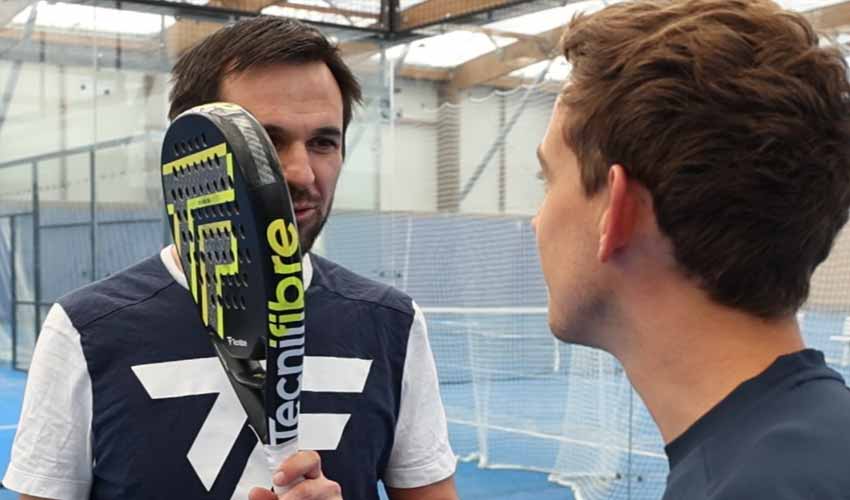
Padel is a doubles sport. Beginners who treat it as an individual game – making decisions without consulting their partner, failing to call for balls, or leaving gaps in court coverage – undermine the team structure that padel requires.
Why It Happens
Players new to doubles formats often focus entirely on their own shot-making and forget that court coverage, positioning, and point construction are shared responsibilities. The fast pace of padel also makes communication feel difficult in the moment.
The Correct Approach
Simple verbal cues – calling “mine” or “yours” for contested balls, confirming serve direction before a point, or signalling a planned net approach – significantly reduce confusion and missed balls between partners.
Coaches recommend that beginners also learn basic court rotation principles: when one player is pushed wide or to the back, the other player adjusts position to maintain balanced coverage of the court.
Basic Partner Communication Habits
- Always call for contested balls rather than assuming.
- Agree on a serve placement before each service game.
- Communicate after points – brief tactical feedback builds coordination over time.
- Establish a default formation (parallel or staggered) to fall back on when under pressure.
Mistake 5 – A Weak or Illegal Serve
What the Mistake Looks Like
Common serving errors among beginners include: serving above waist height (illegal), hitting the ball without bouncing it first (illegal), serving into the wrong service box, and producing serves with so little direction or depth that the receiver has a straightforward attack.
Why It Happens
Beginners accustomed to tennis serve overhand automatically, which is not permitted in padel. Others are unaware of the service box diagonal rule or the waist-height contact requirement.
The Correct Approach
A legal padel serve must: be hit underhand with contact below waist height, be preceded by a single bounce of the ball on the ground within the server’s court, and land in the diagonally opposite service box. The server’s feet must remain behind the service line until contact is made.
Beyond legality, coaches recommend that beginners focus on serve consistency rather than spin or power. A reliable serve that lands in the correct box with adequate depth is more effective than an ambitious serve that produces double faults.
Serve Fault Reference Table
| Fault Type | Rule Violation | Consequence |
|---|---|---|
| Contact above waist | Height rule violation | Fault – second serve |
| No ball bounce before contact | Bounce rule violation | Fault – second serve |
| Landing in wrong service box | Direction rule violation | Fault – second serve |
| Foot on or over service line | Foot fault | Fault – second serve |
| Ball hits metal fencing before box | Boundary violation | Fault – second serve |
| Two consecutive faults | Double fault | Point to receiving team |
Mistake 6 – Staying in No Man’s Land
What the Mistake Looks Like
No man’s land refers to the mid-court zone between the service line and the net – approximately the central third of each side of the court. Players who stand in this area are too close to the net for effective backcourt defence and too far from it for confident volley play. Shots that land at the feet of a player in no man’s land are extremely difficult to return cleanly.
Why It Happens
Beginners often drift into no man’s land during rallies without realising it – moving forward tentatively but not committing to the net, or recovering slowly from a backcourt position. Indecisive movement creates this vulnerable positioning.
The Correct Approach
Coaches teach beginners to commit to one of two clear positions: net zone (frontcourt) or backcourt. Advancing to the net after a well-placed approach shot allows the player to apply pressure through volleys. Retreating to the backcourt after being lobbed or pushed back provides time to reset the point.
The transition between these two zones should be purposeful and decisive – never hesitant.
Court Position Decision Framework
| Situation | Recommended Position | Reason |
|---|---|---|
| After a strong approach shot | Net zone | Control and pressure |
| After being lobbed | Backcourt | Time to reset and defend |
| Neutral rally from mid-court | Move to net zone | Gain initiative |
| Opponent has easy smash opportunity | Backcourt | Defensive safety |
| Both opponents at baseline | Net zone | Maximise attack opportunity |
Mistake 7 – Smashing at the Wrong Time
What the Mistake Looks Like
Beginner players often attempt smashes (remates) from positions where they lack the balance, timing, or court space to execute them cleanly. This results in balls into the net, shots out of court, or smashes that land centrally and allow the opponent a straightforward return.
Why It Happens
The smash is a visually satisfying, high-impact shot. Beginners sometimes prioritise the ambition to execute it over the discipline to assess whether the conditions are right. An off-balance smash from an unfavourable position is one of the most common sources of unforced errors among club-level beginners.
The Correct Approach
Coaches consistently teach that a smash should only be attempted when the player has sufficient time to position under the ball, establish a balanced stance, and rotate the hips and shoulders through contact. When a lobbed ball is awkward or the player is off balance, the bandeja is a far more appropriate choice – it maintains net position without risking an error.
Beginners benefit from practising the distinction between smash-appropriate and bandeja-appropriate situations as a specific drill.
Smash vs Bandeja Decision Guide
| Ball Condition | Recommended Shot | Reason |
|---|---|---|
| High, slow lob with time to position | Smash (remate) | Full balance available, end the point |
| Mid-height lob, player at net | Bandeja | Control, maintain position |
| Fast, low-bouncing overhead | Bandeja or vibora | Spin for safety, avoid error |
| Player off balance or moving | Bandeja | Control over power |
| Short lob close to net | Smash if balanced, bandeja if not | Assess balance first |
Mistake 8 – Playing Without a Tactical Plan
What the Mistake Looks Like
Beginners who play purely reactively – simply returning whatever the opponent plays with no considered shot selection or positioning strategy – miss consistent opportunities to build pressure, expose opponents’ weaknesses, or construct winning points.
Why It Happens
Tactical awareness develops over time and is genuinely difficult to apply while simultaneously managing technique and positioning. Without coaching, many beginners default to survival mode – keeping the ball in play without any broader intent.
The Correct Approach
Coaches recommend that beginners start with two foundational tactical habits:
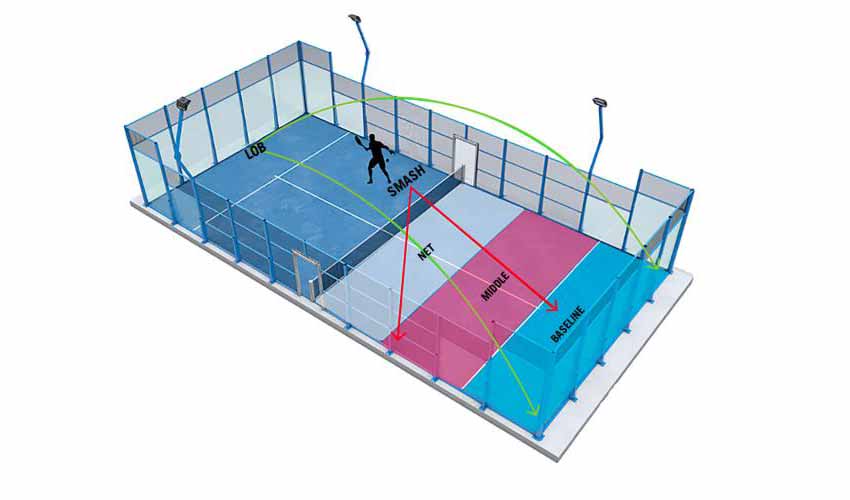
First, target the middle of the court. Shots directed centrally between the two opponents create uncertainty about who should play the ball, reduce the opponent’s angle options, and are statistically more reliable than ambitious sideline attempts.
Second, use the lob (globo) to reset the point when under pressure. A well-executed lob over net-dominant opponents forces them to retreat to the backcourt and allows the defending team to recover position and begin building a new attack.
These two principles alone – targeting the middle and lobbing under pressure – provide a foundation for tactical improvement that beginners can apply from their first few sessions.
Mistake 9 – Ignoring the Glass Walls
What the Mistake Looks Like
Beginners frequently treat the glass walls as hazards rather than tactical tools. They fail to read or use wall rebounds, let balls go unreturned that could have been played off the glass, and stand in positions that prevent them from using the back wall defensively.
Why It Happens
Players new to padel have no equivalent reference point from other sports. Tennis players are conditioned to treat anything near a boundary as out. The concept that the ball remains in play after bouncing off the glass – and can even be used offensively – is counterintuitive without coaching.
The Correct Approach
Understanding wall play is one of the most important padel skills for beginners to develop. The key rule is straightforward: after the ball bounces once on the ground, it may then rebound off any glass wall or metal fence on the player’s own side and still be in play. The player may then return the ball back over the net using this wall rebound.
Coaches introduce wall play through specific drills – hitting controlled shots to the back wall and practising the timing needed to play the ball cleanly as it descends from the glass. Beginners who develop comfort with wall rebounds gain a significant defensive advantage.
Wall Play Rules Reference
| Scenario | Legal or Fault | Explanation |
|---|---|---|
| Ball bounces on ground then hits glass – returned | Legal | Standard wall play |
| Ball hits glass wall before bouncing on ground | Fault | Wall contact must follow ground bounce |
| Ball rebounds off back wall after ground bounce | Legal | Can be played from wall rebound |
| Ball bounces on ground then hits metal fencing | Legal | Fencing counts as part of play |
| Player uses own back wall to return ball over net | Legal | A key padel technique |
Mistake 10 – Using Incorrect or Unsuitable Gear
What the Mistake Looks Like
Some product mentions may include affiliate links.
Common gear-related padel mistakes include using tennis rackets instead of padel-specific rackets, wearing running shoes or flat-soled trainers on court, and using a racket that is significantly too heavy or too advanced for the player’s current skill level.
Why It Happens
Beginners unfamiliar with padel sometimes assume any racket and sports shoe will be adequate. Tennis rackets are strung and have very different weight distribution to padel rackets; they are not suitable for padel and create an incorrect feel for the sport’s mechanics. Running shoes lack the lateral support and court-specific grip pattern needed for the side-to-side movement demands of padel.
The Correct Approach
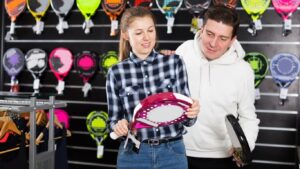
For beginners in the UAE, coaching guidance and community feedback consistently point to a round-shaped padel racket with a soft foam core as the most appropriate starting choice. This shape provides a larger sweet spot, more forgiveness on off-centre shots, and better control for players still developing technique.
Padel-specific shoes – or court shoes with lateral support and a herringbone or multi-directional grip sole – are recommended for all players. Running shoes lack the ankle and lateral stability required for padel’s quick directional changes.
Beginner Gear Selection Guide
| Item | Recommended for Beginners | Why |
|---|---|---|
| Padel racket shape | Round | Larger sweet spot, more control |
| Racket core | Soft foam | Forgiving feel, reduces arm fatigue |
| Racket weight | approx. 360g-370g | Easier to manoeuvre |
| Shoes | Padel or court shoes | Lateral support, court grip |
| Overgrip | Yes | Improves feel and sweat absorption |
| Eye protection | Recommended | Enclosed court – ball speed risk |
UAE-based retailers across Dubai and Abu Dhabi stock beginner-appropriate padel rackets from brands including Head, Bullpadel, and Adidas at various price points. Players should verify current availability directly with retailers.
Mistake 11 – Skipping the Warm-Up and Cool-Down
What the Mistake Looks Like
Many beginner players step directly onto the court and begin playing at full intensity without any physical preparation. Similarly, players who finish a session and leave without cooling down increase their risk of delayed-onset muscle soreness and injury.
Why It Happens
Warm-up and cool-down are often treated as optional extras rather than essential parts of a session. On busy courts in Dubai and Abu Dhabi where court time is a paid resource, players sometimes feel pressure to maximise ball time at the expense of preparation.
The Correct Approach
A structured warm-up for padel typically includes five to ten minutes of dynamic movement – shoulder rotations, hip circles, lateral shuffles, high knees, and light jogging – followed by several minutes of gentle ball-striking at reduced pace. This sequence raises muscle temperature, improves joint mobility, and activates the neuromuscular patterns needed for court movement.
A cool-down of five to seven minutes of static stretching – targeting calves, hamstrings, hip flexors, and shoulders – assists recovery and reduces muscle tightness after play.
Sample Warm-Up and Cool-Down Structure
| Phase | Duration | Activities |
|---|---|---|
| Dynamic warm-up | approx. 5-7 minutes | Shoulder circles, hip rotations, lateral shuffles, high knees |
| Racket activation | approx. 3-5 minutes | Gentle groundstrokes, mini volleys, light serves |
| Match / drill play | Session duration | Full padel play |
| Static cool-down | approx. 5-7 minutes | Calf stretch, hamstring stretch, hip flexor stretch, shoulder stretch |
How to Build Better Habits on UAE Padel Courts
For players based in Dubai, Abu Dhabi, or other emirates, structured coaching is the most efficient route to correcting the padel mistakes outlined in this guide. UAE padel academies across Al Quoz, Business Bay, JVC, and Abu Dhabi’s main sporting districts offer beginner and intermediate group lessons as well as private coaching sessions.
Players who cannot immediately access coaching can make significant improvements by focusing on one mistake at a time – working through grip, then footwork, then positioning – rather than attempting to address all errors simultaneously.
Many players also benefit from watching their own match footage, where mistakes in positioning and court movement become immediately visible. Recording a session on a mobile phone and reviewing it with a more experienced player or coach is a simple and widely used development tool in UAE club environments.
10 FAQs – Common Padel Mistakes for UAE Beginners
1. What is the most common padel mistake beginners make in the UAE?
Based on coaching observations across UAE padel academies, the most frequently observed beginner padel mistake is poor court positioning – specifically staying in no man’s land or failing to commit to either net zone or backcourt. This single error affects a player’s ability to execute most other aspects of the game cleanly.
2. How do I stop hitting padel shots into the net?
Shots into the net most commonly result from late contact (hitting the ball behind the body rather than in front), an incorrect grip, or excessive downward swing. Coaches recommend focusing on early preparation, moving toward the ball rather than waiting for it, and making contact in front of the body with a compact swing. Reducing swing speed and prioritising clean contact typically reduces net errors quickly.
3. Is it a padel mistake to serve overhand like in tennis?
Yes. Overhand serves are not permitted in padel. All serves must be hit underhand with the racket making contact with the ball below waist height. The ball must also be dropped and allowed to bounce once before the serve is struck. Serving overhand is a fault under International Padel Federation (FIP) rules.
4. Why do I keep losing points near the net in padel?
Losing points at the net is often caused by one of three padel mistakes: standing in no man’s land rather than close to the net, using excessive backswing on volleys, or failing to track the lob overhead. Volleys at the net require a short compact motion with the racket in front of the body. When an opponent lobs, the decision to smash or play a bandeja should be made based on available balance and timing – not instinct alone.
5. How can I improve my padel footwork quickly?
Ladder footwork drills and court shadowing exercises are widely used in UAE padel coaching for developing movement patterns. Practising the split-step (a small jump to land just before the opponent strikes) and learning to side-shuffle rather than cross-step for lateral movement are the two most impactful changes for beginners. Spending ten minutes on footwork at the start of each practice session produces noticeable improvement within a few weeks.
6. What is the correct padel racket for a beginner in the UAE?
Coaches commonly recommend a round-shaped padel racket with a soft foam core for beginners. This shape provides a larger sweet spot and more forgiveness on off-centre shots. A racket weight of approx. 360g-370g is generally easier to manoeuvre for players still developing their swing mechanics. UAE retailers across Dubai and Abu Dhabi stock suitable beginner options from brands including Head, Bullpadel, and Adidas.
7. How important is partner communication in padel doubles?
Partner communication is fundamental in padel because the game is exclusively played in doubles format in competition. Simple verbal calls – “mine”, “yours”, and “lob” – prevent the most common doubles errors, which are two players going for the same ball or neither player going for a ball at all. Coaches at UAE academies introduce communication habits from the first group lesson.
8. Should beginners try to use the glass walls in padel?
Yes. The glass walls are not just an architectural feature – they are a structural part of padel gameplay. After the ball bounces on the ground, it may legally rebound off the glass walls and metal fencing, and the player can return it from the wall. Beginners who learn to read and use wall rebounds gain a significant defensive advantage. Wall play drills are a standard component of beginner coaching programs across UAE academies.
9. What padel mistakes are most common specifically in UAE summer play?
During UAE summer months (approximately May to September), the most common environmentally influenced padel mistakes include dehydration affecting concentration and footwork quality, gripping too tightly due to sweat on the handle, and poor ball selection – using pressurised balls that behave differently at high temperatures. Playing in air-conditioned indoor courts, using an overgrip to manage sweat, and carrying sufficient hydration are standard recommendations from UAE coaches for summer play.
10. How many padel lessons does it take to correct the most common beginner mistakes?
There is no fixed number, as progress depends on practice frequency, individual coordination, and the quality of coaching received. However, coaches commonly note that players who receive structured feedback in their first four to six sessions and practise consistently two to three times per week show clear improvement in grip, positioning, and serve mechanics within four to six weeks. Addressing one mistake at a time with a specific correction drill produces faster results than attempting to fix everything simultaneously.
Content produced by the Padel Gameplan Editorial Team. Technique and rules guidance is based on International Padel Federation (PadelFip) official regulations and widely accepted coaching methodology. Venue and pricing information should be confirmed directly with each facility as details are subject to change.