7 Proven Ways to Avoid Padel Injury Prevention Failures in UAE Heat
By the Padel Gameplan Editorial Team | Published: 18 March 2026 | Updated: 18 March 2026
Padel injury prevention is one of the most consistently underestimated areas for players across Dubai, Abu Dhabi, Sharjah, Ras Al Khaimah, and the wider UAE. The sport’s rapid growth across the Emirates has brought a surge of enthusiastic new players onto the court – many of whom are increasing their session frequency far faster than their bodies are prepared for. Combine that with the UAE’s extreme climate, where outdoor temperatures regularly exceed 40°C between May and September and indoor courts expose players to rapid temperature transitions, and the conditions for preventable injury are well established.
Padel injury prevention in the UAE requires more than knowing how to stretch. It demands an understanding of how heat impairs physiological function, how overuse injuries develop in beginner movement patterns, and how a structured approach to warm-up and hydration can meaningfully reduce risk. This guide provides that foundation – drawing on established coaching methodology, sports medicine literature, and the specific conditions faced by padel players across the Emirates in 2026.
Why Padel Injury Prevention Matters More in the UAE
A systematic review published in BMJ Open Sport and Exercise Medicine analysed injury incidence and prevalence across padel studies and identified the lower extremities – particularly the ankle and knee – as the most frequently injured body regions in padel, with the upper limb following closely. Overuse injuries consistently appeared alongside acute traumatic injuries in the findings, reinforcing that padel carries meaningful injury risk in the absence of proper preparation.
In the UAE context, this baseline risk is compounded by environmental and behavioural factors not present in the same combination elsewhere. The social nature of padel across the Emirates – where players are frequently introduced to the game through work colleagues or social groups and begin playing multiple sessions per week almost immediately – accelerates load exposure before the body has adapted. Many players also transition from predominantly sedentary routines, common in the UAE’s car-dependent, office-based environment, into a physically demanding sport with little preparatory conditioning.

The Indoor Court Misconception
A widely held assumption among UAE players is that booking an air-conditioned indoor court eliminates climate-related injury risk. This is not accurate. Players arriving at indoor venues in Al Quoz, JVC, Business Bay, or Khalifa City typically do so after spending time in extreme outdoor heat – walking from car parks, commuting, or working in environments that promote fluid loss even without exercise. Core body temperature, hydration status, and muscle readiness at the point of stepping on court are the variables that determine risk. A dehydrated, thermally stressed player on an indoor court carries elevated injury risk regardless of the ambient temperature during play.
Structured Warm-Up Protocols for UAE Padel Players
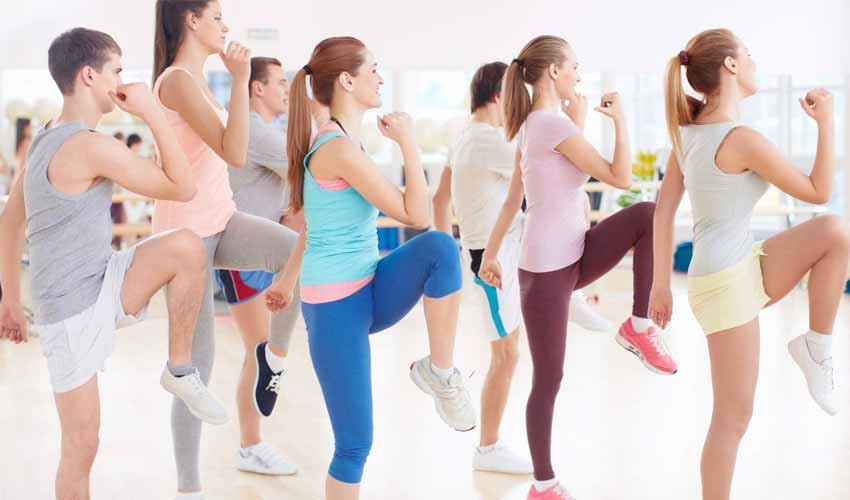
Coaches commonly recommend a minimum of 10 to 15 minutes of structured warm-up before any padel session. In UAE summer months or after a period of inactivity, extending this to 20 minutes is a practical precaution. A dynamic warm-up to prepare muscles for activity is one of the three fundamental principles consistently cited for reducing padel injury risk – alongside hydration and listening to the body.
Phase 1 – General Cardiovascular Activation (3 to 5 minutes)
The goal of this phase is to raise heart rate and core muscle temperature without introducing sport-specific load.
- Begin with 2 to 3 minutes of continuous movement – jogging on the spot, brisk walking around the court perimeter, or side-to-side shuffles across the court width.
- Introduce high-knee marching for 30 seconds, followed by heel kicks for 30 seconds. These activate the hip flexors and hamstrings – two muscle groups under significant demand during padel lateral movement.
- Complete the phase with approx. 60 seconds of controlled jumping jacks or low-intensity skipping if a rope is available.
Avoid static stretching during this phase. Evidence in sports and exercise science consistently indicates that prolonged static stretching before activity reduces power output and does not reduce acute injury risk. Static stretching belongs in the cool-down.
Phase 2 – Dynamic Mobility Work (4 to 6 minutes)
Dynamic mobility prepares the joints and connective tissue for the specific ranges of motion padel demands. Each movement should be controlled and deliberate.
- Shoulder circles – 10 rotations forward and 10 backward on each arm. In padel, many strokes involve overhead movement requiring significant range of motion in the shoulder joint. The thoracic spine and neck are closely connected to shoulder function and both should be included in warm-up mobility work.
- Hip circles – standing with feet shoulder-width apart, perform 10 slow hip rotations in each direction. Hip mobility is critical for low padel stances and lateral recovery.
- Ankle rotations – rotate each ankle 10 times in each direction. Ankle stability is one of the most common injury targets in padel, particularly on glass-walled courts where players adjust their footing rapidly at unpredictable angles.
- Lateral lunges – 8 to 10 on each leg, moving slowly into the stretch and holding for 2 seconds at the bottom. This targets the adductor muscles used in wide defensive stances.
- Torso rotations – standing with the racket held horizontally at chest height, rotate slowly from the waist 10 times in each direction, simulating the trunk rotation of forehand and backhand groundstrokes.
Phase 3 – Racket-Based Court Activation (4 to 6 minutes)
This phase transitions the warm-up into sport-specific movement while keeping intensity low.
- Begin with mini-rallies from the service line, focusing on soft contact and positioning rather than pace. This activates eye-hand coordination and begins to prepare the wrist and forearm tendons.
- Move to soft volley exchanges at the net from close range, keeping the backswing minimal. This is the key preparation exercise for players prone to elbow issues, as it loads the wrist extensors gently before full rally speed is introduced.
- Complete with 4 to 6 controlled serve repetitions per player – underhand, aimed at the mid-service box, focusing on rhythm and foot positioning rather than accuracy or pace.
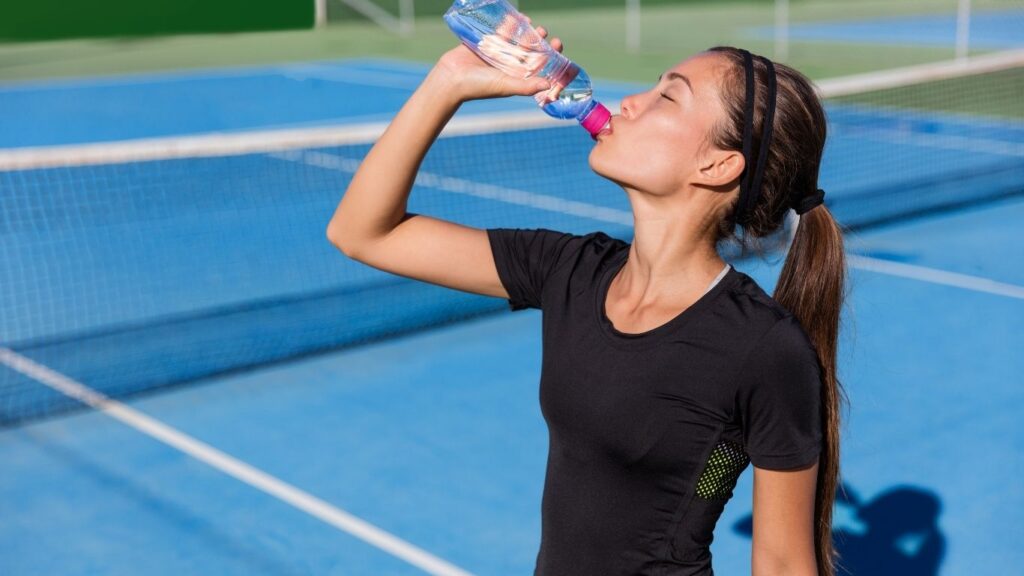
Hydration for Padel Injury Prevention in the UAE
Dehydration is one of the most significant and preventable contributors to padel injury in the UAE. Being even slightly dehydrated can have a significant impact on physical performance, and players should aim to avoid ever feeling thirsty during play – thirst already indicates a meaningful degree of dehydration has occurred. Sports medicine guidance consistently identifies dehydration as a factor that increases muscular fatigue, reduces coordination and reaction time, increases perceived exertion, and raises core body temperature – all of which directly elevate injury risk during padel.
Pre-Session Hydration (2 to 3 Hours Before Play)
Coaches commonly recommend consuming approximately 400 to 600 ml of water in the 2 to 3 hours before a padel session. Players who have been perspiring during the day, or who have consumed significant caffeine in the preceding 12 hours, should increase this volume accordingly. Arriving at the court already dehydrated removes the body’s physiological safety margin before play has even begun.
During Play
Padel sessions in recreational formats typically run for approx. 60 to 90 minutes. During this time, fluid loss through sweat in UAE summer conditions can exceed 1 litre per hour at moderate exertion levels. Coaches commonly recommend drinking 150 to 250 ml of water or electrolyte drink every 15 to 20 minutes during play, rather than consuming large volumes infrequently.
Plain water is adequate for sessions of up to approx. 60 minutes. For longer sessions or those played in high-humidity conditions, an electrolyte-containing drink – with sodium, potassium, and ideally some carbohydrate – is more appropriate. Sodium loss through sweat is significant in the UAE climate, and plain water alone does not replace it.
Post-Session Rehydration
A practical post-session target is 500 to 750 ml of fluid within the first 30 minutes after finishing play, with continued hydration over the following hour. Including electrolytes in post-session drinks supports faster and more complete rehydration than plain water alone.
Hydration Comparison: UAE Summer vs. Cooler Months
| Condition | Pre-Session Target | During Play (per 20 min) | Post-Session Target | Electrolytes Needed |
|---|---|---|---|---|
| UAE Summer – Outdoor (May-Sep) | 600 ml minimum | 250 ml | 750 ml+ | Yes – essential |
| UAE Summer – Indoor AC Court | 400-500 ml | 200 ml | 500-750 ml | Recommended |
| UAE Winter – Outdoor (Nov-Apr) | 400 ml | 150-200 ml | 500 ml | Optional |
| UAE Winter – Indoor AC Court | 300-400 ml | 150 ml | 400-500 ml | Optional |
General guidance based on widely cited sports medicine recommendations. Individual requirements vary. Players with specific medical conditions should always consult a healthcare professional.
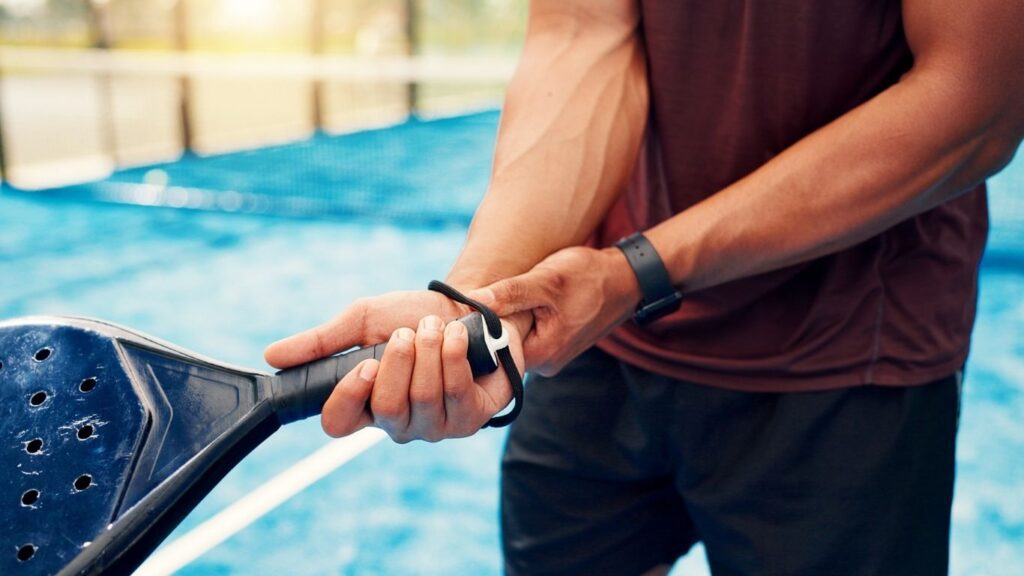
The 7 Most Common Padel Injuries and How to Prevent Them
The constant stress and overload generated in muscles and joints during padel can trigger injuries that sideline players for weeks or months. Treating any developing injury early allows a successful recovery and avoids possible complications. The following are the most frequently reported padel injuries in clinical and community literature, with specific prevention guidance applicable to UAE players.
Lateral Epicondylalgia – Padel Elbow
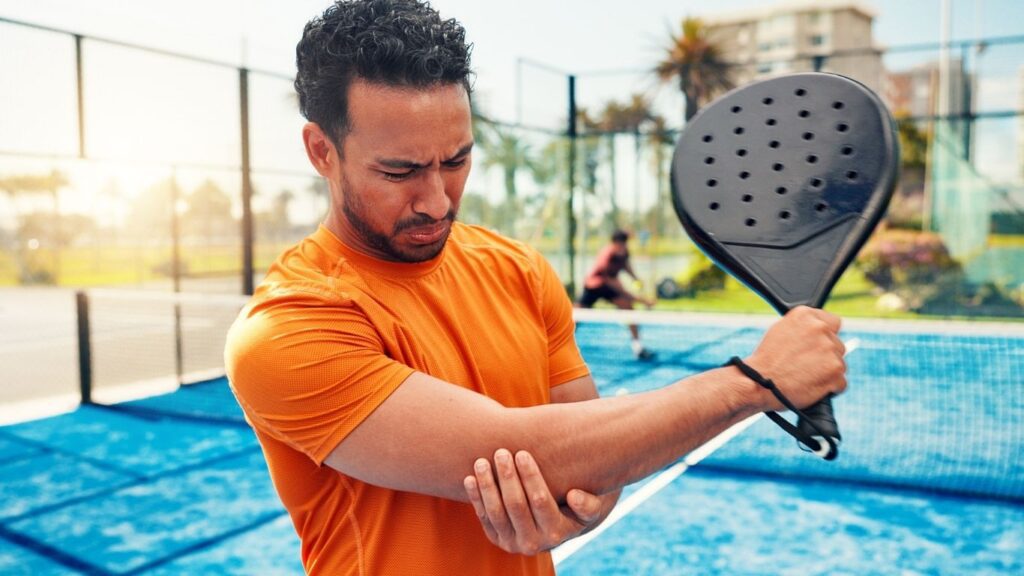
Lateral epicondylalgia – commonly referred to as padel elbow or tennis elbow – is widely reported as the most common overuse injury in padel. The pain is located on the outside of the elbow and develops when the extensor tendons of the forearm are repetitively loaded beyond their capacity through gripping and wrist extension. Every volley, serve contact, and wrist snap of shots like the víbora loads these tendons. Beginner players are particularly vulnerable because they tend to grip the racket too tightly under pressure, and many start with rackets that are too heavy or too stiff for their current strength level.
Common early signs include a dull ache on the outer elbow that worsens during grip activities, tenderness on the bony prominence on the outer elbow, and increased pain when lifting or turning objects with a straightened arm.
Prevention strategies recommended by physiotherapists and padel coaches include:
- Selecting an appropriately weighted racket for the beginner level – round-shaped rackets with softer EVA foam cores absorb more vibration than harder carbon diamond-shaped rackets
- Maintaining a relaxed grip during rallies, tightening only at the moment of contact
- Limiting session frequency during the first 4 to 6 weeks of playing to no more than 2 to 3 sessions per week
- Including forearm eccentric strengthening exercises in off-court conditioning
If symptoms develop, early consultation with a physiotherapist is strongly recommended. Continuing to play through increasing elbow pain typically worsens the condition significantly.
Patellar Tendinopathy – Knee Overuse
The patellar tendon absorbs enormous load during the repeated acceleration, deceleration, and lateral movement patterns padel involves. Patellar tendinopathy develops when this tendon is repetitively loaded beyond its current capacity. In the UAE, the transition many players make from predominantly sedentary office-based routines to multiple padel sessions per week is a primary risk factor. Tendons adapt more slowly than cardiovascular fitness or muscle strength, and the mismatch between perceived fitness and actual connective tissue readiness is a common source of this injury in beginners.
Early signs include a dull ache at the base of the kneecap – often worse in the minutes immediately after a session rather than during it – and stiffness after sitting for extended periods.
Prevention guidance includes gradual progression in session frequency, increasing by no more than 1 additional session per week, wearing footwear with adequate cushioning and lateral stability, and including quadriceps and hip strengthening in training routines.
Ankle Sprains
Ankle sprains are among the most common injuries in padel, caused by rapid changes in direction and the sport’s lateral movement demands. The glass walls of padel courts introduce an additional variable: players regularly adjust their footing when playing balls off the back wall or side glass at unexpected angles, increasing the risk of missteps and foot misplacement. Foot and ankle injuries in padel players are a well-documented concern across sports medicine literature, and prevention is strongly linked to footwear selection and ankle stability conditioning.
Prevention strategies include wearing padel-specific or court-sport footwear with lateral support – not running shoes, which are designed for forward motion and lack the lateral stability padel demands – progressing ankle stability through balance exercises such as single-leg standing and controlled lateral hops, and exercising extra caution on outdoor courts in UAE winter months where dust or sand accumulation near court edges can reduce traction.
Achilles Tendinopathy
The constant tension on the Achilles tendon during running and rapid direction changes in padel can lead to inflammation and tendinopathy over time. In the UAE, an additional factor is the experience of players walking on extremely hot outdoor surfaces before reaching the court, then transitioning abruptly into athletic activity – placing sudden demand on Achilles tendons that have not been adequately warmed. Appropriate stretching of the calf muscles before and after play, and footwear with good heel and Achilles support, are consistently identified as the primary prevention measures.
Early signs include stiffness at the back of the heel in the first few minutes of activity, and a dull ache in the Achilles area that may worsen after sessions. Eccentric calf exercises – particularly eccentric heel drops on a step – are among the most widely cited rehabilitation and prevention exercises for Achilles tendon health.
Calf Muscle Tears
The constant overload on the calf muscles from running and direction changes in padel can lead to fibrillar muscle tears – partial or full disruption of the calf muscle fibres – causing immediate sharp pain and requiring a significant recovery period. This injury is more common in players over 35 and in those who have not maintained regular calf conditioning. In UAE summer conditions, dehydration and elevated muscle temperature both increase calf muscle vulnerability to sudden-load tears.
Prevention strategies include completing a thorough calf warm-up before play, consistent hydration throughout the session to maintain muscle elasticity, and progressive calf conditioning including eccentric exercises in off-court training.
Rotator Cuff Strain – Shoulder Overuse
The rotator cuff stabilises the arm during overhead shots. The smash (remate), bandeja, and víbora all demand significant rotator cuff activation, particularly the infraspinatus and supraspinatus muscles. Beginners who attempt frequent overhead shots without adequate shoulder preparation commonly develop a dull ache at the front or side of the shoulder that worsens with continued overhead activity. Shoulder impingement – where the tendons become pinched between the bones of the shoulder and shoulder blade – is a specific condition noted in padel players due to repetitive overhead loading combined with inadequate thoracic spine and neck mobility.
Prevention includes completing the full shoulder mobility warm-up before every session, limiting overhead shot volume in the first 4 weeks of learning, and including shoulder external rotation and scapular stabilisation exercises in off-court conditioning.
Wrist Injuries
Wrist injuries are commonly reported in padel players and tend to develop from the repetitive loading of shots involving sharp wrist snap – particularly the víbora and certain high-speed volley finishes. Beginners learning these shots without established wrist stability and forearm conditioning are most at risk. Learning wrist-loading shots progressively under coaching supervision, incorporating wrist stability exercises into off-court routines, and ensuring the forearm extensor warm-up in Phase 3 of the warm-up protocol is completed before intensive volley work are the primary prevention measures.
Lower Back Strain
Padel’s combination of forward bending when retrieving low balls, trunk rotation in groundstrokes, and sudden spinal extension during overhead smashes places significant cyclic load on the lumbar spine and its supporting musculature. In the UAE, prolonged sitting in office and vehicle environments tends to reduce hip flexor flexibility and posterior chain strength, both of which contribute to lower back vulnerability during sport. Beginners who lack core stability – the ability of the deep abdominal and back muscles to control spinal movement under load – are particularly susceptible.
Prevention strategies include incorporating core stability exercises such as planks, dead bugs, and glute bridges into off-court routines, maintaining hip flexibility through regular stretching outside of playing sessions, and using the lateral lunge and torso rotation phases of the warm-up before every session.
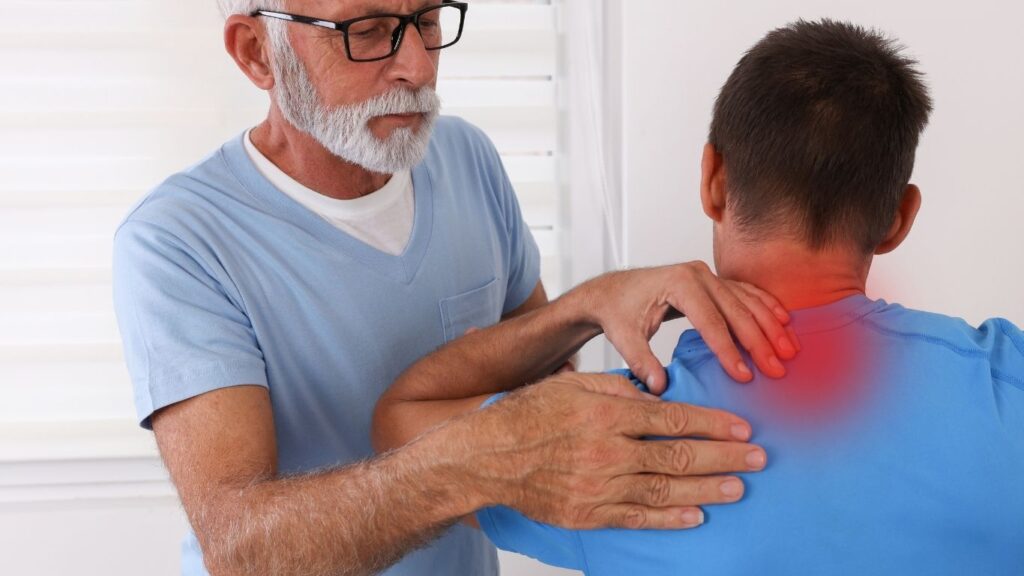
Cool-Down: The Recovery Phase Most UAE Players Skip
The cool-down is the component of a padel session most frequently omitted by players – particularly in UAE summer months when the priority after a hot session is to reach air conditioning as quickly as possible. An adequate cool-down supports faster recovery, reduces next-day muscle soreness, and helps the cardiovascular system transition gradually from exercise load back to rest. Post-session cool-down stretching is arguably the most important aspect of keeping muscles injury-free over time, and skipping it consistently is a meaningful contributor to overuse injury development.
A basic padel cool-down should include:
- 3 to 5 minutes of slow walking or very light movement on or near the court
- Static stretching held for 20 to 30 seconds per muscle group – focusing on the calves, Achilles, hamstrings, hip flexors, quadriceps, shoulder cross-body stretch, and forearm wrist flexor and extensor stretches
- Immediate initiation of post-session hydration as described in the hydration section above
The forearm stretches are particularly important for players who have completed significant volley or smash volume, as they help reduce the cumulative tendon load that contributes to lateral epicondylalgia over time.
Injury Prevention Summary: Quick-Reference Comparison
| Prevention Area | Beginner Risk Level | Key Action | UAE-Specific Note |
|---|---|---|---|
| Warm-up completion | High | 10-15 min structured protocol | Add 5 min in summer months |
| Pre-session hydration | High | 400-600 ml, 2-3 hrs before | Increase if outdoors or humid |
| During-play hydration | High | 150-250 ml every 20 min | Electrolytes essential in summer |
| Elbow load management | Medium-High | Relaxed grip, appropriate racket | Choose softer foam racket to start |
| Knee tendon loading | Medium | Gradual volume increase | Avoid rapid schedule increases |
| Ankle stability | Medium | Court-specific footwear | Extra care on dusty outdoor courts |
| Achilles care | Medium | Calf warm-up and eccentric loading | Hot surface transitions increase risk |
| Calf muscle protection | Medium | Hydration and warm-up | Higher risk over 35 and in summer |
| Shoulder preparation | Medium | Warm-up shoulder circuit | Limit overhead volume in weeks 1-4 |
| Wrist conditioning | Medium | Progressive loading under coaching | Avoid víbora and snap shots too early |
| Lower back conditioning | Medium | Core stability off-court | Address hip mobility and sitting posture |
| Cool-down | High | 5-10 min post-session routine | Begin rehydration immediately after |
When to Stop Playing and Seek Professional Advice
Padel injury prevention guidance is not a substitute for professional assessment. Players should stop playing immediately and consult a physiotherapist or sports medicine practitioner if they experience any of the following:
- Sharp, sudden pain during play in any joint or muscle
- Swelling or visible deformity at a joint
- Pain that worsens progressively during a session rather than easing after the first few minutes of warm-up
- Any elbow, knee, shoulder, or Achilles pain that persists beyond 48 to 72 hours after a session
- Signs of heat exhaustion during play: heavy sweating followed by sudden reduction in sweat output, dizziness, nausea, headache, muscle cramps, or a rapid weak pulse. Players experiencing these symptoms should move to a cool shaded environment immediately, rehydrate steadily, and seek medical attention if symptoms do not improve promptly.
UAE-based sports medicine and physiotherapy services are widely available across Dubai, Abu Dhabi, Sharjah, and Ras Al Khaimah, with many practitioners experienced in racket sport injuries. Several larger padel venues – including clubs in Al Quoz and Khalifa City – maintain partnerships with affiliated physiotherapy providers. Players can confirm this directly with their venue. Early intervention consistently produces better outcomes than delayed treatment.
Frequently Asked Questions – Padel Injury Prevention
1. What is the most important padel injury prevention step for beginners in the UAE? Completing a structured warm-up of 10 to 15 minutes before every session is the single most consistently cited padel injury prevention step in coaching and sports medicine guidance. Combined with adequate pre-session hydration, these two actions address the majority of preventable injury risk factors for beginner players across Dubai, Abu Dhabi, and the wider UAE.
2. How much water should I drink before a padel session in UAE summer? Coaches and sports medicine guidelines commonly recommend consuming approximately 400 to 600 ml of water in the 2 to 3 hours before a padel session. In UAE summer months – particularly between May and September – players who have been perspiring during the day should increase this to at least 600 ml and consider an electrolyte drink alongside plain water.
3. Is padel safe to play outdoors in UAE summer heat? Playing padel outdoors in UAE summer heat carries genuine physiological risk due to extreme temperatures and high humidity. Most padel injury prevention guidance for the UAE recommends limiting outdoor play to sessions scheduled before 8 am or after 8 pm during summer months. Many clubs across Dubai, Abu Dhabi, and Sharjah offer indoor air-conditioned courts that support year-round play safely.
4. What is padel elbow and how do I prevent it? Padel elbow – or lateral epicondylalgia – is the most commonly reported overuse injury in padel. It develops from repetitive gripping and wrist extension during volleys and overhead shots. Selecting an appropriately weighted round-shaped racket with a soft foam core, maintaining a relaxed grip during rallies, and limiting session frequency in the first few weeks of playing are the three most commonly recommended prevention measures.
5. How long should a padel warm-up be? Coaches commonly recommend a minimum of 10 to 15 minutes of structured warm-up before a padel session. This should include cardiovascular activation, dynamic mobility work, and racket-based court activation. In UAE summer conditions or after a period of inactivity, extending the warm-up to 20 minutes is a reasonable precaution.
6. Can I play padel every day as a beginner? Playing every day as a beginner is not typically recommended during the first 4 to 8 weeks of learning the sport. Tendons and connective tissue adapt more slowly than cardiovascular fitness, and daily play increases the risk of developing overuse injuries such as patellar tendinopathy, Achilles tendinopathy, and lateral epicondylalgia. A schedule of 2 to 3 sessions per week with rest days between sessions is the approach most commonly cited in beginner coaching frameworks.
7. What type of shoes are best for padel injury prevention in the UAE? Footwear designed specifically for padel or court sports – with lateral support, a non-marking sole appropriate for the court surface, and adequate cushioning – is strongly recommended. Running shoes are not suitable for padel as they lack the lateral stability the sport demands. For UAE outdoor courts, breathability in warm conditions is an additional relevant factor.
8. Should I stretch before padel? Static stretching before padel is not recommended. Evidence in sports and exercise science consistently indicates that prolonged static stretching before physical activity can temporarily reduce power output. Dynamic warm-up movements – including torso rotations, lateral lunges, shoulder circles, and ankle rotations – are the appropriate preparation before a padel session. Static stretching is appropriate during the cool-down after play.
9. Can a padel elbow injury heal without stopping play? Continuing to play through developing lateral epicondylalgia typically worsens the condition and significantly extends recovery time. Most physiotherapy guidance recommends reducing or temporarily stopping the activity causing the symptoms, alongside a targeted rehabilitation programme. Players who seek assessment within the first 2 to 4 weeks of noticing symptoms generally achieve faster recovery than those who delay.
10. Is there a difference in injury risk between indoor and outdoor padel courts in the UAE? Both court types carry injury risks largely determined by player behaviour rather than court type alone. Indoor air-conditioned courts reduce heat and humidity exposure during play but do not eliminate the risk of arriving dehydrated or skipping a warm-up. Outdoor courts in UAE winter months can accumulate dust near the edges, increasing ankle sprain risk. In UAE summer months, outdoor play during daylight hours carries significant heat-related risk that indoor courts largely avoid, making indoor venues the recommended option for most players between May and September.
This article was researched and produced by the Padel Gameplan Editorial Team. Content draws on guidance from The Padel School Physio Series, Physio-Pedia: Padel Injuries, the PMC Systematic Review on Padel Injury Incidence and Prevalence, BMJ Open Sport and Exercise Medicine, the Aspetar Sports Medicine Journal, Osteo Nordic: Padel Injuries, Everything Padel: Avoiding Padel Injuries, Clinica Elgeadi: Common Padel Injuries Guide, Mandaya Hospital Group: Padel Injury Types, Houston Foot and Ankle Care: Padel Foot and Ankle Injuries, Padel39: Common Padel Injuries, and community discussion on Reddit Padel. Some product mentions may include affiliate links.